Nov 21, 2026
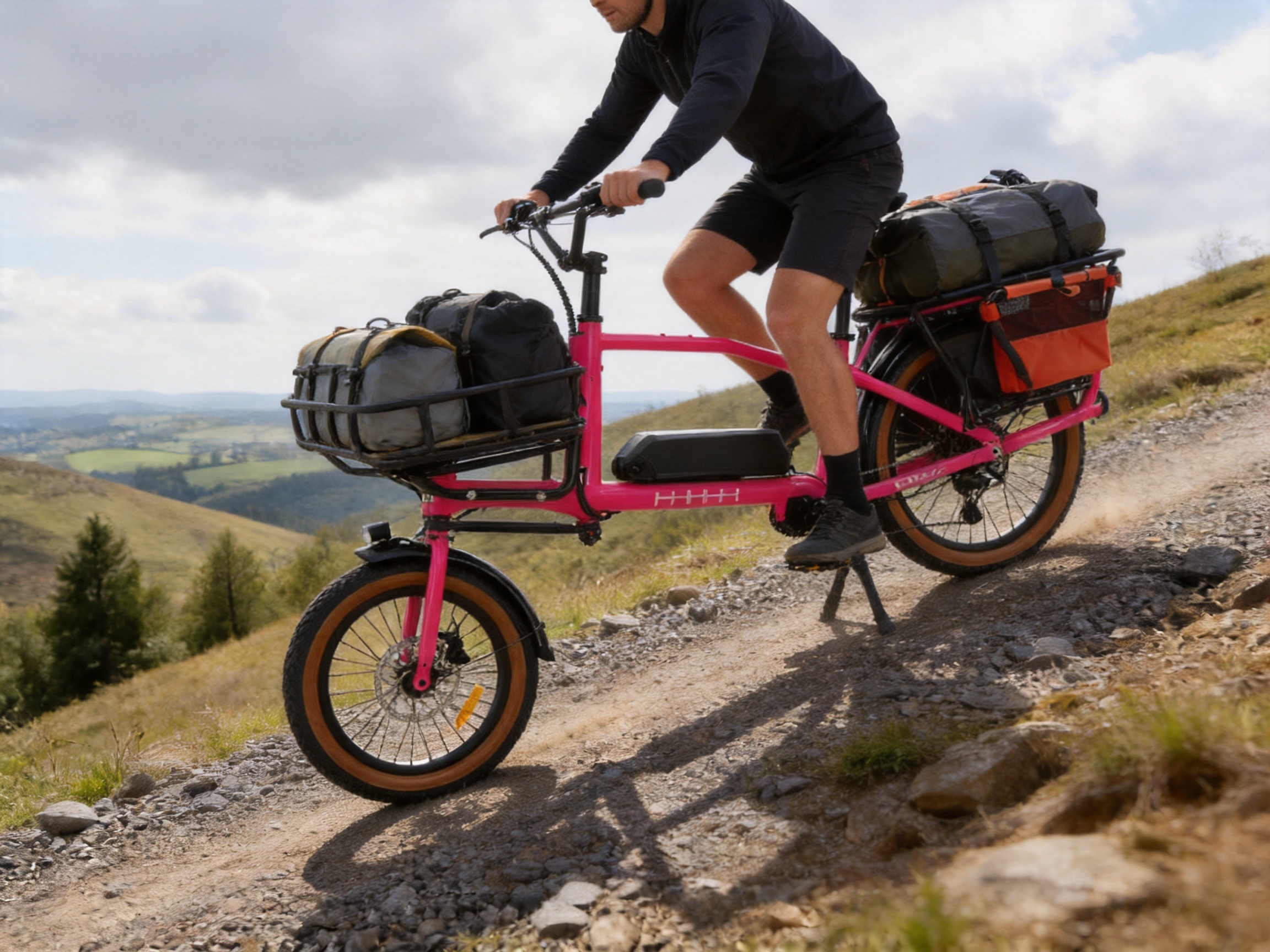
Adventure cargo bikes are becoming increasingly important for riders who want more than ordinary transportation. A conventional bicycle may be efficient for commuting, while a standard touring bicycle may be comfortable over long distances, but neither is always prepared for substantial outdoor equipment, difficult terrain, steep gradients, or changing weather. The Atmose Model V ESV1 addresses this gap by combining the carrying capacity of a cargo bike with the riding characteristics required for exploration, camping, and remote travel.
Designed around an oversized front camping rack, the Model V ESV1 is intended for riders who carry bulky equipment without wanting to use a trailer. Its front storage deck provides a dedicated platform for tents, coolers, fishing equipment, food supplies, tools, and other adventure essentials. At the same time, its mid-drive motor, Shimano 11-speed Cues transmission, hydraulic disc brakes, puncture-resistant tires, and aluminum alloy frame give it the foundations of a serious utility and touring machine.
The result is a cargo bike that occupies a distinctive position in the market. It is not merely a family transport bicycle with a front basket, and it is not simply a commuter bicycle fitted with extra luggage accessories. Instead, it is an integrated adventure platform designed around stability, load management, climbing ability, durability, and practical storage. These characteristics make it suitable for camping trips, countryside exploration, fishing excursions, equipment transport, and everyday riding where carrying capacity is a priority.

Atmose Model V ESV1 Adventure Cargo Bike with Oversized Front Camping Rack
The primary purpose of an adventure cargo bike is to make longer and more demanding journeys possible without relying entirely on a car. Riders may want to travel along forest roads, rural lanes, gravel routes, canal paths, or mixed-surface trails. They may also want to transport equipment to a campsite, carry groceries through hilly neighborhoods, or bring tools and supplies to a work location. These uses require more than a lightweight frame and a small rear rack.
The Model V ESV1 has been developed around the idea that the bicycle itself should carry the trip’s equipment. This is important because trailers can add length, increase turning complexity, and make narrow trails more difficult to navigate. A collection of small panniers can work well for clothing and personal items, but bulky objects such as a cooler or a folded tent may not fit easily. The large front deck provides a more flexible loading surface.
Placing luggage on a front platform also gives the rider a practical way to organize heavy items. Equipment can be strapped down securely and kept within sight. When the load is arranged correctly, the low and broad position of the rack can contribute to predictable handling. The design is particularly useful for items that are awkwardly shaped but not excessively tall, such as camping boxes, dry bags, cooking equipment, and outdoor recreation gear.
An adventure cargo bike must also remain manageable when unloaded. A bike that feels stable only under maximum load may be uncomfortable for daily use. The Model V is therefore positioned as a multi-purpose machine: capable of carrying substantial equipment during a trip, but still suitable for routine errands, local transportation, and recreational rides.
The most distinctive feature of the Model V ESV1 is its oversized front folding basket or camping rack. The listed dimensions are approximately 470 millimeters in length, 470 millimeters in width, and 375 millimeters in height. This creates a generous cargo area compared with the small front baskets commonly fitted to city bicycles.
A large front platform can be more useful than a narrow rear carrier when the rider needs to transport wide or bulky equipment. A compact cooler, rolled sleeping mat, dry storage container, tent bag, or fishing box can be placed directly on the platform. The rack also gives the rider freedom to use straps, elastic retainers, cargo nets, or waterproof bags according to the particular trip.
The folding feature adds practical value. When the basket is not required, a folding structure can help reduce the bike’s visual and physical footprint. This is useful when storing the bicycle in a garage, workshop, apartment entrance, or vehicle-access area. It may also make it easier to prepare the bike for different uses, from daily commuting to fully loaded outdoor travel.
Load organization is essential on any cargo bicycle. Heavy items should be secured so they cannot shift during braking, cornering, or riding over uneven surfaces. The front rack is most effective when the cargo is positioned low, centered, and close to the frame. Lighter items can be placed higher, while dense equipment such as cooking fuel, tools, or food containers should be secured carefully and distributed to avoid excessive steering influence.
Compared with a conventional bicycle basket, the oversized rack offers a major advantage in usable volume. Compared with a trailer, it offers a more compact overall setup and keeps the cargo connected directly to the bicycle. Compared with a rear-only cargo system, it provides more options for balancing equipment between the front and rear sections of the bike.
For a weekend camping trip, the front rack could carry a tent, sleeping mat, compact stove, cooking container, and food box. Clothing and personal items could be placed in rear bags or other storage accessories. For a fishing trip, the platform could accommodate a tackle box, cooler, folding chair, and protective case. For an outdoor work assignment, it could transport tools, spare parts, safety equipment, and a small supply container.
These examples show why the rack is more than a decorative feature. It changes what type of trip the bicycle can support. The bike becomes a platform for carrying equipment that would otherwise require a car, a trailer, or a complicated collection of bags.
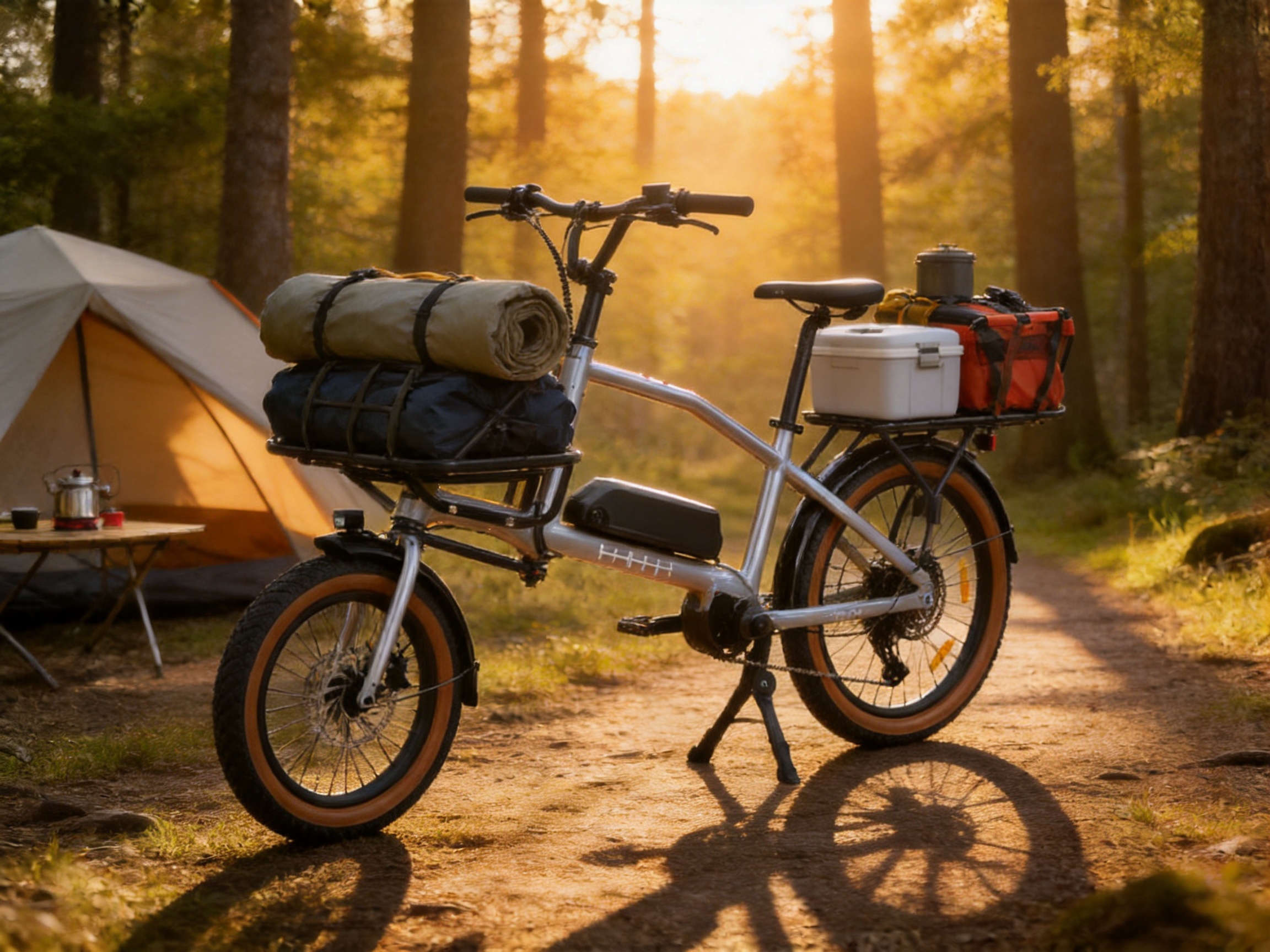
The Model V ESV1 uses a 6061 T4T6 aluminum alloy frame. Aluminum is widely used in performance, utility, and cargo bicycles because it offers a useful balance of strength, weight, corrosion resistance, and manufacturing flexibility. For an adventure cargo bike, frame performance is particularly important because the structure must support the rider, battery, motor, cargo rack, and transported equipment.
The stated maximum load is 170 kilograms. This figure should be understood as the total permitted load for the rider, cargo, and relevant bicycle components, subject to the manufacturer’s operating guidance. It indicates that the bike has been designed as a substantial load carrier rather than a light recreational bicycle.
A cargo frame must manage forces from several directions. Braking creates forward weight transfer, climbing produces drive forces through the frame and rear wheel, and uneven surfaces generate repeated impacts. The large front rack adds another consideration because cargo placed ahead of the steering area can influence handling. A well-integrated structure must therefore support the rack while preserving steering stability and frame alignment.
The T4T6 designation refers to a heat-treated aluminum alloy condition. In practical terms, the frame material is selected for structural performance rather than merely low weight. The design approach reflects the needs of a working cargo bike: dependable load support, resistance to ordinary outdoor exposure, and sufficient stiffness for controlled handling when carrying equipment.
Aluminum also supports repeatable production. Tubes, mounting points, brackets, and frame sections can be prepared with consistent dimensions, allowing the manufacturer to build a product with controlled geometry. Consistency is particularly important for cargo bicycles because small alignment errors can become more noticeable when the bike is heavily loaded.
Adventure riding exposes a bicycle to conditions that are more demanding than smooth urban pavement. Dust, moisture, mud, vibration, and repeated low-speed impacts can affect both comfort and long-term reliability. A corrosion-resistant aluminum alloy frame gives the bike a practical foundation for these environments, although riders should still clean and inspect the bicycle regularly.
The frame also needs to accommodate the electrical system and cargo structure without creating unnecessary complexity. The Model V combines the battery, mid-drive motor, transmission, front rack, and braking components into one coordinated platform. This integrated approach is one of its principal advantages over a basic city bicycle that has been modified after purchase.
The Model V ESV1 is equipped with a Starunion CM2503 mid-drive system rated at 250 watts. A mid-drive motor places its power near the bicycle’s crank area and uses the bicycle’s gearing to help deliver assistance across different riding conditions. This arrangement is especially relevant for cargo bikes because climbing performance depends not only on motor output, but also on gear selection, rider input, wheel traction, and total load.
When the bike is carrying camping equipment, the combined mass of the rider and bicycle increases. Hills that might be manageable on a lightly loaded bicycle can become demanding when a rack is filled with supplies. The mid-drive configuration allows the rider to use the Shimano 11-speed Cues drivetrain to select an appropriate gear for the gradient. Lower gears can help maintain a comfortable cadence on steep climbs, while higher gears can support efficient travel on flatter roads.
The motor is described as being tuned for steep gradients. This makes it particularly suitable for routes where the rider may encounter sustained inclines, uneven paths, or changing terrain. The purpose is not simply to produce acceleration on flat pavement. Instead, the system is intended to assist the rider in maintaining progress when the bike is fully equipped for an outdoor journey.
A mid-drive motor can also offer a more balanced weight distribution than a heavy hub motor mounted in the front or rear wheel. Keeping the motor near the center of the bicycle may contribute to a more natural riding feel and help preserve traction on mixed surfaces. This is valuable on gravel, damp trails, and uneven roads, where excessive weight at one end can affect stability.
Riders should remember that motor assistance is only one part of climbing performance. Tire pressure, cargo placement, rider cadence, terrain condition, and battery charge all matter. The strongest results come when the rider shifts early, maintains a steady cadence, and avoids carrying unsecured equipment that can move during the climb.
The bicycle uses a Samsung 36-volt, 15-amp-hour lithium battery, listed with a capacity of approximately 540 watt-hours. Battery capacity is a key consideration for an adventure cargo bike because outdoor routes may include long distances, hills, headwinds, soft surfaces, and heavy loads. These conditions generally require more energy than short urban trips.
A 540-watt-hour battery provides a useful reserve for practical cargo-bike travel, although real-world range depends on many factors. Rider weight, cargo weight, terrain, temperature, tire pressure, assistance level, wind, stop-and-start riding, and riding speed can all change energy consumption. A rider traveling on smooth flat roads with moderate assistance may achieve a very different range from a rider climbing hills with a fully loaded rack.
The battery’s Samsung cell origin is also relevant to buyers who pay attention to component sourcing. Established cell manufacturers are commonly selected for their experience in energy storage and consistent production. The battery should nevertheless be charged, stored, and maintained according to the manufacturer’s instructions. Extreme temperatures, physical damage, water exposure, and inappropriate chargers can affect battery safety and service life.
Adventure riders can extend practical range by planning the trip around terrain and assistance levels. Using a lower assistance mode on flat sections, shifting to an efficient gear, maintaining correct tire pressure, and avoiding unnecessary acceleration can reduce energy consumption. Higher assistance can then be reserved for steep hills, difficult surfaces, or periods when the rider needs to conserve physical energy.
Battery planning is especially important when carrying equipment. A rider should consider the return journey rather than using most of the battery on the outbound route. If a trip includes remote areas, the rider should also account for the availability of charging, weather changes, and the possibility of riding more slowly than expected.
The Shimano 11-speed Cues system gives the Model V a broad range of mechanical gearing. Multiple gears help the rider match pedaling effort to the terrain. Low gears are valuable when climbing with cargo, while higher gears allow comfortable progress on level roads and descents.
For a cargo bike, the drivetrain has to manage more than speed. It must support controlled starts, steady climbing, and repeated changes in gradient. A wide gear range makes it easier to maintain a consistent cadence instead of relying entirely on motor assistance. This can improve efficiency and give the rider more control over the bike’s movement.
The Cues platform is associated with utility and everyday riding applications, making it a logical choice for a bicycle expected to combine commuting, practical transport, and outdoor use. Riders who regularly travel through muddy or dusty environments should clean the drivetrain and lubricate the chain as recommended. Maintenance is particularly important when the bicycle is used under high load, because chain and gear components experience greater stress.
The combination of an 11-speed drivetrain and mid-drive motor is one of the Model V’s important advantages over simpler electric cargo bicycles. Some competing designs may use a single-speed or limited-speed setup that works well in flat cities but becomes less adaptable on hills. The Model V gives the rider more mechanical options, which is valuable when terrain and cargo weight change throughout the ride.
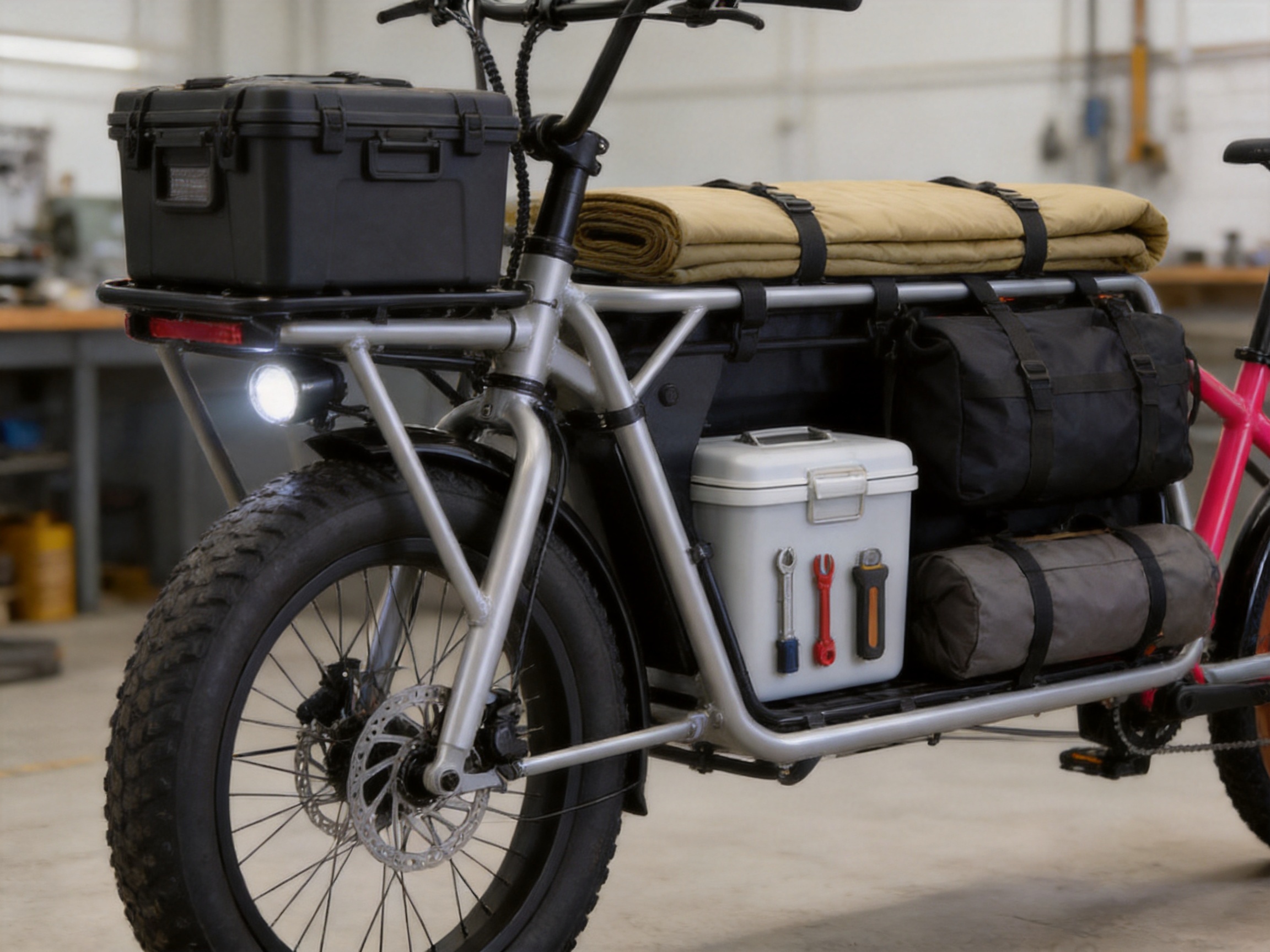
The Model V ESV1 uses Tektro hydraulic disc brakes. Hydraulic disc brakes are well suited to cargo bicycles because they can provide strong, progressive braking with relatively low hand effort. This is important when the bike is carrying a heavy front load or traveling downhill.
Braking demands increase as total weight rises. A loaded bicycle has more momentum and may require greater braking control than an unloaded commuter bike. Hydraulic systems allow the rider to modulate braking force smoothly, helping avoid abrupt wheel lockup while still providing substantial stopping power.
Disc brakes also perform consistently in conditions where rim brakes may be affected by water, mud, or dirty wheel rims. This does not mean that maintenance can be ignored. Brake pads, rotors, hydraulic lines, and mounting hardware should be inspected periodically. Riders should pay attention to unusual noise, reduced lever firmness, vibration, or increased stopping distance.
Wet-weather braking technique remains important. The rider should begin braking earlier, keep the bicycle upright where possible, and avoid sudden steering inputs while applying strong braking force. Cargo should be secured so it does not shift forward during deceleration. A well-maintained hydraulic system is most effective when combined with responsible riding technique.
The listed tire configuration consists of 18-inch by 2.4-inch front tires and a 24-inch by 2.4-inch rear tire, described as puncture-proof or puncture-resistant. The wide profile is appropriate for a cargo bike intended to operate on a mixture of paved roads, gravel, compacted trails, and uneven surfaces.
Wide tires can provide a larger contact patch and help the bicycle feel more stable under load. They may also absorb small surface irregularities more effectively than narrow road tires. This can improve comfort when the front rack is carrying fragile or bulky equipment. On gravel and rough paths, the additional tire volume may reduce the harshness transmitted through the frame and cargo.
Puncture resistance is particularly valuable for adventure riding because a puncture in a remote location can interrupt an entire trip. No tire is completely immune to damage, especially when traveling over sharp stones, broken glass, thorns, or metal debris. However, reinforced construction can reduce the likelihood of common punctures and provide greater peace of mind.
Correct tire pressure is essential. Excessive pressure can reduce comfort and traction on uneven ground, while insufficient pressure can increase rolling resistance and the risk of rim damage. The ideal setting depends on rider weight, cargo load, surface, and tire specifications. Riders should use the manufacturer’s recommended pressure range and make adjustments carefully.
The listed bike dimensions are approximately 1,910 millimeters in length, 750 millimeters in width, and 1,060 millimeters in height. These dimensions place the Model V within the substantial format expected of a cargo bicycle, while keeping its width manageable for many roads, cycleways, storage areas, and access points.
The 750-millimeter width is important for practical use. A bike that is excessively wide may be difficult to take through gates, narrow paths, elevators, or storage doors. The Model V’s width reflects the need for a large front rack without making the bicycle unnecessarily broad.
Its length contributes to stability and cargo capacity, but riders should allow more room when turning, parking, or navigating tight spaces than they would with a standard bicycle. The front rack extends the functional carrying area, so the rider should be aware of clearance around corners and avoid placing cargo where it interferes with steering or lighting.
Before using the bike on a long adventure, it is sensible to practice with a gradually increasing load. This allows the rider to learn how the front rack affects steering, braking distance, balance, and low-speed maneuvering. Familiarity is one of the most effective ways to gain the benefits of a cargo bike without compromising safety.
Many cargo bikes are designed primarily for family transport, grocery shopping, or commercial delivery. These categories often emphasize passenger seating, enclosed boxes, child restraints, or large rear platforms. The Model V differs by giving outdoor equipment and flexible cargo storage a central role.
Its oversized front rack is a significant advantage for users who do not need passenger seating but do need room for camping and recreation equipment. Instead of carrying cargo in a deep enclosed box, the rider can load wide, tall, or irregularly shaped items using straps and containers suited to the trip.
The mid-drive system and 11-speed transmission also distinguish the Model V from basic electric cargo bikes that are optimized mainly for flat urban areas. The combination is more adaptable to hills and changing terrain. Riders can use mechanical gearing and electrical assistance together rather than expecting the motor alone to handle every gradient.
The hydraulic disc brakes and wide puncture-resistant tires further reinforce its outdoor orientation. A commuter-focused cargo bike may be perfectly capable on paved roads, but an adventure-oriented model must be prepared for wet surfaces, gravel, rough paths, and longer periods away from immediate repair facilities.
A touring bicycle is generally efficient and comfortable for carrying moderate personal luggage, but it may not accommodate large camping items as easily as a dedicated cargo bike. Touring racks and panniers work well for compact, organized loads, yet bulky equipment can exceed their practical capacity.
The Model V provides a more substantial platform for oversized items. The front basket dimensions allow the rider to carry equipment that might be awkward on a narrow touring setup. The 170-kilogram maximum load rating also indicates a stronger load-carrying purpose than that of many ordinary touring bicycles, though the rating must always be interpreted according to official instructions.
The electric mid-drive system provides assistance when the combined rider, bicycle, and cargo weight becomes demanding. This can make longer climbs more accessible to riders who want to explore hilly areas without treating every trip as a high-intensity athletic challenge.
The trade-off is that the Model V is larger and heavier than a lightweight touring bicycle. It is not intended to imitate the handling of a racing or minimalist touring bike. Its advantage is the ability to carry more, climb with assistance, and provide a stable platform for practical adventure travel.
A trailer can carry considerable equipment, but it adds another set of wheels, a connection point, and extra length. Maneuvering in narrow spaces can be more difficult, and reversing or parking requires additional attention. A trailer may also bounce or sway when loaded incorrectly.
The Model V keeps the cargo directly attached to the bicycle through its integrated front rack. This creates a more compact arrangement and allows the rider to monitor the cargo more easily. There is no trailer coupling to inspect, and the rider does not have to account for a separate rear section when turning through tight spaces.
The integrated design also makes the bike simpler to prepare. The user can ride with the rack folded or lightly loaded for ordinary trips, then add a carefully arranged camping load when needed. This flexibility is helpful for people who want one bicycle to perform several roles.
The Model V reflects a manufacturing philosophy based on integrating the frame, electrical system, cargo structure, drivetrain, tires, and braking components around a defined use case. Rather than adding a large rack to an existing city bicycle, the product is conceived as an adventure cargo platform from the beginning.
This type of product development requires attention to compatibility. The rack must work with the frame and steering geometry. The motor must work with the drivetrain. The battery must be positioned to support practical weight distribution. The brakes must be appropriate for the combined bicycle and cargo load. The tires must match the intended surfaces and overall weight.
Atmose combines American product thinking with European design and research-and-development involvement based in Paris. The company describes its philosophy as “Fun & Practical,” emphasizing usability, comfort, reliability, and the overall riding experience. These priorities are visible in the Model V’s attempt to combine serious load capacity with a format suitable for real-world recreation and transportation.
The use of a 6061 T4T6 aluminum alloy frame demonstrates attention to material selection. The choice of a Samsung battery, Starunion mid-drive system, Shimano transmission, and Tektro hydraulic brakes also shows an approach based on combining specialized components rather than treating the bicycle as a single undifferentiated product.
Advanced manufacturing is not limited to the frame material or the motor. It also includes the coordination of dimensions, component interfaces, assembly procedures, finishing, inspection, and packaging. Cargo bicycles require careful alignment because their longer frames and higher loads can make small inconsistencies more noticeable. Consistent production methods help ensure that steering, braking, gear shifting, and rack mounting work together as intended.
A strong manufacturing process begins with selecting materials for the intended application. Aluminum alloy provides a practical structural base, while hydraulic braking components, wide tires, and a mid-drive unit address the functional demands of loaded outdoor travel. The battery and electrical system must be protected and mounted securely, while the rack must be aligned with the frame and steering system.
Integration also affects serviceability. Components should be accessible for inspection and maintenance, and replacement parts should be identifiable. A product intended for long-term use benefits from clear assembly standards and consistent component specifications.
Although detailed factory procedures are not provided, a cargo bike of this type logically requires quality checks covering frame alignment, rack mounting, brake operation, gear shifting, motor function, battery installation, tire condition, and fastener security. These checks are important because the bicycle is expected to carry high loads and operate in varied environments.
Quality control should continue after assembly. Packaging must protect the frame, rack, wheels, battery, and controls during transport. Documentation should help dealers and riders complete final setup correctly. Correct assembly is essential for steering, braking, drivetrain adjustment, and safe cargo use.
Atmose’s established manufacturing expertise, mature supply chain, and continuing product development support its ability to offer specialized cargo-bike solutions. The company’s broader product direction covers family mobility, urban commuting, commercial delivery, and outdoor exploration. This range can encourage cross-functional learning, since requirements developed for one category may improve durability, comfort, storage, or usability in another.
An electric cargo bike can contribute to sustainable mobility by replacing some short car trips. The Model V is especially relevant when a rider needs to transport equipment, groceries, tools, or recreational supplies. A standard bicycle may not have enough carrying capacity, while a car may be unnecessarily large for the journey.
Long-term sustainability depends on more than the absence of fuel consumption. It also depends on product longevity, maintenance, repairability, responsible battery handling, and continued usefulness. A durable cargo bike that serves multiple roles may reduce the need to purchase several specialized vehicles or accessories.
The Model V’s multi-purpose character supports this idea. It can be used for adventure travel, local errands, business support, and routine transportation. The more frequently a bicycle is used, the greater its potential to replace short motor-vehicle journeys.
Riders can extend the product’s service life by cleaning the frame and drivetrain, checking brake pads and tire condition, tightening accessories, protecting the battery from extreme conditions, and addressing unusual noises or handling changes promptly. Good maintenance is part of the sustainability equation because it helps prevent premature replacement.
The most obvious application is camping. The front rack can hold a tent, sleeping system, cooking equipment, food, and outdoor clothing. The electric drivetrain helps reduce the challenge of carrying the additional mass over hills, while wide tires provide confidence on mixed surfaces.
Fishing equipment is often bulky and awkward to transport on a standard bicycle. A cooler, tackle box, folding chair, rod case, and waterproof storage can be arranged on the large front rack and other available carrying areas. Riders should use secure restraints and avoid placing long objects where they interfere with steering or visibility.
People living in rural or semi-rural areas may need to travel across rolling terrain while carrying groceries, tools, or supplies. The Model V’s hill-oriented motor, broad gear range, and substantial load capacity make it suitable for these practical journeys.
Tradespeople, technicians, gardeners, event workers, and maintenance staff may benefit from a cargo bike that carries tools without requiring a vehicle for every short assignment. The front platform can be configured for boxes, cases, protective equipment, or compact work materials.
Although the Model V is not described primarily as a passenger carrier, it can support family-oriented outdoor activities by transporting picnic equipment, sports supplies, beach items, or day-trip necessities. Riders must follow the manufacturer’s load and safety guidance and should never use the rack for passengers unless it is specifically designed and approved for that purpose.
Before the first ride, the bicycle should be assembled and inspected by a qualified professional or according to the manufacturer’s instructions. Particular attention should be paid to handlebar alignment, brake function, wheel attachment, tire pressure, rack fasteners, drivetrain adjustment, battery installation, and motor controls.
New users should begin with an unloaded or lightly loaded ride in a controlled area. This helps them understand the steering response, braking distance, turning radius, assistance modes, and gear range. Once comfortable, the rider can add equipment gradually and repeat the practice process.
Cargo should be placed centrally and secured with suitable straps or nets. Heavy items should remain low, and the front rack should not be overloaded beyond its specified limit. The rider must maintain a clear view of the road and ensure that cargo does not obstruct lights, reflectors, brake cables, wheels, or steering movement.
On descents, riders should control speed early instead of waiting until the bike is moving quickly. On climbs, selecting a lower gear before the gradient becomes severe can reduce strain on both rider and drivetrain. On wet or muddy surfaces, braking should begin earlier and steering inputs should be smoother.
| Category | Specification | Practical Significance |
|---|---|---|
| Product | ESV1 | Adventure-oriented cargo bike configuration |
| Frame | 6061 T4T6 aluminum alloy | Structural strength, corrosion resistance, and practical manufacturing consistency |
| Battery | Samsung 36V 15Ah lithium battery | Energy storage for electric assistance on longer and hillier trips |
| Approximate capacity | 540Wh | Useful reserve for cargo travel, subject to terrain, load, and riding conditions |
| Maximum load | 170kg | Designed for substantial rider and cargo weight within official limits |
| Motor | Starunion CM2503 mid-drive, 250W | Centralized assistance and effective use of the bicycle’s gear range |
| Drivetrain | Shimano 11-speed Cues | Broad gearing for climbs, flat roads, and changing terrain |
| Front rack | 470mm × 470mm × 375mm | Large platform for camping, fishing, work, and recreation equipment |
| Tires | Front 18 × 2.4; rear 24 × 2.4 | Wide, stable contact with puncture-resistant construction |
| Brakes | Tektro hydraulic disc brakes | Controlled stopping power for loaded and wet-condition riding |
| Bike dimensions | Approximately 1910mm × 750mm × 1060mm | Substantial cargo format with manageable overall width |
The Model V ESV1 is well suited to riders who want to carry equipment without using a trailer. It is especially attractive to people who enjoy camping, fishing, countryside travel, mixed-surface riding, or outdoor work. It may also appeal to commuters who regularly carry large bags, tools, groceries, or equipment and want a bicycle capable of more than ordinary city transport.
It is less likely to be the ideal choice for someone seeking the lightest possible bicycle, the smallest storage footprint, or a racing-style riding experience. Its strengths are capacity, versatility, stability, and assisted performance. Buyers should evaluate storage space, local regulations, charging access, maintenance support, and the type of terrain they expect to ride.
It combines a large front camping rack, high load capacity, a hill-oriented mid-drive motor, a wide-range drivetrain, puncture-resistant wide tires, and hydraulic disc brakes. These features are intended for outdoor equipment transport and varied terrain rather than only short urban trips.
The listed maximum load is 170 kilograms. Riders should treat this as the total permitted system load unless the manufacturer specifies otherwise, including the rider, cargo, and relevant bicycle equipment.
The rack measures approximately 470 millimeters by 470 millimeters by 375 millimeters. It can accommodate many tents, coolers, dry bags, fishing boxes, cooking containers, tools, and other bulky items when they are properly secured.
A mid-drive motor works with the bicycle’s mechanical gears. This allows the rider to select lower gears for steep climbs and suitable higher gears for flatter roads, making the system adaptable to different loads and terrain.
Its hydraulic disc brakes and puncture-resistant tires are appropriate for wet and muddy riding conditions. However, riders should reduce speed, brake earlier, keep cargo secure, and maintain all components properly.
The provided specifications describe the rack as a cargo and camping platform, not a passenger seat. It should not be used to carry passengers unless the manufacturer specifically approves that use with suitable safety equipment.
Use an appropriate gear, maintain correct tire pressure, avoid unnecessary acceleration, select lower assistance on flat sections, reduce excess cargo, and plan the route around hills and charging opportunities.
Yes. Its cargo capacity can be useful for groceries, work equipment, and daily supplies. Riders should remember that it is larger than a conventional commuter bicycle and should plan for its longer wheelbase and larger front loading area.
Regular maintenance includes checking tire pressure, brake pads, rotors, hydraulic function, chain lubrication, gear shifting, rack fasteners, wheel security, battery condition, and frame cleanliness. Adventure use may require more frequent cleaning and inspection.
The integrated front rack keeps cargo directly on the bicycle and avoids the additional length and coupling hardware of a trailer. A trailer may offer more total volume in some situations, but the Model V provides a more compact and maneuverable single-unit solution.
The Atmose Model V ESV1 is a specialized electric cargo bike built around the needs of riders who want to go farther while carrying more. Its oversized front camping rack is the defining feature, but its overall value comes from the way that rack works with the rest of the bicycle.
The 6061 T4T6 aluminum alloy frame supports a high maximum load. The 250-watt mid-drive motor helps manage hills, while the Shimano 11-speed Cues drivetrain provides the gearing needed for changing terrain. The Samsung 36-volt, 15-amp-hour battery supplies practical energy storage for extended rides, and Tektro hydraulic disc brakes provide controlled stopping power. Wide puncture-resistant tires add comfort, traction, and protection on varied surfaces.
Compared with a conventional commuter cargo bike, the Model V offers a stronger outdoor identity and more flexible bulky-item storage. Compared with a touring bicycle, it provides more carrying capacity and electric assistance. Compared with a trailer-based system, it offers an integrated and more compact arrangement. These advantages make it a compelling option for camping, fishing, rural transport, outdoor work, and recreational exploration.
Its manufacturing strengths are expressed through material selection, component integration, practical dimensions, and a product-development philosophy focused on usefulness and reliability. Atmose’s combination of American product origins, European design and research involvement, manufacturing experience, and cargo-bike specialization provides a foundation for a product intended to serve both everyday mobility and more ambitious outdoor journeys.
For riders who view the bicycle as a tool for exploration rather than merely a means of getting from one street to another, the Model V ESV1 offers a convincing proposition: carry the equipment you need, climb with less effort, ride confidently across changing surfaces, and make the bicycle central to the adventure.
Atmose Bikes. ESV1 Adventure Cargo Bike Product Specifications and Product Description.
Atmose Bikes. Company Information and Product Development Overview.
Shimano. Cues Drivetrain Product and Maintenance Documentation.
Tektro. Hydraulic Disc Brake Technical and Service Information.
General bicycle engineering references concerning aluminum alloy frame construction, cargo-bike load distribution, hydraulic braking, electric bicycle battery management, and tire-pressure optimization.
Nov 27, 2026
Nov 25, 2026
Nov 21, 2026


info@atmosecargobike.com

200 rue de la Croix Nivert 75015 Paris

Custom Electric Bakfiets
 English
 Français
 Deutsch