Nov 23, 2026
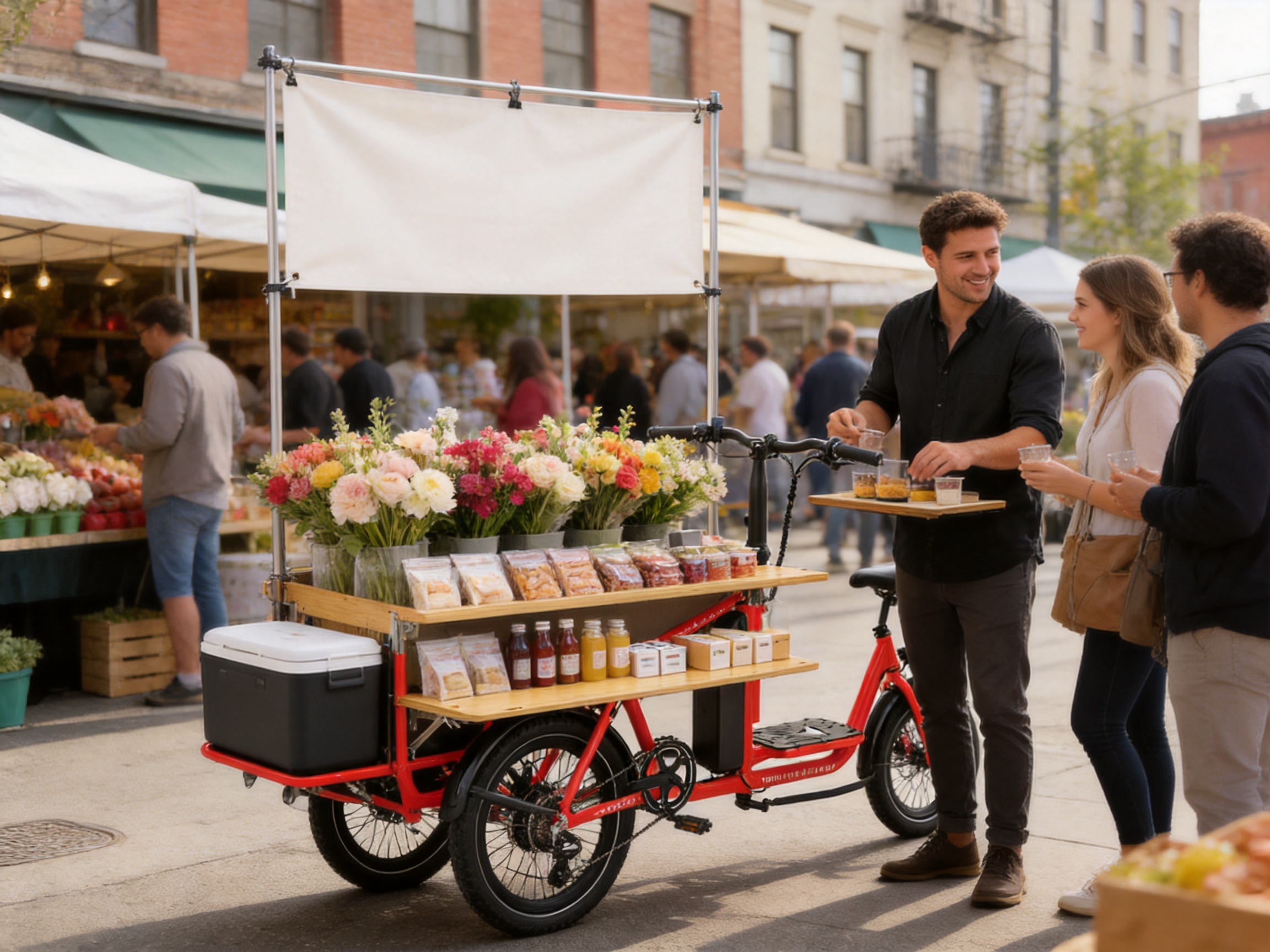
Urban mobility is changing rapidly. Cargo bicycles are no longer used only for carrying groceries, children, or parcels. They are increasingly becoming flexible business tools for independent vendors, local retailers, caterers, florists, market traders, delivery operators, and community organizations. A cargo e-bike can provide transportation, storage, and visibility at the same time, but many commercial users need more than a standard loading area. They need a platform that can support a temporary display, remain stable during daily riding, and return to a compact commuting configuration when business activities are finished.
The Bamboo Folding Cargo Platform Kit for the Urban Companion Cargo Bike, Model Q, is designed around that need. Measuring 85 × 61 centimeters, or 33.5 × 24.0 inches, the platform creates a broad, low-mounted surface for merchandise, food containers, sample boxes, coolers, and other equipment. Its natural bamboo deck combines with a powder-coated steel support frame, stainless steel hinges, locking folding brackets, and integrated anchor points. The result is a practical bolt-on accessory that helps transform a compact front-loading e-cargo bike into a mobile stall without requiring permanent vehicle modification.
This product is not simply a larger cargo board. It is a conversion system for people who want to move between transportation and commercial use. During a weekday commute, the deck can be folded flat. During a market, delivery route, neighborhood event, or pop-up sales activity, it can be unfolded into a stable display platform. That combination of adaptability, low-mounted loading, durable construction, and quick conversion gives the kit a distinct advantage over fixed racks, improvised wooden platforms, bulky trailers, and permanently modified cargo-bike bodies.
A conventional cargo-bike deck is usually optimized for transport. It may hold a box, bag, child seat, or container, but it does not always provide a suitable surface for public presentation. Street vending and pop-up retail require additional considerations. Products must be visible, organized, and easy to reach. Food and beverage containers need a stable base. Marketing materials may need to be secured against movement. Operators also need to preserve maneuverability between sales locations.
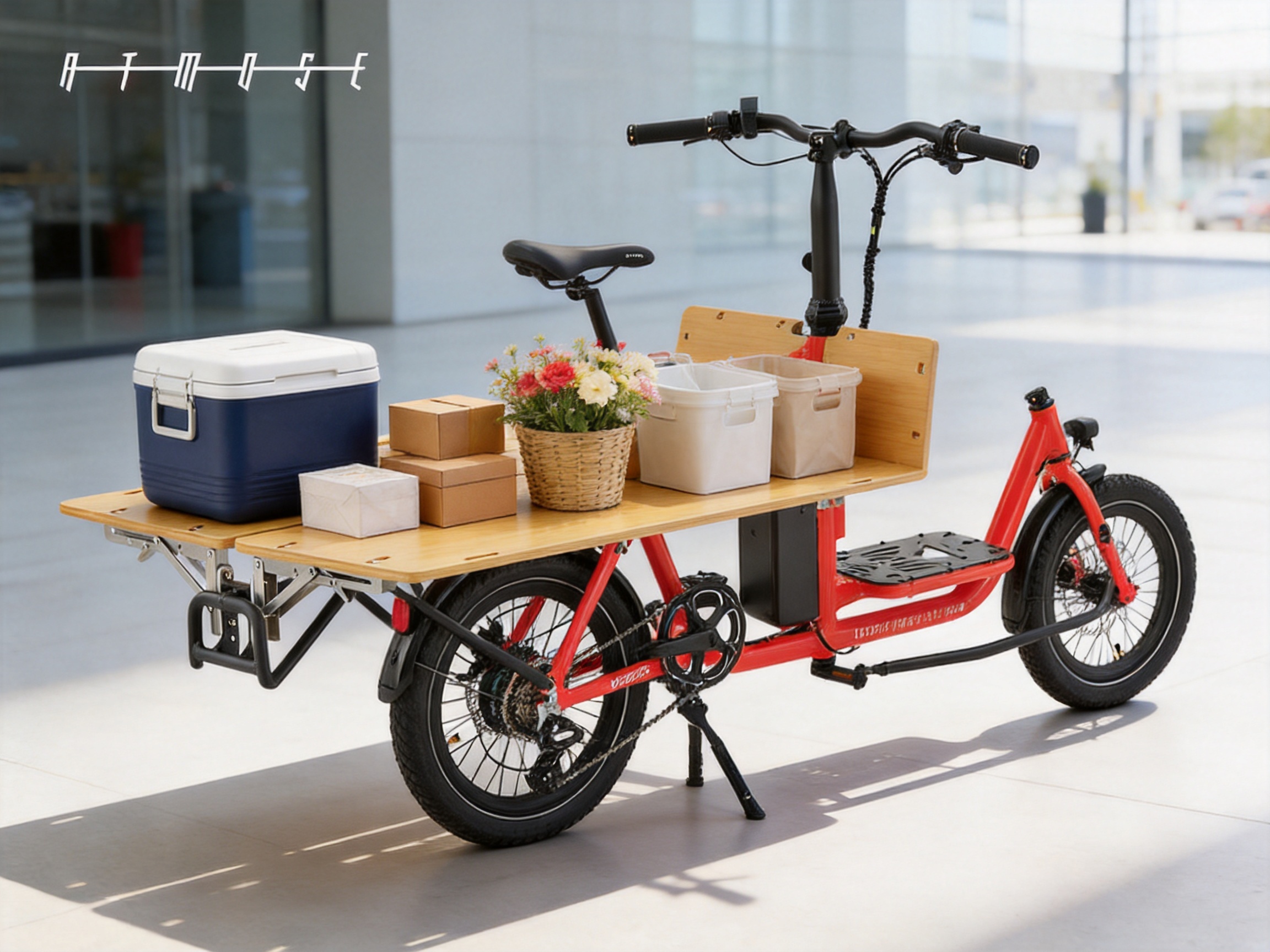
The Bamboo Folding Cargo Platform Kit addresses these requirements through a flat, spacious deck that sits close to the bicycle’s lower structure. The 33.5 × 24.0-inch surface provides enough area for merchandise trays, sample boxes, insulated containers, flower arrangements, produce baskets, or a compact coffee and snack setup. The deck can be arranged according to the operator’s needs rather than being limited to one fixed commercial application.
For a street-food operator, the surface can support ingredient containers, packaging, serving supplies, and an insulated cooler. For a flower seller, it can provide a broad base for buckets, wrapped bouquets, and display trays. For a coffee vendor, it can carry beverage carriers, cups, supplies, and signage. A local maker may use it for handmade goods, product samples, or promotional materials. A delivery business may use the platform for organized transport of boxes and coolers during short urban routes.
The platform does not attempt to turn the bicycle into a full-size commercial vehicle. Its value is more focused: it adds a useful working surface while keeping the bicycle compact enough for urban riding. This balance is important in crowded streets, bicycle lanes, residential areas, market entrances, and other locations where a large trailer or van would be inconvenient.
The kit is categorized for the Urban Companion Cargo Bike, Model Q. This positioning reflects the needs of riders who use one vehicle for several parts of daily life. The same bicycle may serve as a commuting vehicle in the morning, a transport platform during the day, and a vending or promotional station in the afternoon. A permanent commercial body would make those transitions difficult, while a temporary platform can support them naturally.
Model Q users may include independent business owners, mobile food operators, delivery professionals, neighborhood retailers, event organizers, and families who occasionally transport larger loads. The folding deck gives these users an accessory that can be adapted to the moment. When the platform is needed, it creates a broad working area. When it is not needed, the flat-folding design helps reduce the visual and practical impact of the accessory.
This adaptability is one of the product’s strongest competitive advantages. Many cargo accessories are designed for one narrow task. A delivery box is effective for enclosed parcel transport but may not be suitable for visible retail. A fixed wooden counter may create a useful display but make normal riding less convenient. A trailer can increase capacity but also adds length, turning considerations, storage demands, and connection hardware. The folding deck occupies a middle position: it supports commercial tasks without forcing the rider into a dedicated business-only configuration.
| Feature | Specification | Practical Benefit |
|---|---|---|
| Product type | Bamboo Folding Cargo Platform Kit | Converts the cargo area into a temporary working or display platform |
| Compatible vehicle | Urban Companion Cargo Bike, Model Q | Designed for the designated front-loading e-cargo-bike platform |
| Deck dimensions | 85 × 61 cm / 33.5 × 24.0 in | Provides room for merchandise, containers, samples, and coolers |
| Main deck material | Natural bamboo | Offers a warm, presentable surface for retail and hospitality applications |
| Support structure | Powder-coated steel support frame | Creates a rigid base for regular transport and display use |
| Folding hardware | Stainless steel hinges and locking folding brackets | Supports repeatable folding and secure deployment |
| Installation method | Bolt-on | Allows installation without permanent bicycle modification |
| Folding format | Flat folding design | Helps the deck store compactly when not in use |
| Integrated accessories | Strap and banner anchor points | Helps secure cargo and attach promotional materials |
| Recommended applications | Mobile vending, pop-up retail, cargo transport | Supports multiple commercial and everyday operating modes |
The choice of natural bamboo gives the deck a different character from purely industrial metal platforms. A vending surface is part of the customer experience. Customers see the platform while they browse products, receive food, or interact with the operator. Bamboo provides a natural, approachable appearance that can complement fresh produce, flowers, baked goods, beverages, handmade products, and environmentally focused business concepts.
Its visual quality is especially useful for businesses that want to communicate warmth and craftsmanship. A plain metal surface may be practical but can appear utilitarian. A bamboo deck can make a temporary stall look more intentional and welcoming. This does not mean that appearance replaces structural performance. The deck is supported by a dedicated steel frame and locking hardware, so the visual material is integrated into a working platform rather than used as decoration alone.
The flat surface also supports better product organization. Trays, boxes, containers, and baskets can be placed in rows or zones. A vendor can separate stock from display items, reserve an area for payment equipment, or position frequently requested products near the accessible edge. When the platform is used for transport rather than sales, straps can help keep containers in place.
Because the deck is a working surface, users should select containers and loading arrangements appropriate to the journey. Heavy items should be distributed rather than concentrated in one location. Fragile products should be protected with suitable packaging. Food and beverage operators should use containers that are designed for safe transport and should follow all applicable local hygiene requirements. The platform provides a foundation, while the operator remains responsible for the suitability and secure placement of the carried goods.
The bamboo deck is paired with a powder-coated steel support frame. This construction approach combines a presentable upper surface with a robust structural base. Steel is well suited to a platform that must support repeated loading, unloading, folding, and riding over ordinary urban surfaces. The frame gives the deck a defined support structure instead of relying on an improvised board or unsupported panel.
Powder coating is an important part of the frame finish. In a powder-coating process, a dry coating material is applied to a prepared metal component and then cured to form a continuous finish. The process is commonly used for bicycle and mobility equipment because it can provide a consistent surface and help protect the underlying steel during everyday use. The stated construction of this kit uses a powder-coated steel support frame, reflecting attention to both structure and finish.
A properly finished frame also contributes to a more cohesive product appearance. Commercial users often need equipment that looks professional in front of customers. A carefully coated support structure, combined with a natural bamboo deck and stainless hardware, presents a more deliberate solution than a self-built platform assembled from mismatched parts.
The frame should still be treated as part of a complete loading system rather than as permission to exceed safe operating limits. The supplied product information identifies intended uses such as product display, food containers, sample boxes, and coolers, but it does not state a specific maximum load rating. Users should follow the applicable vehicle and accessory instructions, distribute weight evenly, and avoid carrying loads that compromise steering, braking, visibility, or stability.
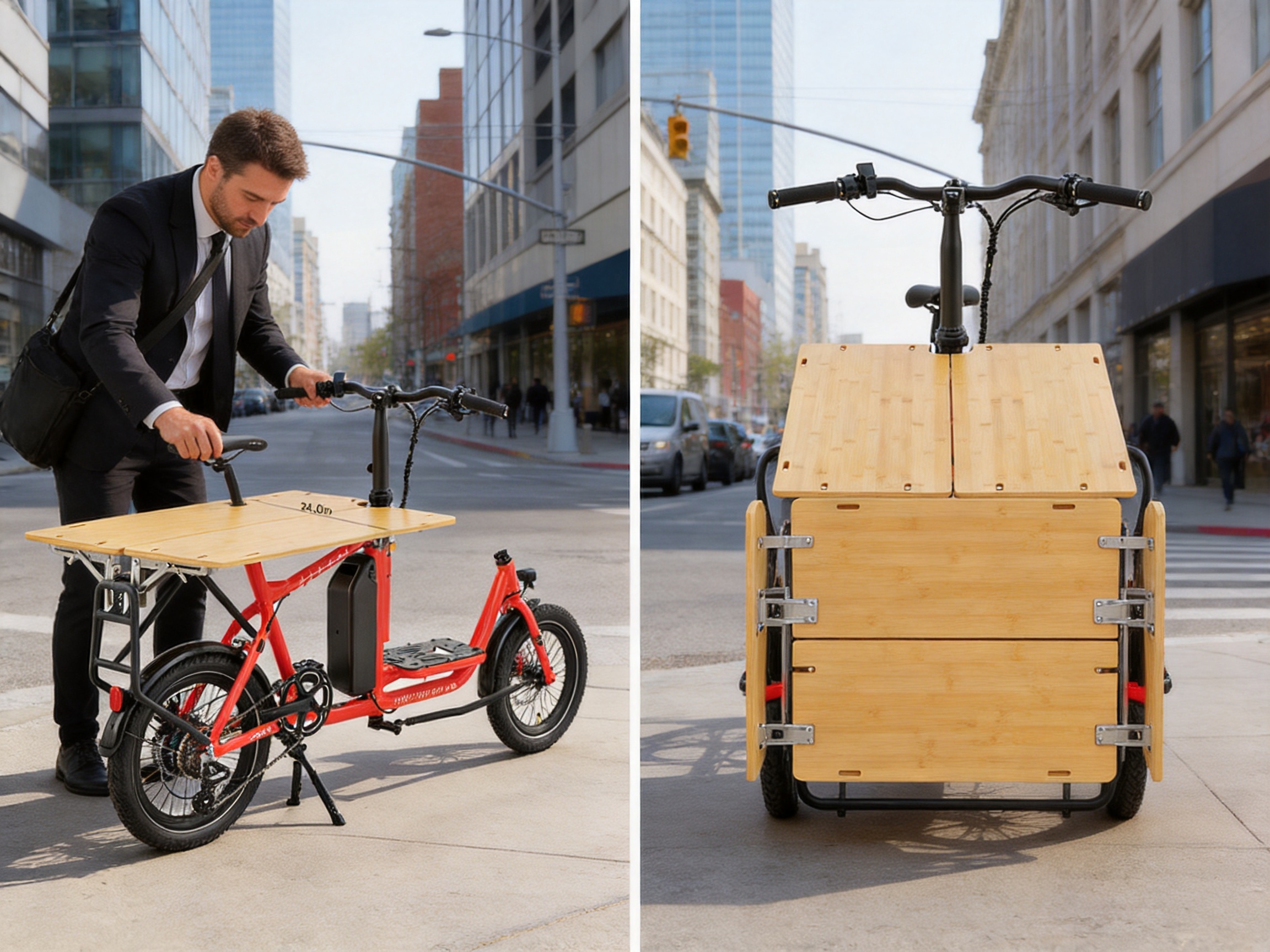
Folding systems are only useful when they are easy to operate and secure when deployed. The kit uses stainless steel hinges together with locking folding brackets. The hinges provide the pivot points for the deck, while the brackets help hold the platform in its working position. This hardware arrangement is more purposeful than a simple loose panel that must be tied or propped into place.
Stainless steel is appropriate for exposed bicycle hardware because the accessory may encounter rain, road moisture, condensation, food-service spills, and frequent handling. Stainless components can help maintain a clean appearance and support long-term usability when properly maintained. The presence of locking brackets is equally significant: the platform needs a defined open position so the rider can prepare the stall with confidence and avoid relying on temporary supports.
The folding mechanism also makes the kit more compatible with mixed-use transportation. A fixed platform remains present regardless of the rider’s activity. A folding platform can be prepared for vending at the destination and folded for storage or commuting when the commercial task is complete. That reduces the need to remove the entire accessory between uses.
Operators should inspect the hinges and brackets regularly. Before every commercial route, the deck should be unfolded fully, the locking mechanism should be checked, and the platform should be examined for loose fasteners, unusual movement, or damage. Folding hardware should be kept free of dirt and product residue. If a hinge or bracket does not engage correctly, the bike should not be used with the deck loaded until the issue has been resolved.
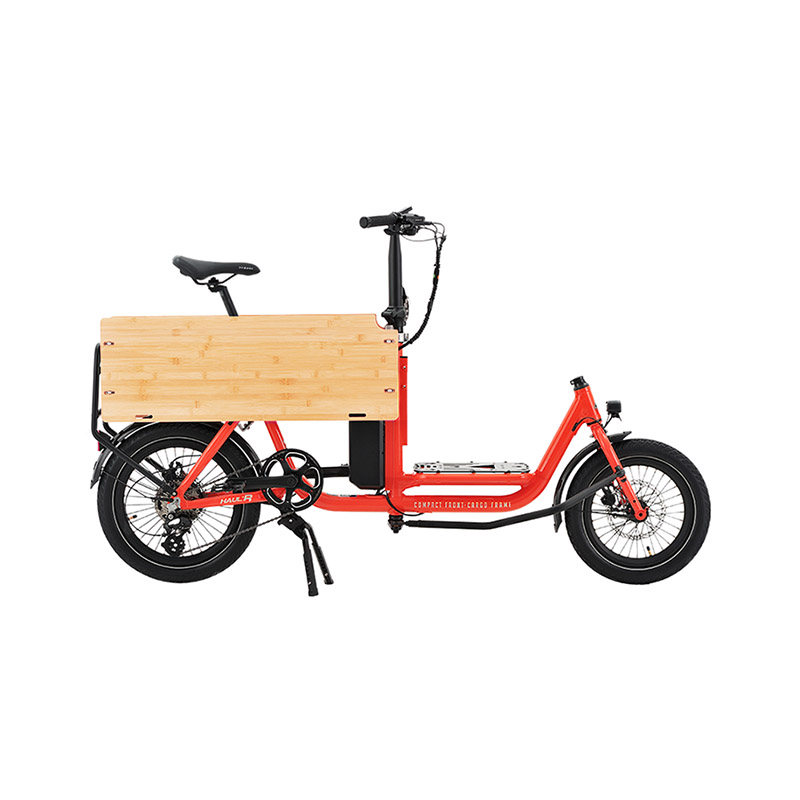
Bamboo Folding Deck Kit 33.5x24in for Model Q E-Cargo Bike Street Vending
The Bamboo Folding Cargo Platform Kit is designed for bolt-on installation. This is valuable for owners who want to expand the working capability of a Model Q without cutting, welding, drilling new structural holes, or permanently rebuilding the original cargo area. A reversible installation protects the bicycle’s original flexibility and makes the accessory easier to evaluate, replace, or remove as business needs evolve.
For commercial users, avoiding permanent modification can also simplify fleet management. A small business may use the same Model Q bicycle for several roles. The platform can be installed when mobile retail or vending is planned and removed when another configuration is more suitable. A reversible bolt-on system may also make it easier to maintain a consistent base vehicle across different seasonal applications.
Installation should be carried out using the correct fasteners and appropriate tools. Mounting surfaces should be clean, and bolts should be tightened evenly according to the relevant instructions. The installer should confirm that the deck moves freely, that no hardware interferes with steering or braking components, and that the folded platform does not obstruct the rider’s normal position. After an initial short ride, all accessible fasteners should be checked again because components can settle during early use.
The phrase “no permanent bike modification” does not mean that installation can be performed without attention to compatibility. The product is intended for the Model Q platform. Users should verify the exact bicycle version, mounting points, and instructions before ordering or fitting the kit. If the bicycle has been previously modified, compatibility should be reviewed carefully.
One of the most important design decisions is the low-mounted position of the platform. Cargo placed high above the bicycle can raise the center of gravity and make the vehicle feel less stable, especially during stops, starts, turns, and low-speed maneuvering. A lower platform helps keep the carried load closer to the bicycle’s base, supporting a more controlled ride when the cargo is properly distributed.
This is particularly helpful for mobile vending. A vendor may need to carry multiple containers, boxes, or display trays at once. Placing those items on a low deck can make the loaded bicycle easier to manage than placing the same weight on a tall rack or stacking it high in open bags. The low position can also make loading and unloading more convenient because the operator does not need to lift every item to shoulder height.
Stability depends on more than platform height. The load should remain centered, balanced from side to side, and secured against sliding. Tall or irregular objects may still affect handling even when placed on a low deck. Riders should allow additional braking distance when carrying cargo, take turns smoothly, and test the loaded configuration in a safe area before entering crowded streets.
The product’s compact dimensions also support urban maneuverability. At 85 × 61 centimeters, the deck offers useful working space without being described as a full trailer or extended cargo body. This can make it better suited to locations where the rider must navigate narrow lanes, building entrances, market aisles, or dense pedestrian areas. However, the actual operating width and clearance depend on how the kit is installed and what is placed on it. Displays, banners, and containers should not extend into unsafe areas or obstruct the rider’s view.
The most distinctive benefit of the kit is the ability to switch between daily transportation and commercial activity. Many small businesses do not need a dedicated vending vehicle every day. An owner may commute to work, deliver supplies, attend a market, and return home using the same bicycle. A product that supports this rhythm can reduce equipment duplication and make a cargo e-bike more valuable over its entire operating week.
In commuting mode, the deck can be folded flat when the expanded display surface is not required. The rider can then use the Model Q in a more ordinary cargo-transport configuration. In vending mode, the deck can be deployed, secured with the locking folding brackets, and prepared with merchandise or service equipment.
This transition also helps seasonal businesses. A flower seller may use the deck intensively during holidays and community events but need a normal transport setup during quieter periods. A farm or food producer may use it for weekend markets and weekday deliveries. A maker may use it for exhibitions, fairs, and promotional events while retaining the bike for ordinary errands. The accessory supports these changes without requiring a separate vehicle for each activity.
Operators can create a repeatable setup routine. Before leaving, they can check the platform, load heavy items first, secure containers with straps, and confirm that all display materials remain within a safe outline. At the destination, the deck can be unfolded and arranged. At the end of the day, merchandise can be removed, the platform can be cleaned, and the bicycle can be returned to transport mode. A consistent routine reduces forgotten equipment and helps protect the bicycle and products.
Commercial cargo rarely stays secure through surface friction alone. Urban riding includes acceleration, braking, turns, uneven pavement, and occasional stops. The platform includes integrated strap anchor points to help users restrain boxes, coolers, trays, and other cargo. These anchor points are more useful than simply wrapping a strap around an arbitrary part of the frame because they provide designated locations for securing the load.
Straps should be selected according to the size and weight of the cargo. They should hold items firmly without crushing containers or damaging delicate merchandise. Loose strap ends should be secured so they cannot reach wheels, brakes, chains, or moving hinges. A load should be checked again after the first part of a route, especially if the road surface is uneven.
The same anchor points can support banners and small promotional accessories. A banner can help identify a business, announce a product, display a menu, or create a recognizable visual presence at a market. Because branding elements can catch wind, they must be mounted carefully and kept within safe dimensions. A banner should not obscure lights, reflectors, the rider’s view, or other road users’ visibility.
The anchor-point design adds commercial flexibility without requiring a permanent advertising frame. A vendor can use signage during an event and remove it for normal commuting. This is another example of the product’s temporary-conversion philosophy: the bicycle can be adapted for a particular task while retaining its everyday identity.
A fixed platform may provide a stable surface, but it can limit the bicycle’s usefulness outside the task for which it was installed. If the platform remains permanently extended, it may occupy valuable space, affect storage, and make ordinary cargo arrangements more difficult. A fixed commercial body may also create a more permanent visual identity than some users want.
The folding deck offers a more flexible alternative. It provides a working surface when open and a flatter, less intrusive arrangement when folded. This matters for independent operators who cannot justify a dedicated vending bicycle or who need to change their setup from day to day.
The bolt-on installation is another advantage. Permanent modifications can affect resale, warranty considerations, service access, and future configuration choices. A removable accessory allows owners to preserve more of the original vehicle structure. It also supports experimentation: a business can test mobile vending, pop-up retail, or event sales without commissioning a custom bicycle body at the outset.
The product is not intended to replace every fixed commercial solution. A full enclosed body may be preferable for weather-sensitive goods, high-volume deliveries, or specialized food-service equipment. However, for light-to-medium flexible retail and transport applications, the folding deck offers a simpler and more adaptable approach.
Trailers can increase cargo volume, but they also add length and introduce a separate connection between the bike and the load. In tight urban environments, that extra length can complicate turning, parking, storage, and movement through busy areas. A trailer may be excellent for certain high-volume tasks, yet unnecessary for a vendor who needs a compact display surface rather than maximum capacity.
The folding platform keeps the working area integrated with the cargo bike. The rider does not need to manage a separate trailer wheel or coupling point. The bicycle remains a single, coherent vehicle, and the load stays within the platform designed for the Model Q. This can support a more direct riding experience for small-scale vending and neighborhood delivery.
Improvised additions present different risks. A homemade board, loose crate, or temporary table may not provide consistent support, reliable attachment, or clean folding operation. Improvised structures can also interfere with steering and braking or create sharp edges and unstable load points. The Bamboo Folding Cargo Platform Kit offers a purpose-designed combination of deck, steel frame, hinges, brackets, and anchor points in one coordinated accessory.
Its advantage is therefore not simply that it is made from bamboo or that it folds. The stronger benefit comes from the integration of these elements. The surface, support structure, folding hardware, installation method, and accessory points are designed to work as one product system.
The company behind the product combines American product thinking with European design and research-and-development work based in Paris. This international structure supports a practical approach to mobility products. Cargo bikes must work in real streets, around real families and businesses, and under changing urban conditions. Design decisions therefore need to balance appearance, usability, reliability, comfort, and everyday serviceability.
The company describes its guiding philosophy as “Fun & Practical.” In the context of this platform kit, that philosophy is visible in the product’s purpose. The deck is practical because it adds a clear working surface, uses a bolt-on installation, folds flat, and includes cargo and banner anchor points. It is also intended to make urban business activity more enjoyable by helping a rider turn a normal trip into a mobile retail or service opportunity.
The product reflects several layers of manufacturing discipline. The natural bamboo deck must be shaped and finished as a consistent panel. The steel support frame must be formed and prepared to interface with the deck and bicycle. The powder-coated surface must be applied as a controlled finish. Stainless hinges and locking brackets must align with the folding geometry. Finally, the complete assembly must be compatible with the intended Model Q mounting points.
These individual elements require more than selecting attractive materials. The platform must fold without unnecessary resistance, remain stable when opened, and fit the bicycle without permanent modification. A poorly matched hinge position could cause binding. An incorrectly aligned bracket could prevent secure locking. An inconsistent frame could affect deck flatness or load distribution. The value of a manufactured kit lies in coordinating these details into a repeatable assembly.
The company’s established manufacturing expertise, mature supply chain, and continuous product-development approach provide a foundation for this kind of coordinated accessory. The available information does not identify specific factories, testing standards, or certification numbers, so those details should not be assumed. Nevertheless, the stated combination of product design, international research and development, manufacturing experience, and supply-chain support indicates a structured approach rather than an improvised aftermarket solution.
Material integration is central to the product’s design. Bamboo provides the visible deck surface, steel provides the supporting frame, and stainless steel provides the hinge and folding hardware. Each material is used for a different functional role. This is more effective than expecting one material to perform every task.
The bamboo surface contributes presentation quality and a natural finish. The powder-coated steel structure supplies a rigid foundation. Stainless hardware supports repeated movement and exposure to everyday conditions. When these materials are assembled correctly, the platform can combine commercial appearance with practical strength.
The powder-coated steel frame represents a controlled finishing step rather than an untreated structural component. A consistent coating helps the frame look complete and can support protection during ordinary use. Stainless hardware contributes a clean, durable appearance at the points that receive repeated handling.
Finishing quality matters to commercial operators because equipment is part of the customer-facing environment. A professional-looking platform can help a small business present its products more confidently. It can also make cleaning and inspection easier because the major components have defined surfaces and interfaces.
The bolt-on format requires attention to dimensional compatibility and assembly sequence. The deck, frame, hinges, brackets, and mounting hardware must align with the Model Q cargo-bike structure. A coordinated design reduces the need for users to invent their own attachment methods.
For operators purchasing several units, a standardized kit can also simplify staff training. Employees can learn one installation, inspection, folding, and loading routine. Consistency is particularly valuable when multiple bicycles are used at different locations or when platforms are shared among seasonal workers.
The platform can support a compact street-food or beverage operation by carrying ingredient boxes, cups, containers, napkins, serving equipment, and insulated coolers. Its broad surface allows a vendor to organize items visibly instead of stacking everything inside a deep bag. Integrated strap points can help keep containers secure during travel.
Food operators should remember that the deck is a transport and display platform, not a complete food-preparation system. Safe food handling, temperature management, sanitation, local permits, and equipment requirements remain the responsibility of the business. The platform’s role is to provide a mobile base for appropriate containers and service equipment.
Flowers and produce benefit from open, accessible presentation. A low deck can carry baskets, crates, buckets, and wrapped arrangements while allowing customers to see the products from the side. A banner anchor can help identify a farm, florist, or seasonal seller.
Because fresh goods can be sensitive to movement and weather, the operator should use suitable trays and protective containers. Weight should be distributed evenly, and tall arrangements should be secured so they do not affect visibility or balance.
Artists, makers, and local retailers can use the deck as a compact market table. Small goods can be displayed in trays or boxes, while the bicycle provides transportation between event locations. The natural bamboo surface may complement handmade products and create a more inviting presentation than a bare metal rack.
For this application, removable signage is especially useful. A vendor can install a banner for a market, remove it after the event, and fold the platform for the journey home. The same deck may support several product categories over a single week.
Businesses conducting neighborhood promotions can use the platform to carry sample boxes, brochures, demonstration products, and small displays. A mobile bicycle can reach locations that are difficult for a van or fixed booth to access. The platform helps create a recognizable point of contact while preserving the mobility of the operator.
Even when no selling takes place, the platform can be used for ordinary cargo transport. Boxes, coolers, sample cases, and delivery containers can be arranged on the surface and secured with straps. Its folding capability means that the accessory remains useful for transport even when a full display is not required.
A well-designed platform still depends on responsible operation. Before riding, the user should check that the deck is fully open or fully folded according to the intended configuration. Locking brackets should be engaged when the platform is deployed. Bolts, hinges, and mounting interfaces should be inspected for looseness or damage.
Loads should be placed as low and centrally as practical. Heavy items should not be positioned at one extreme corner. Containers should be secured through the integrated strap points, and no strap should hang near moving wheels or drivetrain components. Merchandise should remain within a safe boundary and should not obscure lighting, reflectors, the rider’s view, or access to controls.
Riders should allow for changes in handling when the platform is loaded. Starting, braking, turning, and parking may feel different from riding with an empty bicycle. A short practice ride helps the operator understand the loaded configuration before entering traffic or a crowded market.
After use, the deck should be cleared of loose items and cleaned with methods appropriate for bamboo and coated metal. Spills should not be allowed to remain around hinges or brackets. The platform should be stored in a dry, orderly condition when possible. Regular care can help preserve both the presentation quality and the operating function of the accessory.
The platform is most suitable for users who need flexibility rather than maximum enclosed capacity. Before purchasing, an operator should consider the type of goods, typical load size, route conditions, storage arrangements, and the amount of time spent in display mode. Businesses carrying small containers, boxes, trays, sample products, and coolers are likely to benefit most directly.
Users should also plan how the deck will be arranged at the destination. A simple layout may place service items at the front, display products in the center, and reserve the rear area for additional stock. The exact arrangement depends on the bicycle, rider position, and goods. The important principle is to keep heavy cargo low, maintain balance, and ensure that frequently accessed items do not force the rider to reach across an unstable load.
Branding should be considered separately from cargo organization. A banner can increase visibility, but it should not be so large that it acts as an uncontrolled sail or blocks the rider’s view. Compact, well-secured signage usually provides a better balance between recognition and safe handling.
The long-term value of the Bamboo Folding Cargo Platform Kit comes from extending the useful role of the Model Q. Instead of limiting the bicycle to family transport, commuting, or parcel carrying, the accessory opens a path toward flexible commercial use. A single bicycle can support several activities without requiring a complete replacement or permanent reconstruction.
This versatility can be especially important for small businesses. An owner may begin with occasional markets, add weekend vending, and later use the bicycle for regular delivery or promotion. A bolt-on platform allows the business to scale its use gradually. The owner can explore new services without immediately investing in a larger vehicle or a dedicated mobile stall.
The product can also support more efficient use of physical space. A folded platform may require less storage space than a separate table or trailer. The bicycle itself becomes the transport solution and the base of the display, reducing the number of separate items that must be moved to an event.
Its value is therefore measured not only by deck dimensions or materials. It lies in the way those features combine to reduce barriers between transportation and commerce. The operator can travel, arrive, unfold, display, serve, pack, and ride away using one integrated mobility platform.
Regular inspection should form part of the operating routine. The deck should be checked for cracks, splits, severe surface damage, or signs of water exposure. The steel frame should be examined for deformation, coating damage, or corrosion. Hinges and locking brackets should move smoothly and engage positively. Mounting bolts should remain tight and should be replaced if damaged or excessively worn.
Bamboo should be kept reasonably clean and dry. Operators should avoid leaving wet cloths, spilled beverages, or damp packaging on the deck for long periods. Cleaning products should be selected carefully so they do not damage the surface finish. If the deck receives heavy commercial use, the operator should establish a regular cleaning and inspection schedule rather than waiting for a problem to appear.
The stainless hardware should also be kept clean. Food residue, salt, mud, and road contaminants can collect around moving joints. Wiping the hinge area after use and checking for restricted movement can help maintain the folding function. Any maintenance action should follow the relevant product instructions and should not involve unauthorized structural changes.
The accessory transforms the cargo area of a Model Q Urban Companion Cargo Bike into a folding platform for mobile vending, pop-up retail, cargo transport, and product display. It is intended for users who want to switch between ordinary riding and temporary commercial use.
The deck measures 85 × 61 centimeters, equivalent to 33.5 × 24.0 inches. This provides a broad surface for merchandise trays, sample boxes, food containers, insulated coolers, and similar cargo.
No. The kit uses a bolt-on installation and is designed to avoid permanent bicycle modification. This supports removal, replacement, and changes between different operating configurations, provided that installation and removal are completed correctly.
The main deck is made from natural bamboo. The supporting structure uses a powder-coated steel frame. The folding mechanism includes stainless steel hinges and locking folding brackets.
Yes. It uses a flat folding design. When the expanded display surface is not required, the deck can be folded flat according to the operating instructions.
A low-mounted platform helps keep cargo closer to the bicycle’s base. When the load is distributed properly, this can support a lower center of gravity and more controlled handling than a high-mounted arrangement. Riders must still account for the size, weight, and shape of the cargo.
The recommended uses include food containers and coolers. The platform can provide a base for suitable food-service equipment, but the operator remains responsible for safe food handling, sanitation, temperature control, permits, and compliance with local regulations.
Yes. The kit includes integrated strap and banner anchor points. Banners should be sized and secured carefully so they do not interfere with steering, braking, visibility, lights, reflectors, or the safe movement of the bicycle.
The supplied product information does not state a specific maximum load rating. Users should follow the applicable product and bicycle instructions, distribute cargo evenly, and avoid loads that compromise stability, braking, steering, or visibility.
The product is categorized for the Urban Companion Cargo Bike, Model Q. Compatibility with other bicycles should not be assumed. Users should verify the exact model, mounting points, and installation instructions before purchasing or fitting the kit.
It can provide a compact alternative for users who need a working surface integrated with the bicycle rather than the additional length and separate connection of a trailer. It is not intended to replace every trailer or high-capacity commercial solution.
Potential applications include street food, coffee, flowers, produce, handmade goods, sample distribution, pop-up retail, local deliveries, promotional events, and general cargo transport. The best application depends on the operator’s cargo, route, and local requirements.
The operator should confirm that the deck is correctly positioned, the locking folding brackets are engaged when deployed, the mounting hardware is secure, the cargo is balanced, and all straps and displays are clear of moving parts and visibility zones.
The Bamboo Folding Cargo Platform Kit offers a practical way to expand the role of a Model Q e-cargo bike. Its 33.5 × 24.0-inch natural bamboo deck creates a useful surface for products, food containers, samples, coolers, and everyday cargo. The powder-coated steel support frame provides a structured foundation, while stainless steel hinges and locking folding brackets enable a repeatable transition between open and folded configurations.
Its strongest advantage is flexibility. Rather than creating a permanently dedicated vending vehicle, the kit allows one compact e-bike to serve commuting, cargo transport, mobile retail, and pop-up business needs. The low-mounted design supports practical loading and balanced handling, the bolt-on installation avoids permanent vehicle modification, and integrated anchor points help secure cargo and attach temporary promotional materials.
The product also reflects a broader manufacturing and development philosophy. Natural materials, structural steel, stainless hardware, controlled finishing, coordinated assembly, and Model Q compatibility are brought together in a single accessory. Supported by an international design and research-and-development structure, established manufacturing experience, and a mature supply-chain approach, the company positions the kit as a purposeful mobility solution rather than a makeshift platform.
For independent vendors, local retailers, event operators, delivery users, and urban riders who need more than ordinary cargo capacity, this folding deck can turn transportation into a flexible commercial asset. With appropriate loading, inspection, maintenance, and responsible operation, it provides a compact foundation for taking products and services directly into the streets and communities where customers are found.
1. Product specification sheet for the Bamboo Folding Cargo Platform Kit, including dimensions, materials, hardware, folding method, installation type, and recommended applications.
2. Urban Companion Cargo Bike, Model Q, product-category information and compatibility description.
3. Company information describing product philosophy, international design and research-and-development activities, manufacturing experience, supply-chain capabilities, and cargo-bike applications.
4. General principles of cargo-bike loading, center-of-gravity management, load securing, and urban riding safety.
5. General manufacturing references concerning powder-coated steel structures, stainless steel hardware, bolt-on assemblies, and folding mechanical components.
Nov 23, 2026
Nov 09, 2026
Nov 01, 2026


info@atmosecargobike.com

200 rue de la Croix Nivert 75015 Paris

Custom Electric Bakfiets
 English
 Français
 Deutsch