Sep 22, 2026
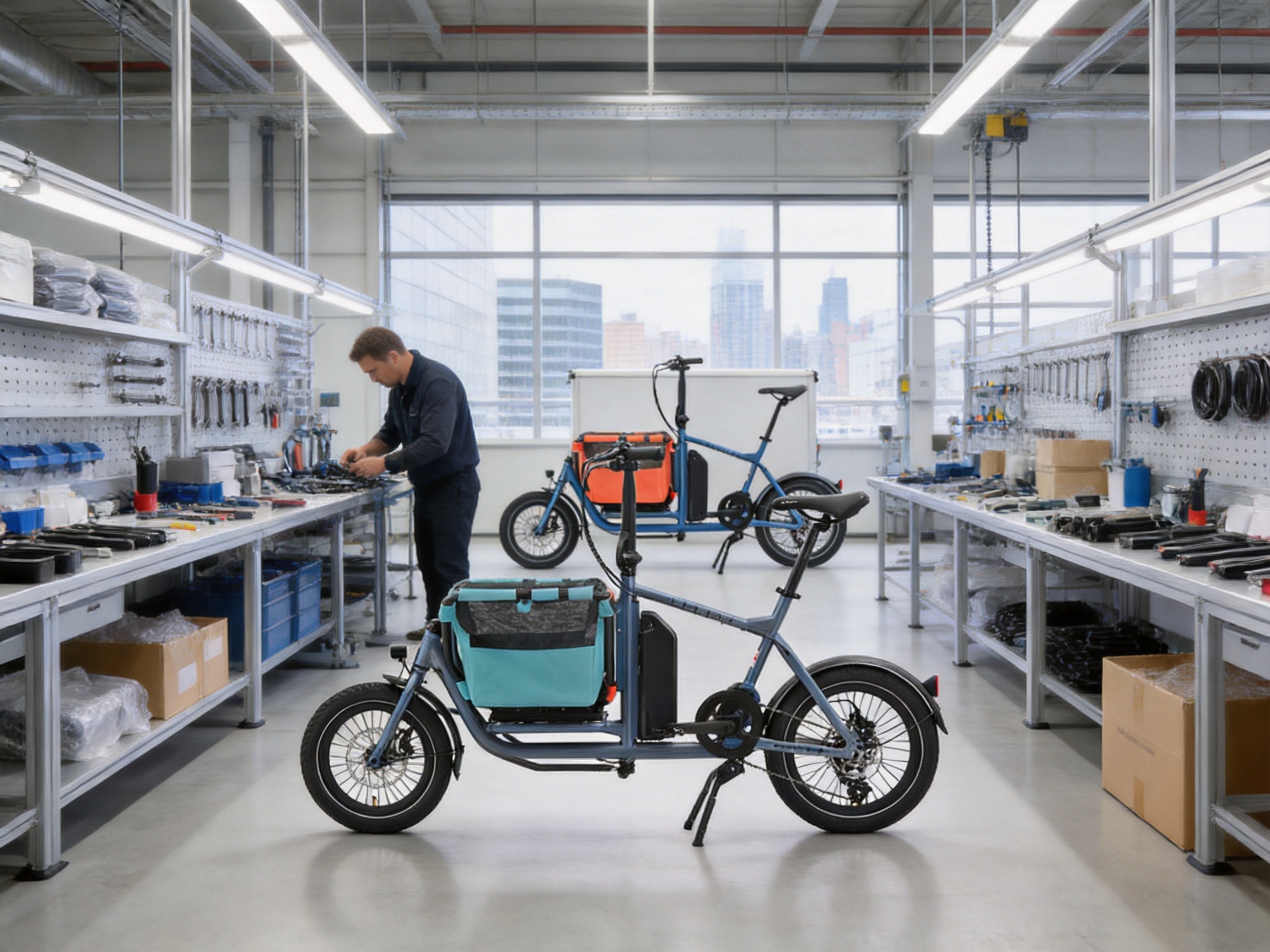
Urban transportation is changing rapidly. As cities become denser, parking becomes more difficult, and consumers seek alternatives to private cars, compact electric cargo bikes are becoming an increasingly practical solution. A well-designed cargo bike can combine the carrying ability of a small utility vehicle with the agility, simplicity, and environmental benefits of a bicycle. However, not every cargo bike is equally suitable for daily city life. Some models are too large for apartments, difficult to maneuver through crowded streets, or unnecessarily complicated to store and maintain.
The ESQ1 compact electric cargo bike is designed to answer these specific urban challenges. Classified as an Urban Companion Cargo Bike, it offers a front-loading cargo format, compact overall dimensions, responsive handling, electric mid-drive assistance, and a removable front folding basket. Its purpose is not to imitate a large delivery tricycle or a long family cargo bike. Instead, it concentrates on the needs of urban riders who want meaningful carrying capacity without sacrificing accessibility and maneuverability.
With a length of approximately 1,780 millimeters and a width of approximately 620 millimeters, the bike is sized for streets, bicycle lanes, apartment storage areas, elevators, and compact urban homes. Its front 16-inch and rear 18-inch puncture-resistant tires support a low and balanced profile, while the aluminum alloy frame helps keep the structure practical for everyday use. The combination of a Bafang CM2503 36-volt, 250-watt mid-drive motor and a Samsung 36-volt, 15Ah lithium battery provides electric support for commuting, shopping, small-business errands, and light commercial transport.
This article examines the product’s design, technical configuration, practical benefits, competitive advantages, manufacturing considerations, customization potential, and suitability for wholesalers, retailers, families, commuters, and business users.
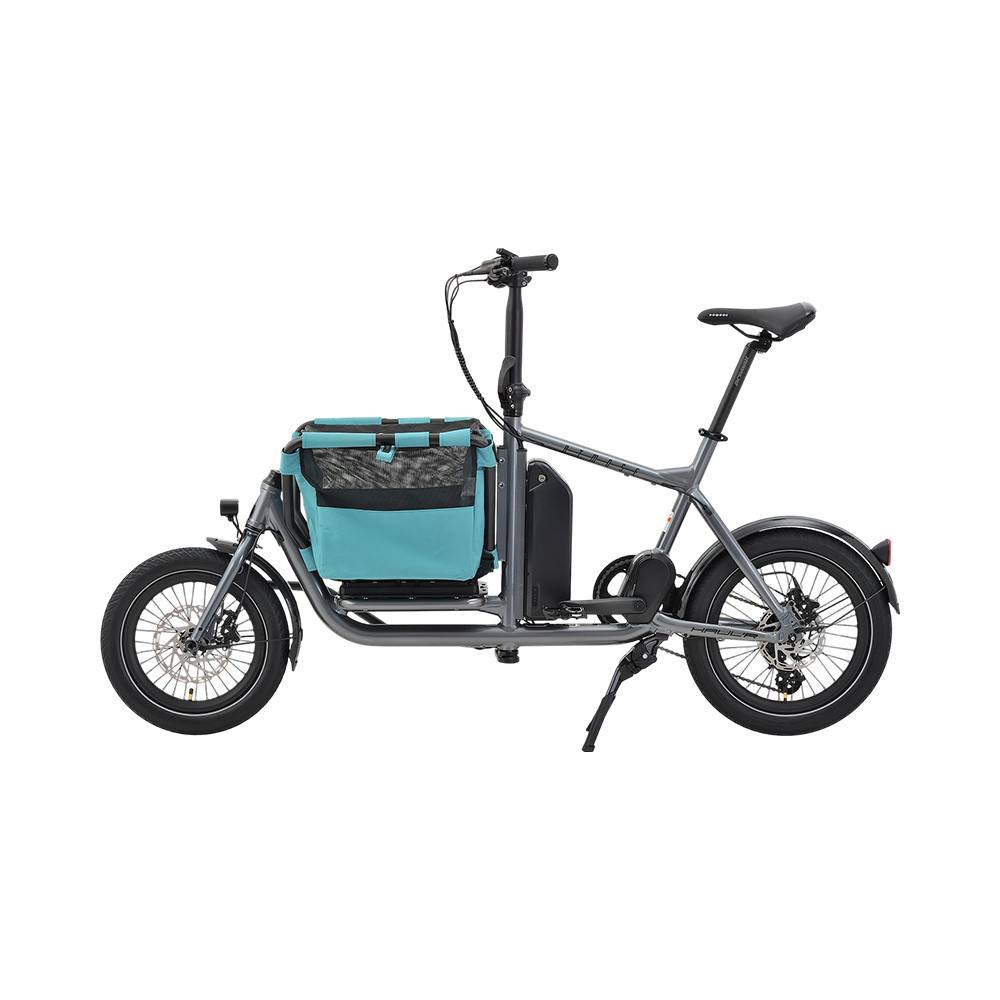
Atmose Model Q ESQ1 Compact Electric Cargo Bike for Agile Urban Commuting
The central idea behind the ESQ1 is simple: provide the utility of a cargo bike in a frame that remains easy to control and easy to live with. Traditional cargo bikes often emphasize maximum load volume. That approach is valuable for larger families, professional logistics, and heavy commercial work, but it can create compromises for riders who live in apartments or navigate narrow streets every day.
The ESQ1 takes a more balanced approach. Its front basket provides useful cargo capacity while keeping the overall bike relatively short. The rider sits behind the load, maintaining a direct view of the road and the cargo area. This front-loading arrangement is especially useful for shopping bags, work equipment, parcels, school items, gym gear, and other daily necessities that need to remain visible and accessible during a journey.
The product is particularly suited to urban users who need flexibility rather than extreme carrying capacity. A commuter may use it to transport a laptop bag, groceries, or rain equipment. A local business may install a delivery box or branded container. A parent may use the front basket for smaller family items. A retailer may position the bike as a practical alternative to a full-size cargo model for customers who want to replace short car trips.
The product category also gives the ESQ1 a clear market identity. It is not simply a conventional electric bicycle with a rack added to the back. It is a purpose-designed front-loading cargo bike. At the same time, it avoids the bulk of many longtail and long-john configurations. This middle position allows it to address an important segment of the market: riders who need more than a standard bicycle but less than a heavy-duty cargo platform.
Urban mobility products must be evaluated in the spaces where people actually use them. A bike may perform well on an open road but still be inconvenient if it cannot fit through a building entrance or into a storage room. The ESQ1’s approximately 620-millimeter width is a significant practical feature because it helps the bike occupy less space in corridors, bicycle parking areas, and narrow passageways.
The approximate 1,780-millimeter length is also important. Many conventional front-loading cargo bikes use a substantially extended frame to accommodate a large box. That design can provide impressive volume but may be difficult to turn, park, or transport. The ESQ1 is designed to maintain a shorter footprint while retaining a useful front cargo platform.
Its compact wheelbase and smaller wheel configuration contribute to a lower visual and physical profile. This makes it more approachable for riders who are new to cargo bikes. It can also be easier to place on a bicycle lift, maneuver into a storage area, or position beside other bicycles.
The frame uses 6061 T4T6 aluminum alloy. This material is widely valued in bicycle manufacturing because it offers a practical balance between low weight, corrosion resistance, strength, and manufacturability. For an urban cargo bike, the frame must support more than the rider. It must also handle the changing forces produced by a front basket, uneven pavement, braking, cornering, and repeated loading and unloading.
Aluminum alloy construction can help reduce the total weight compared with many steel alternatives. A lighter frame is beneficial when the rider needs to move the bike without motor assistance, lift the front end over a small step, position the bike in a storage area, or control it at low speed. Lower weight also contributes to a more responsive riding experience, particularly in crowded streets where frequent steering corrections are required.
The T4T6 designation refers to a controlled heat-treatment condition used to achieve a desirable combination of mechanical properties. In a professional bicycle manufacturing process, the use of a specified aluminum alloy and temper condition supports consistency between production batches. Frame tubes, welded joints, mounting points, and alignment features must work together as a complete structural system rather than as isolated components.
A reliable aluminum cargo frame begins with accurate material preparation. Tubes and formed sections must be cut to controlled dimensions so that the completed frame maintains correct geometry. Fixture design is equally important. During welding, a frame must be held securely so that the head tube, bottom bracket area, rear triangle, and cargo support structure remain aligned.
Professional production normally involves several quality-control stages. Incoming aluminum material can be checked against specified dimensions and material requirements. Cut components can be inspected before welding. Welded frames can then be checked for visible defects, dimensional accuracy, alignment, and surface condition. Mounting points for the basket, battery, motor, brakes, and accessories require particular attention because small deviations can affect installation or long-term performance.
After welding, the frame may undergo finishing operations such as smoothing, cleaning, surface preparation, and protective coating. Consistent finishing improves corrosion resistance and gives the product a uniform appearance. It also helps protect the frame from the moisture, dirt, and road salt commonly encountered in urban environments.
The ESQ1’s frame geometry is designed around accessibility and agility. A compact cargo bike must remain stable when carrying a load, but it should not feel slow or cumbersome when unloaded. The smaller wheels and compact structure support faster steering response. This is helpful when making tight turns, entering bicycle lanes, navigating intersections, or positioning the bike beside a curb.
A lower step-through height can make the bike easier to mount and dismount. This is particularly helpful for riders wearing work clothing, riders carrying bags, and users who stop frequently. It may also broaden the product’s appeal among riders who find tall traditional bicycles less comfortable.
At the same time, a responsive bike requires appropriate rider awareness. The steering should be operated smoothly, especially when the front basket is loaded. Cargo should be distributed evenly and secured so that the steering behavior remains predictable. These are normal considerations for any front-loading cargo bike and should be included in customer education and dealer training.
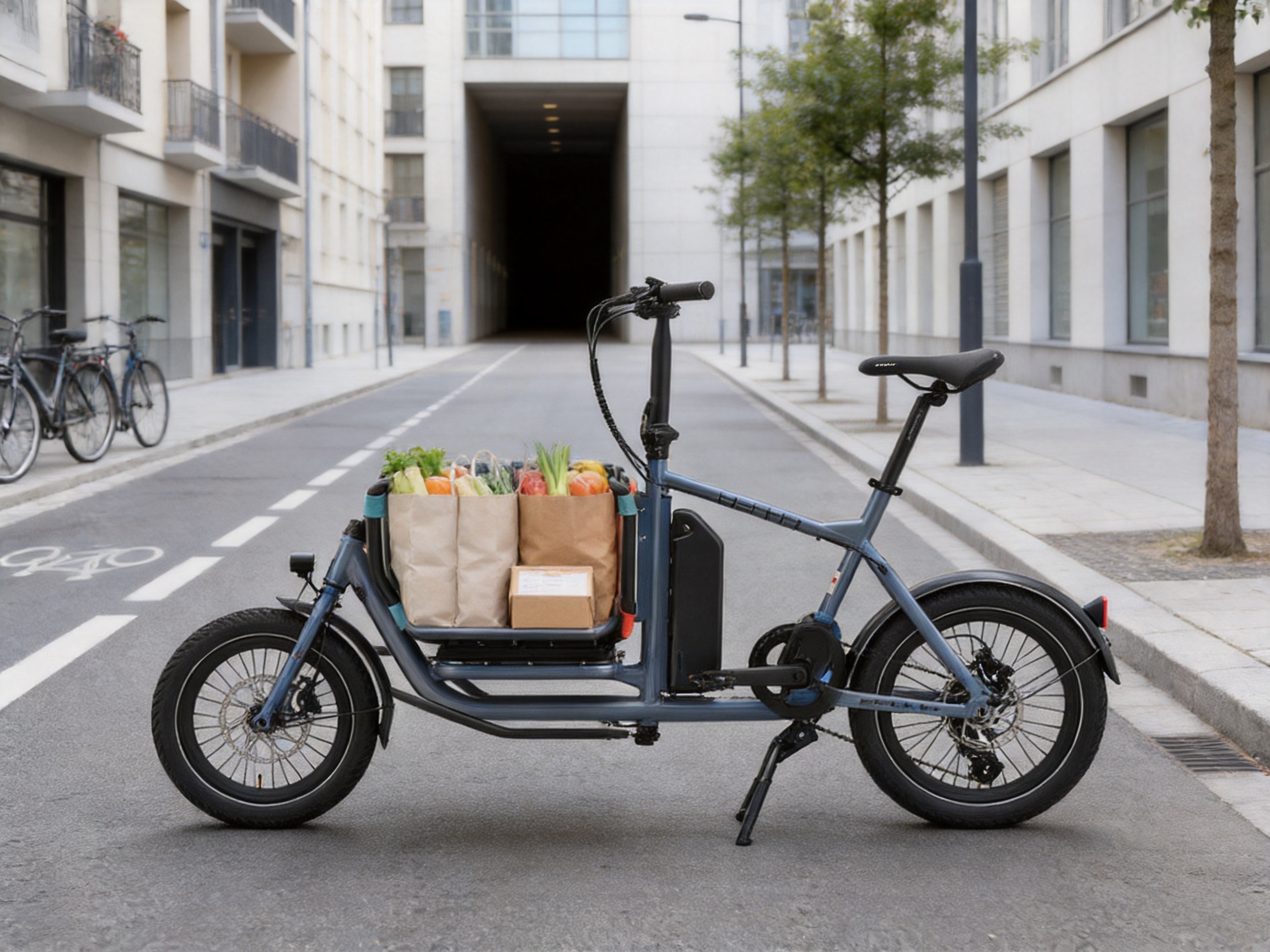
The front folding basket is one of the product’s defining features. It measures approximately 470 millimeters in length, 470 millimeters in width, and 375 millimeters in height. Its design gives the bike a practical loading area without requiring a large permanent cargo box. The basket can be used for shopping, work supplies, daily bags, packages, sports equipment, or other items that do not require a full-size commercial enclosure.
The published maximum basket load is 25 kilograms, while the maximum rider load is 120 kilograms. These figures clarify the product’s intended role. It is a compact utility bike for everyday urban carrying, not a substitute for a heavy-duty industrial cargo vehicle. When used within its specified limits, the basket can support a useful amount of cargo while preserving the bike’s compact character.
The basket is designed for a three-step installation process. First, the user aligns the basket base with the pre-installed mounting holes near the handlebar. Second, the basket is lowered vertically until the clips make contact. Third, the basket is pushed backward toward the saddle until a click indicates that it has engaged securely.
This approach offers an important advantage over permanently mounted cargo boxes. A rider can adapt the bike to different tasks instead of committing the bike to one configuration. With the basket installed, the bike is ready for shopping, commuting, or carrying supplies. When the basket is removed, the bike can become more compact and visually lighter for recreational riding or storage.
Removal requires two primary actions. The user pulls down the pin at the bottom of the basket mount, pushes the basket forward along its track, and then lifts it away. A removable system can make cleaning easier, simplify storage, and support replacement or accessory upgrades over the product’s service life.
Fixed cargo boxes are useful when maximum enclosure, weather protection, or child seating is required. However, they may add weight, increase the turning envelope, and reduce flexibility. A removable folding basket provides a different value proposition. It gives the user cargo capability when needed and a more streamlined configuration when it is not.
For wholesalers and retailers, the modular basket system can also simplify product positioning. The same base bike can be marketed to commuters, shoppers, small businesses, and active urban households. Different basket accessories or cargo inserts may be offered according to local demand, allowing dealers to build packages without changing the complete bicycle platform.
The ESQ1 uses a Bafang CM2503 mid-drive motor rated at 36 volts and 250 watts. A mid-drive motor places the drive unit near the bicycle’s central crank area rather than in the front or rear wheel hub. This configuration can help centralize weight and may provide a more natural relationship between motor assistance and the bicycle’s gearing.
Because the motor works through the bicycle’s drivetrain, the rider can use the Shimano seven-speed Sora transmission to select an appropriate gear for different conditions. Lower gears can assist with starts, inclines, or heavier loads, while higher gears can be useful on open, level roads. Effective gear selection allows the motor and rider to share the work more efficiently.
A mid-drive system can be especially appropriate for a compact cargo bike because it keeps the wheel areas relatively uncluttered. This can support balanced handling and simplify wheel removal compared with some hub-motor configurations. It also enables the bicycle’s mechanical gearing to contribute to climbing and acceleration performance.
Urban riding consists of repeated stops and starts rather than long periods of steady speed. Riders encounter traffic lights, intersections, slopes, pedestrians, delivery zones, and changing road surfaces. The combination of a central motor, multiple gears, and compact geometry is intended to make these transitions smoother.
The motor’s rated output is aligned with common electrically assisted bicycle categories in many markets, although local regulations must always be checked before sale or use. Retailers should confirm regional requirements concerning maximum assisted speed, equipment, road access, rider age, and certification.
The electric system should be viewed as assistance rather than a replacement for rider input. The rider remains responsible for safe acceleration, braking, load distribution, and road awareness. Proper use of the gear system can reduce unnecessary strain on the motor and battery, particularly when starting with a full basket or climbing a hill.
The battery is specified as a Samsung 36-volt, 15Ah lithium battery with a stated capacity of 540 watt-hours. Battery capacity is one of the most important factors in an electric cargo bike because cargo bikes may experience greater rolling resistance and more frequent acceleration than ordinary bicycles.
A 540Wh battery provides a substantial energy reserve for daily urban use, although actual range will vary. Important factors include rider weight, cargo weight, terrain, wind, tire pressure, riding mode, temperature, stop-and-go traffic, and maintenance condition. Dealers should avoid presenting one universal range figure unless it has been verified through a clearly defined test method.
The use of cells from an established battery supplier can support consistency and confidence in the energy storage system. However, the battery must be evaluated as a complete pack, including the battery management system, enclosure, wiring, charger, mounting interface, and protection against vibration and moisture. Good battery integration is not limited to the cells themselves.
A professional manufacturing process should include careful control of electrical connections, connector seating, cable routing, battery retention, and system testing. The battery must remain secure over uneven surfaces while still being accessible for charging or service. Wiring should be routed to reduce the risk of abrasion, sharp bending, water exposure, or interference with steering and moving components.
End-of-line testing is particularly important for electric bicycles. A complete unit should be checked for power-up behavior, motor assistance, display or control response, brake cut-off operation where applicable, charging function, battery connection, and basic electrical safety. Mechanical tests should be coordinated with electrical tests so that the completed bike is evaluated as a working product rather than as a collection of separate parts.
The Shimano seven-speed Sora speed system provides a range of mechanical ratios for city riding. Seven speeds are sufficient for many urban routes while keeping the control system relatively straightforward. A rider can select a lower ratio for climbing or heavy starts and a higher ratio for maintaining momentum on level roads.
The drivetrain should be kept clean and appropriately lubricated. Cargo bikes can be exposed to more dust and road contamination because they are frequently used in practical, everyday conditions. Routine drivetrain maintenance supports smooth shifting, reduces wear, and helps the motor operate efficiently.
The ESQ1 uses Tektro hydraulic disc brakes. Hydraulic disc brakes are valued for their braking control, progressive lever feel, and ability to provide consistent stopping performance across changing weather conditions. These qualities are especially important on a cargo bike because the total system weight changes according to the load.
Braking distance depends on speed, surface, tire condition, rider reaction, slope, and total weight. A properly maintained hydraulic system can help the rider manage these variables, but no brake system can eliminate the need for safe speed selection and anticipation. Retailers should provide customers with guidance on bedding in new brake pads, checking pad wear, and inspecting hydraulic components.
The bike uses 16-inch by 2.4-inch front tires and an 18-inch by 2.4-inch rear tire. Smaller wheels can contribute to a lower frame profile and more responsive steering. The relatively wide tire section adds air volume, which can help provide comfort and grip on uneven urban surfaces when the tires are inflated correctly.
The specified tires are punch proof, a feature intended to reduce the risk of punctures during everyday riding. Puncture-resistant construction does not make a tire impossible to damage, but it can offer a practical benefit for commuters and delivery users who cannot afford frequent roadside repairs.
Correct tire pressure remains essential. Underinflation may increase rolling resistance and cause handling to feel heavy, while overinflation may reduce comfort and grip. The appropriate pressure should be selected according to the tire specification, rider weight, cargo load, and road conditions.
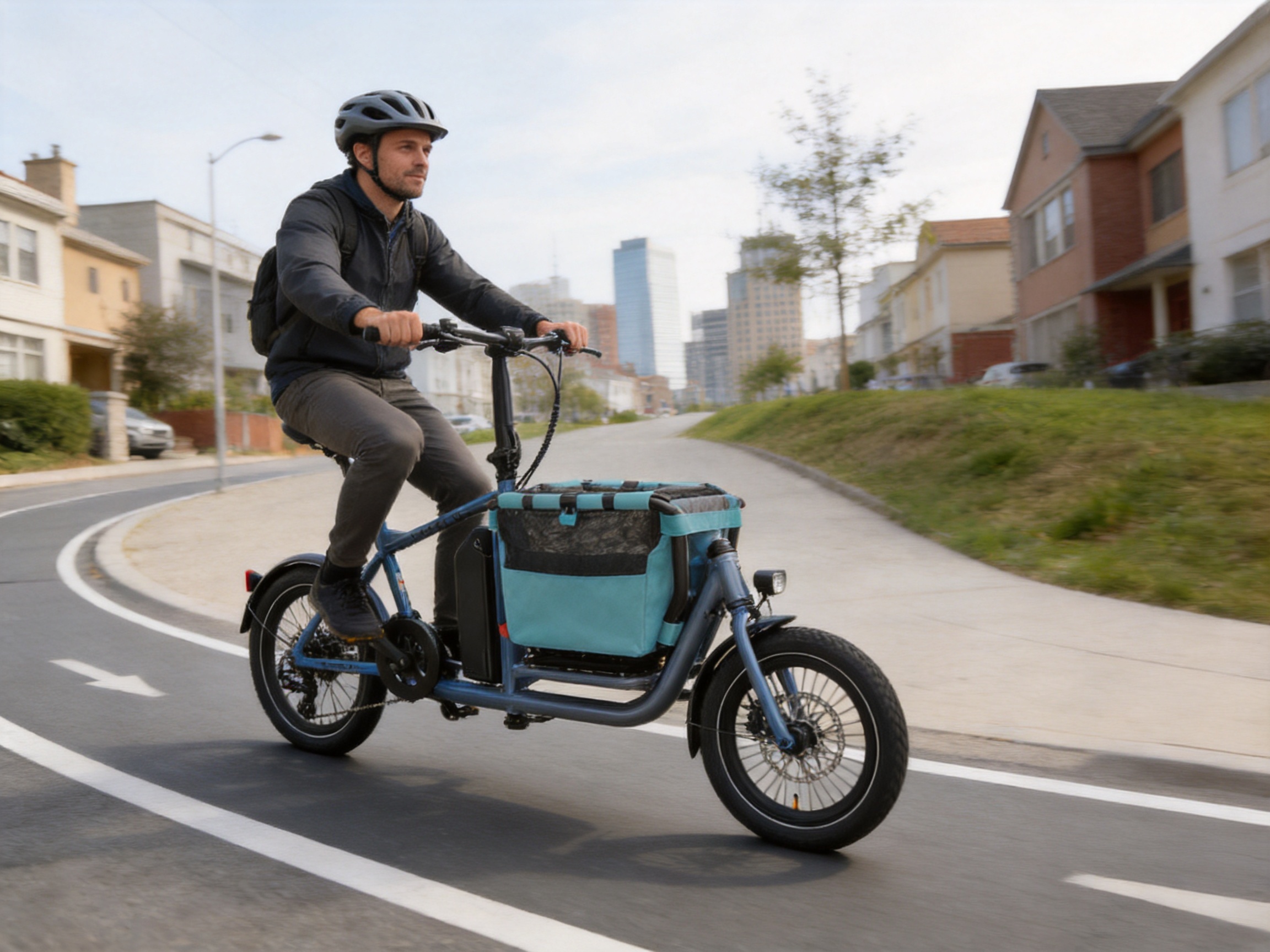
The compact cargo bike market includes longtail bicycles, front-loading family bikes, utility e-bikes, folding cargo bikes, and conventional electric bicycles equipped with racks or panniers. The ESQ1 competes by combining several advantages in one platform rather than by maximizing a single specification.
Many cargo bicycles offer substantial carrying volume but demand substantial storage space. The ESQ1’s compact dimensions make it more suitable for apartment dwellers, city-center residents, and businesses operating from small premises. A bike that can fit in an elevator or narrow storage area has a practical advantage over a larger model that offers more capacity but cannot be conveniently kept nearby.
Longer cargo bikes can require more planning in tight corners and crowded areas. The ESQ1’s shorter format and smaller wheels are intended to support quick, controlled steering. This can make it appealing to riders who need to move through dense traffic, narrow bicycle lanes, compact courtyards, or busy shopping streets.
The removable front folding basket gives the bike a flexible operating profile. A fixed cargo box may be excellent for one specific application, but the ESQ1 can be adapted to different daily needs. This flexibility can reduce the need for a customer to purchase separate bicycles for commuting and utility use.
The Bafang mid-drive motor works with the seven-speed transmission to support varied terrain and load conditions. Compared with a single-speed utility bicycle, this setup gives the rider more control over effort and cadence. Compared with some hub-motor arrangements, central motor placement may help preserve balanced handling and a natural riding feel.
Large cargo bicycles may appear intimidating to people who have only ridden standard bicycles. The ESQ1’s lower and shorter profile can make the transition easier. The product communicates its purpose clearly while remaining approachable for first-time cargo bike users.
The product can be sold through bicycle retailers, mobility dealers, urban transport specialists, family lifestyle stores, delivery equipment suppliers, and online distributors. Its combination of personal and commercial utility helps retailers address more than one customer segment.
The value of a cargo e-bike is determined not only by its visible components but also by the quality and consistency of the manufacturing process behind it. A reliable product requires coordinated engineering, sourcing, assembly, testing, packaging, and after-sales support.
The company behind this product combines American product development experience with European design and research and development capabilities. The brand originated in California through MOTIV, an established American beach cruiser company, and later expanded its organizational structure through the establishment of ATMOSE SASU in France and a Paris-based design and R&D team. This combination supports a product philosophy that brings together practical American mobility thinking and European attention to urban form, usability, and design.
Effective cargo bike development requires cooperation between industrial designers, frame engineers, electrical specialists, component buyers, manufacturing engineers, quality teams, and logistics professionals. A feature such as a removable basket affects frame geometry, steering clearance, mounting strength, packaging, user instructions, and service procedures. It cannot be treated as an isolated accessory.
The ESQ1 demonstrates an integrated approach through the relationship between its compact frame, front cargo system, mid-drive motor, battery placement, wheel configuration, and hydraulic brakes. Each element contributes to the overall urban riding experience. The success of the product depends on how these parts function together under real use.
Frame manufacturing should begin with clear technical drawings, defined tolerances, and controlled fixtures. The use of 6061 T4T6 aluminum alloy requires attention to welding practice and post-weld treatment because aluminum’s properties can be affected by heat. Consistency in weld placement, penetration, alignment, and finishing is essential for both appearance and structural performance.
Production teams should inspect frame alignment before assembly. A misaligned frame can create uneven handling, shifting problems, brake rotor interference, or premature tire wear. Measurement tools and dedicated fixtures help reduce variation and support repeatable production.
Component integration is another manufacturing strength. The motor, battery, drivetrain, brakes, wheels, tires, basket, cables, and controls must be assembled in a sequence that protects both the components and the finished product. Cable routing should be checked at full steering lock. The basket should be tested for secure engagement and removal. The brake system should be inspected for lever feel and rotor alignment. The drivetrain should be adjusted through its complete gear range.
Assembly documentation is valuable for consistency. Clear work instructions help production teams repeat critical steps and make it easier to train new personnel. Quality records can also assist with traceability and corrective action if a problem is identified in the field.
A mature manufacturing system uses end-of-line inspections to confirm that each completed bicycle is ready for shipment. Typical checks may include frame appearance, fastener torque, wheel alignment, brake operation, gear shifting, motor activation, battery charging, control functions, tire condition, basket attachment, and a short functional ride or roller test.
Electric cargo bikes deserve particular attention because their performance depends on both mechanical and electrical systems. A bike can look complete while still having a loose connector, incorrect sensor adjustment, or poorly routed cable. Coordinated testing reduces the risk of such issues reaching the customer.
For global wholesalers and retailers, packaging is part of product quality. Cargo bikes have larger frames and more projecting components than ordinary bicycles, so the packaging system must protect the basket mount, brake levers, display, wheels, fork, and frame surfaces during transportation.
Good packaging design also supports efficient warehouse handling. Protective inserts, organized accessory compartments, clear assembly instructions, and logical labeling can reduce dealer assembly time and prevent missing-part problems. Since the product is intended for international buyers, documentation and packaging should be adapted to different markets and translated where required.
The product can serve as a foundation for customized electric cargo bike programs. Customization may involve branding, color, basket configuration, delivery accessories, packaging, regional component specifications, or fleet-oriented preparation. Any customization should preserve the structural and electrical requirements of the base product.
For a small business, the front basket can become a branded delivery platform. A bakery, florist, repair service, café, or local retailer may use a customized container or graphic treatment to make the bike part of its visible identity. For residential users, practical accessories can focus on shopping, storage, or weather management.
Wholesalers can also create market-specific packages. One package might target apartment commuters and include a compact basket insert. Another might target local businesses and include a larger delivery container. A family-oriented package might emphasize secure storage for daily belongings. The same core frame and power system can support different commercial messages.
Retailers generally benefit from products that are easy to explain. The ESQ1 has a clear story: it is compact, electric, front-loading, removable-basket equipped, and designed for agile urban use. These characteristics are easy for customers to understand during a showroom demonstration.
A showroom can demonstrate the basket installation in a few minutes. Staff can show how the bike fits through a typical doorway, how the rider can step through the frame, and how the steering responds at low speed. Demonstration-based selling is particularly effective for cargo bikes because customers often need to experience the size and handling directly.
After-sales support can also be organized around familiar bicycle systems. The Shimano drivetrain, Tektro hydraulic brakes, Bafang motor, and Samsung battery use recognizable technology categories, although service availability and regional compatibility should be verified by the distributor.
For commuters, the ESQ1 can replace short car or public-transport trips where carrying capacity is a daily concern. A rider may transport a laptop, change of clothing, lunch, work documents, or groceries. The front position of the basket allows the rider to monitor belongings more easily than a deeply loaded rear bag.
The compact footprint is valuable when the bike is parked at an office, café, apartment building, or transit connection. A commuter who has limited storage space may find the compact format more realistic than a large family cargo bike.
Small businesses often need mobility but cannot justify a van for short-distance deliveries. A front-loading electric bike can support local delivery routes while reducing fuel, parking, and operating costs. The 25-kilogram basket rating provides useful capacity for light parcels, supplies, tools, and packaged products.
Businesses should calculate their operating requirements carefully. The ESQ1 is best suited to light and medium urban delivery tasks within the basket’s specified load limit. Users who need large-volume freight, temperature-controlled storage, or very heavy loads should consider a larger cargo platform.
Apartment residents are an important target group because storage is one of the most common barriers to cargo bike ownership. The ESQ1’s narrow width and shorter length can make indoor storage more achievable. The removable basket may also help when navigating an elevator, hallway, or doorway.
Riders should still measure their actual storage route before purchase. Door widths, elevator dimensions, stairwell turns, and building policies vary. A dealer can help customers compare the bike’s dimensions with their available space.
The bike can also support recreational and active urban lifestyles. The basket may carry sports equipment, picnic supplies, musical instruments, or shopping items during weekend rides. When the basket is removed, the bike can present a cleaner and more streamlined profile.
Safe cargo bike operation begins with correct loading. Cargo should be placed low, distributed evenly, and secured so that it cannot move into the steering area or contact the wheels. The basket should never be loaded beyond its specified 25-kilogram capacity.
Before each ride, the user should check tire inflation, brake function, wheel security, basket engagement, battery attachment, and visible cable condition. A quick inspection is especially important when the bike has been used in rain, transported, or subjected to heavy loading.
Hydraulic brakes should be inspected regularly. Brake pads wear over time, and hydraulic systems require qualified service if a leak or loss of pressure occurs. The drivetrain should be cleaned and lubricated according to use conditions. Tires should be checked for cuts, embedded objects, tread wear, and correct pressure.
The battery should be charged with the appropriate charger and kept away from excessive heat, water exposure, and physical damage. Users should follow local requirements for battery storage and recycling. Dealers should provide clear instructions covering charging, storage, transport, and long-term non-use.
Because the bike uses smaller wheels and responsive steering, riders should become familiar with its handling before carrying a full load. Practice should begin in a low-traffic area. Riders should test braking distances and turning behavior gradually rather than immediately entering dense traffic.
| Product name | ESQ1 |
| Product type | Compact front-loading electric cargo bike |
| Frame material | 6061 T4T6 aluminum alloy |
| Battery | Samsung 36V 15Ah lithium battery |
| Stated battery capacity | 540Wh |
| Motor | Bafang CM2503 mid-drive, 36V 250W |
| Drivetrain | Shimano seven-speed Sora |
| Maximum rider load | 120 kilograms |
| Maximum basket load | 25 kilograms |
| Front basket dimensions | Approximately 470mm long by 470mm wide by 375mm high |
| Front tire | 16-inch by 2.4-inch puncture-resistant tire |
| Rear tire | 18-inch by 2.4-inch puncture-resistant tire |
| Bike dimensions | Approximately 1,780mm long by 620mm wide by 1,070mm high |
| Brakes | Tektro hydraulic disc brakes |
| Basket system | Removable front folding basket with track-mounted attachment |
Specifications may vary according to regional configuration, production batch, regulatory requirements, and customized orders. Buyers should confirm final specifications with the authorized supplier before placing a wholesale or retail order.
The ESQ1 is designed for urban commuters, apartment residents, shoppers, small-business operators, and riders who need practical front cargo capacity in a compact format. It is especially suitable for users who value maneuverability and storage convenience over maximum cargo volume.
The stated maximum basket load is 25 kilograms. The load should be distributed evenly and secured properly. Riders should not exceed this limit or place unstable, sharp, loose, or oversized items in a way that could affect steering or braking.
The stated maximum rider load is 120 kilograms. This figure refers to the rider and should be considered together with the basket load, accessories, and other equipment when evaluating total system weight.
No. The front basket is designed to be installed and removed. Installation involves aligning the mounting holes, lowering the basket, and pushing it backward until it clicks into position. Removal involves releasing the lower pin, pushing the basket forward, and lifting it away.
A mid-drive motor places power near the center of the bicycle and works with the mechanical gear system. This can support balanced handling and allow the rider to select different gears for starts, slopes, and level roads. It is a useful configuration for an urban cargo bike that may carry changing loads.
Range depends on rider and cargo weight, terrain, wind, temperature, tire pressure, riding mode, traffic conditions, acceleration frequency, and drivetrain condition. The stated 540Wh capacity provides a useful energy reserve, but actual range should be evaluated under local riding conditions.
Yes, it can support light commercial delivery applications such as local parcels, food orders, retail supplies, tools, and promotional materials. Businesses should remain within the basket load limit and should choose a larger cargo platform if they require high-volume, heavy, or specialized freight transport.
Its compact dimensions and removable basket are intended to make apartment storage easier than with many larger cargo bikes. Customers should measure elevators, doors, hallways, and storage areas before purchase because building dimensions differ.
The ESQ1 offers a purpose-designed front cargo area, higher practical carrying capacity, a removable basket, and a frame intended for utility use. A conventional electric bicycle may be lighter or more compact, but it may require additional racks, panniers, or trailers to carry comparable everyday loads.
The ESQ1 is shorter, narrower, and more maneuverable than many large cargo bikes. It is easier to position in confined areas and may be more approachable for first-time cargo riders. The trade-off is that it does not provide the same maximum volume as a heavy-duty or family-sized cargo model.
Some assembly may be required depending on the shipping configuration and market. Dealers should follow the official assembly instructions, check all fasteners, adjust the brakes and gears, inspect the electrical system, and complete a functional test before delivering the bicycle to a customer.
The product is positioned for customized electric cargo bike and wholesale programs. Potential options may include branding, colors, cargo accessories, packaging, and market-specific configurations. Final options, minimum order quantities, lead times, and technical limitations should be confirmed with the supplier.
Routine maintenance includes checking tire pressure, brake pads, hydraulic brake condition, wheel security, drivetrain lubrication, gear adjustment, battery connections, cable routing, and basket mounting. Professional service should be used for hydraulic repairs, electrical faults, structural damage, or battery problems.
No electric bicycle is automatically compliant with every jurisdiction. Requirements for motor power, assisted speed, equipment, labeling, lighting, rider age, and road access vary. Importers and retailers must verify local regulations and complete any required conformity procedures before sale.
Urban mobility is moving toward smaller, cleaner, and more flexible transport solutions. Not every journey requires a car, van, or large cargo bicycle. Many trips involve only one rider and a moderate amount of cargo, yet ordinary bicycles may not provide enough carrying capacity. The ESQ1 occupies this practical middle ground.
Its front-loading layout keeps cargo visible and accessible. Its compact frame addresses storage limitations. Its electric assistance helps riders manage distance, hills, and heavier loads. Its removable basket supports changing daily needs. These characteristics make the bike relevant to both personal mobility and local commerce.
For businesses, replacing selected short van trips with electric cargo bike journeys can support more efficient use of street space. For individuals, replacing short car trips can reduce dependence on fuel and parking. For retailers, the product offers a clear and demonstrable entry into the expanding cargo e-bike category.
The company’s broader strengths support this market opportunity. Its American origins, European design and R&D development, established manufacturing experience, mature supply-chain relationships, and emphasis on practical product innovation create a foundation for international business cooperation. The focus on sustainability, reliability, usability, and enjoyable riding aligns with the expectations of modern urban consumers.
The ESQ1 compact electric cargo bike is designed for riders who want cargo capability without the inconvenience of an oversized bicycle. Its 6061 T4T6 aluminum alloy frame, compact 1,780-millimeter length, approximately 620-millimeter width, front folding basket, Bafang mid-drive motor, Samsung 540Wh battery, Shimano seven-speed drivetrain, Tektro hydraulic disc brakes, and puncture-resistant wide tires create a balanced urban transport platform.
Its strongest competitive advantage is the way these elements work together. The bike is compact but useful, agile but capable, and practical without being limited to one type of rider. The removable basket expands its use from commuting to shopping and light delivery. The mid-drive system and seven-speed gearing support varied urban conditions. The compact footprint helps address one of the biggest barriers to cargo bike ownership: storage.
Behind the product is a development and manufacturing approach built around cross-functional design, controlled aluminum frame production, component integration, testing, international distribution, and customization support. These strengths are important for wholesalers and retailers seeking a reliable platform that can be adapted to different markets.
For modern city users, the ESQ1 offers a practical alternative to short car journeys and a more accessible option than many full-size cargo bikes. It demonstrates how thoughtful engineering can deliver meaningful carrying capacity while preserving the maneuverability, convenience, and enjoyment that make cycling attractive.
1. Product technical specification sheet for the ESQ1 compact electric cargo bike.
2. Product installation and removal instructions for the front folding basket.
3. General technical information on 6061 aluminum alloy bicycle frame construction.
4. General component information for Bafang mid-drive electric bicycle systems.
5. General component information for Shimano seven-speed bicycle drivetrains.
6. General component information for Tektro hydraulic disc brake systems.
7. General guidance on lithium-ion battery use, charging, storage, and maintenance.
8. General principles of urban cargo bicycle design and safe load management.
9. General guidance for electric bicycle regulatory review and market-specific conformity assessment.
10. Company background materials concerning American product development, European design and research, manufacturing experience, and sustainable urban mobility.
Nov 17, 2026
Nov 03, 2026
Oct 26, 2026


info@atmosecargobike.com

200 rue de la Croix Nivert 75015 Paris

Custom Electric Bakfiets
 English
 Français
 Deutsch