Oct 24, 2026
Urban transportation is changing. Families are looking for alternatives to short car journeys, commuters want dependable mobility without parking difficulties, and pet owners need a secure way to bring animals along for daily errands. At the same time, businesses and retailers are seeking practical electric cargo bikes that can be supplied consistently, adapted to different markets, and supported by an experienced product-development team.
The ESP3 electric family cargo bike is designed around these needs. Its central idea is simple: combine the carrying ability of a compact cargo platform with the natural handling, riding comfort, and electric assistance expected from a modern bicycle. The result is a front-loading electric cargo bike intended for children, pets, groceries, commuting, and general urban transport.
Rather than treating cargo capacity as the only measure of performance, the ESP3 takes a broader approach. Its aluminum alloy frame, mid-drive motor, hydraulic disc brakes, folding front basket, puncture-resistant tires, and family-oriented accessories work together as an integrated transportation system. This makes the bike suitable for school runs, shopping trips, veterinary visits, leisure rides, and many other everyday journeys.
The product is also supported by a company structure that combines American product thinking, European design and research activity, international sourcing, and manufacturing expertise. ATMOSE SASU operates as part of a wider Atmose development story that began in California and expanded through a Paris-based design and R&D team. This international structure allows the product to be considered from several perspectives: practical family use, urban design, engineering performance, regulatory expectations, and commercial supply.
A family cargo bike must do more than carry weight. It needs to inspire confidence when loaded, remain manageable in traffic, protect passengers from weather, provide predictable braking, and fit into ordinary daily routines. The ESP3 is developed with these requirements in mind.
The front cargo area gives the rider a clear view of the load and helps keep children, pets, and shopping items positioned ahead of the rider rather than behind them. This arrangement can make communication easier during family trips. A parent can monitor a child, check on a pet, or quickly see whether a bag has shifted without turning around.
The front basket is designed to be versatile. It can carry groceries and daily supplies, while its form also allows compatibility with child seats, rain covers, pet arrangements, and other equipment. When additional carrying capacity is not required, the basket can be folded to reduce the bike’s footprint. The supplied information identifies a folded width of approximately 365 millimeters, making the folding function useful when the bike is parked, stored, or maneuvered through a restricted area.
This flexibility distinguishes the ESP3 from a narrow-purpose cargo vehicle. Some cargo bikes are optimized mainly for commercial deliveries, while others focus only on children. The ESP3 is positioned between these categories. It is family-oriented, but it can also serve as a grocery bike, pet carrier, commuter bike, and general-purpose urban utility bike.
Its dimensions are approximately 2,130 millimeters in length, 680 millimeters in width, and 1,130 millimeters in height. These measurements provide a substantial carrying platform while retaining a relatively narrow profile for a front-loading cargo bike. The width is particularly important in urban settings, where riders may encounter cycle lanes, bollards, narrow entrances, parked cars, and limited storage areas.
The ESP3 is therefore not merely an electric bicycle with a basket attached. It is a purpose-designed transport platform. The frame geometry, wheel arrangement, cargo structure, motor placement, braking system, and accessory compatibility are selected to support repeated carrying duties.
Safety is the most important consideration when transporting children or animals. The ESP3 product information emphasizes a safety-first approach, including frame fatigue testing and TUV and EN17860-related certification claims. These references are significant because cargo bikes experience stresses that ordinary bicycles may not encounter. Repeated loading, frequent braking, uneven roads, curb transitions, and low-speed balancing all affect the frame and components over time.
The stated 300,000-cycle fatigue testing demonstrates an emphasis on repeated structural loading rather than only one-time static strength. Fatigue testing is valuable because a bike may complete thousands of journeys during its service life. A frame that appears strong when new must also withstand recurring vibration, acceleration, braking, and cargo movement.
The 6061 T4T6 aluminum alloy frame provides a balance between low weight, corrosion resistance, stiffness, and manufacturability. Aluminum alloy is widely used in modern bicycle construction because it can produce a strong structural platform without the mass associated with heavier steel designs. The T4T6 designation indicates a controlled heat-treatment pathway associated with the material, although the final strength and durability of any frame depend on tube design, weld quality, joint structure, heat treatment, finishing, and quality control.
For a cargo bicycle, frame design is especially important around the head tube, steering area, bottom bracket, cargo support, rear triangle, and attachment points. These areas experience different forces when the bike is loaded. A thoughtfully engineered frame must manage the interaction between rider weight, cargo weight, motor torque, braking forces, and road impacts.
The product’s hydraulic disc brakes are another major safety advantage. Hydraulic systems generally provide consistent power and smooth modulation with relatively low hand effort. This is useful when a rider is carrying a heavy load or making frequent stops in traffic. The ability to control braking progressively helps reduce abrupt weight transfer and supports greater confidence on descents, at junctions, and near schools.
The front 18-inch and rear 20-inch tires have a wide 2.4-inch profile and are described as puncture-proof or puncture-resistant in the supplied materials. Wider tires can contribute to stability, comfort, and traction, especially when roads are uneven or the cargo load changes the bike’s handling. Their smaller wheel sizes also help keep the cargo platform low and support a lower center of gravity.
A low cargo position is valuable for family riding. It can reduce the sensation of a high, top-heavy load and make the bike more predictable when starting, stopping, or turning. The rider still needs to operate within the recommended load limits and adapt speed to road conditions, but the basic architecture is intended to support controlled and confident handling.
Safety should not depend only on adding optional equipment after purchase. It begins with the frame, steering geometry, braking system, tire selection, load platform, and distribution of weight. The ESP3 integrates these elements from the beginning.
Child seats, rain covers, and pet arrangements can further improve safety and comfort, but they must be installed correctly and used according to the relevant instructions. Cargo should be secured so that it cannot slide, interfere with steering, touch moving parts, or affect brake operation. Riders should also confirm the permitted weight for each accessory and the complete system.
The product information lists a maximum load of 145 kilograms for the rider and 35 kilograms for the basket. Elsewhere, the product description refers to a total load capability of up to 175 kilograms, while the individual figures can imply a different combined value depending on how the specification is interpreted. Buyers and distributors should therefore verify the final market-specific load rating, accessory limits, and certification documentation before use. In all cases, the published technical limits should be treated as maximums rather than routine targets.
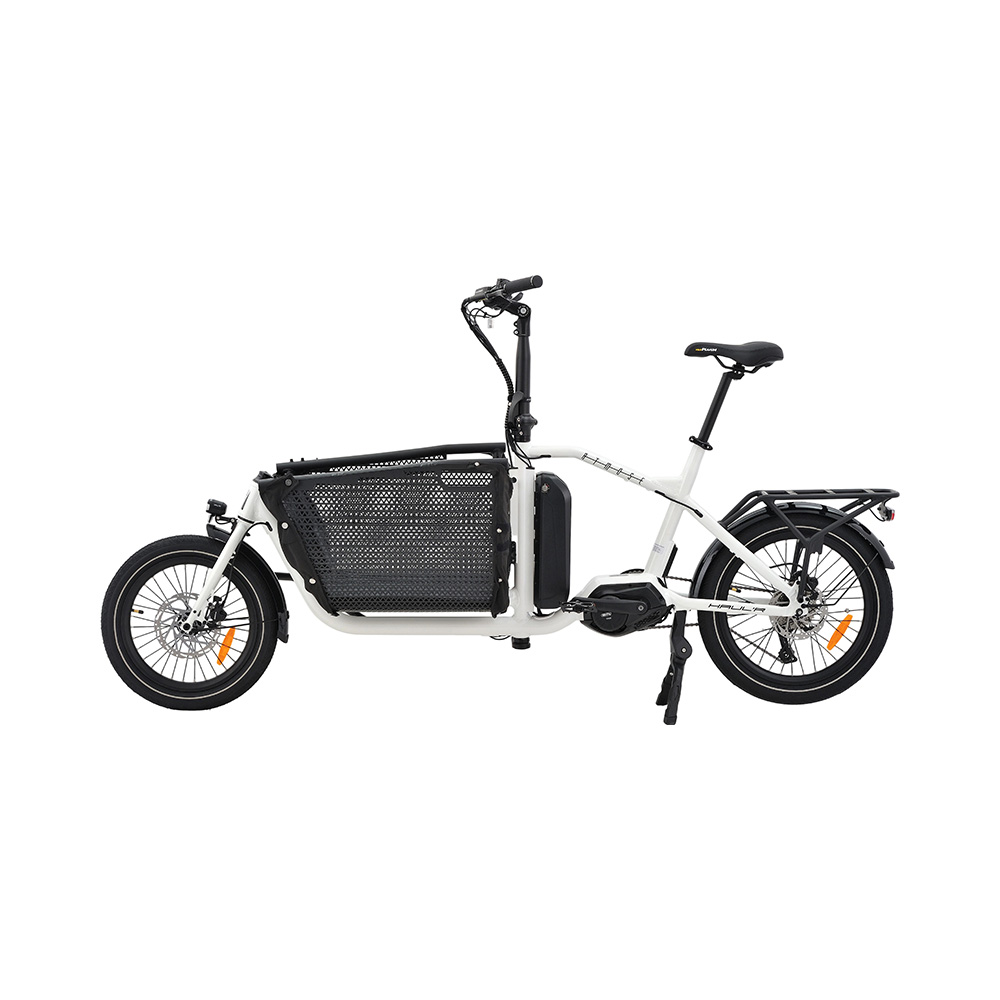
Atmose Model P ESP3 Electric Family Cargo Bike for Kids and Pet Transport
One of the ESP3’s most important advantages is its Bafang M430 mid-drive motor system. The product information identifies a 36-volt, 250-watt power system and also describes motor output of up to 500 watts with maximum torque of up to 110 newton-meters. These figures should be understood according to the applicable market configuration, legal limits, operating conditions, and whether the reference is to nominal or peak output.
A mid-drive motor places the motor near the bicycle’s central bottom-bracket area rather than inside one of the wheels. This position helps centralize mass and can improve the balance of a loaded cargo bicycle. It also allows the motor to work through the bicycle’s gear system, enabling the rider to select an appropriate gear for flat roads, hills, starts, and heavier loads.
This is a meaningful advantage over many hub-motor cargo bikes. A hub motor can be effective for simple urban riding, but the motor does not use the bicycle’s mechanical gearing in the same way. A mid-drive system can provide more flexible climbing behavior because the rider can shift into a lower gear while the motor continues assisting through the drivetrain.
For a family cargo bike, hill performance is not a luxury. A rider may be carrying a child, a pet, groceries, school bags, and personal equipment at the same time. Starting from a stop on a slope can be demanding, and maintaining momentum on an incline requires usable torque. The M430 system is designed to provide strong assistance in these conditions, reducing the physical effort required from the rider.
The motor is described as offering up to 110 newton-meters of torque, smooth and linear power delivery, integrated six-volt lighting support, and IP6X protection against dust and water exposure. Smooth assistance is especially important for family transport. Sudden surges can unsettle passengers and make low-speed handling more difficult, whereas progressive support makes acceleration feel more natural.
The motor’s central position also supports a balanced frame layout. Cargo bikes are already longer and heavier than standard bicycles, so the placement of major components affects steering feel and stability. Keeping the motor low and central helps avoid concentrating additional weight in the front cargo area or rear wheel.
The Shimano nine-speed Sora system gives the rider a useful spread of ratios for daily riding. Lower gears can help with starts and climbs, while higher gears allow efficient progress on level roads. The drivetrain also gives the rider more control over how the motor and legs work together.
Gear selection matters when carrying cargo. A rider may use a lower gear when starting with a full basket and a higher gear when cruising after reaching speed. This adaptability helps conserve battery energy, reduce drivetrain strain, and keep pedaling comfortable over different terrain.
Compared with a single-speed cargo bike, a nine-speed system can provide a more refined experience across mixed routes. Compared with a basic entry-level drivetrain, it offers a more recognizable component platform for distributors, service technicians, and experienced riders. Proper adjustment and maintenance remain important, particularly because cargo use can place higher demands on chains, cassettes, derailleurs, and brakes.
The ESP3 uses a Samsung 36-volt, 15-ampere-hour lithium battery with a stated capacity of 540 watt-hours. Battery capacity is one of the most practical specifications for a cargo bike because families often need to make several trips in one day. A school journey may be followed by shopping, a work commute, a visit to a park, or a trip to the veterinarian.
The supplied materials state a range of up to 80 kilometers. Actual range will vary according to rider weight, cargo weight, terrain, temperature, tire pressure, wind, riding speed, stop-and-start frequency, assistance level, and battery age. A rider on flat roads using moderate assistance may achieve a substantially different result from a heavily loaded rider climbing hills in cold weather.
The 540-watt-hour capacity gives the rider a useful energy reserve for ordinary urban mobility. It can reduce the need to recharge after every short trip and makes the bike more suitable for people who combine multiple errands. For commercial distributors, a battery from a recognized cell supplier can also support customer confidence, provided the complete battery-management system, charger, casing, wiring, and service procedures meet the relevant requirements.
Battery care is essential. Riders should use the supplied or approved charger, avoid exposing the battery to extreme temperatures, keep electrical connections dry, and follow the recommended charging and storage practices. Distributors should provide customers with clear information about charging, transport, removal, replacement, and end-of-life recycling.
The battery and motor combination also supports a better experience when the cargo bike is used in mixed environments. The ESP3 can be used on city streets, suburban roads, and longer recreational routes, subject to local regulations and safe operating practices. Its purpose is not to replace every vehicle, but to make a meaningful proportion of short and medium-distance journeys possible without a car.
The front folding basket is one of the ESP3’s most distinctive features. It is approximately 64.5 centimeters by 62 centimeters at the top and 50 centimeters by 39 centimeters at the bottom, according to the supplied specifications. The basket can carry up to 35 kilograms under the stated product information, although the final permitted load should always be checked against the complete vehicle configuration.
The tapered shape helps create a useful cargo enclosure without making the front of the bicycle unnecessarily bulky. It can hold shopping bags, school supplies, picnic equipment, small packages, and pet-related items. A lower center of mass within the basket can also help preserve stable handling, provided the load is distributed evenly and secured properly.
The folding function offers several benefits over a fixed cargo box. It can make the bike easier to store in a garage, apartment entrance, shop, or service area. It may also help when the bicycle is being transported by a service vehicle or positioned beside other bicycles. When folded, the basket occupies less space while preserving the possibility of carrying larger loads when opened.
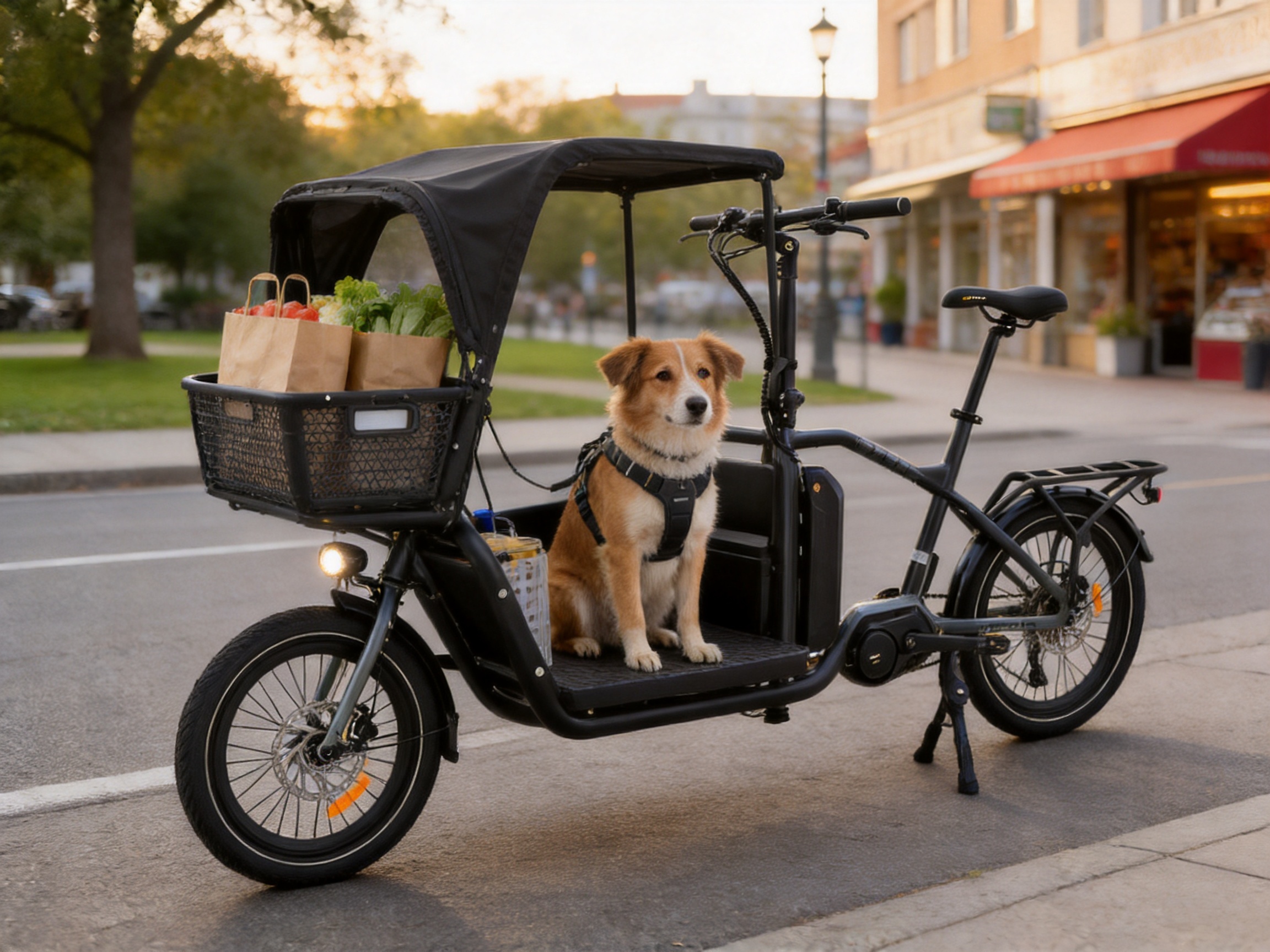
For families, the basket can be configured around different daily routines. A child seat and rain cover may be appropriate for school trips. A protective mat or pet restraint may be preferred for a dog. Open basket space may be useful for groceries or sports equipment. This ability to change roles is one reason the ESP3 can deliver better value than a bike designed for a single type of cargo.
Accessory compatibility is also important for distributors and retailers. A product that supports a range of practical add-ons can appeal to more customer groups and make it easier for retailers to build complete packages. A family buyer may choose a child-oriented configuration, while a pet owner may select a different arrangement without needing a completely different vehicle.
A cargo bike’s handling characteristics often matter more to customers than a single headline specification. New cargo-bike riders may initially feel uncertain because of the longer wheelbase, larger front structure, and increased weight. The ESP3 is designed with optimized geometry to help first-time cargo riders develop confidence.
Stable handling does not mean the bike should feel slow or unresponsive. The rider needs enough control to navigate cycle lanes, make turns, avoid road hazards, and position the bike near a curb. The 680-millimeter overall width supports a relatively manageable urban profile, while the compact wheel sizes help keep the cargo area and center of gravity under control.
Wide tires contribute to comfort by absorbing some small road irregularities. Hydraulic brakes provide dependable stopping control, and the mid-drive motor maintains a balanced layout. Together, these details can make the bike feel more composed when the basket is full.
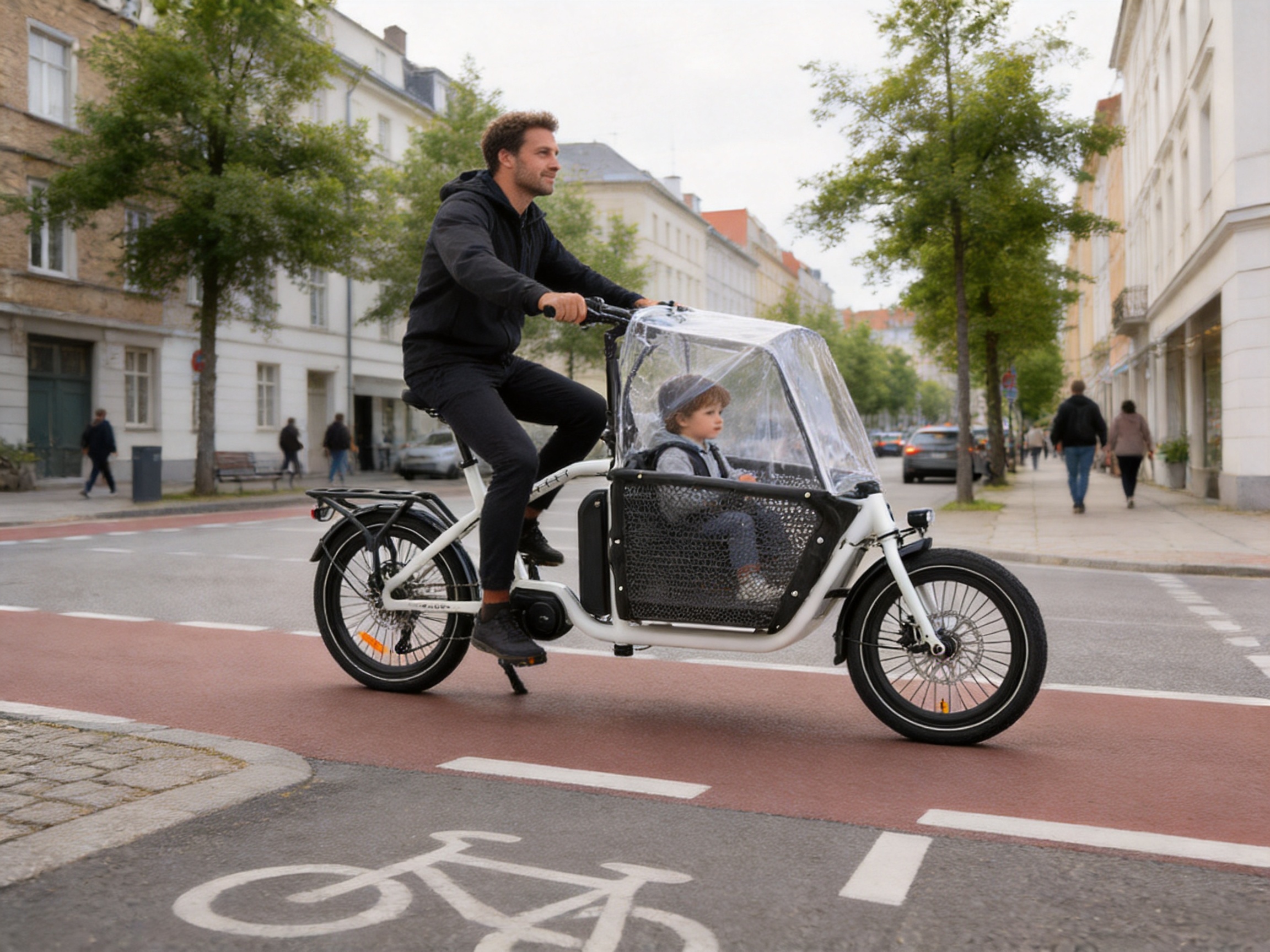
Comfort also includes the passengers’ experience. Children and pets are more likely to accept regular cargo-bike travel when they are protected from wind and rain, positioned securely, and provided with a stable ride. The compatibility with rain covers and child seats enables the ESP3 to remain useful beyond sunny weather.
For the rider, comfort involves more than saddle cushioning. It includes manageable steering effort, predictable power assistance, practical gear selection, accessible controls, and sufficient braking performance. These qualities encourage consistent use, which is important because the environmental and financial benefits of a cargo bike increase when it replaces more car trips.
A conventional bicycle may be lighter and easier to store, but it usually cannot carry children, large grocery loads, or pets with the same level of security. Adding panniers or a rear rack can expand capacity, yet the load may remain limited and less suitable for passengers.
The ESP3 offers a dedicated front cargo platform, electric assistance, stronger load capability, and compatibility with family equipment. Its trade-off is greater size and weight, but those characteristics are connected to its carrying purpose. For households replacing regular car trips, the additional capacity can be more valuable than the compactness of a standard bicycle.
Rear-loading cargo bikes often place children or goods behind the rider. Front-loading designs such as the ESP3 allow the rider to see the cargo area more directly. This can simplify communication with children and make it easier to check on a pet or monitor a shifting item.
The front basket also provides a broad, accessible loading zone. Groceries can be placed in front without lifting them over the rear wheel or balancing them on a narrow rack. The choice between front and rear loading depends on household needs, but the ESP3’s forward cargo arrangement is particularly suited to supervision and flexible access.
The ESP3’s mid-drive system is an important differentiator. By working through the nine-speed drivetrain, the motor can support climbing and varied terrain more effectively than a simple single-ratio arrangement. Central motor placement can also improve weight distribution.
Hub motors can still be appropriate for riders who prioritize simplicity or flat-road use. However, a loaded family bike frequently encounters hills, repeated starts, and changing conditions. The mid-drive approach gives the ESP3 a strong advantage in those situations, especially when the rider understands how to select gears and manage assistance levels.
A fixed box can provide a large, permanent cargo space, but it may be less convenient when the bike is stored or used without cargo. The ESP3’s folding basket addresses this issue. It provides capacity when needed and a more compact profile when the rider is traveling light.
This flexibility is useful for households with variable routines. A family may carry a child in the morning, groceries after work, and nothing more than a small bag on another day. The bike can adapt without requiring a different vehicle.
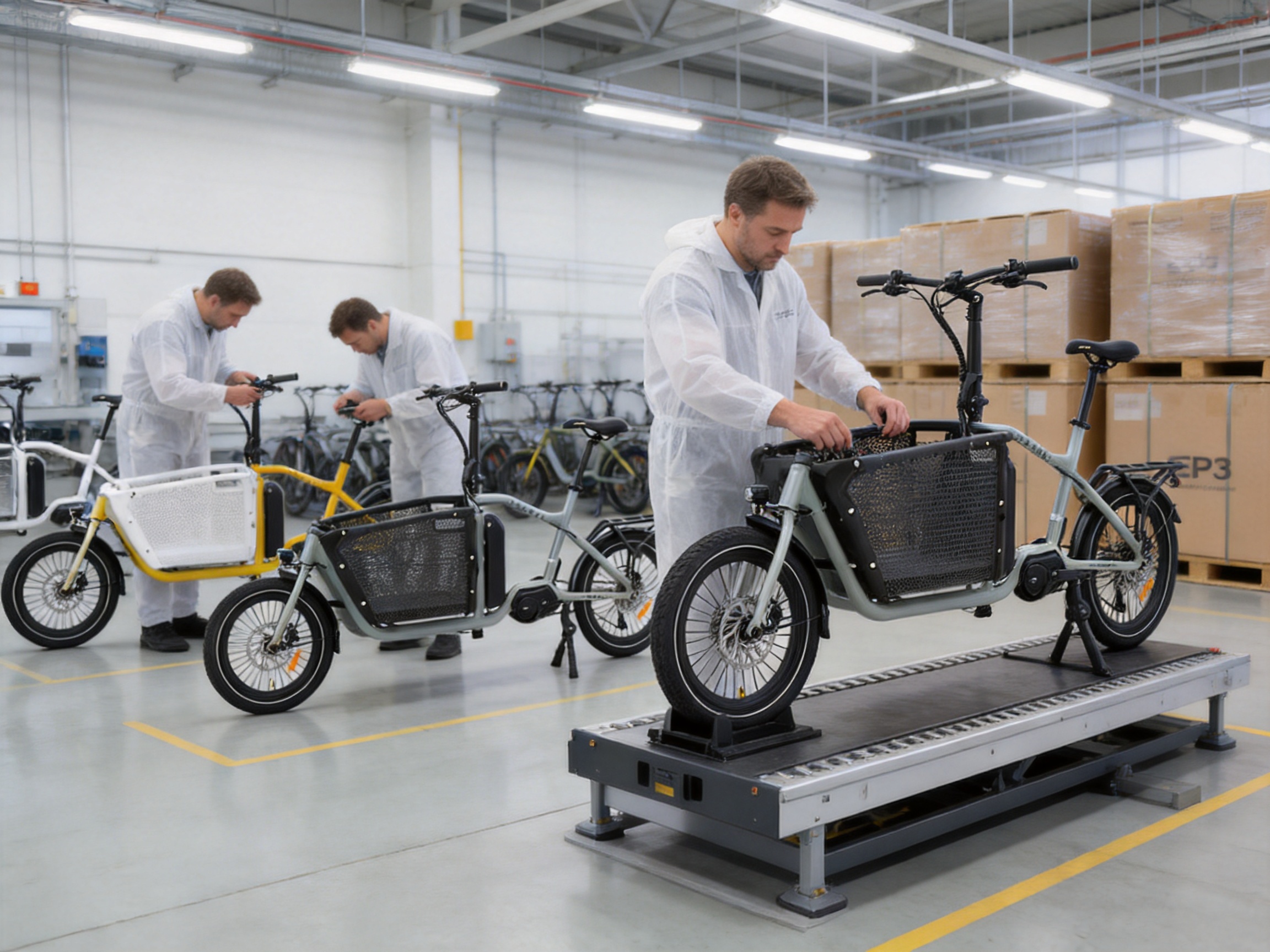
The ESP3’s advantages are connected not only to its visible components but also to the development and manufacturing systems behind them. A dependable cargo bike requires coordinated work across design, engineering, materials, component selection, assembly, testing, quality assurance, logistics, and after-sales support.
Atmose describes itself as a U.S.-origin cargo e-bike brand with an international design and R&D team based in Paris. The company developed from MOTIV, an established American beach cruiser brand with industry experience, manufacturing knowledge, and an established supply chain. This background provides a foundation for combining consumer-oriented design with practical production capability.
The establishment of ATMOSE SASU in France in 2026 represents an additional European base for design and research activity. A Paris-based team can contribute to an understanding of European streets, cycling infrastructure, family mobility patterns, regulatory expectations, and aesthetic preferences. Meanwhile, the company’s American origins contribute a strong focus on approachable, enjoyable, and practical transportation.
Manufacturing strength should be evaluated as a complete process rather than as a single factory claim. The product requires appropriate frame materials, controlled welding, accurate alignment, reliable finishing, consistent component installation, electrical-system inspection, brake adjustment, wheel truing, and final road or functional checks. A high-quality supply chain ensures that these activities are repeatable across production batches.
The 6061 T4T6 aluminum alloy frame requires careful forming, cutting, joining, heat treatment, and finishing. Frame alignment is especially important for a cargo bike because small deviations can affect steering, wheel tracking, brake performance, and tire clearance. Consistency between frames helps distributors reduce assembly problems and helps riders receive predictable handling.
Welding quality is also essential. Cargo-bike joints may experience high cyclic forces, so weld preparation, penetration, appearance, inspection, and post-weld treatment all contribute to long-term reliability. The stated fatigue-testing program provides evidence that the frame is evaluated for repeated loading rather than only visual quality.
The use of a Bafang M430 mid-drive motor, Samsung battery cells, Shimano nine-speed Sora components, and Tektro hydraulic disc brakes shows an effort to combine recognized systems within one vehicle. Component selection affects performance, serviceability, customer confidence, and spare-parts planning.
Integration is more challenging than simply listing individual brands. The motor must work with the drivetrain, the battery must communicate safely with the controller, the frame must accommodate wiring and mounting points, and the brakes must provide adequate performance for the complete loaded vehicle. The final product must also protect electrical connections from ordinary weather and vibration.
Product testing should cover more than the frame. A complete quality program may include inspection of welds and alignment, torque verification, brake testing, gear shifting, electrical function, battery charging, lighting connections, wheel tension, tire installation, and accessory attachment points. The stated TUV and EN17860-related safety positioning indicates that regulatory and certification considerations are part of the product strategy.
For distributors and retailers, repeatability is particularly important. A product must be delivered with consistent specifications, documentation, packaging, assembly instructions, and replacement-part support. Manufacturing expertise becomes commercially valuable when it reduces warranty problems, simplifies technician training, and gives retailers confidence when ordering multiple units.
Atmose’s combination of product design, international R&D, mature supply-chain relationships, and manufacturing experience supports this type of scalable approach. It also creates a foundation for future custom configurations, regional adaptations, and updates to the cargo-bike range.
Electric cargo bikes can contribute to more sustainable transportation by replacing some short car journeys. School drop-offs, grocery runs, local errands, and commuting trips often cover distances that are suitable for electrically assisted bicycles. When a family uses a cargo bike regularly, it may reduce fuel consumption, traffic exposure, parking costs, and the number of cold starts made by a private car.
The sustainability value of a cargo bike depends on how long it remains in service and how often it is used. This is why durability, repairability, battery care, and component support matter. A bike that can continue serving a family for many years has a more meaningful environmental benefit than one that is quickly discarded.
The ESP3’s versatile design supports sustained use. It is not limited to one stage of family life or one type of trip. A household may initially use it for a child, later for groceries and pets, and eventually for commuting or recreation. The folding basket and accessory compatibility help the same product adapt as needs change.
For businesses, the bike can support low-emission local delivery, mobile services, campus transport, hospitality operations, and neighborhood logistics. Its front cargo area is suitable for equipment and supplies, while electric assistance can help riders manage routes with less physical strain than an unassisted cargo bicycle.
Families should identify the main intended use before choosing accessories. A household carrying children may prioritize approved seats, harnesses, weather protection, and foot protection. A pet owner may need a stable mat, restraint system, ventilation, and a way to prevent the animal from jumping out. Grocery users may prefer an open basket with reusable bags or internal dividers.
Riders should practice in an open area before entering traffic. It is useful to become familiar with starting, stopping, turning, braking, shifting, folding the basket, and parking while unloaded. Training should then continue with a light load before carrying a child or pet.
Load distribution matters. Heavy objects should be placed low and centrally where possible. Loose objects must be secured. The rider should reduce speed on corners, wet roads, uneven surfaces, and downhill sections. Regular checks of tire pressure, brake pads, hydraulic lines, chain lubrication, battery mounting, and fasteners will support safe operation.
Retailers can present the ESP3 as a complete mobility solution rather than a single bicycle model. Demonstrations should show the folding basket, loading process, braking feel, assistance response, and available family or pet configurations. Customers often understand the value of a cargo bike more quickly when they can see how it fits into a real daily routine.
Retail staff should explain the distinction between rider weight, basket load, accessory weight, and total permitted vehicle load. They should also provide clear information about battery charging, expected range, maintenance, warranty procedures, and local riding rules.
Distributors may benefit from the ESP3’s broad market positioning. It can be offered to family retailers, bicycle dealers, mobility specialists, outdoor stores, pet-oriented businesses, and selected commercial customers. The product can support both direct-to-consumer sales and wholesale programs.
Atmose’s stated capabilities in custom design, electric cargo-bike supply, and international support may be valuable for distributors seeking regional specifications or branded configurations. Any customization should preserve structural safety, electrical compatibility, certification requirements, and serviceability.
A cargo bike operates under greater loads than a normal bicycle, so maintenance should be scheduled accordingly. Before each ride, the user should inspect the tires, brakes, steering, cargo attachment, battery seating, lights, and visible fasteners. Any unusual play, noise, vibration, or change in braking performance should be investigated before continuing.
The chain and drivetrain should be kept clean and lubricated, particularly after wet or dusty rides. Hydraulic brakes should be inspected for pad wear and fluid-line damage. Tires should be maintained at an appropriate pressure because underinflation can increase rolling resistance and affect handling, while excessive pressure can reduce comfort and traction.
The folding basket should be checked for secure locking and structural damage. Hinges, latches, attachment points, and accessory mounts should not be ignored. If the bike has carried a heavy load, the rider should pay particular attention to wheel spokes, brake operation, and frame joints.
Battery maintenance includes using the correct charger, avoiding unauthorized modifications, storing the battery in a suitable environment, and following local recycling requirements. Service work on the electrical system should be carried out by qualified technicians or approved service centers.
The ESP3 is designed for families, commuters, pet owners, grocery shoppers, and users who need a flexible front-loading electric cargo bike. It can also serve selected business and local delivery applications.
Yes. The front cargo area is described as compatible with child seats and rain covers. The correct seat, restraint, mounting method, and weight limit must be confirmed for the specific configuration.
Yes. The front basket can be configured for small pets, and the product is promoted for dog and pet transport. A secure pet arrangement, suitable surface, ventilation, and restraint should be used, and the animal should be introduced to the bike gradually.
The ESP3 uses a Bafang M430 mid-drive motor system. The supplied specifications identify a 36-volt, 250-watt system, while the product material also refers to output of up to 500 watts and torque of up to 110 newton-meters. The exact legal and technical configuration should be confirmed for the intended market.
The bike uses a Samsung 36-volt, 15-ampere-hour lithium battery with a stated capacity of 540 watt-hours.
The supplied information states a range of up to 80 kilometers. Actual range depends on load, terrain, speed, assistance level, temperature, wind, tire pressure, and battery condition.
The stated basket capacity is up to 35 kilograms. Users should verify the final approved load rating for the complete bike, including any child seat, pet equipment, and other accessories.
The ESP3 uses Tektro hydraulic disc brakes. Hydraulic braking provides strong, controllable stopping performance and is well suited to a loaded cargo bicycle.
Yes. The front basket has a folding design intended to save space when the bike is stored or used without a full cargo load. The supplied material identifies a folded width of approximately 365 millimeters.
A mid-drive motor is positioned centrally and works through the bicycle’s gears. This can improve balance and provide better flexibility on hills and during loaded starts than a simple single-speed motor arrangement.
The product is designed with weather-resistant features, including a motor described as having IP6X protection and compatibility with rain covers. Riders should still follow safe wet-weather practices and avoid submerging electrical components.
Atmose combines American origins, European design and R&D activity, manufacturing experience associated with MOTIV, international supply-chain knowledge, and a focus on cargo-bike development. These strengths support product design, testing, customization, and wholesale supply.
No. Although family transport is a central use case, the bike can also support groceries, pet transport, commuting, recreation, and certain commercial or local delivery tasks.
Customers should confirm the local legal configuration, maximum rider and cargo limits, accessory compatibility, battery warranty, service arrangements, charging requirements, and the availability of replacement parts.
The ESP3 electric family cargo bike is built around a practical proposition: make everyday transport more capable, more comfortable, and less dependent on short car journeys. Its front folding basket provides flexible space for children, pets, groceries, and equipment. Its 6061 T4T6 aluminum frame, hydraulic disc brakes, wide tires, and safety-focused development support stable and confident use. The Bafang M430 mid-drive motor and Shimano nine-speed drivetrain give the bike the climbing ability and adaptability required for loaded urban travel, while the Samsung 540-watt-hour battery supports a useful daily range.
Its advantages over more limited cargo-bike designs come from integration. The bike is not defined only by its battery, motor, basket, or frame. It combines those systems into a platform intended for varied family and urban needs. The folding cargo structure improves storage flexibility, the central motor supports balanced handling, and the accessory compatibility allows the product to evolve with the user.
Behind the product is a company strategy that joins American origins, European design and research, manufacturing experience, supply-chain capability, safety testing, and potential customization. This combination is important for both end users and professional buyers. Families need a dependable daily vehicle, while retailers and distributors need consistent products, clear specifications, and support for different markets.
For users seeking a single electric cargo bike that can handle school runs, grocery trips, pet transport, commuting, and leisure riding, the ESP3 presents a strong and versatile option. With correct loading, responsible riding, regular maintenance, and appropriate accessories, it can become a practical part of modern family mobility and a meaningful tool for cleaner urban transportation.
1. Atmose product specification sheet for the ESP3 electric family cargo bike.
2. Atmose product information concerning frame construction, battery capacity, motor system, drivetrain, brakes, dimensions, basket design, and load ratings.
3. Technical product materials concerning the Bafang M430 mid-drive motor and Samsung lithium battery system.
4. Technical product materials concerning Shimano nine-speed Sora drivetrain components and Tektro hydraulic disc brakes.
5. Safety and certification information supplied for the cargo-bike frame, including fatigue testing and TUV and EN17860-related claims.
6. General engineering principles for aluminum bicycle frames, fatigue testing, hydraulic braking, lithium-ion battery care, and cargo-bike load distribution.
7. Company information concerning Atmose origins, MOTIV manufacturing experience, Paris-based design and R&D activity, sustainability objectives, and international cargo-bike supply.
Nov 17, 2026
Nov 03, 2026
Oct 26, 2026


info@atmosecargobike.com

200 rue de la Croix Nivert 75015 Paris

Custom Electric Bakfiets
 English
 Français
 Deutsch