Sep 26, 2026
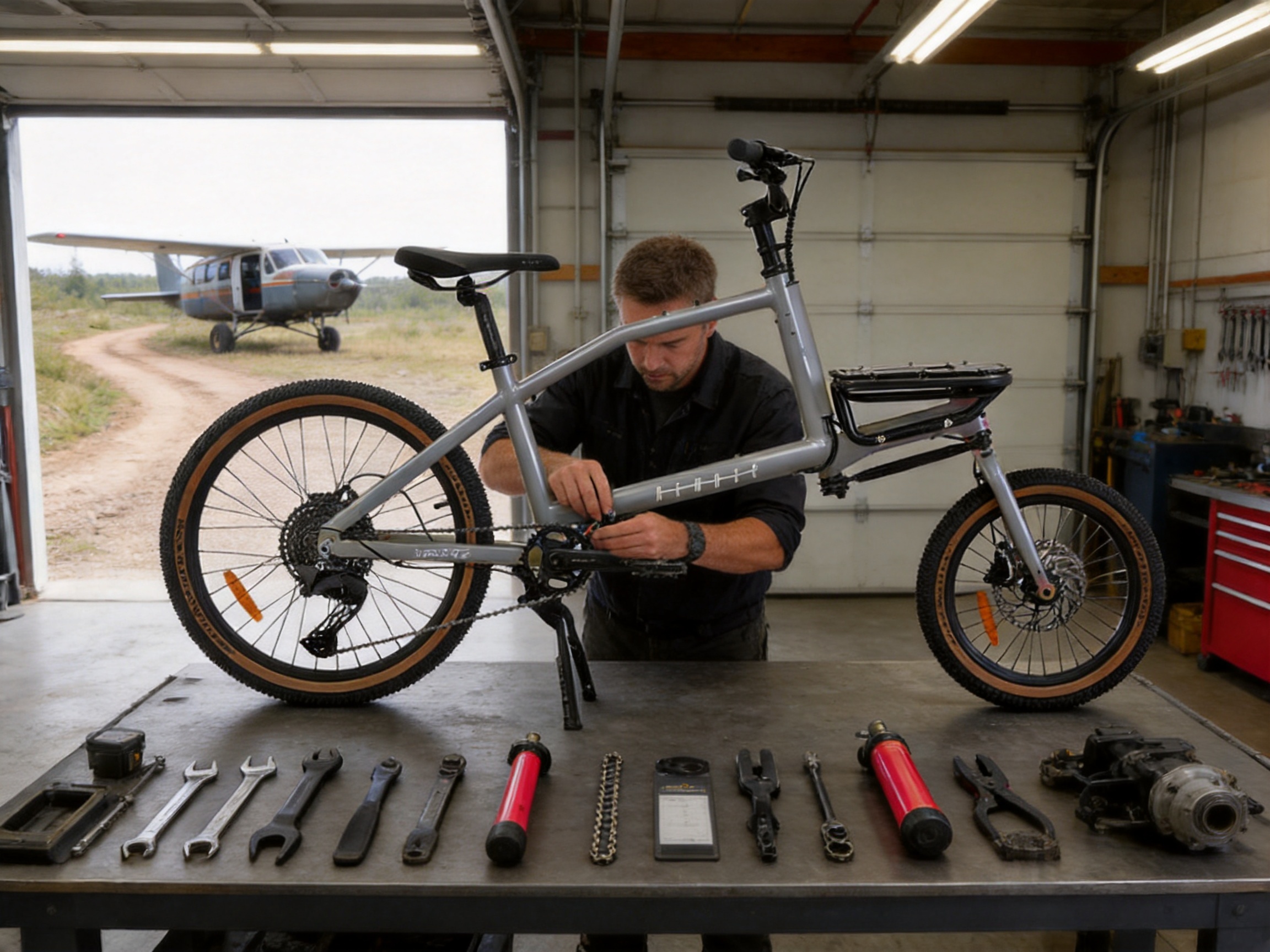
Adventure cycling is often associated with lightweight touring bicycles, technical mountain bikes, or electric cargo bikes equipped for long-distance travel. Each category has its strengths, but none offers exactly the same combination of expedition capacity, mechanical simplicity, cargo flexibility, and load-ready stability as the Atmose Model V V1 Manual Adventure Cargo Bike with Oversized Front Rack. Designed for riders who want to travel beyond dependable access to electricity, the V1 is a purpose-built mechanical cargo bike for camping, bikepacking, remote transport, and demanding outdoor use.
The V1 takes a different approach from the increasingly common electric cargo bike. Instead of depending on a motor, battery, display, controller, charger, or charging network, it relies on the rider, a robust aluminum frame, hydraulic braking, wide-range gearing, puncture-resistant tires, and a generous front cargo platform. This design is not a compromise for users who need assistance. It is a deliberate choice for people who value independence, straightforward maintenance, lower system complexity, and the ability to keep moving in places where charging is difficult or impossible.
With a maximum rider load of 145 kilograms and a basket capacity of 25 kilograms, the V1 is prepared for serious equipment. Its oversized front folding basket measures 470 millimeters in length, 470 millimeters in width, and 375 millimeters in height. This creates useful space for camping equipment, food, tools, water containers, protective clothing, and other supplies that would be difficult to carry on a conventional bicycle.
The result is a cargo bike that bridges several categories. It can serve as a compact expedition hauler, a bikepacking platform, a remote-work transport vehicle, an outdoor utility bike, or a practical mechanical alternative to an electric cargo bike. Its value comes from how well its individual features work together: a durable alloy frame, a compact overall footprint, an 11-speed drivetrain, hydraulic disc brakes, wide tires, a folding front basket, and a design focused on self-sufficiency.
Many modern cargo bikes are designed primarily around electric assistance. That approach is highly effective for daily commuting, family transportation, delivery work, and heavy urban loads. An electric motor can make hills easier and extend the practical use of a cargo bike for riders who would otherwise struggle with weight or distance. However, electric systems also add complexity. Batteries must be charged, electrical connections must remain protected, and replacement components may not be readily available in remote locations.
The Model V V1 is designed around a different priority: mechanical reliability in environments where support infrastructure may be limited. It removes the battery and power system completely. There is no motor to protect from water, dust, impact, or overheating, and there is no charging schedule that determines how far the rider can travel. Range is instead influenced by the rider’s physical ability, route conditions, gearing, available food and water, and the amount of equipment carried.
This mechanical design can be particularly valuable during extended wilderness trips. A rider may be traveling through forests, mountain passes, coastal tracks, desert roads, or rural areas where a power outlet is unavailable. While ordinary maintenance is still important, the core systems of the bicycle can be inspected, adjusted, and serviced using familiar mechanical procedures. A chain, cassette, derailleur, brake system, tires, and bearings are generally easier to understand and maintain in the field than an integrated electric drive system.
The V1 therefore appeals to a specific kind of rider: someone who regards self-sufficiency as part of the adventure. Instead of asking where the next charging station is located, the rider can focus on route planning, carrying the right equipment, and managing physical effort. For expedition cyclists, this freedom can be more important than motor assistance.
A conventional bicycle can carry panniers and a rear rack, but its cargo capacity is usually limited by frame design, axle loading, handling balance, and available attachment points. The V1 addresses these limitations with a large front folding basket designed as a central part of the bicycle rather than as an afterthought.
The front basket measures 470 millimeters by 470 millimeters by 375 millimeters. Its broad, deep format is suitable for equipment that is awkward to place inside narrow panniers. A tent, rolled sleeping mat, cooking kit, camera bag, dry bag, cooler, tool case, or large grocery container can be arranged on the front platform with greater accessibility than on a traditional touring bicycle.
The front cargo location also allows riders to keep essential items within reach. Water bottles, rain gear, maps, food, repair tools, and first-aid supplies can be organized at the front of the bike for quick access. This is helpful during long rides, where frequently stopping to unpack a rear bag can be inconvenient.
At the same time, front cargo handling requires thoughtful loading. Heavy items should be secured and distributed evenly to preserve predictable steering. The V1’s design provides the capacity needed for large loads, but the rider should still position dense equipment low and toward the center of the basket whenever possible. Properly arranged cargo can improve stability, reduce movement, and make the bicycle easier to control on uneven surfaces.
The basket is also described as folding. This feature gives the bicycle greater flexibility when it is not being used for cargo. A foldable front structure can make storage easier, reduce the bike’s visual bulk, and assist with transport in vehicles or other confined spaces. For expedition users, foldability can be especially useful when the bike must be loaded onto a boat, aircraft, train, or support vehicle.
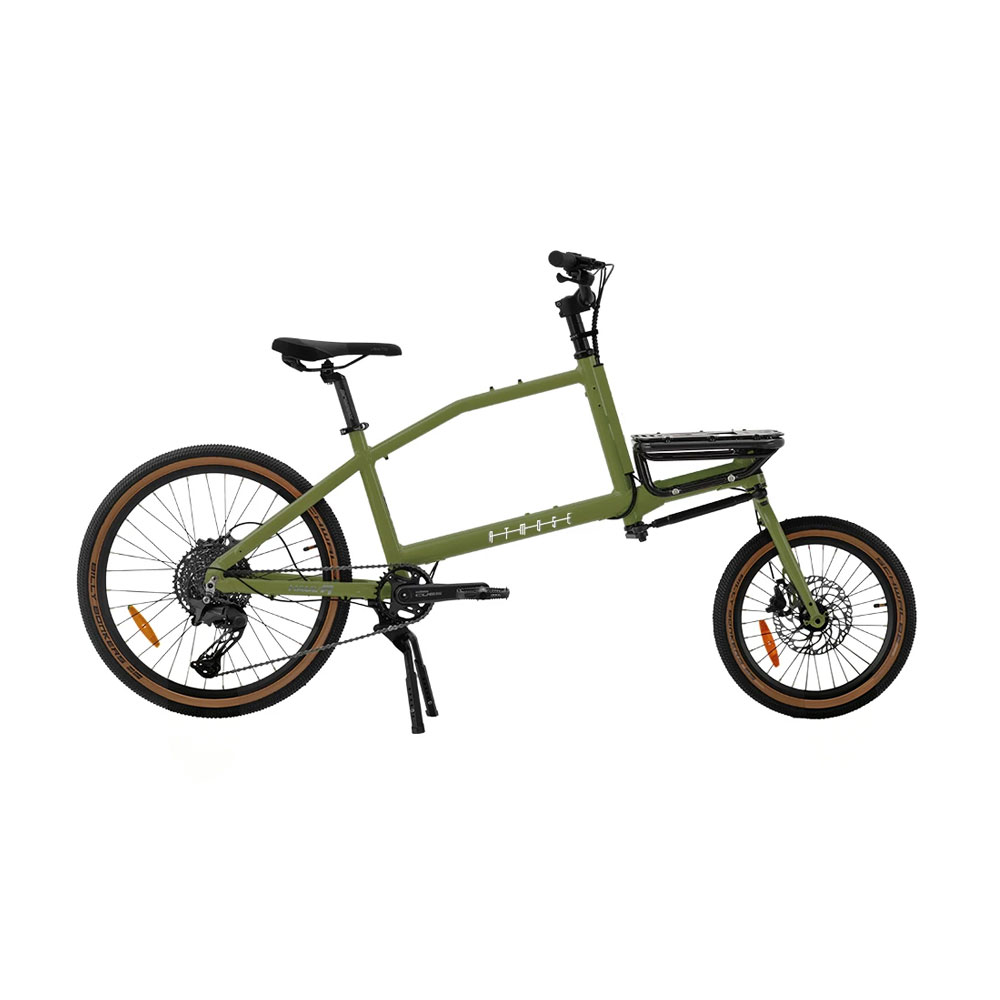
Atmose Model V V1 Manual Adventure Cargo Bike with Oversized Front Rack
The V1 offers several advantages over a conventional cargo bicycle designed mainly for urban errands. Its geometry and cargo structure are intended for more demanding environments, where the surface may be loose, uneven, or unpredictable. The wide 18-inch front tires and 20-inch rear tires, both listed with a 2.4-inch width, provide a substantial contact area and are better suited to gravel roads, packed dirt, woodland tracks, and other surfaces where narrow commuter tires may feel less confident.
Its compact length of 1,910 millimeters is also significant. Many long-tail or front-loading cargo bicycles become difficult to maneuver in narrow paths, storage areas, or transport situations. The V1 remains a substantial cargo vehicle, but its dimensions are still compatible with a variety of real-world situations. The 750-millimeter width provides a stable stance while remaining practical for common paths, doors, and loading areas.
The low and wide cargo arrangement can help keep the bicycle balanced when carrying bulky gear. This is important for adventure travel because equipment is often irregularly shaped. A camping load may include tall items, soft bags, hard cases, and supplies that do not fit neatly into standard panniers. The large front deck gives riders more freedom to organize equipment around the actual demands of the trip.
Compared with a standard bicycle fitted with improvised racks, the V1 provides a more integrated cargo solution. The rider does not need to depend on a collection of aftermarket accessories to create carrying capacity. The basic platform is already part of the bicycle’s intended function. This can reduce setup complexity and provide a more cohesive riding experience when the bicycle is fully loaded.
Electric cargo bikes remain an excellent choice for many riders, especially those who carry children, transport heavy commercial loads, or need to reduce physical exertion over steep urban routes. However, the V1 is advantageous in several situations where electric systems are less convenient.
The first advantage is energy independence. The V1 does not require a battery charge before departure and cannot be immobilized because its battery has reached a low state of charge. The rider’s effective range is not restricted by battery capacity. This does not eliminate physical fatigue, but it makes the bike’s energy source predictable and available wherever the rider can continue pedaling.
The second advantage is reduced electrical complexity. There is no motor, battery management system, charging port, display, throttle, or electronic controller. Removing these components reduces the number of systems that must be protected and diagnosed. For a rider operating far from a dealer or repair center, that simplicity can provide confidence.
The third advantage is weight. The product description specifically emphasizes that the V1 is significantly lighter than its electric counterparts. A lighter bicycle can be easier to lift over fallen branches, carry up steps, position on a rack, or load onto a transport vehicle. In remote travel, this can make a major difference because roads and trails do not always remain rideable.
Weight also affects handling. Without the mass of a motor and battery, the bike can feel more responsive when changing direction, negotiating narrow tracks, or moving around obstacles. The rider still needs to account for cargo weight, but the unloaded platform is designed to be more manageable than a similarly equipped electric cargo bike.
For users who do not need electric assistance, the V1 can also reduce ownership considerations associated with battery aging, battery storage, charging equipment, software compatibility, and electronic replacement parts. Its long-term upkeep is centered on familiar bicycle components and routine mechanical inspection.
The Model V V1 uses a 6061 T4T6 aluminum alloy frame. Aluminum alloy is widely used in performance and utility bicycles because it can provide a useful balance of low weight, corrosion resistance, rigidity, and manufacturability. The T4T6 designation indicates a heat-treatment pathway associated with aluminum alloy processing, supporting the material properties needed for a functional cargo frame.
For an adventure cargo bicycle, the frame must do more than support the rider. It must manage steering forces from the front cargo structure, resist flex under uneven loads, and maintain stable handling when the bicycle travels over irregular surfaces. The frame is therefore a central part of the riding experience. A strong but unnecessarily heavy frame would reduce portability, while a frame that is too flexible could make loaded handling less predictable.
The V1’s structure is matched to its intended use by combining the alloy frame with wide tires, a load-bearing front basket, and a mechanical drivetrain designed for climbing under load. These elements work as a system. The frame carries the rider and cargo, the tires maintain contact with the ground, the gearing converts rider effort into forward motion, and the brakes control the combined mass on descents and stops.
The stated maximum rider load is 145 kilograms, while the basket is rated for 25 kilograms. These figures distinguish the V1 from ordinary bicycles that may not be designed for substantial cargo. Riders should interpret load ratings responsibly and include clothing, equipment, accessories, and other carried items when calculating the total working load. Cargo should also be secured to prevent shifting, especially on rough surfaces.
The V1 is equipped with wide 2.4-inch tires, using an 18-inch configuration at the front and a 20-inch configuration at the rear. The product information identifies these tires as puncture-proof or punch-proof, a feature that supports the bike’s role as a remote-use machine.
Wide tires can improve comfort and traction by creating a broader contact patch. They can also be operated at pressures appropriate for the surface, allowing the tire to absorb some small impacts and irregularities. On gravel, firm dirt, and mixed terrain, this can make the ride more controlled than a narrow road-oriented tire would provide.
The smaller wheel formats are also relevant to cargo bike design. A smaller wheel can help lower the cargo platform, improve structural packaging, and create a compact overall frame. At the front, the 18-inch wheel supports the front-loading design, while the 20-inch rear wheel provides a practical balance between rolling ability and cargo-bike stability.
No tire can be completely immune to damage, and expedition riders should still carry a pump, tire levers, patches, and appropriate replacement equipment. However, puncture-resistant construction can reduce the frequency of interruptions and provide an additional layer of protection when riding over thorns, sharp gravel, branches, and rough trail debris.
A cargo bike designed for adventure must be able to climb while loaded. Carrying camping equipment increases the total weight that the rider must move, and unpaved surfaces can add rolling resistance. The V1 addresses this challenge with a Shimano 11-speed Cues gearing system.
An 11-speed drivetrain gives the rider a broad selection of ratios. Lower gears help reduce the effort required on steep climbs, while higher gears allow more efficient progress on flatter roads or downhill sections. The rider can select a suitable gear before a climb becomes too demanding, maintain a comfortable cadence, and manage energy more effectively over a long route.
Wide-range gearing is particularly important on a manual cargo bike because there is no motor to provide additional torque. The drivetrain must allow the rider to convert physical effort into useful movement over changing terrain. A well-managed cadence can help avoid sudden fatigue and make long climbs more sustainable.
Shimano’s Cues family is positioned for durable, practical cycling applications. The use of a recognized drivetrain system gives riders access to familiar maintenance practices and replacement knowledge. Adventure riders can prepare more effectively when they understand the adjustment requirements, chain care, derailleur protection, and spare parts associated with their bicycle.
The drivetrain is not intended to remove the physical challenge of adventure cycling. Rather, it gives the rider more control over that challenge. The V1 encourages deliberate pacing, route awareness, and efficient use of mechanical advantage. For riders who enjoy the active character of manual cycling, this is a central benefit rather than a limitation.
The V1 uses Tektro hydraulic disc brakes. Braking performance is particularly important on a cargo bike because the combined weight of rider, bicycle, and equipment can be considerably higher than that of a standard bicycle. Descents, wet surfaces, loose gravel, and sudden obstacles all demand predictable speed control.
Hydraulic systems transmit force through fluid rather than a traditional mechanical cable. This can provide smooth lever action and consistent braking modulation. Disc brakes also maintain their position away from the wheel rim, which can be advantageous when riding through mud, water, or debris.
For an adventure cargo bike, braking is not only about stopping distance. It is also about maintaining control while moving slowly on technical descents, balancing the bicycle through turns, and managing speed when the front basket is heavily loaded. Good modulation allows the rider to apply braking force progressively rather than locking a wheel unnecessarily.
As with any braking system, regular inspection remains essential. Riders should check pad wear, rotor condition, lever feel, and fluid performance before extended trips. Heavy cargo and steep terrain place additional demands on brakes, so maintenance should be treated as part of expedition preparation.
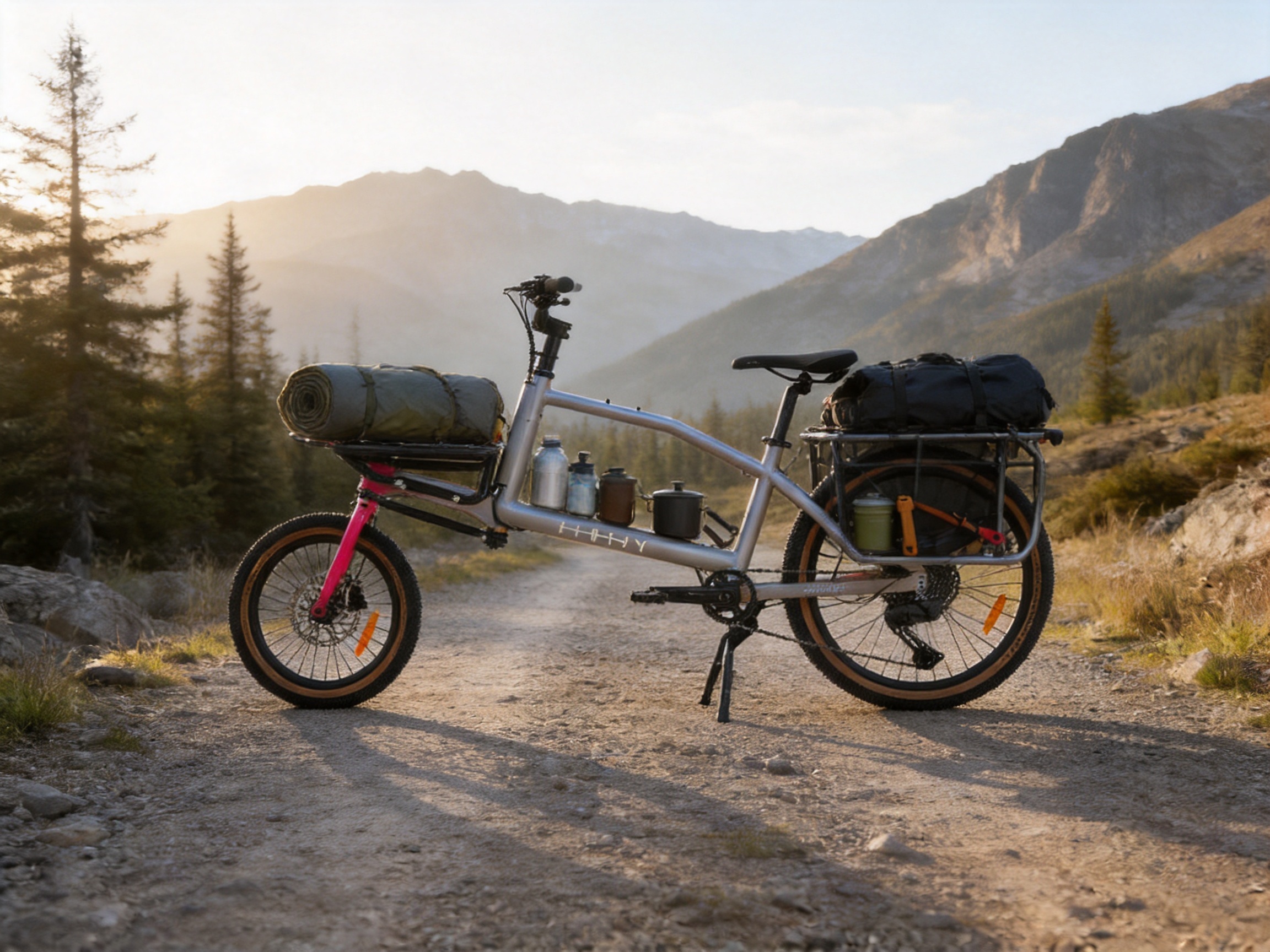
Adventure travel rarely consists entirely of smooth, rideable roads. Riders may encounter stairs, washouts, gates, narrow bridges, fallen trees, soft sand, or sections where the bicycle must be carried. The V1’s manual configuration supports this reality by avoiding the added weight of an electric motor and battery.
A lighter cargo bike is easier to lift with two people and more manageable for one rider who needs to raise the front wheel, move the bicycle around an obstacle, or position it on a transport platform. The product description also highlights suitability for loading onto a bush plane, an important indication of the bike’s intended use in locations where conventional road transport is unavailable.
The folding front basket adds another dimension to portability. When cargo capacity is not needed, folding the basket can help the bike fit more easily into a storage area or transport environment. For expedition teams, guides, research workers, and outdoor professionals, the ability to transition between cargo mode and compact mode can make logistics simpler.
Portability does not mean the bike is designed only for short trips. Its purpose is to provide practical capacity without making every handling task unnecessarily difficult. This balance is one of the main distinctions between a compact adventure cargo bike and a very large commercial cargo platform.
The V1 is supported by the broader capabilities of Atmose, a cargo bicycle company with American origins, a design and research-and-development presence in Paris, and manufacturing experience developed through its connection with MOTIV, an established American beach cruiser brand. This background gives the product a combination of market understanding, design perspective, and supply-chain experience.
Atmose describes its approach as combining American product thinking with European design aesthetics. For the Model V V1, that combination can be seen in the focus on practical performance and visual simplicity. The bicycle is not defined by unnecessary electronic features or decorative complexity. Its design begins with a clear use case: carrying substantial equipment through environments where reliability and independence matter.
The company’s manufacturing strength is also connected to an established supply chain and years of industry experience. A cargo bike is a system of many components, and dependable production requires coordination across frame fabrication, welding, finishing, wheel building, drivetrain installation, brake assembly, quality inspection, packaging, and distribution. A mature supply chain helps ensure that these elements are available and compatible throughout production.
The 6061 T4T6 aluminum frame requires appropriate forming, joining, heat-treatment control, finishing, and inspection. A manufacturer experienced with bicycle production can apply established processes to maintain dimensional consistency and alignment. This is especially important for a cargo bike because small alignment errors can become more noticeable when the bicycle carries a heavy front load.
Manufacturing quality also depends on how well individual components are integrated. The front basket, frame, steering assembly, wheels, drivetrain, and brake system must function together under real load conditions. A practical cargo design cannot be evaluated only by the strength of a single tube or the specification of a single component. It must be assessed as a complete vehicle.
Atmose’s product-development philosophy emphasizes usability, reliability, comfort, and riding experience. These principles are relevant to the V1 because an expedition bicycle must be practical over long periods, not merely impressive in a specification sheet. A useful product is one that riders can load, ride, inspect, clean, maintain, and transport with reasonable effort.
The company’s international design and research-and-development team contributes to a product-development process that considers different transportation cultures and environments. American cycling traditions often emphasize relaxed usability, robustness, and everyday practicality, while European urban design frequently places strong attention on spatial efficiency, visual refinement, and integrated utility. The V1 combines these perspectives in a form intended for outdoor exploration.
Research and development for a cargo bike must address more than appearance. It includes rider position, steering response, cargo placement, frame proportions, tire clearance, braking requirements, drivetrain selection, and the practical dimensions of storage and transport. The V1’s compact length, moderate width, front basket dimensions, and wheel configuration indicate a design process concerned with balancing cargo volume against maneuverability.
The company also operates in several cargo bike categories, including family, urban, adventure, heavy-duty, children’s learning, and flexible mobility applications. Experience across these categories can support product development because different models share technical challenges. Load distribution, frame strength, comfort, safety, weather exposure, and accessory integration are important in multiple types of cargo bicycles.
Component selection is another manufacturing strength. The V1 uses recognized equipment from Shimano and Tektro for its drivetrain and brakes. Specifying established components helps create a predictable service experience for riders and dealers. It also allows maintenance personnel to draw on existing technical knowledge rather than learning an entirely proprietary system.
Component integration requires careful assembly. The drivetrain must be adjusted so that the chain moves cleanly across the cassette. Hydraulic brake lines must be routed without excessive bends or exposure to damage. Wheels must be tensioned and aligned, and the basket must be secured so that it remains stable under load. These details influence how the bicycle performs in daily use.
A strong production process includes inspection at multiple stages rather than relying only on a final visual check. Frame alignment, weld quality, paint or finish coverage, fastener torque, brake operation, shifting performance, wheel trueness, and cargo-platform security all deserve attention. The more demanding the intended environment, the more valuable systematic inspection becomes.
Atmose’s American origin and French establishment reflect an international operating structure. ATMOSE BIKES INC. was founded in Long Beach, California, in 2023, while ATMOSE SASU was established in France in 2026 alongside a new design and research-and-development team. This structure supports a global outlook and allows the company to work across different markets.
International supply and support can be valuable for cargo bike buyers who require more than a single consumer product. Wholesale customers, outdoor businesses, mobility operators, delivery users, and specialty retailers may need consistent specifications, documentation, replacement components, and communication across regions. A company with international ambitions must coordinate these needs while maintaining a recognizable product standard.
The company’s stated commitment to sustainability, reliability, practicality, and fun also aligns with the manual V1’s purpose. The lack of a motor and battery can reduce dependence on electrical energy during use, while the durable mechanical platform is intended for repeated service. Sustainability is not only a question of propulsion. It also involves product longevity, repairability, appropriate use, and the ability to keep a vehicle operating for a long period.
Compared with a standard touring bicycle, the V1 offers substantially greater front cargo capacity and a frame designed around carrying equipment. A touring bicycle may be faster and narrower when lightly loaded, but it usually cannot accommodate the same volume of bulky cargo without extensive accessories. The V1 is better suited to riders who prioritize carrying capability over road-racing efficiency.
Compared with a conventional mountain bike, the V1 offers more load capacity and a more practical cargo structure. A mountain bike may be superior on highly technical singletrack, but it is not normally designed to carry a 25-kilogram front basket load. The V1 is intended for a different type of adventure: expedition travel, mixed-surface touring, utility exploration, and outdoor transport.
Compared with an electric cargo bike, the V1 is lighter in its base configuration and independent of charging. An electric bike can reduce pedaling effort, particularly on steep hills, but it also brings additional weight and electrical systems. The best choice depends on the rider’s priorities. The V1 is most compelling when mechanical simplicity, remote range, and portability matter more than motor assistance.
Compared with a heavy-duty commercial cargo bike, the V1 is more focused on portability and adventure mobility. Commercial platforms may carry larger loads or support specialized delivery bodies, but they can be difficult to transport and maneuver away from roads. The V1’s 25-kilogram basket rating and compact dimensions create a more balanced solution for personal expedition equipment and outdoor use.
The V1 is naturally suited to bikepacking and camping. A rider can place a tent, sleeping system, stove, cookware, food, clothing, and repair equipment in the front basket while using additional bags for smaller items. The broad platform makes it easier to carry equipment that does not compress well into traditional panniers.
It can also serve as a support bike for outdoor events, nature excursions, photography trips, and field work. A camera operator may need to transport cases and tripods. A guide may carry safety supplies, food, and tools. A researcher may need to move equipment between a base camp and remote observation areas. The lack of a battery simplifies operation in locations where recharging would be inconvenient.
For rural property owners, the bike can function as a human-powered utility vehicle. It may be used for moving gardening tools, supplies, feed, or maintenance equipment over paths that are too narrow for a car. Because the bicycle is manually powered, it can be operated quietly and without fuel.
It may also appeal to emergency preparedness users who value transport resilience. In a power outage, natural disaster, or infrastructure disruption, an electric vehicle may not be practical if charging is unavailable. A manual cargo bike can remain useful as long as the rider can provide the necessary physical effort and the tires, drivetrain, and brakes are maintained.
Urban riders can use the V1 as well, especially those who want a cargo platform for shopping, gardening, weekend escapes, or recreational transport. Its adventure orientation does not prevent practical city use. The same basket that carries camping gear can carry groceries, tools, sports equipment, or household supplies.
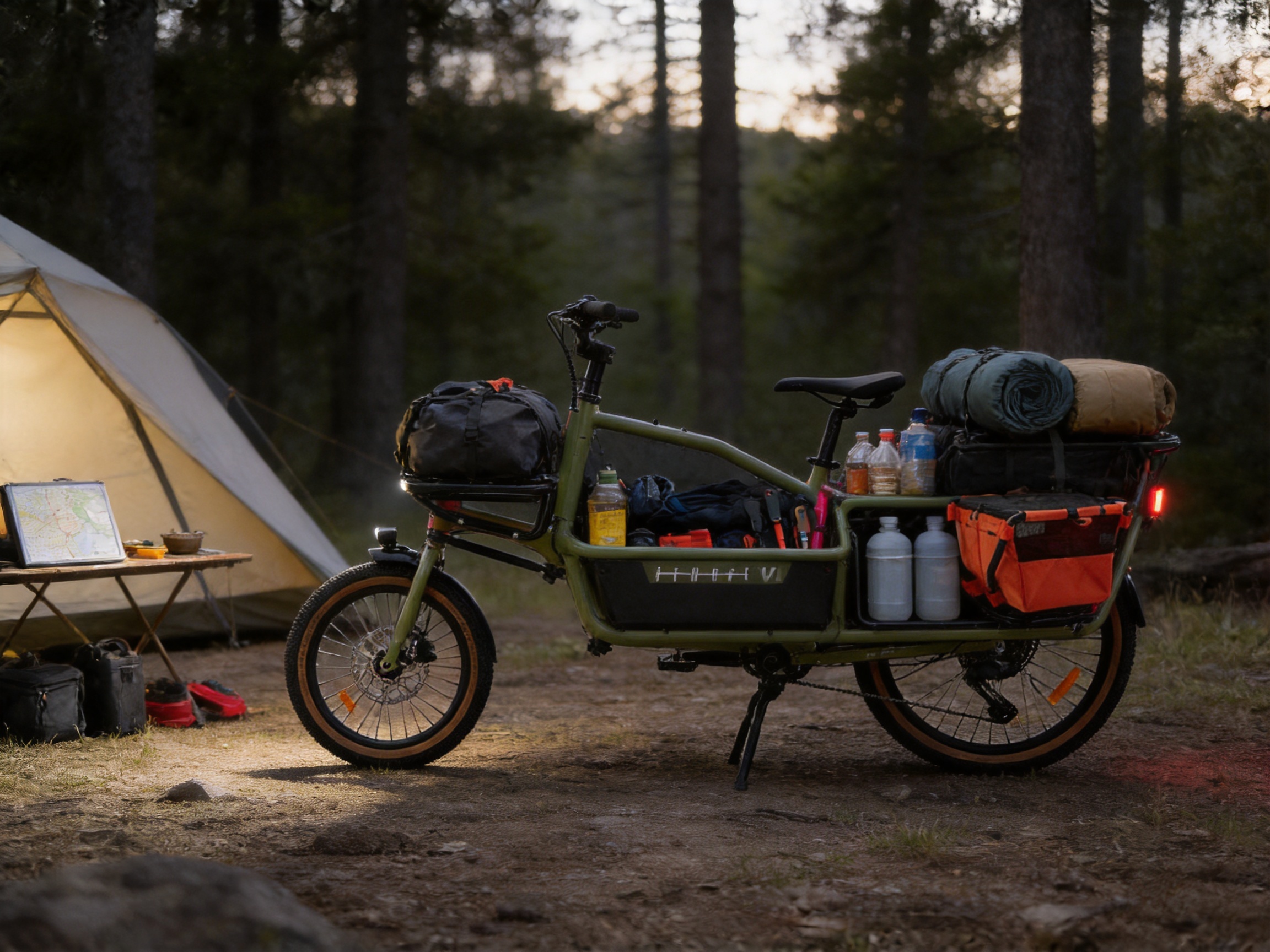
Riders should begin each trip by checking that the front basket is securely attached and that all cargo is restrained. Loose objects can shift during braking or cornering, affecting steering. Soft items should be packed around rigid equipment to reduce movement, while heavy objects should remain low and close to the bicycle’s centerline.
The stated basket capacity is 25 kilograms. This limit should not be exceeded, even if the basket appears physically capable of holding more. Excessive front weight can influence steering effort, braking behavior, and frame loading. The rider should also consider the combined weight of the bicycle, rider, basket contents, and any additional accessories.
Before riding on a remote route, it is sensible to test the fully loaded bike in a familiar area. This allows the rider to understand how the bicycle accelerates, turns, climbs, and stops under expedition conditions. Tire pressure can then be adjusted for the chosen surface, and cargo placement can be refined before the actual trip begins.
Riders should plan routes according to both physical capacity and mechanical conditions. The V1’s 11-speed system supports climbing, but a manual cargo bike still requires sustained effort on steep terrain. Carrying enough water, scheduling rest periods, and choosing realistic daily distances are essential parts of safe adventure planning.
The V1’s mechanical configuration simplifies some aspects of ownership, but it does not eliminate maintenance. The chain should be cleaned and lubricated according to terrain and weather conditions. Mud, dust, sand, and water can accelerate wear. The cassette, chainrings, derailleur, and jockey wheels should be inspected regularly, particularly after long trips.
Tire condition deserves special attention because remote riders depend on reliable contact with the ground. Check the tread, sidewalls, valve areas, and inflation pressure before every major ride. Puncture-resistant tires reduce risk but do not replace the need for repair supplies and basic tire knowledge.
Hydraulic disc brakes should be checked for pad wear, rotor contamination, and changes in lever feel. A soft lever, unusual noise, or reduced braking power should be treated as a reason for inspection before further loaded riding. Brake components experience greater stress when descending with a heavy basket.
Fasteners around the basket, frame, handlebars, seat, wheels, and brake mounts should be checked periodically. Cargo bicycles experience repeated vibration, and rough tracks can loosen hardware over time. A compact tool kit with appropriate hex keys, a multi-tool, tire levers, a pump, patches, spare tubes if applicable, chain repair equipment, and replacement brake-related supplies can improve self-sufficiency.
The absence of a battery means owners do not need to manage battery storage temperature, charging cycles, or electronic diagnostics. This can make seasonal storage simpler. Nevertheless, the bicycle should be kept clean, dry when possible, and protected from prolonged exposure to corrosive conditions.
The V1 is designed for riders who want cargo capacity without electric assistance. It suits people who enjoy physical cycling and see pedaling as part of the purpose of the journey. It is also suitable for users who regularly travel beyond reliable charging infrastructure or who need a bicycle that can be transported into remote areas.
Bikepacking purists may appreciate its direct mechanical character. Outdoor professionals may value its carrying ability and field-serviceable systems. Rural users may find it practical for moving supplies. Adventure travelers may choose it because the bicycle remains useful in locations where electric alternatives are difficult to charge or transport.
The V1 may not be the ideal choice for every rider. Someone who regularly transports children up steep city hills, carries extremely heavy commercial loads, or wants effortless acceleration may prefer an electric cargo bike. Someone focused on technical mountain-bike trails may need a different suspension and geometry platform. The Model V V1 is strongest when its specific advantages are aligned with the rider’s actual mission.
No. The V1 is a manual cargo bike with no battery and no power system. It is propelled entirely by the rider through its mechanical drivetrain.
Its main differences are mechanical simplicity, lower base weight than comparable electric models, freedom from charging requirements, and easier field servicing of its core bicycle systems. It is intended for riders who value independence from electrical infrastructure.
The listed maximum basket load is 25 kilograms. Cargo should be secured and distributed evenly. Riders should also observe the overall rider and bicycle load limits and avoid placing excessive weight high or far forward.
The front folding basket measures approximately 470 millimeters in length, 470 millimeters in width, and 375 millimeters in height.
The stated maximum rider load is 145 kilograms. Clothing, equipment, and other carried items should be considered when planning the total operating load.
The V1 uses a 6061 T4T6 aluminum alloy frame, selected for a balance of strength, manageable weight, corrosion resistance, and manufacturing practicality.
The bicycle uses a Shimano 11-speed Cues drivetrain. Its wide range is intended to provide suitable gearing for climbing and mixed terrain while carrying cargo.
The V1 is equipped with Tektro hydraulic disc brakes. These are suited to controlling a loaded bicycle across varied terrain when properly maintained.
The listed configuration uses 18-inch by 2.4-inch tires at the front and 20-inch by 2.4-inch tires at the rear. The product information identifies them as puncture-resistant or punch-proof tires.
Yes. The oversized front basket is designed to carry camping equipment such as tents, sleeping gear, cooking supplies, food, and other outdoor necessities. The bike is especially appropriate for riders who want a manual bikepacking platform with substantial cargo capacity.
The product is described as lighter than comparable electric cargo bikes and suitable for lifting over obstacles or loading onto transport such as a bush plane. Actual portability depends on the rider, cargo weight, and the transport method being used.
No. Because it has no motor, battery, or electronic control system, maintenance focuses on conventional bicycle components such as the drivetrain, brakes, wheels, tires, frame, and cargo basket.
Yes. Although designed for adventure, it can also carry groceries, tools, sports equipment, and household supplies in urban environments. Its utility depends on the rider’s preferred riding style and the local terrain.
Riders should consider carrying tire repair equipment, a pump, a multi-tool, chain repair supplies, spare fasteners, water, food, navigation equipment, first-aid supplies, and clothing appropriate for changing weather. The exact kit should match the route and duration.
The Atmose Model V V1 Manual Adventure Cargo Bike is built around a clear and increasingly valuable idea: adventure transport does not always need a motor. By eliminating the battery and power system, it gives riders a simpler, lighter, and more independent platform for carrying substantial equipment into places where charging is unavailable.
Its oversized folding front basket, 145-kilogram rider rating, 25-kilogram basket capacity, wide puncture-resistant tires, 11-speed Shimano Cues drivetrain, Tektro hydraulic disc brakes, and 6061 T4T6 aluminum alloy frame create a coherent package for expedition use. Each feature supports the same objective: moving people and equipment reliably across mixed terrain while preserving practical handling and field serviceability.
The bicycle’s advantages over conventional cargo bikes are its expedition-focused carrying capacity, wide tires, compact proportions, and load-ready construction. Its advantages over electric cargo bikes are its independence from charging, reduced electrical complexity, and lighter manual configuration. Its strongest appeal is not that it attempts to replace every type of cargo bike, but that it serves a specific purpose exceptionally well.
Supported by a company with American origins, French design and research-and-development operations, manufacturing experience, and an established supply-chain foundation, the V1 reflects a product philosophy centered on function, reliability, practicality, and enjoyment. For riders who want to carry their equipment beyond the limits of ordinary cycling infrastructure, it offers a direct connection between human effort, mechanical engineering, and outdoor freedom.
Atmose product specification sheet for the Model V V1 Manual Adventure Cargo Bike.
Atmose product information regarding the 6061 T4T6 aluminum alloy frame, basket dimensions, load ratings, wheel sizes, drivetrain, and braking system.
Atmose company information concerning its American origin, Paris-based design and research-and-development team, manufacturing experience, and international development.
Shimano technical information for the Cues 11-speed bicycle drivetrain family.
Tektro technical information for hydraulic disc braking systems.
General bicycle maintenance and cargo-loading principles for touring, utility, and adventure bicycles.
Nov 17, 2026
Nov 03, 2026
Oct 26, 2026


info@atmosecargobike.com

200 rue de la Croix Nivert 75015 Paris

Custom Electric Bakfiets
 English
 Français
 Deutsch