Oct 18, 2026
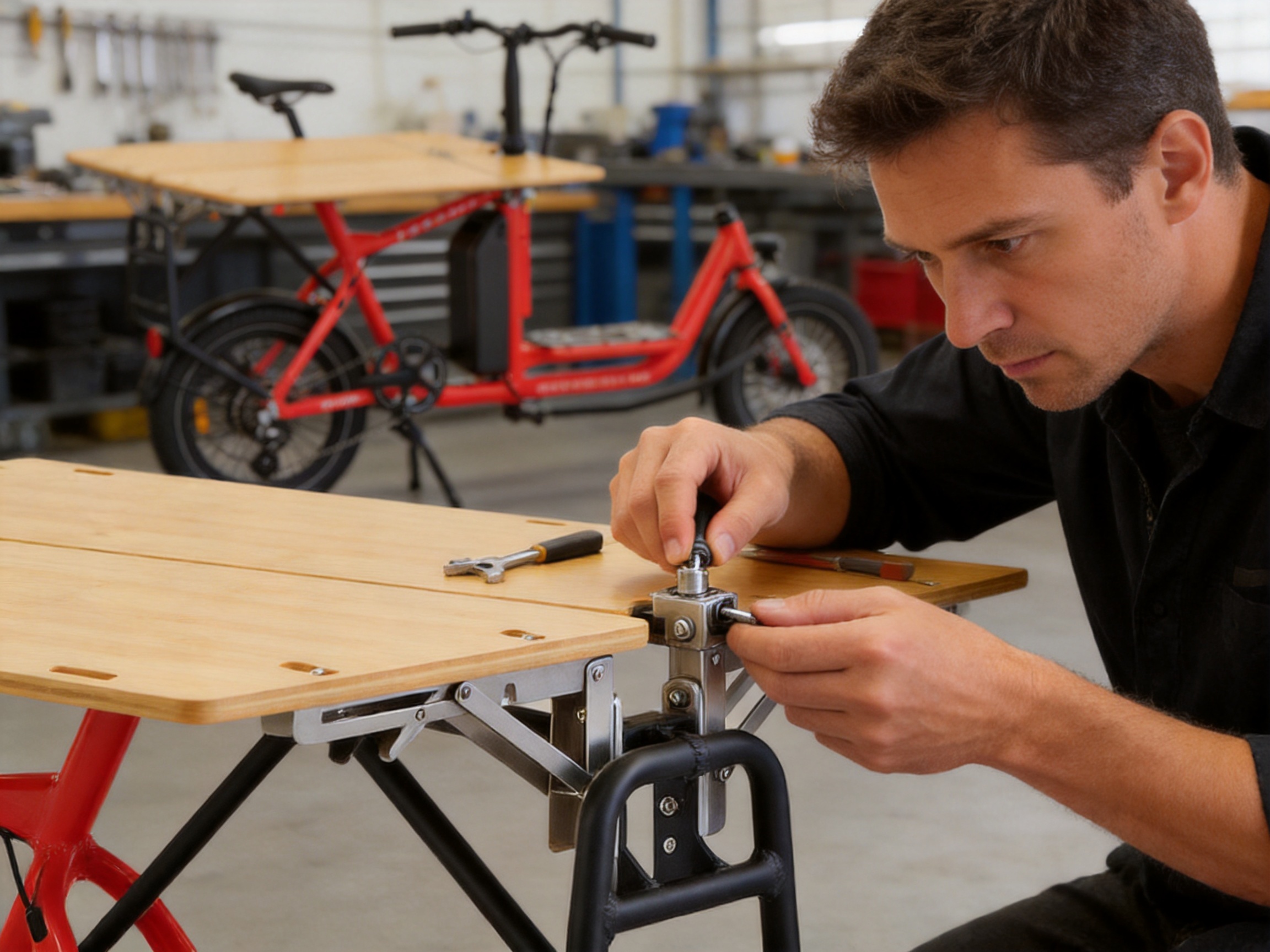
Urban cargo bikes are increasingly used for more than family transportation, grocery shopping, and daily commuting. They are also becoming practical tools for small businesses, market vendors, caterers, delivery operators, florists, farmers, coffee sellers, and independent retailers. A cargo bike can move through streets more efficiently than a van, occupy less parking space, and provide a highly visible platform for direct customer interaction. However, converting a conventional cargo bike into a dependable mobile stall requires more than placing a box or table on the front deck. The platform must be stable, compact, durable, easy to install, and compatible with the bike’s everyday riding role.
The Bamboo Folding Deck Kit measuring 33.5 by 24 inches, or 85 by 61 centimeters, is designed specifically for the Urban Companion Cargo Bike, Model Q. It addresses the practical challenge of switching between transportation and vending without requiring a permanent alteration to the bicycle. The kit combines a natural bamboo deck, a powder-coated steel support frame, stainless steel hinges, locking folding brackets, and integrated anchor points for straps and banners. Together, these elements create a flexible platform for mobile vending, pop-up retail, product display, food containers, sample boxes, coolers, and other cargo.
Its most important benefit is adaptability. Instead of committing an entire cargo bike to a fixed commercial body, the rider can use the bike for commuting or personal transport and then convert it into a mobile stall when needed. The deck folds flat when not in use and attaches through a bolt-on installation method. This balance between commercial utility and everyday practicality gives the product a distinctive position among cargo-bike accessories.
The Model Q is intended for urban mobility, where maneuverability, storage efficiency, and multipurpose use are especially important. A platform that is too large, too high, or permanently mounted can make a compact cargo bike less convenient in daily traffic. The Folding Deck Kit is designed around the idea that a business accessory should increase the bike’s usefulness without eliminating its original purpose.
When installed, the deck creates a broad, low-mounted surface measuring 85 by 61 centimeters. This area is large enough for merchandise trays, insulated food containers, sample cartons, flower arrangements, produce baskets, or small retail displays. At the same time, its folding construction allows the platform to be stored flat when the bike is being used for ordinary transport. This makes it suitable for users whose work schedule changes from day to day or even from hour to hour.
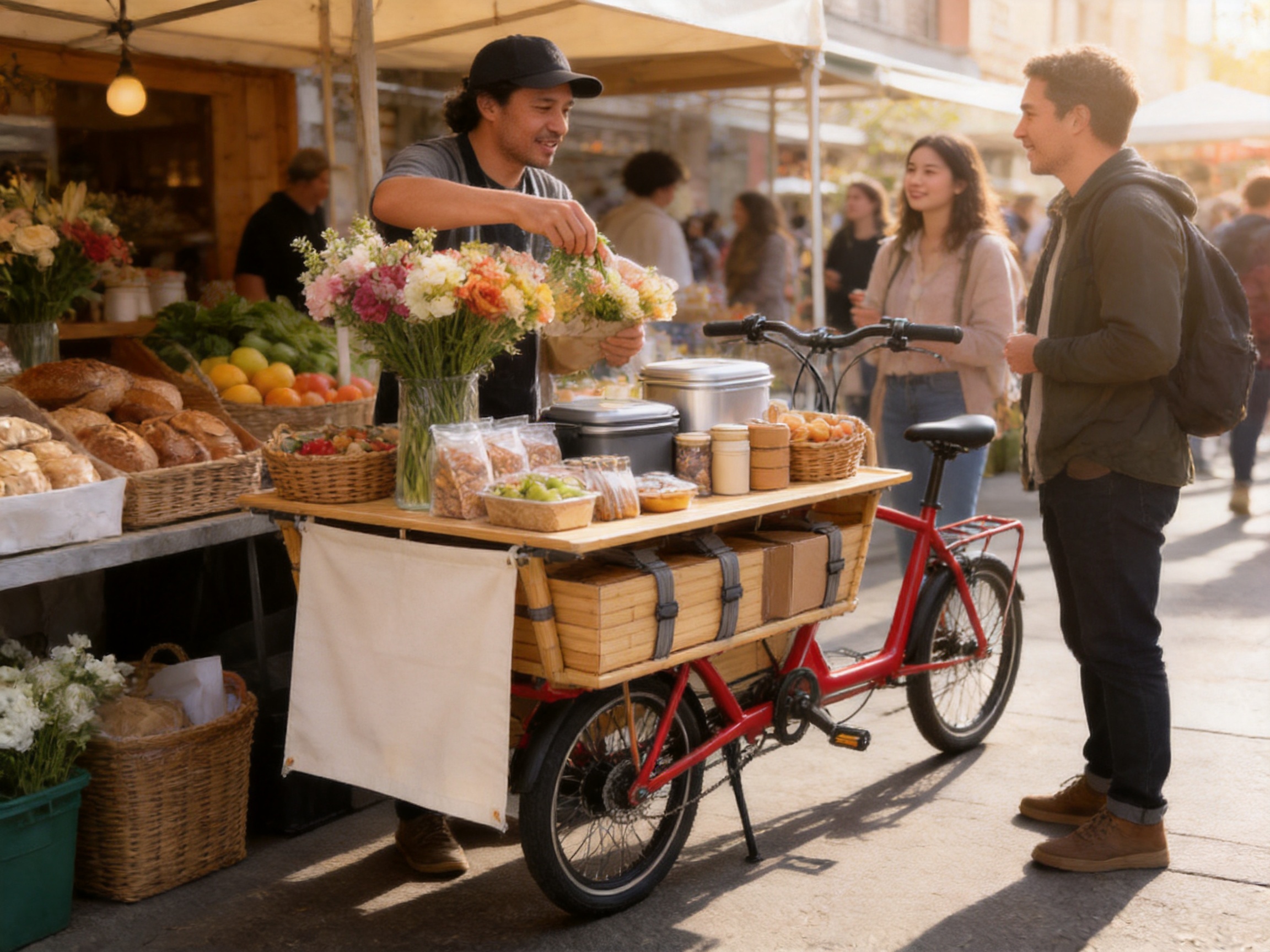
A mobile vendor may use the deck in the morning to transport baked goods, fold it during a midday commute, and reinstall or unfold it for an afternoon market. A florist may use it for a weekend pop-up display but retain a clear cargo bike for weekday deliveries. A coffee seller may use the platform as a base for containers and presentation materials while preserving the bike’s ability to move through narrow urban streets. The kit therefore supports a range of business models rather than a single specialized application.
The design also recognizes that cargo-bike users often need to park, store, and maneuver in limited spaces. A flat-folding deck is easier to store in a workshop, garage, shop, or commercial vehicle than a fixed box or permanent counter. It can reduce the amount of space required when the bicycle is not operating as a mobile stall. This is particularly valuable for small businesses that do not have dedicated storage facilities.
Many commercial cargo-bike solutions are built around permanent bodies. These may be useful for a business with one narrowly defined purpose, but they can be restrictive for an owner who needs flexibility. A fixed vending box may add weight, increase the visual size of the bicycle, and prevent the vehicle from being used efficiently for other types of cargo. Replacing a permanent body can also require significant labor and expense.
The folding conversion approach offers a different solution. Instead of turning the bicycle into a dedicated vending vehicle, the kit provides a removable or foldable working surface. This allows the rider to decide when the bike should function as a delivery vehicle, personal transporter, market stand, or display platform. The same base bicycle can therefore serve multiple roles throughout the week.
This flexibility is one of the product’s strongest advantages over conventional fixed accessories. It can help reduce the need for separate vehicles or separate equipment for different activities. A small enterprise may not need a dedicated delivery van, market table, and cargo bicycle if one carefully designed platform can perform several related functions.
The folding structure also supports more efficient preparation. A user can load a selection of goods onto the deck, arrive at a destination, unfold the platform, and arrange the items for presentation. The bike becomes part of the display rather than merely a means of transportation. This can make the setup more visible and more approachable in pedestrian areas, neighborhood events, markets, and temporary sales locations.
For businesses that depend on quick setup and teardown, the ability to fold the deck is equally valuable at the end of the day. Merchandise and containers can be removed, the platform can be folded flat, and the bicycle can return to a more compact configuration. This helps reduce the time between commercial use and ordinary use.
The deck uses natural bamboo as its main surface material. Bamboo is widely valued for its combination of relatively low weight, useful structural performance, and distinctive natural appearance. In a mobile retail application, appearance matters because the cargo bike is also part of the vendor’s public presentation. The warm, natural character of bamboo can create a more welcoming visual impression than an entirely industrial metal platform.
Bamboo also suits businesses that want their mobile equipment to communicate simplicity, craft, freshness, or environmental awareness. A flower seller, baker, produce vendor, or handmade-goods retailer may find that the material complements the character of the products being displayed. The deck can therefore contribute to the overall presentation without requiring additional decorative panels.
The supporting frame is made from powder-coated steel. Steel provides a strong foundation for the folding deck and the loads placed on it during transport or display. Powder coating adds a finished protective layer to the steel surface. Compared with an unprotected metal structure, a properly coated frame is better suited to regular exposure to handling, outdoor conditions, dust, and incidental moisture.
The combination of bamboo and steel provides a useful balance between visual appeal and structural support. Bamboo forms the customer-facing platform, while the steel frame carries the mechanical role of supporting the deck and connecting it to the bicycle. This division of functions is practical: the surface can remain warm and presentable, while the frame provides a robust mounting base.
The kit also uses stainless steel hinges and locking folding brackets. Hinges are critical components in any folding product because they experience repeated movement and must maintain alignment over time. Stainless steel hardware is selected for its corrosion resistance and suitability for outdoor equipment. The locking brackets are intended to hold the deck securely in its operating position, helping it function as a stable platform rather than a loose or improvised board.
A cargo platform affects the handling of a bicycle through its weight, height, width, and position. A high-mounted load can raise the center of gravity and make the bicycle feel less predictable when starting, stopping, or turning. The Folding Deck Kit is designed as a low-mounted platform, keeping the cargo area closer to the ground and supporting a more stable loading arrangement.
Lower placement is especially helpful when carrying containers, merchandise, or display materials that may be relatively bulky. It can make it easier to place items on the deck and remove them at the destination. It also reduces the need to lift goods to a high counter or upper storage box. For vendors who repeatedly load and unload during a working day, this practical difference can improve efficiency and reduce unnecessary effort.
Low mounting does not eliminate the need for responsible loading. Users should distribute weight evenly, secure movable items, avoid exceeding the bicycle manufacturer’s specifications, and ensure that no package interferes with steering, braking, lighting, or rider visibility. The deck is intended as a versatile platform, but safe operation still depends on proper cargo management and compliance with local regulations.
Compared with a tall display box or an elevated rack, a low platform can also make customer interaction easier. Products may be visible from above without requiring the vendor to stand behind a large structure. A low profile can preserve a more open relationship between the rider, the bicycle, and pedestrians. This is useful for informal markets, neighborhood sales, exhibitions, and temporary street commerce.
Folding products must be designed around movement. A platform that folds only once or twice is not enough for a working cargo bicycle. The deck may be opened at the beginning of a sales period, closed during transport, opened again at a new location, and folded for storage at the end of the day. The hinges and brackets therefore perform a central role in the product’s long-term usability.
The kit uses stainless steel hinges together with locking folding brackets. The hinges guide the folding motion, while the brackets provide support when the deck is extended. This separation of functions allows the deck to move when conversion is required and remain supported when it is in use. A locking mechanism is particularly important because it helps prevent accidental movement of the deck during loading or display.
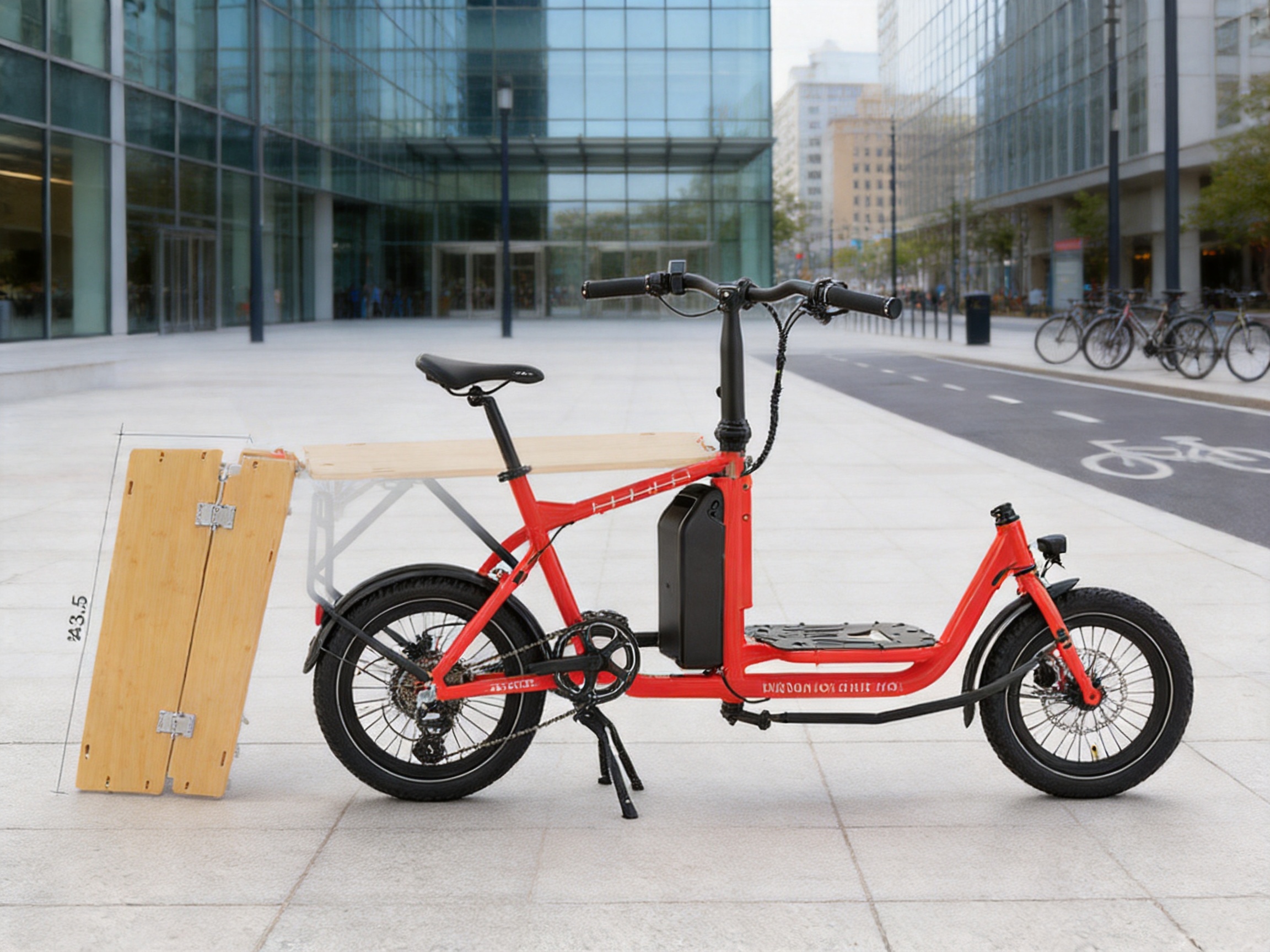
The flat-folding design is also advantageous during transport and storage. When folded, the deck can occupy less vertical space and present fewer projecting surfaces. This may make it easier to store the bicycle in a workshop, retail back room, apartment storage area, or service facility. A compact folded configuration can also simplify movement through doors and around other equipment.
For operators managing several bicycles, foldability can improve fleet organization. Bikes can be parked more closely together when their platforms are folded, provided that the manufacturer’s storage and safety instructions are followed. The design may also make it easier to prepare bicycles for different assignments. One bike can be configured for product display while another remains ready for ordinary cargo transport.
The Folding Deck Kit uses a bolt-on installation approach. This is important for owners who want to add commercial capability without permanently changing the bicycle frame or original cargo structure. A bolt-on accessory can generally be removed, adjusted, or replaced more easily than a welded or permanently integrated conversion.
Non-permanent installation offers several practical benefits. First, it can help preserve the original identity and resale flexibility of the bicycle. A future owner may want a standard cargo bike rather than a vending configuration. Second, it makes the accessory easier to service or replace. Third, it enables an owner to adapt the bike as business needs change.
Installation should be performed carefully using appropriate tools and hardware procedures. The mounting surfaces must be clean and aligned, fasteners should be tightened according to the applicable instructions, and the deck should be checked for movement before carrying cargo. After initial use, the mounting points and folding brackets should be inspected periodically, especially if the bicycle is used frequently on uneven roads.
The bolt-on method also supports experimentation. A new vendor may begin with a simple deck, test different product arrangements, and later add straps, banners, containers, or display accessories. This reduces the pressure to design a complete commercial system before the business model has been tested in real conditions.
A cargo platform is more useful when cargo can be secured and the display can be organized. The kit includes integrated strap and banner anchor points, allowing users to attach tie-downs, lightweight signage, promotional fabric, or other compatible accessories. These anchor points help transform the deck from a basic carrying surface into a configurable commercial tool.
Straps are useful for securing boxes, sample cases, coolers, trays, baskets, and containers. They can reduce shifting during riding and help keep the load organized when the bicycle moves between locations. The correct strap type and tension should always be used, and the straps should not obstruct moving parts or extend into the wheel path.
Banner anchor points can help businesses communicate their identity in busy urban environments. A small sign or banner can show the business name, product category, operating hours, or promotional message. Since the deck does not require a permanent retail body, the visual presentation can be changed according to the event or product line.
These attachment points also make the platform suitable for seasonal use. A vendor may use one arrangement for summer drinks, another for winter products, and a third for a community event. The core platform remains the same while the accessories and display materials change.
Street food operators can use the deck to carry food containers, packaging, utensils, menu boards, and insulated boxes. The broad surface makes it possible to arrange items in a logical sequence for setup. A coffee seller may place sealed beverage containers, cups, ingredients, and a small display on the platform, while a food vendor may use it for pre-packed goods rather than on-bike cooking.
The platform should not be interpreted as a complete food-preparation station unless additional equipment is specifically approved for that purpose. It is best suited to transport and presentation of food-related containers and supplies. Users must follow local food safety, sanitation, licensing, and public vending requirements.
Florists and plant sellers often need a display surface that is visible, flexible, and easy to rearrange. The bamboo deck can provide space for buckets, wrapped bouquets, small planters, seasonal arrangements, or promotional materials. Its natural appearance can complement flowers and plants while giving the bicycle a recognizable market presence.
Because plants and flowers may be sensitive to movement or wind, they should be secured appropriately. Water containers should be sealed or stabilized, and the load should be arranged so that it does not interfere with steering or braking.
Farmers, neighborhood grocers, and local food sellers can use the platform for baskets, crates, sample boxes, and packaged produce. A low surface makes it easier for customers to view goods and for the vendor to replenish the display. The open format can also support direct communication between seller and customer, which is often central to local commerce.
Artists, makers, and independent retailers can use the deck as a mobile display base for crafts, accessories, small home goods, clothing items, and promotional materials. The ability to attach banners and straps makes it possible to create a simple branded presentation without investing in a large permanent booth.
The platform is not limited to public selling. It can carry insulated delivery containers, product samples, demonstration cases, and promotional kits. A sales representative may use the bike to visit several locations in one day, while a small service business may use the deck to move tools or materials that need to remain accessible.
The most direct alternative to a folding deck is a fixed cargo body. Fixed boxes and cabinets can offer enclosed storage and protection from weather, but they also increase the specialization of the bicycle. They may add visual bulk, reduce adaptability, and require more substantial installation work.
The folding deck has several advantages in situations where openness and flexibility are more important than enclosure. It can serve as a display area rather than a sealed container. It can be folded when the bike is needed for another purpose. It can accept different baskets, cases, coolers, and trays instead of being limited to one internal shape.
Compared with a simple loose board or improvised table, the kit offers a more integrated solution. The steel support frame, locking brackets, stainless hinges, and attachment points are designed to work together. An improvised platform may lack reliable mounting, folding control, or suitable cargo anchors. A dedicated accessory can provide a more consistent user experience and a more professional appearance.
Compared with a conventional portable market table, the deck has the advantage of mobility. The bicycle carries the display surface directly to the destination, reducing the need to transport a separate table. This may be particularly helpful for vendors working in locations where car access is limited or where parking is difficult.
Compared with permanently customized commercial vehicles, the kit can offer a lower-barrier entry into mobile retail. A small business can begin with a standard Model Q cargo bike and add a platform designed for a particular use. If the business expands, additional accessories or dedicated equipment can be considered later.
The product reflects a combination of product design, material selection, mechanical integration, and practical manufacturing experience. The deck is not simply a bamboo panel. It is a coordinated assembly in which the deck, steel support structure, hinges, brackets, mounting system, and anchor points must fit together accurately.
Atmose combines American product thinking with European design and research-and-development capabilities based in Paris. The company describes its product philosophy as “Fun & Practical,” emphasizing usability, comfort, reliability, and the overall riding experience. In the context of this kit, that philosophy appears in the effort to make commercial utility compatible with ordinary urban mobility.
The company’s manufacturing background is supported by an established supply chain and years of industry experience through its connection with MOTIV, an American beach cruiser brand. Such experience can contribute to more disciplined product development, supplier coordination, component selection, and quality control. A folding accessory requires more than attractive styling; it depends on repeatable dimensions, reliable hardware, and consistent assembly.
The powder-coated steel support frame demonstrates an emphasis on durable structural components. Steel parts must be formed, finished, and aligned so that they support the deck without unnecessary movement. The bamboo surface must be prepared and integrated with the frame in a way that allows the folding action to remain smooth. Hardware selection must account for repeated use and outdoor exposure.
In a well-managed manufacturing process, design and production are linked through several stages. These may include concept development, dimensional planning, prototype construction, fit testing on the Model Q, evaluation of folding movement, load-use review, surface finishing, assembly inspection, and packaging preparation. The goal is to ensure that the final accessory behaves as a coordinated system rather than a collection of unrelated parts.
International design and R&D cooperation can also support a broader understanding of urban mobility needs. Cargo-bike users in different regions may face different road conditions, storage constraints, regulations, and commercial habits. A product developed with international input can be designed with versatility in mind while still maintaining a clear application for the Model Q.
For the bamboo deck, quality begins with consistent material selection and dimensional control. The surface should be properly prepared for use as a cargo platform, with attention to flatness, edges, joints, and finish. Since the deck may be handled frequently, smooth and carefully finished surfaces are important for practical use.
For the steel frame, quality includes accurate forming, secure joints, corrosion-resistant finishing, and correct alignment with the bicycle’s mounting points. Powder coating must be applied consistently to provide a clean surface and protect the underlying metal. Any areas that receive fasteners or moving hardware should be considered during the finishing and assembly process.
For the hinges and brackets, quality involves smooth movement, correct positioning, and reliable locking action. The bracket must support the platform when open while allowing the user to fold it without excessive effort. Hardware should be checked for proper fit and should not create unnecessary play or interference.
For the final assembly, quality control should include a visual inspection, a folding and unfolding check, a mounting review, and confirmation that the deck is properly supported. Packaging should protect the bamboo surface, coated frame, and hardware during transport. Clear installation information is also important because correct assembly contributes directly to safety and user satisfaction.
Before each ride, the user should confirm that the platform is fully unfolded or fully secured in its storage position, depending on the intended configuration. The locking folding brackets should be checked for engagement, and all carried items should be restrained. Loose objects can shift during acceleration, braking, or turns.
Heavy items should be placed low and distributed across the deck rather than concentrated at one edge. Containers should be positioned so that they do not block the rider’s view or interfere with the steering system. Tall displays, banners, or promotional structures should be evaluated carefully because they may be affected by wind and can change the handling of the bike.
The platform should be kept clean and dry when possible. Food residue, soil, spilled liquids, and abrasive particles should be removed promptly. Bamboo and coated steel have different care requirements, so users should follow appropriate cleaning practices and avoid harsh methods that could damage the surface or finish.
Periodic inspections should include the deck surface, frame, hinges, locking brackets, fasteners, and anchor points. Any unusual movement, looseness, cracking, corrosion, or damage should be addressed before continued use. Regular maintenance is especially important for businesses that open and close the platform many times each week.
A cargo bike used for vending is both a vehicle and a point-of-sale environment. Customers form impressions from the appearance, organization, and accessibility of the display. The natural bamboo surface can help create a warmer presentation, while the integrated banner points allow the vendor to add clear messaging without permanently changing the deck.
The open platform encourages visible organization. Products can be arranged by size, color, flavor, price, or use. Containers can be grouped to make the display easy to understand. Because the deck is low and accessible, the vendor can communicate directly with customers rather than standing behind a high enclosure.
A well-organized platform can also improve the vendor’s workflow. Frequently used items can be placed near the rider, while reserve stock can be secured underneath or in additional compatible containers. Setup materials, signage, and straps can be planned as part of a repeatable operating routine.
The bicycle itself can become a recognizable feature of the business. In a crowded market or event, a distinctive mobile platform may be easier for customers to notice than a conventional table. The ability to move between locations can extend the reach of a small enterprise and support flexible scheduling.
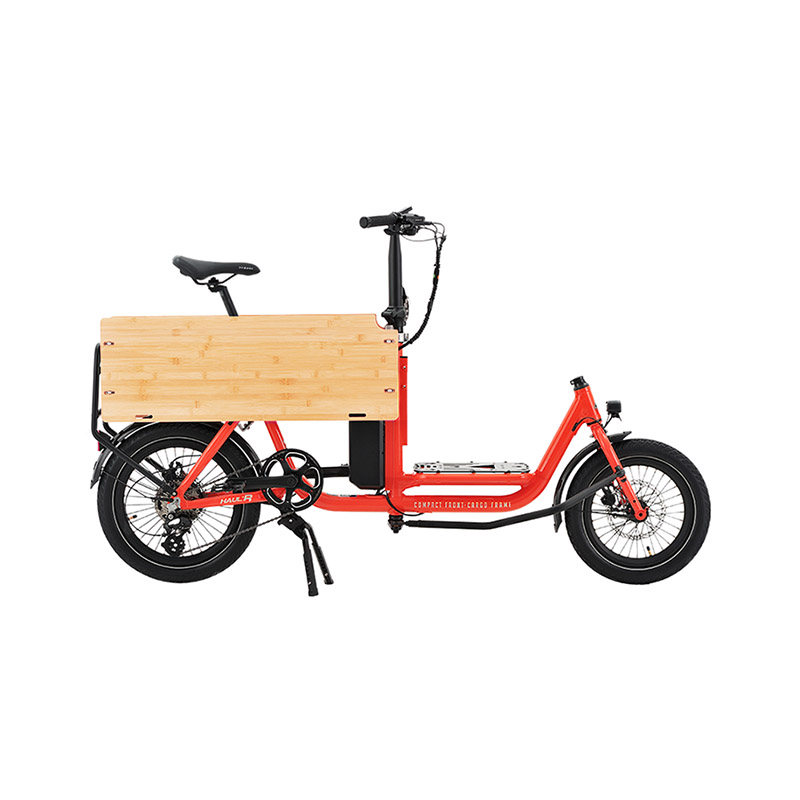
Bamboo Folding Deck Kit 33.5x24in for Model Q E-Cargo Bike Street Vending
Cargo bicycles support transportation models that can reduce dependence on larger vehicles for short urban trips. They are useful in dense neighborhoods where traffic congestion, parking limitations, and delivery restrictions make vans less efficient. A mobile platform can add commercial value to this mode of transportation without requiring a separate motor vehicle for every small delivery or retail task.
The Folding Deck Kit supports a sustainability-oriented business model by helping one bicycle serve multiple purposes. A single Model Q can function as a commuter vehicle, delivery vehicle, merchandise carrier, and pop-up stall. Multipurpose equipment may reduce the total amount of business infrastructure required, particularly for small operators and early-stage enterprises.
The use of bamboo as the main deck material also contributes to a natural material profile. Material sustainability depends on sourcing, processing, durability, maintenance, and end-of-life handling, so no single material should be treated as a complete environmental solution. Nevertheless, the combination of bamboo and a durable steel support frame reflects an effort to create an accessory that is both functional and visually aligned with sustainable urban commerce.
Long service life is another important sustainability factor. A product that remains useful through changing business needs can avoid premature replacement. The bolt-on construction may allow the accessory to be removed, serviced, or adapted rather than discarded when the owner’s activities change.
Large commercial operators may have access to dedicated vehicles, fixed stalls, and specialized logistics equipment. Small businesses often need a more flexible solution. They may work at different markets, test new products, attend temporary events, or operate only on certain days. Their equipment must justify its cost through multiple uses.
The Bamboo Folding Deck Kit is suited to this environment because it provides a defined commercial function without forcing the user into a permanent configuration. It can help a new vendor test mobile selling with a relatively focused investment in equipment. If the business develops, the deck can remain useful as a secondary display surface, delivery platform, or event accessory.
Its folding capability also supports seasonal businesses. A user may operate a market stall during summer weekends and use the same bicycle for family or commuting purposes during the rest of the year. This versatility can improve the practical value of the bicycle across the entire calendar.
For established businesses, the kit may support route expansion. A florist, bakery, producer, or retailer can use mobile sales to reach neighborhoods that are not served by a permanent store. The bicycle can act as a traveling showroom, delivery tool, and promotional vehicle at the same time.
The product belongs to a wider family of cargo-bike solutions that includes family transportation, urban commuting, adventure use, heavy-duty hauling, children’s learning applications, and flexible mobility. This broader perspective is relevant because accessories are most valuable when they fit into a complete mobility philosophy.
The Model Q represents the urban companion category, where daily usefulness and adaptability are central. The Folding Deck Kit extends that role into commercial activity without changing the basic identity of the bike. Owners can select an accessory according to their actual needs rather than purchasing a completely different vehicle for every purpose.
A company that develops several cargo-bike categories can apply lessons from one product area to another. Family users may prioritize stability and ease of handling, while commercial users may prioritize load organization and conversion speed. Product development across these categories can encourage attention to comfort, reliability, practical dimensions, and real-world use.
Before installation, the bicycle should be placed on a stable surface with enough room to access the mounting points. The cargo area should be emptied and cleaned. The installer should confirm that all parts are present and compare the hardware with the supplied instructions.
The powder-coated steel support frame should be positioned according to the designated mounting points. Fasteners should be started by hand to avoid cross-threading and tightened progressively so that the frame remains aligned. The frame should not be forced into position, since misalignment may affect folding movement and load distribution.
After the frame is mounted, the bamboo deck, stainless steel hinges, and locking brackets should be examined. The deck should move through its folding range without scraping or binding. The brackets should engage in the operating position and release in a controlled manner.
Before carrying valuable products, the user should perform a stationary test and a short low-speed ride with a light, secured load. This allows the rider to become familiar with the changed handling characteristics. The mounting points should be checked again after the first period of use.
The exact procedure should always follow the product instructions and the bicycle manufacturer’s requirements. Professional installation may be appropriate for commercial operators, fleet owners, or users who are unfamiliar with mechanical assembly.
A responsible product evaluation should recognize that the kit is a platform accessory, not a replacement for every type of commercial body. It is designed for display, food containers, sample boxes, coolers, cargo transport, and related uses. It is not automatically an enclosed weatherproof cabinet, a certified food-preparation surface, or a high-capacity industrial loading system.
Users should confirm the permitted load capacity of the Model Q and any relevant accessory specifications before operation. The materials and dimensions described for the deck do not by themselves establish a universal maximum load. Weight distribution, road conditions, rider ability, and local traffic rules must also be considered.
Weather protection may require additional covers or containers. Perishable goods may require certified insulated equipment and temperature control. Electrical appliances, open flames, pressurized containers, and other specialized equipment should not be placed on the platform unless their use is specifically approved and safely integrated.
These limitations do not reduce the product’s value. They clarify its intended role: a flexible, low-mounted, foldable platform for transporting and displaying compatible goods on an urban cargo bike.
The kit competes through a combination of flexibility, material character, installation convenience, and practical integration. Some alternatives emphasize enclosed storage, some focus on maximum capacity, and others are simple racks with limited presentation value. The Folding Deck Kit occupies a middle ground between a transport accessory and a mobile retail surface.
Its 33.5 by 24 inch dimensions provide a useful working area without turning the bicycle into an oversized vehicle. Its natural bamboo surface gives it a distinctive appearance, while the powder-coated steel frame supplies structural support. Stainless steel hinges and locking brackets address the repeated folding requirement. Integrated anchors add functionality for both cargo security and visual merchandising.
The non-permanent bolt-on approach is another competitive strength. It gives users more control over the life of the bicycle and makes the accessory relevant to businesses that cannot predict their future operating model. A permanent conversion may be appropriate for a dedicated fleet, but a removable folding platform can be more attractive to individual entrepreneurs and mixed-use households.
Finally, the product benefits from being designed for a specific cargo-bike model rather than treated as a generic board. Model-specific compatibility can improve integration, fit, and ease of use. The accessory is developed around the dimensions and intended role of the Urban Companion Cargo Bike, Model Q, giving it a clearer purpose than an improvised universal platform.
Regular maintenance helps preserve both safety and presentation. The bamboo deck should be inspected for cracks, splinters, swelling, or surface damage. Any issue that could affect cargo stability or user contact should be addressed promptly. The surface should be cleaned using methods appropriate for finished bamboo and allowed to dry properly.
The powder-coated frame should be checked for scratches, exposed metal, deformation, or signs of corrosion. Small surface damage should not be ignored, particularly in environments where the bicycle is exposed to road salt, rain, or frequent washing. Fasteners should be checked for tightness, but they should not be overtightened in a way that damages the deck or frame.
Hinges should remain clean and free of grit. If lubrication is recommended by the manufacturer, the appropriate product should be used sparingly. The locking brackets should be examined for wear and should engage positively. Any looseness in the folding system should be investigated before the deck is used with a commercial load.
Businesses should establish a simple inspection schedule. Daily users may perform a quick check before each shift and a more complete review weekly. Occasional users should inspect the kit before every installation and after periods of storage. Keeping a record of maintenance can be useful for fleet operators and commercial insurance requirements.
The primary purpose is to convert the Model Q Urban Companion Cargo Bike into a flexible mobile display and transport platform. It can support mobile vending, pop-up retail, food containers, sample boxes, coolers, merchandise trays, and other compatible cargo.
The deck measures 85 by 61 centimeters, equivalent to 33.5 by 24.0 inches. This provides a broad surface for product display and cargo organization while maintaining a practical footprint for an urban cargo bicycle.
The kit uses a bolt-on installation method and is designed not to require permanent modification to the bicycle. The deck also folds flat when not in use, allowing the bike to return to a more compact or conventional configuration.
The main deck is made from natural bamboo. The supporting structure uses powder-coated steel, while the folding hardware includes stainless steel hinges and locking folding brackets.
Bamboo provides a natural, distinctive appearance and is suitable for a presentation-oriented platform. It can complement products such as flowers, produce, baked goods, and handmade merchandise. It also offers a useful balance between practical performance and visual warmth when properly manufactured and maintained.
The deck uses hinges to guide folding movement and locking brackets to support the deck when it is opened for use. The flat-folding design allows the platform to be stored more compactly when the bike is being used for commuting or other transport duties.
It can be used to transport food containers, insulated delivery boxes, sample boxes, and related supplies. Users must comply with local food safety and vending regulations. The platform should not be assumed to be a certified food-preparation surface unless separate certification or equipment approval applies.
Yes. The surface can support flower arrangements, plant containers, wrapped bouquets, and related display materials. Water containers and fragile products should be secured carefully, and the load should be distributed to preserve safe handling.
The kit includes integrated strap and banner anchor points. These can be used for compatible lightweight signage, promotional fabric, or cargo restraints. Any banner should be secured so that it does not obstruct visibility, lighting, steering, or braking.
It can be useful for commercial fleets, especially when different bicycles need to alternate between delivery, display, and ordinary cargo duties. Fleet operators should establish installation, inspection, loading, and maintenance procedures for consistent use.
The provided product information describes suitable usage categories but does not specify a universal maximum load figure. Users should follow the Model Q bicycle’s cargo limits and the official accessory instructions. Weight should be distributed evenly and secured before riding.
The kit combines a model-specific mounting approach, a supporting steel frame, folding hinges, locking brackets, and integrated anchor points. An improvised board may not provide the same level of fit, stability, folding control, or cargo-securing capability.
The folding deck is more adaptable. It can serve as a display platform when needed and fold away when the bicycle is used for commuting or ordinary cargo transport. It may therefore be better suited to small businesses and mixed-use owners who do not want a permanently specialized vehicle.
The product is supplied by Atmose, a cargo e-bike company associated with family mobility, urban commuting, commercial delivery, and outdoor exploration. The company combines American origins with design and research-and-development activity in France, supported by an established supply chain and broader industry experience.
Users should inspect the bamboo surface, steel frame, fasteners, hinges, brackets, and anchor points regularly. The deck should be kept clean and dry when possible, moving parts should remain free of debris, and any looseness or damage should be corrected before carrying commercial loads.
The Bamboo Folding Deck Kit offers a focused solution to a growing urban mobility need: turning a practical cargo bicycle into a flexible mobile business platform without sacrificing its everyday usefulness. Designed for the Urban Companion Cargo Bike, Model Q, it combines an 85 by 61 centimeter natural bamboo deck with a powder-coated steel support frame, stainless steel hinges, locking folding brackets, and integrated strap and banner anchors.
Its key strength is conversion. The bike can support street vending, pop-up retail, local deliveries, product displays, food containers, flowers, produce, sample boxes, coolers, and handmade goods. When commercial use is finished, the deck can fold flat, helping the vehicle return to a more compact configuration for commuting, storage, or general cargo transport.
Compared with permanent cargo bodies, the kit offers greater adaptability. Compared with improvised platforms, it provides a more coordinated structure and mounting system. Compared with a conventional market table, it adds mobility and reduces the need to transport a separate display surface. These advantages make it particularly relevant to small businesses, independent vendors, mixed-use households, and commercial operators seeking a flexible urban tool.
The product also reflects the strengths of Atmose’s broader development approach: practical design, attention to user experience, international design input, an established manufacturing supply chain, and industry experience connected with cargo and mobility products. Its value lies not only in the materials used, but in how those materials and components are integrated into a repeatable, serviceable, and adaptable system.
For riders who want one e-cargo bike to serve transportation, delivery, display, and mobile retail needs, the Folding Deck Kit provides a clear path from ordinary cargo cycling to practical urban commerce.
Atmose product information sheet: Bamboo Folding Cargo Platform Kit for Urban Companion Cargo Bike, Model Q.
Atmose company information: Product philosophy, design and research-and-development activities, manufacturing background, and cargo-bike applications.
Atmose technical information table: Deck dimensions, materials, hardware, folding style, installation method, usage categories, and anchor-point features.
General principles of cargo-bike loading, center-of-gravity management, cargo securing, and urban bicycle safety.
General guidance on bamboo material care, powder-coated steel maintenance, stainless steel hardware, and folding mechanism inspection.
Nov 17, 2026
Nov 03, 2026
Oct 26, 2026


info@atmosecargobike.com

200 rue de la Croix Nivert 75015 Paris

Custom Electric Bakfiets
 English
 Français
 Deutsch