

Aug 09, 2026
Urban transportation is changing. More people are looking for alternatives to private cars, crowded public transport, and increasingly complex electric mobility systems. Cargo bikes have become an important part of this change because they combine personal transportation with useful carrying capacity. However, not every rider needs a large electric motor, a high-capacity battery, or a highly technical control system. For many short-distance journeys, a lightweight manual cargo bike can provide a simpler, more direct, and more physically engaging solution.
The Atmose Model Q Q1 is designed for this specific purpose. It is a manually powered urban companion cargo bike created for fitness-minded riders, neighborhood errands, flat commutes, and everyday utility. By removing the battery and motor found on electric cargo bikes, the Q1 focuses on low weight, straightforward mechanical operation, easy storage, and the natural riding experience of a traditional bicycle. At the same time, it retains a practical front cargo basket capable of carrying up to 25 kilograms.
This combination gives the Q1 a distinctive position in the cargo-bike market. It is not intended to replace every electric cargo bike, nor is it designed as a high-speed touring machine. Instead, it offers an efficient middle ground between a standard bicycle and a full-size electric cargo bike. Riders receive more carrying capacity than a conventional city bike while avoiding the additional weight, charging requirements, electronic maintenance, and purchase complexity associated with powered systems.
The Q1 also reflects the broader philosophy of its manufacturer, ATMOSE SASU. The company combines American product thinking with European design and research-and-development experience in Paris. Its approach emphasizes practical mobility, visual simplicity, reliability, comfort, and enjoyment. The result is a cargo bike intended not merely to transport objects, but to make short urban trips feel more active, manageable, and rewarding.
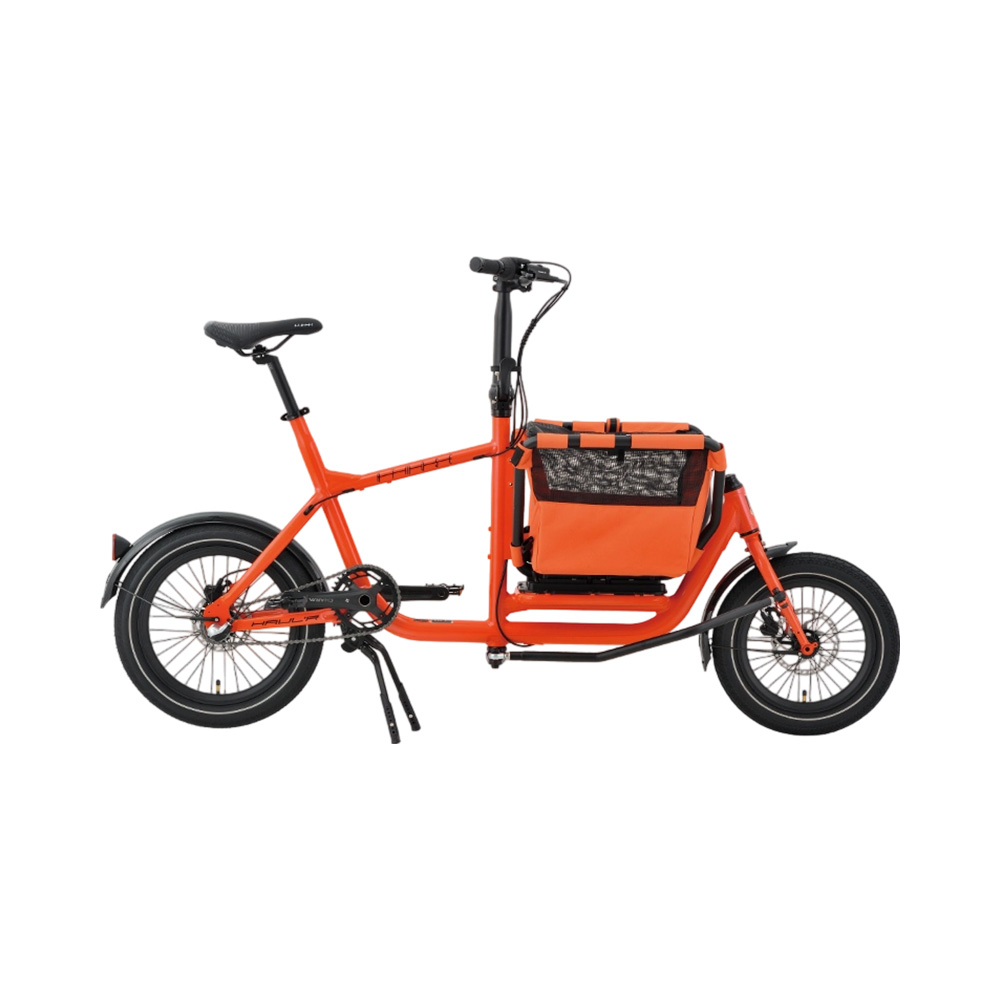
Atmose Model Q Q1 Lightweight Manual Cargo Bike for Fitness and Errands
The defining feature of the Q1 is what it does not include. There is no battery, no motor, no electronic control unit, and no charging port. This decision is deliberate. Instead of adding electrical assistance to make the bike easier to pedal, the Q1 reduces unnecessary mass and preserves the direct relationship between rider and bicycle.
For riders who live in relatively flat areas, this design can be highly effective. A short trip to a local market, a grocery store, a neighborhood café, a school, or a workplace may not require powered assistance. The rider can pedal at a comfortable pace, use the three-speed transmission to manage changing conditions, and carry daily goods in the front folding basket.
The manual format also gives the bike a familiar character. Riders who enjoy the feel of a traditional bicycle can operate the Q1 without learning a digital interface or monitoring a battery display. The controls are based on established bicycle components, and the riding experience depends on cadence, gearing, steering, braking, and body position rather than software or electrical output.
This simplicity is particularly useful for people who want a vehicle that is ready whenever they are. There is no need to remember to recharge a battery before a trip. There is no concern about arriving home with low electrical power. There is also less exposure to the long-term aging of battery cells, which can eventually reduce range and require replacement.
Compared with a typical electric cargo bike, the Q1 is likely to be easier to lift, maneuver, and store. Its listed dimensions are 1,780 millimeters in length, 620 millimeters in width, and 1,070 millimeters in height. While cargo bikes are generally larger than ordinary bicycles, this profile remains suitable for urban storage environments where every centimeter can matter.
A manual system can offer several advantages over competitors that depend entirely on electrical assistance. First, the bike is mechanically uncomplicated. The major operating systems are the frame, wheels, drivetrain, brakes, steering assembly, and cargo basket. Regular maintenance can therefore be approached in much the same way as maintenance for a conventional bicycle.
Second, the Q1 can be used in locations where charging is inconvenient. Apartment residents may not have a secure indoor power outlet near their bicycle parking area. Office workers may not be able to charge during the day. Some riders may also prefer not to transport or store a lithium-ion battery indoors. The Q1 avoids these concerns entirely.
Third, the rider’s energy becomes part of the transportation system. This can turn everyday utility trips into manageable exercise. A journey that would otherwise be made by car can become a short cycling session without requiring a separate visit to a gym. Because the bike is designed for errands rather than extreme athletic performance, the exercise can be integrated into ordinary routines.
Fourth, the absence of electrical components can reduce the number of systems that require technical diagnosis. Electric cargo bikes may include sensors, wiring, displays, motor controllers, and battery-management systems. These components can be useful, but they may also require specialist support. The Q1’s conventional architecture is more accessible to riders and bicycle mechanics who are already familiar with standard mechanical systems.
The Model Q Q1 is best understood as a neighborhood utility vehicle. It is designed for relatively short trips, regular errands, and flat or gently rolling routes. The bike’s purpose is not to carry the heaviest commercial loads or conquer steep mountain roads. Its strength lies in making everyday transportation more useful without making the machine excessively large or technologically complicated.
Potential uses include carrying groceries, market purchases, small parcels, work materials, picnic supplies, personal equipment, and other everyday goods. The front basket offers a dedicated space for cargo, keeping items visible and accessible while leaving the rider’s back free from a backpack. For urban users, this can make a major difference in comfort and convenience.
The folding function of the front basket also improves flexibility. A basket that can fold can reduce the bike’s effective storage footprint when the cargo area is not in use. It may also make it easier to position the bicycle in a hallway, garage, apartment storage room, or shared bicycle area. The dimensions of the basket are 370 millimeters in length, 370 millimeters in width, and 375 millimeters in height, providing a practical container for daily loads.
The specified basket capacity is 25 kilograms. This figure should be treated as a maximum cargo rating rather than a suggestion that every ride should carry the full amount. Riders should distribute goods evenly, secure loose objects, and avoid placing unstable or excessively tall items in the basket. Proper load management helps preserve steering control and braking performance.
The rider capacity is listed as up to 120 kilograms. This specification refers to the rider and should be considered together with the cargo limit, riding conditions, and applicable safety requirements. As with any bicycle, the total operating load should be managed responsibly, particularly when carrying heavy items on uneven surfaces or during sudden braking.
A standard city bicycle may be lighter, narrower, and faster to carry upstairs, but it usually provides less integrated cargo capacity. Riders often compensate with panniers, backpacks, handlebar bags, trailers, or improvised straps. Those solutions can work, but they may affect balance and do not always provide a stable, visible cargo platform.
The Q1 addresses this limitation by making cargo carrying a central part of its design. The front basket is not an accessory added after the frame was completed. It is integrated into the overall purpose of the bicycle. This makes the bike more suitable for users who regularly carry goods but do not want the size or expense of a large family cargo platform.
The Q1 may also be more approachable for riders who do not need the acceleration of an electric motor. A motor can be valuable when carrying children, climbing hills, or covering long distances. However, it can also add weight and complexity. For a rider who primarily travels a few kilometers on flat roads, the manual Q1 may offer sufficient utility while remaining more responsive and easier to control at low speed.
Electric cargo bikes are often excellent solutions, but they are not universally ideal. They can be heavier, more expensive, and more dependent on battery condition. A large electric model may be difficult to lift over steps, place on a wall rack, or maneuver into a narrow storage area. The Q1 directly addresses these issues through its lightweight manual configuration.
Electric systems also introduce operating decisions that do not apply to the Q1. Riders may need to choose an assistance level, manage charging cycles, protect the battery from extreme temperatures, and consider the availability of replacement parts. The Q1 does not eliminate all bicycle maintenance, but it removes this additional layer of responsibility.
For fitness-focused riders, the absence of a motor is not a disadvantage. It is part of the appeal. Every pedal stroke contributes to propulsion, and the rider can select a comfortable rhythm based on the three-speed drivetrain. The bike can therefore function as both transportation equipment and a practical exercise tool.
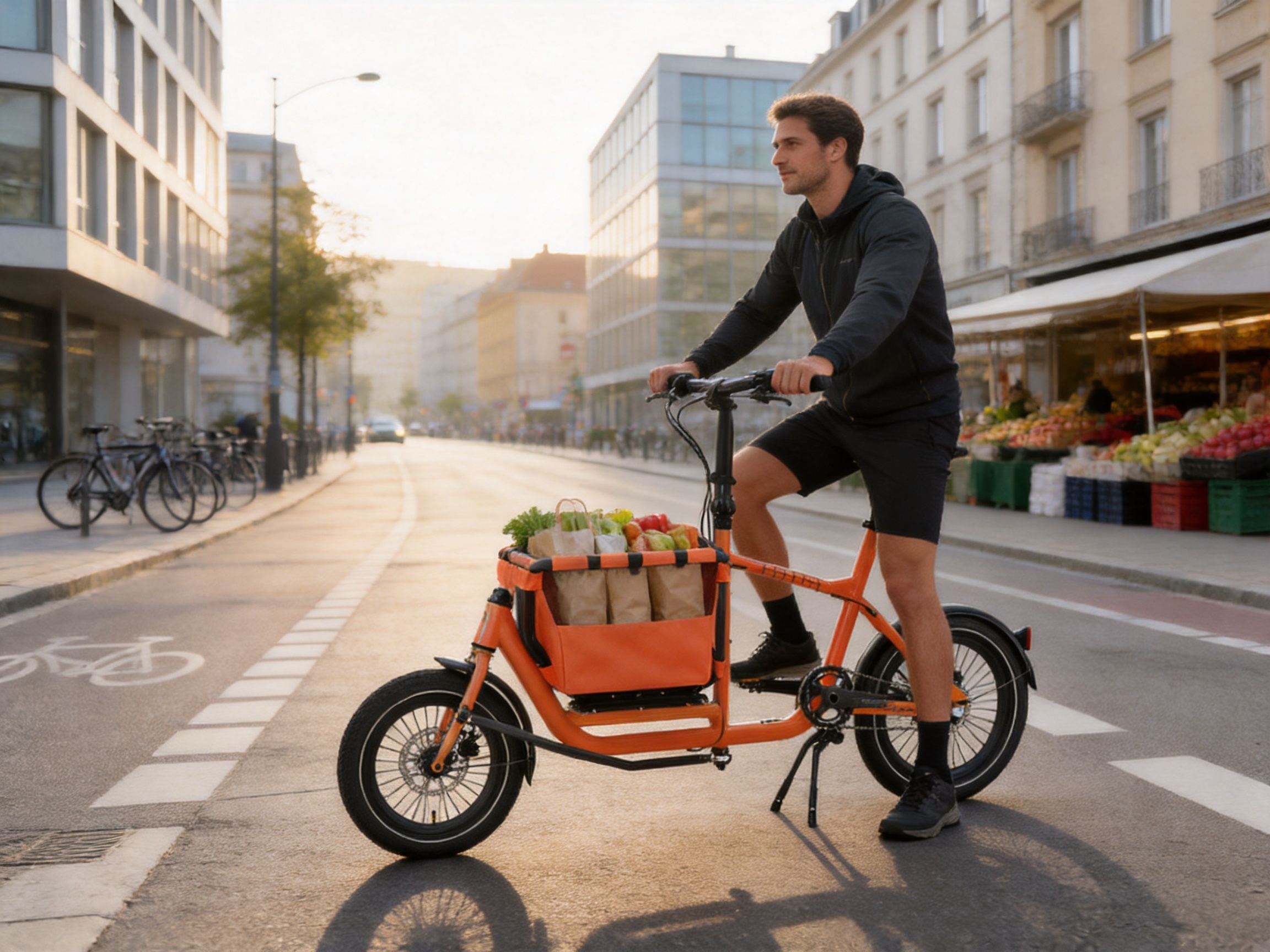
The Q1 uses a 6061 T4T6 aluminum alloy frame. This material choice reflects a common goal in modern bicycle engineering: achieving a useful balance between structural strength, manageable weight, corrosion resistance, and manufacturing practicality.
Aluminum alloy is widely used in bicycle frames because it can provide a favorable strength-to-weight relationship. For a cargo bike, this balance is especially important. The frame must support the rider and front cargo while remaining light enough for urban handling. A frame that is excessively heavy can undermine the benefits of a manual bicycle, especially when the rider must carry it up steps or move it without riding.
The Q1’s frame must also manage the dynamic forces created by front cargo. A load placed ahead of the rider can influence steering, braking, and turning behavior. This makes frame geometry, fork design, wheel placement, basket integration, and load positioning important elements of the complete product. The bicycle is not simply a normal bike with a container attached to the front. Its structural arrangement must be designed around the interaction between rider, cargo, and road.
The compact front wheel and larger rear wheel contribute to the Q1’s practical profile. The front wheel is specified as 16 inches with a 2.4-inch tire, while the rear wheel is 20 inches with a 2.4-inch tire. This combination can support a low and stable front cargo position while retaining useful rolling characteristics at the rear.
Wide tires can provide several practical benefits in an urban environment. A 2.4-inch tire offers a broader contact area than a narrow road tire and can help absorb small surface imperfections. It may also provide additional confidence on rough pavement, painted road markings, light gravel, or uneven sections of a cycle path. The listed tires are described as puncture-proof, which is particularly relevant for riders who use the bike frequently in areas where glass, thorns, and road debris may be present.
No tire is completely immune to all damage, and riders should still maintain correct pressure and inspect the tread regularly. However, puncture-resistant construction can reduce interruptions and improve the suitability of the Q1 for routine transportation.
Carrying cargo in front of the rider requires thoughtful loading. Heavy objects should be placed low and centered whenever possible. Softer goods can be used to prevent movement, while fragile items should be protected from vibration. The basket should never be overloaded beyond its stated 25-kilogram capacity, and cargo should not obstruct the rider’s view, brake cables, steering movement, or front wheel.
The Q1’s compact dimensions can support controlled maneuvering in urban areas. At 620 millimeters wide, it may fit comfortably within many bicycle lanes and storage spaces, although riders should always account for the actual width of cargo and any load extending from the sides. Turning should be performed progressively, particularly when the basket is heavily loaded.
The presence of a cargo basket can change the steering response of any bicycle. A rider moving from a standard bicycle to the Q1 should practice first with a light load. This allows the rider to learn the balance, braking distance, turning radius, and low-speed behavior before carrying heavier items.
The Q1 uses a Shimano three-speed Sora system. A three-speed drivetrain is intentionally simple compared with the multi-speed systems found on performance bicycles. For a flat urban commute, however, a limited gear range may be sufficient and can make the operating experience easier to understand.
The lower gear can help the rider start from a stop or manage a heavier basket load. The middle gear can serve as a general-purpose setting for ordinary streets. The higher gear can support a faster cadence on level roads or when the rider is traveling without a heavy load. The rider can select the appropriate gear based on terrain, cargo, wind, and desired effort.
This type of drivetrain complements the manual character of the Q1. It provides enough adjustment for common urban conditions without turning each journey into a technical exercise. Riders who are already familiar with bicycle gearing should find the system intuitive, while new riders can learn its basic operation quickly.
Compared with a single-speed cargo bike, the three-speed arrangement provides greater flexibility. A single-speed bicycle can be highly reliable, but the fixed gear may feel difficult when starting with cargo or riding into a headwind. The Q1 offers an additional level of control while remaining simpler than a wide-range derailleur system.
Compared with a heavily automated electric drivetrain, the Shimano system requires more direct rider participation. That is consistent with the Q1’s fitness focus. The rider chooses the gear, controls the effort, and receives immediate mechanical feedback through the pedals and chain.
A mechanical drivetrain still requires normal care. The chain should be kept reasonably clean and lubricated, the gears should shift correctly, and wear items should be inspected. Brake components and tires also need periodic attention. However, the absence of a motor and battery means there are fewer system-specific checks.
There is no electronic power system listed for the Q1, and the battery field is not applicable. This reduces concerns about battery storage, charging cycles, firmware, motor temperature, and electrical troubleshooting. For riders who prefer equipment that can be serviced using widely available bicycle tools and knowledge, this can be a meaningful advantage.
The practical result is a bicycle that can remain useful for many years when maintained properly. Long-term durability depends on manufacturing quality, riding conditions, servicing, and replacement of normal wear parts, but a mechanically focused product avoids the potential obsolescence of proprietary electronic components.
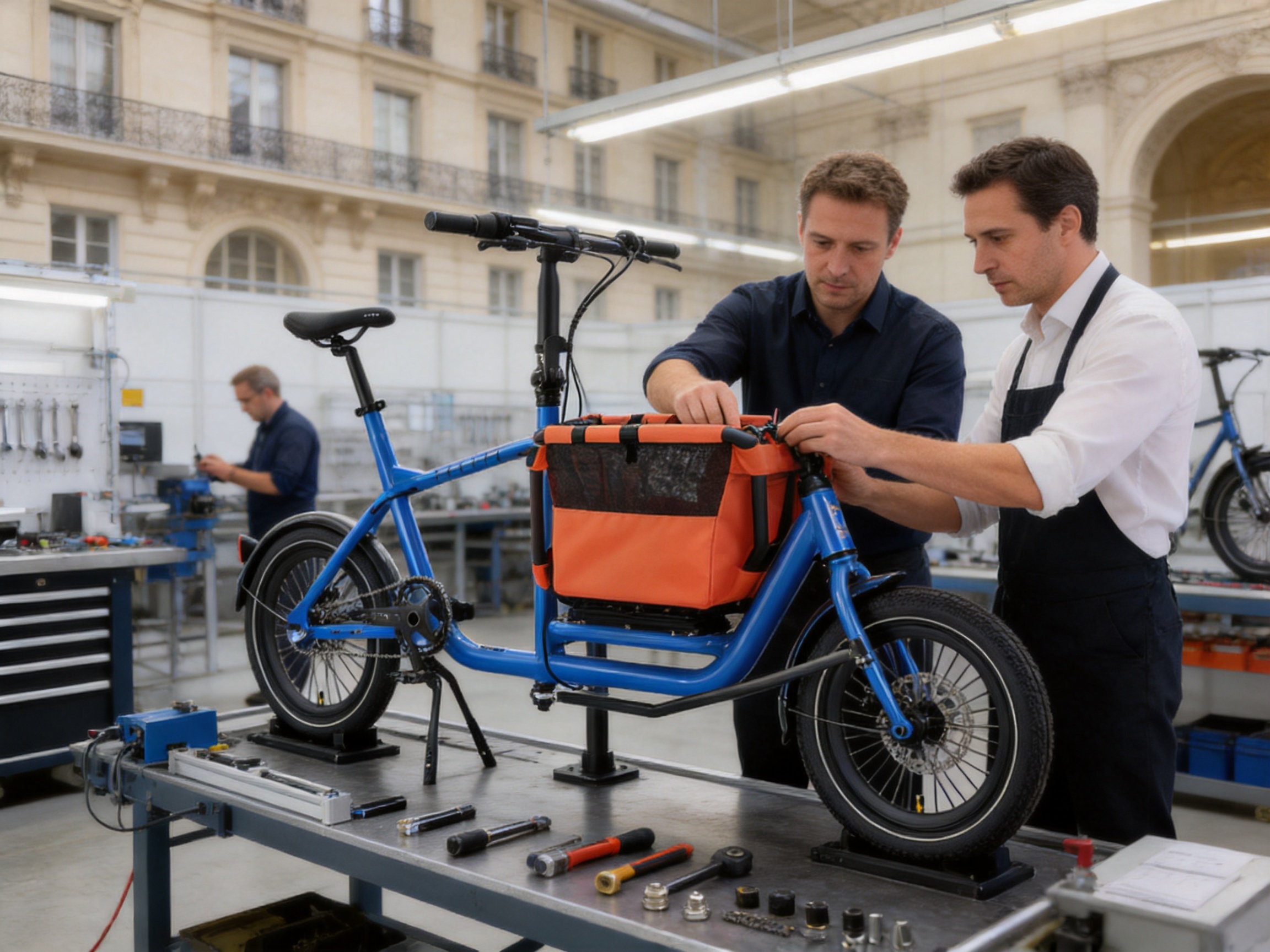
The Q1 is equipped with Tektro hydraulic disc brakes. Hydraulic disc brakes are an important feature on a cargo bike because the bicycle may carry a substantial load and may be used in changing weather conditions. Reliable braking is essential when approaching intersections, descending small slopes, navigating shared paths, or responding to pedestrians and traffic.
Disc brakes locate the braking surface at the wheel hub rather than on the outer rim. This can provide consistent performance even when the wheel rim becomes wet or dirty. Hydraulic actuation uses fluid pressure to transmit force from the brake lever to the caliper, often allowing smooth modulation and a controlled lever feel.
For a manual cargo bike, braking performance must work together with rider technique. More cargo generally means more momentum, which can increase stopping distance. Riders should apply both brakes progressively, keep the load secure, and allow additional space when carrying a full basket. Hydraulic brakes provide a strong mechanical foundation, but responsible riding remains essential.
The use of recognized bicycle components also supports serviceability. Tektro is an established bicycle component manufacturer, and replacement brake pads and service knowledge are widely available through bicycle retailers and mechanics in many markets. This can be more convenient than relying on a proprietary braking system integrated into a specific electric platform.
The company behind the Q1, ATMOSE SASU, presents itself as a cargo-bike brand with American origins, European design influence, and an international research-and-development structure. The company was established in France in 2026, while its broader brand development originated in California through ATMOSE BIKES INC. and its connection with MOTIV, an established American beach cruiser brand.
This background brings together several perspectives. American product development often emphasizes approachable use, lifestyle integration, and practical everyday performance. European design influence can contribute attention to compact urban form, visual refinement, transport efficiency, and the needs of dense city environments. The company states that its design and R&D team is based in Paris, creating a direct connection to a major urban mobility market.
The Q1’s specifications suggest a product development process centered on functional prioritization. The design does not attempt to include every possible feature. Instead, it concentrates on a small group of important requirements: manageable weight, useful cargo capacity, durable frame material, puncture-resistant wide tires, a straightforward gear system, and hydraulic disc braking.
This kind of focused engineering can be a manufacturing strength. Every additional system on a bicycle introduces more components, assembly steps, quality-control points, and potential service requirements. By selecting a manual configuration, the company can dedicate attention to the frame, basket attachment, wheel alignment, brake routing, drivetrain installation, and overall structural consistency.
The use of 6061 aluminum alloy indicates attention to material consistency and repeatable frame production. A cargo-bike frame must be manufactured with accurate alignment because small deviations can affect steering, wheel tracking, braking, and load behavior. A professional manufacturing process therefore requires controlled tube preparation, joining, alignment inspection, surface treatment, and final assembly checks.
Although the supplied product information does not specify individual welding methods or factory machinery, the frame specification itself points to a design intended for repeatable production. Aluminum frames require appropriate control of heat input, joint preparation, weld quality, and post-weld inspection. These factors help ensure that the finished frame meets the intended geometry and load requirements.
Quality control should also include checking the interface between the frame and the cargo basket. The basket is a functional load-bearing area, so its attachment points must remain secure under repeated acceleration, braking, vibration, and uneven-road impacts. Proper assembly torque, fastener inspection, and structural testing are important parts of producing a dependable cargo bike.
Manufacturing quality is not determined by the frame alone. The Q1 integrates components from specialized suppliers, including Shimano drivetrain components and Tektro hydraulic brakes. Effective product assembly requires those parts to work together correctly within the specific frame design.
Wheel installation must be accurate, with appropriate tension, alignment, axle security, and tire seating. Brake lines must be routed so that steering remains free and cargo does not interfere with the controls. Gear cables must be positioned to reduce unnecessary friction and protect against abrasion. The front basket must be aligned with the steering system and secured against movement.
These details may appear small, but they strongly influence the ownership experience. A bicycle can have an attractive frame and good components yet perform poorly if the assembly is inconsistent. A mature manufacturing approach therefore includes incoming component inspection, controlled assembly procedures, torque verification, functional testing, and final road-readiness checks.
The Q1’s manufacturing philosophy also benefits from maintainability. A product that uses familiar mechanical systems is easier to support across different markets. Local bicycle shops may be able to inspect or repair the drivetrain, brakes, tires, and wheels without specialized electronic diagnostic equipment.
Maintainability begins during product design. Components should be accessible for adjustment, replacement, and inspection. Cables and brake lines should be routed in a way that protects them without making service unnecessarily difficult. Wear items should be replaceable rather than permanently sealed into an entire assembly. The use of standard bicycle technologies supports this objective.
For international distribution, serviceability is particularly important. Buyers may live far from the original design center or factory. A product that can be maintained using commonly available parts has an advantage over a highly proprietary vehicle that depends on a narrow service network.
A cargo bike must be judged not only by its specifications but also by how naturally it fits into daily life. The Q1 is positioned as a companion for neighborhood use, which means the rider may mount and dismount frequently, stop at several destinations, carry different types of goods, and store the bike in a limited space.
The relatively compact overall dimensions support this kind of routine. The bike is long enough to provide a practical cargo area, but it is not presented as a large front-loading family platform. Its 620-millimeter width is relevant for urban movement, especially when passing through gates, storage areas, and designated bicycle spaces.
The front basket keeps cargo in front of the rider, where it can be monitored during the journey. This may be preferable to carrying goods on the back, where they can create heat, discomfort, or an uneven load. A front cargo area also makes it easier to place and remove shopping bags during short stops.
Riders should still organize cargo carefully. Glass containers, loose vegetables, books, and work equipment may require different forms of protection. A liner, straps, or reusable shopping bags can help prevent movement. The basket should not be used to carry items that could fall into the wheel or interfere with steering.
The Q1 is also suitable for riders who want to combine transportation with moderate physical activity. Because there is no motor assistance, the level of exercise depends on route length, speed, gear selection, and cargo weight. Riders can choose a relaxed pace for routine errands or use the bike as a more active commuting tool.
Many fitness bicycles are designed primarily for exercise, while many utility bicycles prioritize carrying capacity. The Q1 attempts to combine both roles. Its cargo basket makes it practical, while its manual drivetrain ensures that the rider remains the source of propulsion.
This approach may appeal to people who do not want a separate exercise routine. A short ride to the store can contribute to daily movement. A commute can include useful physical effort without requiring a change of clothing for intense training. The bike can therefore support a sustainable habit rather than a specialized activity.
Fitness should be approached progressively. Riders who are new to cargo cycling should begin with light loads and short routes. They can gradually increase distance or carrying weight as their confidence and conditioning improve. The Q1’s three-speed system allows riders to control the effort more easily than a single-speed design.
Sustainability involves more than the absence of fuel emissions during use. It also includes product longevity, repairability, resource consumption, and the frequency with which a vehicle can replace car trips. The Q1 supports these goals through its bicycle-based operation and mechanically simple architecture.
Every trip made by bicycle instead of car can reduce fuel use, local congestion, and the space required for parking. A cargo bike is especially useful because it can replace trips that might otherwise seem too inconvenient for a conventional bicycle. The front basket provides enough capacity for common errands, making short-distance car substitution more realistic.
The absence of a battery also avoids the material and end-of-life considerations associated with battery production and disposal. This does not make the Q1 impact-free; aluminum production, tires, components, packaging, and transportation all have environmental costs. However, its simpler equipment profile can reduce the number of specialized energy-storage components required for ownership.
Long service life is another important factor. A durable frame, replaceable mechanical components, and access to ordinary bicycle maintenance can help keep the product in use. The longer a bicycle remains functional, the more effectively its manufacturing impact is distributed across years of transportation service.
The company’s stated emphasis on sustainability, reliability, practicality, and innovation is consistent with this approach. The Q1 does not rely on a complex feature list to communicate value. Instead, it emphasizes useful carrying capacity, durable materials, straightforward maintenance, and regular use.
The cargo-bike market includes several broad categories: ordinary bicycles fitted with racks, compact utility bicycles, electric long-tail bikes, large front-loading family cargo bikes, and commercial delivery platforms. The Q1 occupies a distinctive space between these options.
| Category | Typical Strength | Common Limitation | Q1 Difference |
|---|---|---|---|
| Standard city bicycle | Lightweight and easy to store | Limited integrated cargo capacity | Adds a dedicated front basket for practical errands |
| Single-speed utility bicycle | Simple mechanical operation | Limited flexibility for different loads and conditions | Provides three selectable speeds |
| Electric cargo bike | Motor assistance for hills, distance, and heavy loads | Greater weight, charging needs, and electronic complexity | Removes the battery and motor for lower system complexity |
| Large family cargo bike | High passenger and cargo capacity | Large footprint and more demanding storage requirements | Offers a more compact urban utility format |
| Commercial delivery bike | Designed for very high load volume | May be excessive for personal errands | Targets moderate everyday carrying needs |
The Q1’s main competitive advantage is focus. It is not trying to satisfy every type of rider. Instead, it serves people who value lightness, mechanical simplicity, physical engagement, and practical front cargo space. This can be a compelling proposition for urban users whose routes are short and relatively flat.
Compared with a conventional electric cargo bike, the Q1 may be easier to lift and store. Compared with a basic bicycle, it offers more useful cargo integration. Compared with a large family cargo bike, it may feel less overwhelming for solo riders and small households. Compared with a performance bicycle, it provides a more functional and relaxed platform for daily transportation.
Its limitations are also part of an honest competitive analysis. Riders who regularly face steep hills, long distances, strong headwinds, heavy commercial loads, or frequent passenger transport may prefer an electric model. The Q1’s value is strongest when its design matches the rider’s environment and expectations.
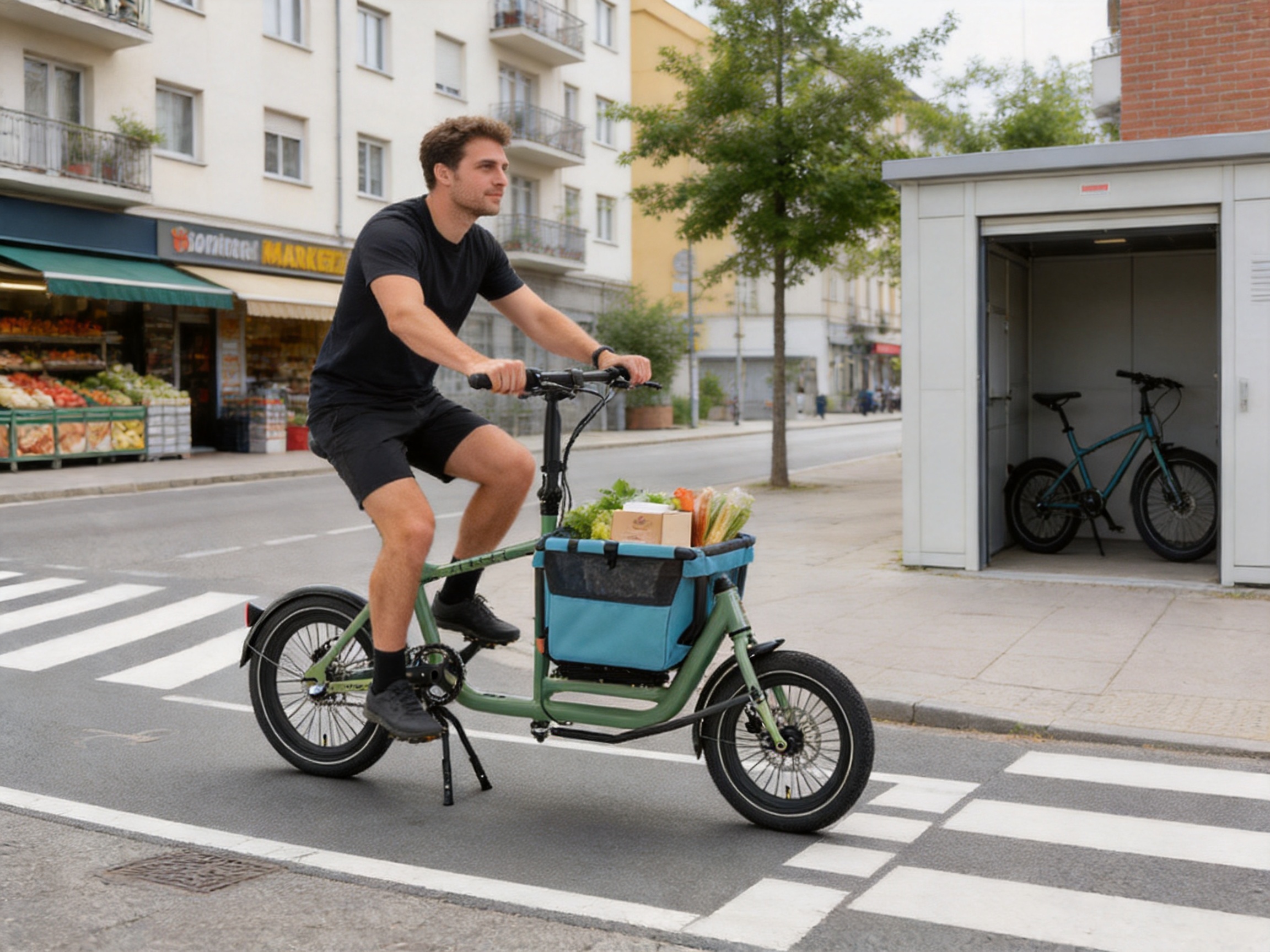
The Q1 is a strong candidate for riders who live in flat or gently rolling urban areas and regularly travel short distances. It is suitable for people who enjoy traditional cycling and want to carry more than a normal bicycle can comfortably manage.
It may also suit apartment residents who need a manageable bicycle for indoor or semi-indoor storage. The reduced weight compared with electric cargo models can make a difference when navigating stairs, lifting the bicycle over a threshold, or positioning it in a compact storage area.
Fitness-oriented commuters may appreciate that the bike turns transportation into exercise. The rider can maintain a consistent routine without worrying about battery availability. The three-speed system provides enough range for ordinary urban conditions while preserving a relatively simple mechanical structure.
Environmentally conscious consumers may value the ability to replace short car journeys with a bicycle that does not require electrical charging. Small businesses and local service providers could also consider the Q1 for light-duty neighborhood trips, provided that the cargo requirements remain within the basket and rider limits.
The Q1 may be less suitable for riders who need to carry children, transport very heavy goods, climb steep hills, or travel long distances every day. In those situations, motor assistance and a larger cargo platform may be more appropriate. Selecting the right bicycle depends on actual route conditions rather than general product enthusiasm.
Before purchasing, riders should evaluate their route, storage location, cargo habits, and fitness level. The most important question is whether the local terrain supports manual riding. A flat neighborhood with frequent short errands is an ideal environment. A hilly region may demand more physical effort, especially when the basket is heavily loaded.
Storage should also be considered carefully. The bike measures 1,780 millimeters long, 620 millimeters wide, and 1,070 millimeters high. Buyers should measure doorways, elevators, corridors, storage rooms, bicycle racks, and parking spaces. They should also account for the basket and any cargo that extends beyond the frame.
Riders should plan for ordinary maintenance. The chain, brake pads, hydraulic brake system, tires, wheels, and fasteners should be inspected periodically. Correct tire pressure is important because pressure affects comfort, rolling efficiency, grip, and puncture resistance. Heavy cargo makes proper braking and tire maintenance even more important.
Security is another ownership issue. A practical cargo bike may attract attention because it is useful and visually distinctive. Owners should use a high-quality lock, secure the frame rather than only the wheel, and store the bike in a protected location whenever possible. The removable or foldable nature of the basket does not eliminate the need to secure the main bicycle structure.
Finally, riders should become familiar with handling before attempting maximum cargo capacity. A brief practice session with an empty basket followed by gradually heavier loads can improve confidence. The rider should practice starting, stopping, slow turns, tight turns, and emergency braking in a safe area.
Load the basket evenly and keep the center of gravity low. Avoid placing a single heavy item at the far front or on one side. Secure bags and packages so that they cannot shift during braking.
Use the lower gear when starting with cargo or when additional pedal force is required. Shift before a hill or difficult section whenever possible rather than waiting until the rider is struggling at low speed.
Apply both hydraulic disc brakes smoothly. When the basket is full, allow more stopping distance and reduce speed before entering intersections, corners, and crowded paths.
Inspect the tires before longer journeys. Look for embedded glass, uneven wear, cuts, or low pressure. Puncture-resistant tires improve reliability, but they still need appropriate inflation and regular inspection.
Keep the steering area clear. Cargo should never interfere with the handlebar, brake levers, cables, front wheel, or the rider’s view of the road.
When parking, use the bicycle’s most stable position and avoid leaving a loaded basket where the bike could tip. Remove valuable goods and use a lock appropriate for the location and duration of parking.
No. The Q1 is a manual cargo bike. It does not include a battery or motor, and it has no listed power system. The rider provides all propulsion through the pedals.
The Q1 is designed for short urban trips, neighborhood errands, flat commutes, and fitness-focused transportation. Its front folding basket provides practical carrying capacity for groceries and everyday goods.
The front basket is rated for a maximum load of 25 kilograms. Cargo should be distributed evenly and secured carefully. Riders should avoid exceeding this limit or carrying unstable objects.
The listed maximum rider load is 120 kilograms. Riders should also consider cargo weight, road conditions, riding style, and local safety recommendations.
The Q1 uses a Shimano three-speed Sora system. The gears provide basic adjustment for starting, ordinary flat-road riding, and moderate changes in effort.
The bicycle is equipped with Tektro hydraulic disc brakes. These brakes are intended to provide controlled and reliable stopping performance for a practical cargo-bike application.
The frame is made from 6061 T4T6 aluminum alloy. This material supports the design goal of combining structural utility with manageable weight.
The listed dimensions are 1,780 millimeters in length, 620 millimeters in width, and 1,070 millimeters in height. Buyers should measure their intended storage and access areas before purchase.
The front tires are specified as 16 inches by 2.4 inches, while the rear tires are 20 inches by 2.4 inches. They are described as puncture-proof tires.
The Q1 is primarily intended for flat commutes and short-distance urban riding. It can be ridden on inclines by a capable rider, but people who regularly face steep hills may prefer an electric cargo bike with motor assistance.
No. Because it has no battery or motor, the Q1 does not require charging. This makes it ready to ride whenever the mechanical components are maintained and the tires are properly inflated.
Its mechanical configuration removes battery, motor, wiring, and electronic control systems. Normal bicycle maintenance is still necessary, but the system has fewer electrical components than a typical electric cargo bike.
Yes. The product information identifies it as a front folding basket. Folding can be useful when storing the bike or when the full cargo area is not required.
The ideal rider enjoys traditional cycling, lives in a relatively flat area, makes short urban trips, wants integrated cargo space, and appreciates exercise and mechanical simplicity.
The Atmose Model Q Q1 presents a clear alternative to the assumption that every cargo bike must be electric. Its design is based on a straightforward idea: many urban errands can be completed with human power if the bicycle is light, stable, practical, and properly equipped.
Its 6061 aluminum alloy frame, front folding basket, three-speed Shimano drivetrain, wide puncture-resistant tires, and Tektro hydraulic disc brakes create a balanced specification for everyday utility. The Q1 is not overloaded with features that may be unnecessary for short trips. Instead, it focuses on the details that directly affect daily use: carrying goods, controlling the bicycle, storing it, and maintaining it.
The absence of a motor and battery is its most important differentiator. This reduces weight, eliminates charging, simplifies the ownership experience, and makes fitness part of transportation. For riders in flat urban environments, these benefits may outweigh the assistance offered by an electric system.
The company’s manufacturing and product-development strengths are reflected in the Q1’s focused architecture and component integration. ATMOSE SASU brings together American origins, European design and research experience, established bicycle-industry knowledge, and an emphasis on practical mobility. A manufacturing approach centered on material consistency, structural alignment, component quality, assembly control, and maintainability can support dependable long-term use.
Ultimately, the Q1 is best for a specific but substantial group of riders: people who want a useful cargo bicycle without the weight and complexity of electric assistance. It offers a practical way to carry daily goods, replace short car trips, and incorporate moderate exercise into ordinary routines. Its success depends on matching the bike to the rider’s terrain and cargo needs, but within that intended role, it is a thoughtful and distinctive urban mobility solution.
1. Product specification sheet for the Model Q Q1 manual cargo bike.
2. Manufacturer-provided product description for the Urban Companion Cargo Bike category.
3. Manufacturer-provided company information concerning product philosophy, company history, design, and research-and-development activities.
4. General bicycle engineering principles concerning aluminum alloy frame construction and structural alignment.
5. General bicycle maintenance practices for mechanical drivetrains, hydraulic disc brakes, wheels, and puncture-resistant tires.
6. General urban mobility research concerning bicycle-based transportation, cargo cycling, active commuting, and short-distance car-trip substitution.
7. General product-development principles concerning design for maintainability, component integration, quality control, and serviceability.
Nov 27, 2026
Nov 25, 2026
Nov 21, 2026


info@atmosecargobike.com

200 rue de la Croix Nivert 75015 Paris

Custom Electric Bakfiets
 English
 Français
 Deutsch































