Nov 01, 2026
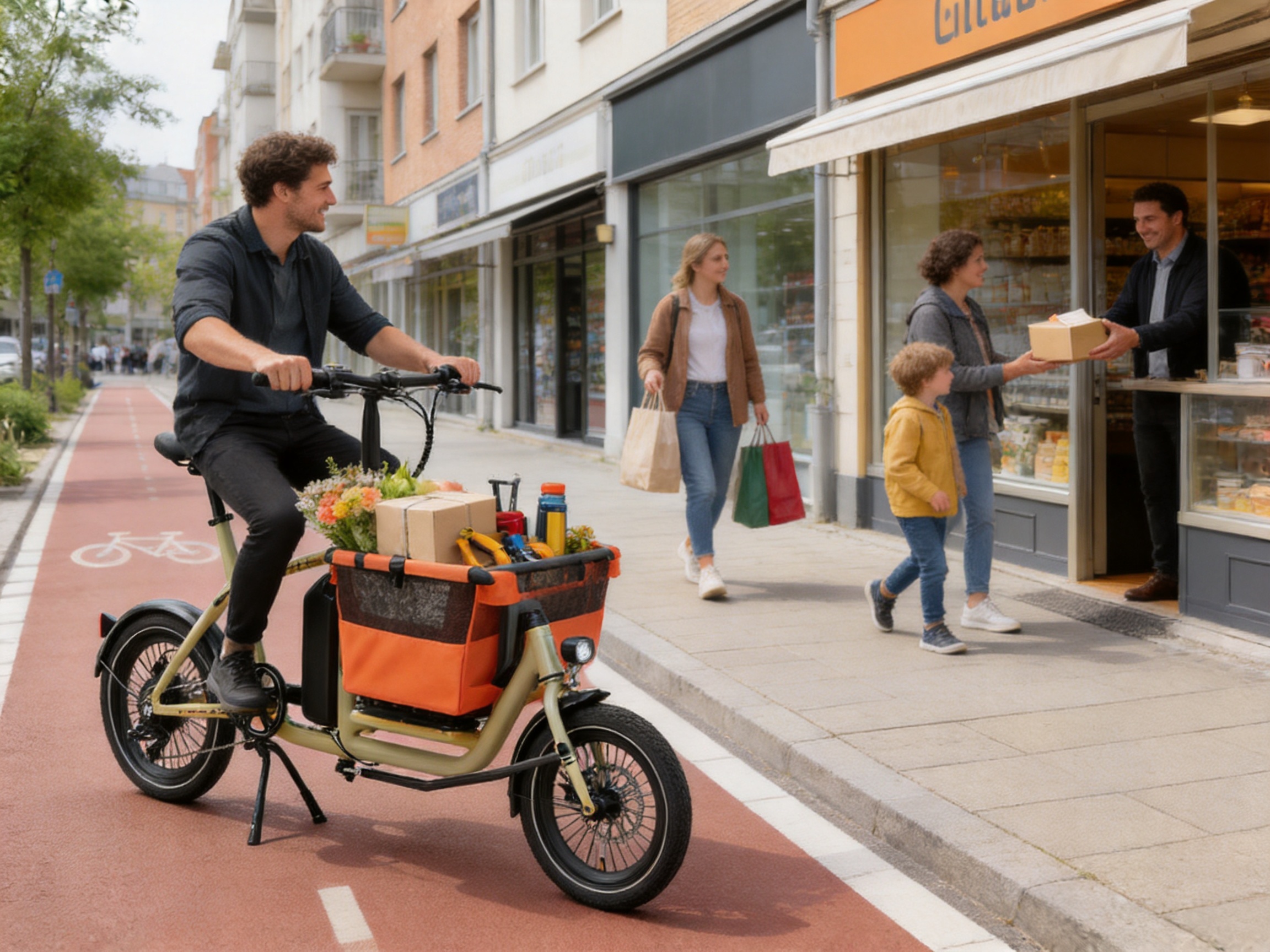
Urban transportation is changing rapidly. More people are looking for alternatives to private cars, crowded public transit, and short-distance trips made inefficient by traffic congestion. For families, commuters, local businesses, and delivery operators, the cargo e-bike has become one of the most practical solutions. It combines the compact footprint of a bicycle with useful carrying capacity, electric assistance, and lower operating costs.
However, not every cargo e-bike is designed for the same type of rider or environment. Some models are built for steep hills and demanding off-road conditions. Others focus on maximum passenger capacity or premium integrated technology. For riders living in flat or moderately rolling cities, a simpler and more serviceable design can often provide greater long-term value.
The Atmose Model Q EQ1 is designed around that idea. It is a reliable urban cargo e-bike intended for practical daily transportation, local errands, family use, and light commercial hauling. Its rear hub motor, aluminum frame, front folding basket, hydraulic disc brakes, seven-speed drivetrain, and compact dimensions create a balanced package for riders who want useful cargo capacity without unnecessary complexity.
Rather than attempting to be everything to everyone, the EQ1 concentrates on the requirements of everyday urban mobility: easy starting, straightforward maintenance, stable handling, efficient loading, accessible operating costs, and dependable performance on flat to moderate terrain.
The central strength of the EQ1 is its clear purpose. It is not presented as an extreme mountain cargo bike or as a high-powered long-distance touring machine. It is a city workhorse for riders who need to transport groceries, work materials, packages, personal belongings, or daily essentials.
This focus creates several practical advantages. The bike has a relatively compact overall length of 1,780 millimeters and a width of 620 millimeters. Those dimensions help it remain manageable on urban streets, cycle paths, residential lanes, and storage areas. Compared with many larger front-loading or long-tail cargo bikes, the EQ1 is easier to position in a garage, apartment entrance, retail back room, or workplace storage area.
The front cargo basket measures approximately 470 millimeters in length, 470 millimeters in width, and 375 millimeters in height. This gives riders a useful open loading area for shopping bags, parcels, backpacks, tools, or other daily cargo. The basket is also designed to fold, helping reduce the bike’s footprint when the cargo area is not in use.
For urban riders, the ability to switch between transportation and cargo modes is important. A bike that is permanently configured for bulky loads may be inconvenient for short personal trips. The EQ1’s front basket system allows the rider to make better use of the bike throughout the day, whether commuting in the morning, shopping after work, or carrying supplies for a local business.
The bike is rated for a rider load of up to 120 kilograms and a basket load of up to 25 kilograms. These specifications make the EQ1 suitable for a broad range of adult riders and common urban cargo tasks. As with any bicycle, the load should be distributed evenly, secured properly, and kept within the manufacturer’s stated limits.
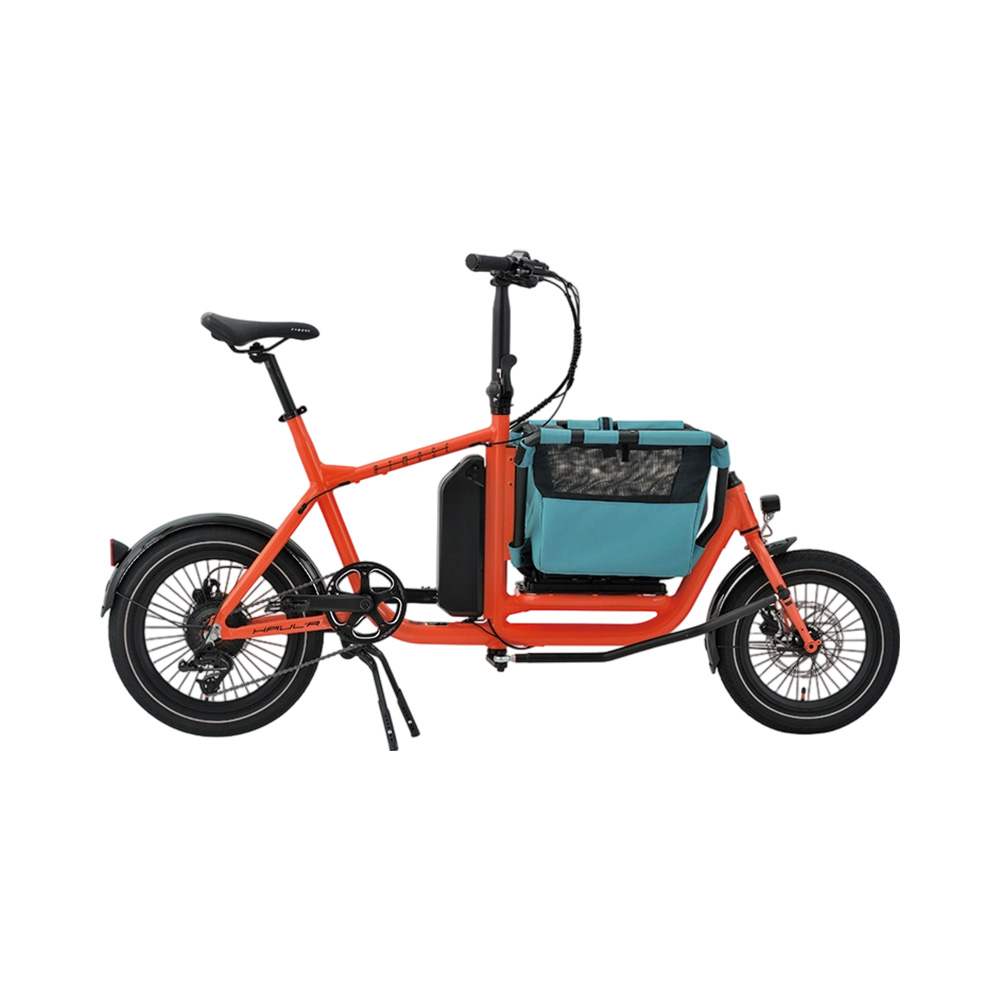
Atmose Model Q EQ1 Reliable Hub-Motor Urban Cargo E-Bike for Flat Cities
The EQ1 uses a Bafang 36-volt, 250-watt rear hub motor. This configuration is particularly well suited to flat urban areas and routes with moderate inclines. The motor is positioned in the rear wheel, allowing it to provide direct assistance without becoming deeply integrated into the bicycle’s chain and gear system.
One of the most noticeable benefits of a hub motor is its starting response. When a cargo bike is loaded, getting moving from a complete stop can require more effort than riding an unloaded bicycle. This is especially noticeable at traffic lights, intersections, pedestrian crossings, and busy urban junctions. A rear hub motor provides a useful push when the rider begins pedaling, helping the bike move smoothly into traffic.
This starting assistance can make the bike feel more approachable for new e-bike users. Riders do not need to develop a specialized technique to activate a complex mid-drive system. Instead, the motor supports the rear wheel in a direct and familiar way. The result is a riding experience that feels simple, predictable, and easy to understand.
Another advantage is the motor’s independence from the bicycle’s main drivetrain. In a mid-drive cargo bike, the motor’s power is transmitted through the chain, cassette, derailleur, and other drivetrain components. When a rider shifts under load or applies strong pedal pressure, these parts can experience additional stress. A hub motor sends its assistance directly through the wheel, reducing the amount of motor torque passing through the chain and gears.
This separation can contribute to lower drivetrain wear over time. The chain, sprockets, and derailleur still require regular cleaning, lubrication, inspection, and eventual replacement, but they are not responsible for transferring all motor assistance to the wheel. For users who prioritize straightforward upkeep, this is a meaningful design choice.
The 250-watt rating is appropriate for an urban assistance system intended for practical city riding. It supports efficient movement while helping the bike remain aligned with common electric bicycle categories in many markets. Local regulations vary, so retailers and users should always confirm applicable requirements regarding speed assistance, motor output, equipment, and road use.
Hub motors are often selected for their simplicity and value. They generally have fewer moving parts than more mechanically integrated drive systems. Because the motor is contained within the wheel hub, many routine drivetrain tasks can be handled like those on a conventional bicycle.
For a retailer or mobility operator, this can simplify product training and after-sales service. A mechanic familiar with standard bicycle maintenance can address many of the bike’s ordinary service needs without dealing with a highly specialized transmission system. For a rider, it can mean easier diagnosis when a chain needs adjustment, a derailleur requires alignment, or a tire needs replacement.
Hub motors also offer a distinct riding character. Their assistance is often smooth and direct, particularly when starting on level ground. This is valuable for errands involving frequent stops and starts. A rider making several deliveries or visiting multiple stores may appreciate consistent launch support more than extreme climbing capability.
The EQ1 is equipped with a Samsung 36-volt, 15-amp-hour lithium battery, listed with a capacity of 540 watt-hours. Battery capacity is one of the most important factors in the usefulness of an electric cargo bike because cargo, rider weight, tire pressure, temperature, terrain, wind, and riding style all affect energy consumption.
A 540-watt-hour battery gives the EQ1 a practical energy reserve for typical urban riding. It can support commuting, shopping, school-related errands, local delivery routes, and multiple short trips between charging sessions. The actual distance will vary according to conditions, but the specification places the bike in a useful range for everyday city applications.
Using Samsung battery cells is also a significant product detail. Established cell manufacturers provide a recognized foundation for battery design and quality control. A complete battery system still depends on the battery management system, housing, wiring, charger, connectors, and assembly standards, but reputable cells are an important component of a dependable energy platform.
For fleet buyers and overseas retailers, battery configuration is especially important. A consistent battery format simplifies inventory planning, replacement support, product education, and warranty administration. It also gives customers a clearer understanding of what they are purchasing.
Battery care remains essential. Users should charge the battery with the supplied or approved charger, keep the battery dry, avoid extreme heat, and follow the recommended storage procedures. Regular charging habits and correct storage can help preserve usable capacity over the service life of the bicycle.
The EQ1’s battery should be considered part of an overall operating system rather than an isolated component. Efficient tire inflation, sensible cargo loading, smooth acceleration, appropriate gear selection, and regular brake and drivetrain maintenance all influence real-world range. A well-maintained bicycle can make better use of every watt-hour.
The frame is made from 6061 T4T6 aluminum alloy. Aluminum is widely used in modern bicycles because it offers a useful balance between weight, stiffness, corrosion resistance, and manufacturing flexibility. For an urban cargo bike, frame design must do more than support the rider. It must also manage steering loads, cargo weight, braking forces, motor assistance, and repeated starts and stops.
The use of a 6061 aluminum alloy platform gives the EQ1 a practical foundation for regular city service. Aluminum is well suited to hydroforming, shaping, welding, finishing, and other bicycle manufacturing processes. The T4T6 designation refers to heat-treatment conditions associated with the material, helping engineers achieve appropriate strength and structural performance when the frame is correctly designed and manufactured.
A cargo bike frame must be evaluated as a complete structure. Tube profiles, weld locations, mounting points, fork interfaces, steering geometry, wheel alignment, and load distribution all contribute to ride quality and durability. A strong material alone does not guarantee a strong bicycle. The design and manufacturing process must ensure that these elements work together.
In the EQ1, the frame is matched with a front cargo system, a rear motor, small-diameter wheels, and hydraulic disc brakes. This combination is intended to create a stable urban platform that remains maneuverable in confined spaces. The compact wheel format also contributes to a lower center of gravity when compared with larger-wheel cargo configurations, although the rider must still load the basket carefully and avoid excessive high stacking.
Advanced manufacturing is not limited to a single machine or a single production step. A dependable cargo e-bike requires coordination among industrial design, material selection, frame fabrication, electrical integration, component sourcing, assembly, testing, packaging, and after-sales support.
Atmose combines American product thinking with European design and research-and-development involvement. The company originated in California and has developed an international design and R&D structure based in Paris. This combination creates a product-development approach that connects practical North American utility with European attention to urban form, compact mobility, and visual design.
The company’s background is also connected to MOTIV, an established American beach cruiser brand. This provides experience in bicycle design, production coordination, component integration, and consumer-oriented product development. Cargo bicycles require many of the same fundamentals as other bicycles, while adding greater demands in load management, frame strength, braking, and utility.
For international production, a mature supply chain is a major advantage. A cargo e-bike contains mechanical, electrical, and finishing components sourced from multiple manufacturing disciplines. Consistency depends on reliable suppliers, clear specifications, quality inspection, and controlled assembly procedures.
Frame production typically involves material preparation, tube cutting, forming, fixture alignment, welding, surface treatment, painting, and inspection. Precise fixtures help maintain repeatable geometry during welding. Consistent alignment is essential because small deviations can influence steering behavior, wheel tracking, brake alignment, and tire clearance.
Electrical assembly requires an equally disciplined approach. The battery, motor, display or controls, wiring harness, connectors, and charging system must work as an integrated network. Cable routing should protect wires from abrasion, water exposure, sharp edges, and excessive bending. Connectors must be properly seated, and electrical systems should be checked before shipment.
Final assembly is where the product’s systems come together. Technicians install the wheels, brakes, drivetrain, basket, controls, battery, and other components. They must verify torque, alignment, shifting, braking, wheel rotation, motor operation, and overall finish. A good manufacturing process recognizes that a bicycle is not complete when parts are merely attached; it is complete when the assembled product performs consistently.
For wholesale and mobility customers, these processes provide a foundation for repeatability. Retailers need products that can be assembled, explained, serviced, and reordered with confidence. Commercial users need predictable performance across multiple bicycles. A structured manufacturing system helps reduce variation between units and supports stronger long-term customer relationships.
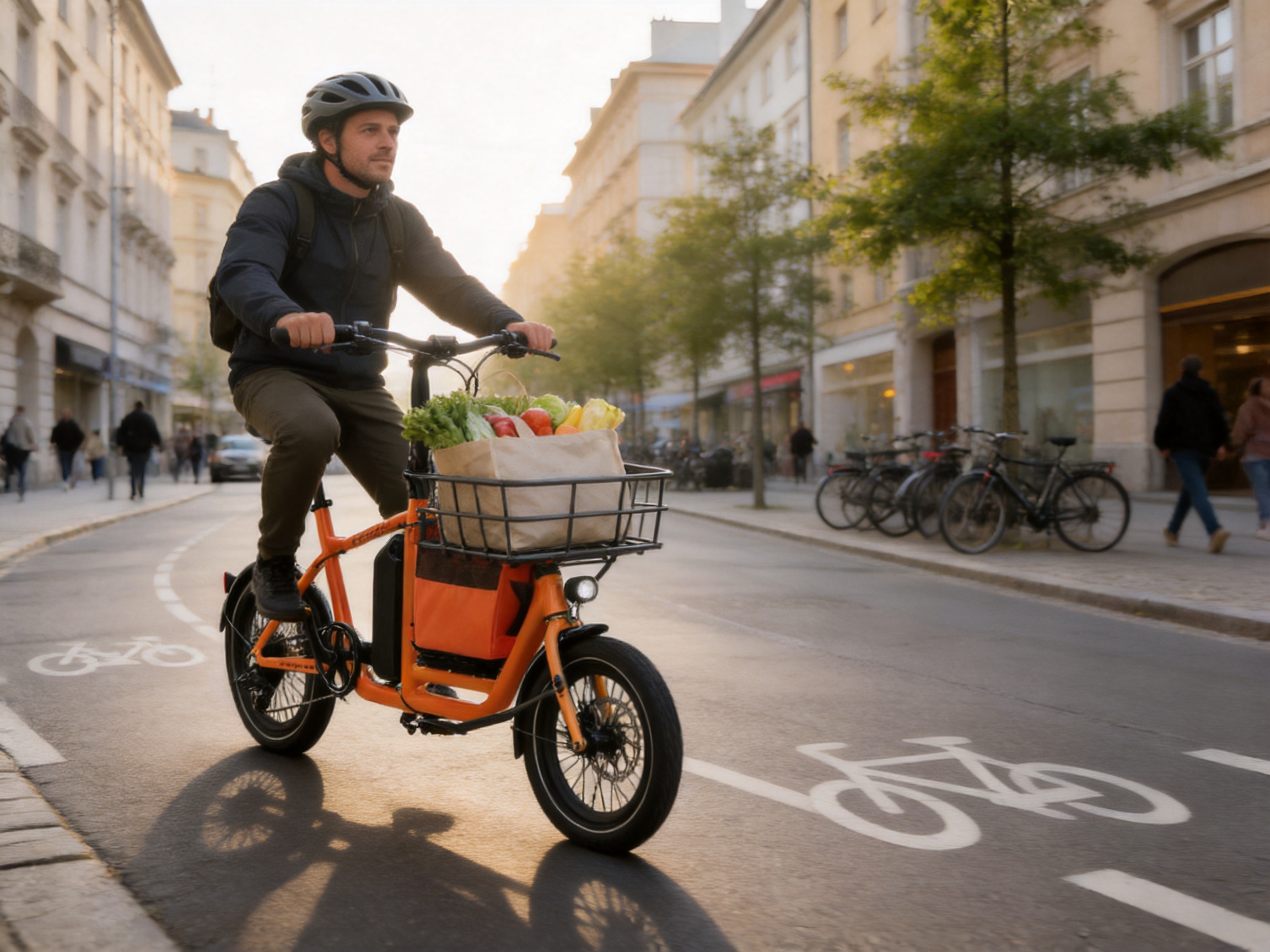
The EQ1 uses 16-inch by 2.4-inch front tires and a 20-inch by 2.4-inch rear tire. The relatively wide tire format supports comfort, traction, and load handling on common urban surfaces such as asphalt, concrete, painted cycle lanes, paving stones, and compacted paths.
Smaller cargo-bike wheels can offer several practical benefits. They can keep the frame and cargo platform closer to the ground, making loading easier and contributing to a lower overall center of gravity. They may also create a compact wheelbase and responsive handling suited to city streets.
The stated tires are described as puncture-proof or puncture-resistant in the product information. No tire is completely immune to every road hazard, but reinforced tires can reduce the likelihood of interruptions from ordinary urban debris. Riders should still inspect the tread, sidewalls, and inflation pressure regularly.
Tire pressure is particularly important on a cargo bike. Underinflation can increase rolling resistance, reduce range, make steering feel sluggish, and expose the rim to impact damage. Overinflation can reduce comfort and traction. The correct pressure depends on rider weight, cargo, road conditions, and tire specifications.
The front and rear wheels have different diameters, which can help balance cargo-bike geometry. The smaller front wheels keep the front loading area compact, while the 20-inch rear wheel supports the motor and rear riding position. The arrangement is intended to combine practical loading with manageable handling.
Cargo bikes carry more mass than standard bicycles, particularly when the basket is loaded. Braking performance is therefore essential. The EQ1 uses Tektro hydraulic disc brakes, a feature that provides strong stopping control with relatively low hand effort.
Hydraulic systems transmit lever force through fluid rather than a traditional mechanical cable. This can provide a smooth lever feel and consistent actuation. Hydraulic disc brakes also maintain their braking performance across a range of weather and load conditions when properly maintained.
Disc brakes are positioned away from the tire’s outer braking surface, which can be advantageous in wet or dirty conditions. They also provide effective braking with wide tires and smaller wheels. For a practical cargo e-bike, predictable braking is more important than aggressive performance. Riders should be able to slow down smoothly, stop at intersections, and manage a loaded bike on slight declines.
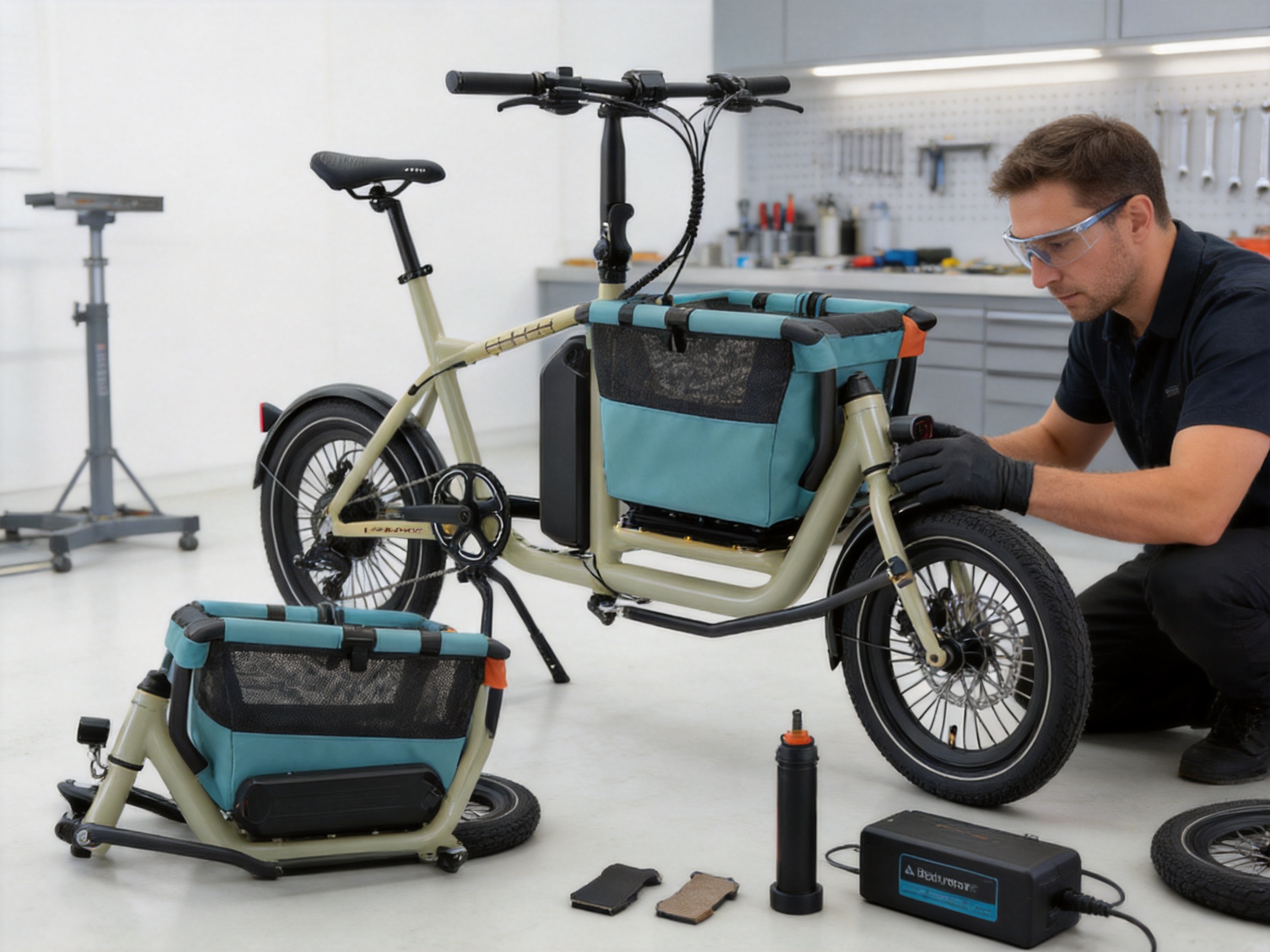
Brake maintenance remains important. Brake pads wear with use, especially when the bike regularly carries heavy cargo or operates in hilly areas. Rotors should be kept clean, calipers should remain aligned, and hydraulic systems should be serviced by a qualified technician when required.
The EQ1 uses a Shimano seven-speed Sora shifting system. A multi-speed drivetrain allows the rider to select an appropriate gear for starting, cruising, gentle inclines, and changes in load.
On flat roads, a higher gear can support efficient cruising. When starting with a full basket, a lower gear can reduce the effort required from the rider. The motor assists the ride, but gearing remains useful because it helps the rider maintain a comfortable cadence and manage battery consumption.
The drivetrain also gives the bike flexibility beyond purely flat routes. Although the EQ1 is optimized for flat to moderate terrain, a rider can use lower gears when approaching a bridge, ramp, or gradual hill. The bike is not intended to replace a high-torque mountain-oriented cargo model, but it provides useful adaptability for ordinary urban topography.
Because the rear hub motor operates independently from the drivetrain, the chain and gears are not required to transfer the motor’s full output. This can support longer drivetrain service intervals when the bicycle is maintained correctly. Chain cleaning, lubrication, derailleur adjustment, and inspection should still be part of the service schedule.
The front folding basket is one of the EQ1’s defining features. Many cargo bicycles offer storage capacity, but the usefulness of a cargo area depends on how easily it can be installed, removed, and adapted to different tasks.
The basket is designed to attach to pre-installed mounting holes. Installation involves aligning the base with the mounting points, lowering the basket vertically, and pushing it backward toward the saddle until it clicks into position. This three-step process is intended to make installation fast and intuitive.
A secure connection is essential because a front basket affects steering and carries visible weight. The click mechanism should be fully engaged before riding. Users should inspect the mounting area periodically, especially if the bicycle is used on uneven roads or carries cargo frequently.
Removal is also designed as a simple process. The rider pulls down the release pin at the bottom of the basket mount, pushes the basket forward along its track, and lifts it upward once it reaches the end. This allows the bike to transition between cargo use and a more open configuration.
The removable design can benefit families and commercial users in different ways. A family may remove the basket when using the bike for a short personal ride. A retailer may demonstrate the product in more than one configuration. A small business may install the basket during delivery hours and remove it when the bike is used for staff transportation.
Because the basket is positioned in front of the rider, visibility and balance should be considered. Large or tall items should not block lights, controls, or the rider’s view. Cargo should be secured so that it cannot shift into the wheel or interfere with steering.
The cargo e-bike market includes models with mid-drive motors, electronic shifting, suspension systems, integrated smart displays, dual batteries, and highly specialized frames. Those technologies can be valuable for certain applications, but they may also increase purchase price, service complexity, and replacement costs.
The EQ1 takes a more focused approach. Its rear hub motor, conventional seven-speed drivetrain, aluminum frame, hydraulic brakes, and removable basket provide the core features required for many urban trips without overloading the design with systems that every rider may not need.
This can create a lower total cost of ownership. A simpler motor architecture may be easier to diagnose. A standard drivetrain may be familiar to more bicycle technicians. A removable basket can be replaced or adapted without redesigning the entire front structure. These factors matter to users who view their cargo bike as a daily tool rather than a luxury product.
The EQ1 also offers a value advantage for overseas retailers and mobility partners. A practical specification can make it easier to position the product at an accessible price point. This may open the cargo-bike category to customers who need electric carrying capacity but cannot justify the price of a highly equipped premium model.
Against conventional bicycles, the EQ1 provides electric assistance and greater carrying utility. Against large cargo bikes, it offers a more compact physical format. Against highly specialized performance cargo bikes, it emphasizes simplicity and maintainability. This balanced positioning is one of its strongest competitive advantages.
For individual riders, the EQ1 can replace many short car trips. Grocery shopping, pharmacy visits, parcel collection, commuting, and trips to local services can become easier when the rider has both electric assistance and a dedicated cargo basket.
Families can use the bike for transporting household supplies, sports equipment, school bags, or picnic goods. The stated basket capacity is suitable for everyday objects rather than oversized commercial loads, which makes it appropriate for practical local errands.
The bike can also support a hybrid lifestyle. A rider may use public transportation for longer journeys and use the EQ1 for the first or final part of the trip. Its compact dimensions can be useful in neighborhoods where parking is limited and roads are congested.
For older riders or people returning to cycling, electric assistance can reduce the physical barrier associated with carrying cargo. The rider still pedals and controls the bicycle, but the motor helps reduce effort during acceleration and moderate resistance. This may encourage more frequent use and make active transportation feel more accessible.
Small businesses are increasingly interested in cargo bikes for local delivery and service work. Restaurants, florists, repair technicians, market vendors, neighborhood shops, and mobile service providers can all benefit from a compact electric transport platform.
The EQ1 is especially relevant where delivery distances are short and roads are mostly flat. A business can use the basket for documents, small packages, tools, ingredients, or customer orders. The bike’s compact width may allow it to move through urban spaces that are difficult for vans or larger utility vehicles.
For wholesale buyers, product consistency is important. A retailer needs clear specifications, reliable component sourcing, assembly guidance, and access to technical support. A mobility partner may require a product that can be introduced across multiple cities with a consistent user experience.
Atmose supports custom design and wholesale orders for global buyers. Customization may involve market-specific configurations, branding, accessories, packaging, or product adaptations, depending on project requirements and regulatory conditions. Any customization should be evaluated carefully because changes to battery systems, brakes, frames, or motors may affect compliance and performance.
A practical cargo bike can also serve as a demonstration product for sustainable transportation programs. Businesses, municipalities, campuses, and mobility operators may use such bicycles to test low-emission delivery, employee transportation, or neighborhood logistics.
| Specification | EQ1 Details | Practical Significance |
|---|---|---|
| Product category | Urban Companion Cargo Bike, Model Q | Designed for everyday urban transport and light cargo use |
| Frame | 6061 T4T6 aluminum alloy | Balances structural performance, corrosion resistance, and manageable weight |
| Battery | Samsung 36V, 15Ah lithium battery | Provides a 540 watt-hour energy capacity for practical city riding |
| Motor | Bafang rear hub motor, 36V, 250W | Offers direct starting assistance and a relatively simple drive layout |
| Maximum rider load | 120 kilograms | Supports a broad range of adult users when operated correctly |
| Maximum basket load | 25 kilograms | Suitable for groceries, parcels, tools, and daily supplies |
| Drivetrain | Shimano seven-speed Sora | Provides gear choices for starts, cruising, and moderate inclines |
| Front basket | 470 × 470 × 375 millimeters | Creates useful loading space while supporting a compact urban format |
| Front tire | 16 × 2.4 inches | Supports compact handling and a stable front cargo platform |
| Rear tire | 20 × 2.4 inches | Provides support for the rear motor and riding position |
| Brakes | Tektro hydraulic disc brakes | Supports controlled stopping with a loaded bicycle |
| Overall dimensions | 1,780 × 620 × 1,070 millimeters | Suitable for many urban storage and riding environments |
A cargo bike is a long-term transportation tool, so serviceability should be considered before purchase. The EQ1’s configuration supports a familiar maintenance approach. The chain, gears, wheels, tires, brake components, and steering parts can be inspected using established bicycle service practices.
The rear hub motor separates electric assistance from much of the mechanical drivetrain. This can make routine bicycle maintenance more understandable for owners and technicians. If a chain requires replacement, the motor does not necessarily need to be opened. If the derailleur requires adjustment, the electrical drive unit remains a distinct system.
Electrical troubleshooting should still be performed carefully. Battery connectors, wiring, motor cables, controls, and charging equipment should not be modified without appropriate technical knowledge. Retailers should provide customers with clear maintenance instructions and should identify qualified service channels for electrical repairs.
Hydraulic brakes require periodic inspection, while tires need pressure checks and puncture monitoring. The folding basket mechanism should remain clean and should be checked for secure engagement. Fasteners throughout the bike should be inspected according to the recommended service schedule.
For commercial operators, preventive maintenance is more efficient than waiting for a failure. A fleet schedule can include tire inspections, brake pad checks, drivetrain cleaning, battery condition checks, wheel alignment, and fastener verification. Keeping records can help identify repeated issues and improve fleet availability.
Safe operation begins with correct assembly. Before the first ride, the rider or technician should verify that the handlebars, seat, wheels, pedals, brakes, basket, and battery are installed correctly. The basket must be fully locked into its mounting system before cargo is added.
Loads should remain within the stated limits. Heavy items should be placed low and centered whenever possible. Cargo must not interfere with steering, braking, lights, tires, or the rider’s ability to dismount. Loose objects should be secured.
Riders should become familiar with the bike in an open area before entering busy traffic. Electric assistance can make acceleration feel different from a conventional bicycle. The rider should practice starting, stopping, turning, shifting, and braking with an empty basket before carrying a full load.
Local regulations regarding electric bicycles can differ significantly. Requirements may address maximum assisted speed, helmet use, lighting, reflectors, equipment, insurance, age limits, and permitted roads or cycle paths. Retailers and users are responsible for confirming the rules that apply in their market.
Visibility is also important. Urban riders should use appropriate lighting, wear visible clothing when conditions require it, signal clearly, and maintain a safe distance from other road users. Cargo capacity does not eliminate the need for defensive riding.
An electric cargo bike can reduce dependence on short car journeys. Replacing even a portion of local trips can reduce fuel use, traffic pressure, parking demand, and local emissions. For businesses, cargo bikes may also reduce the cost and logistical difficulty of operating a vehicle for short urban deliveries.
The economic benefits extend beyond fuel savings. A cargo e-bike generally requires less space than a car, may avoid some parking costs, and can travel efficiently through congested areas. A business may be able to serve nearby customers without assigning a van to every short delivery.
The EQ1’s accessible design supports this transition by lowering the complexity barrier. Not every user needs a high-performance or heavily computerized cargo bike. A practical model with a useful battery, strong brakes, manageable dimensions, and a removable basket may be enough to make electric cargo transport viable.
Sustainability also depends on product longevity. A bicycle that remains useful for many years has a lower environmental impact than one that is quickly discarded. Serviceable mechanical parts, replaceable wear components, and organized after-sales support can contribute to longer ownership.
The EQ1 reflects a product philosophy centered on “Fun and Practical.” These two ideas are not opposites. A practical bike should be easy to use, but it should also be enjoyable enough that people want to ride it regularly. Comfortable handling, responsive assistance, accessible controls, and useful cargo capacity all influence whether a product becomes part of a person’s routine.
Atmose describes its mission as delivering smarter, more efficient, and more enjoyable mobility solutions for families, commuters, and commercial users. This broad perspective is important because cargo bikes occupy several roles at once. They are bicycles, transportation tools, household equipment, and sometimes business assets.
The company’s combination of California origins and European design and R&D involvement gives the EQ1 an international development context. American product culture often emphasizes utility, usability, and lifestyle flexibility, while European urban design frequently focuses on compact transport, cycling infrastructure, and integration into dense city environments. Bringing these perspectives together can help create a cargo bike suited to multiple markets.
Overseas retailers and mobility partners often need more than a product specification sheet. They need confidence that the supplier understands branding, product adaptation, technical communication, packaging, service, and market requirements.
Atmose SASU presents itself as a supplier of electric cargo bikes, electric bicycles, and electric bakfiets solutions for global buyers. Its product categories cover several forms of cargo mobility, including family, urban companion, adventure, heavy-duty, learning, and flexible folding applications. The EQ1 occupies the urban companion position within this broader portfolio.
This category structure can help retailers select products according to customer needs rather than treating every cargo bike as interchangeable. An urban companion model can be marketed to city commuters and everyday errand riders, while a heavy-duty model may target commercial operators with different load expectations.
Customization capabilities are also relevant to international distribution. Different markets may favor different accessories, colors, storage systems, motor configurations, packaging formats, or retail presentations. A supplier that combines design resources with manufacturing coordination can be better positioned to support these projects.
Any international product program must still address local certification, battery transportation rules, electrical compliance, labeling, warranty procedures, and service training. A strong supplier relationship depends on transparent communication and documented technical information.
The EQ1 is designed for urban riders who need electric assistance and practical cargo capacity for commuting, shopping, family errands, and local transportation. It is especially suitable for flat to moderately rolling cities.
The bike is optimized for flat and moderate terrain. Its 250-watt rear hub motor can assist with ordinary urban inclines, but riders who regularly face steep hills, very heavy loads, or demanding off-road routes may prefer a model designed specifically for high-torque climbing.
The rear hub motor provides direct assistance at the rear wheel and offers useful starting support when the bike is loaded. Because it operates independently from the chain and gears, it can also help reduce motor-related stress on the conventional drivetrain.
The stated maximum basket load is 25 kilograms. Cargo should be distributed evenly, secured correctly, and kept clear of the steering, wheels, brakes, lights, and rider’s field of view.
Yes. The basket is designed to be installed and removed using a guided mounting system. The rider releases the lower pin, pushes the basket forward, and lifts it away after it reaches the end of its track.
The product information identifies a 36-volt, 15-amp-hour lithium battery. Retailers should confirm the exact removal, charging, replacement, and service procedures for the market-specific configuration supplied to customers.
Range depends on rider weight, cargo weight, tire pressure, terrain, wind, temperature, stop-and-go traffic, riding speed, assist level, and maintenance condition. A smooth riding style and correct tire inflation generally improve efficiency.
Hydraulic disc brakes can provide smooth, controlled braking with relatively low hand effort. This is valuable when the bike is carrying cargo or operating in busy urban environments.
The rear hub-motor layout and conventional seven-speed drivetrain support a relatively straightforward maintenance approach. Routine service still includes brake inspection, tire checks, chain lubrication, gear adjustment, wheel inspection, battery care, and electrical-system checks.
The frame uses 6061 T4T6 aluminum alloy. This material is widely used in bicycle manufacturing because it can provide a practical combination of strength, corrosion resistance, stiffness, and manageable weight when properly designed and fabricated.
Retailers, wholesalers, urban mobility companies, delivery operators, family transportation providers, and other mobility partners may benefit from a practical cargo e-bike platform. The most suitable application depends on local regulations, customer needs, terrain, and service capabilities.
Atmose supports custom design and wholesale projects. The exact scope may include market-specific configuration, accessories, visual identity, or other adaptations. Custom projects should be assessed for technical compatibility, regulatory compliance, production volume, and after-sales support.
The Atmose Model Q EQ1 is a focused urban cargo e-bike built around everyday usefulness. Its 250-watt rear hub motor provides direct launch support, while the independent motor layout helps keep the drivetrain comparatively simple. The 540-watt-hour Samsung battery offers a practical energy platform for city riding, and the seven-speed Shimano drivetrain gives riders useful flexibility for starts, cruising, and moderate inclines.
The 6061 T4T6 aluminum frame, wide puncture-resistant tires, hydraulic disc brakes, compact dimensions, and removable folding basket create a well-balanced utility package. Instead of competing primarily through extreme power or an abundance of complex technology, the EQ1 competes through accessibility, maintainability, cargo convenience, and value.
Its strongest market position is among urban riders and businesses that need a dependable daily transport tool for flat or moderately rolling environments. Families can use it for errands and supplies. Commuters can use it to reduce car dependence. Small businesses can use it for local delivery and service work. Retailers can offer it as an approachable entry into electric cargo mobility.
Behind the product is a company that combines American origins, European design and R&D involvement, bicycle industry experience, international manufacturing coordination, and custom development capability. This combination supports a product strategy based on practical innovation rather than complexity for its own sake.
For customers seeking a compact, serviceable, and budget-conscious electric cargo bike, the EQ1 provides a persuasive balance of utility and simplicity. It is a reminder that successful urban mobility does not always require the most elaborate machine. Often, the most valuable product is the one that starts easily, carries what people need, stops confidently, fits into daily life, and continues working with sensible care.
1. Atmose EQ1 product specification and technical information supplied for this article.
2. Atmose company profile and product category information supplied for this article.
3. General bicycle engineering principles relating to aluminum alloy frames, hub-motor systems, hydraulic disc brakes, tire pressure, and cargo-bike load distribution.
4. General electric bicycle maintenance practices covering lithium-ion battery care, drivetrain servicing, brake inspection, and electrical-system safety.
5. General urban mobility research concerning cargo bicycles, short-distance transportation, local delivery, traffic reduction, and sustainable mobility.
Nov 23, 2026
Nov 09, 2026
Nov 01, 2026


info@atmosecargobike.com

200 rue de la Croix Nivert 75015 Paris

Custom Electric Bakfiets
 English
 Français
 Deutsch