Oct 30, 2026
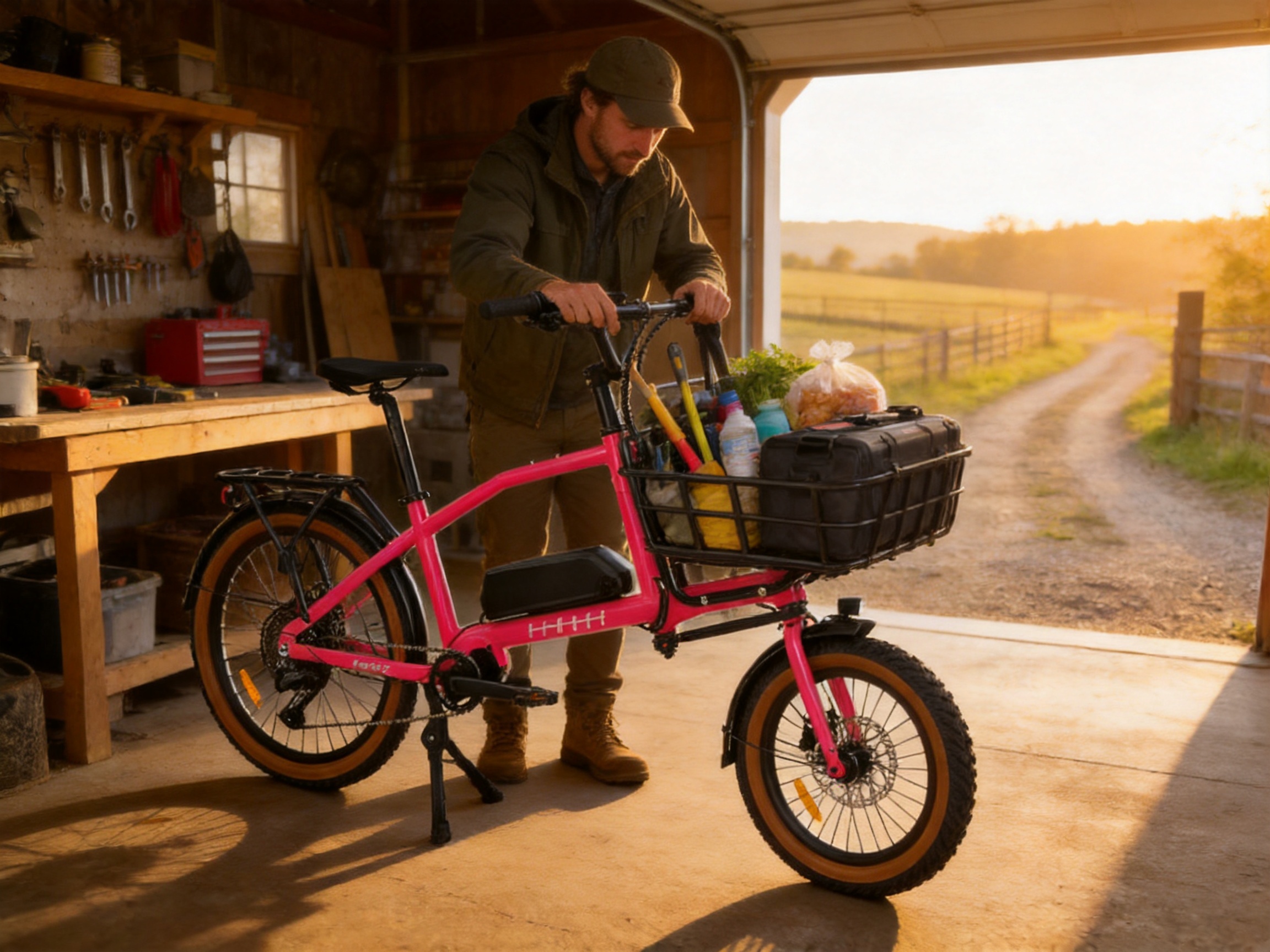
Adventure travel demands more from a cargo bike than ordinary urban transportation. A practical expedition bicycle must carry substantial equipment, remain stable on changing surfaces, climb confidently when fully loaded, and stop securely when weather and terrain become unpredictable. It also needs to be comfortable and manageable enough for everyday use, because an adventure-oriented bike is most valuable when it can serve more than one purpose.
The Atmose Model V ESV1 is designed around that broader idea of utility. It combines a compact cargo-bike frame with a large front folding basket, a high-torque mid-drive motor, a long-range-oriented battery, puncture-resistant tires, hydraulic disc brakes, and an 11-speed Shimano Cues transmission. The result is a cargo e-bike aimed at riders who want to travel beyond paved streets while carrying camping equipment, groceries, tools, recreation gear, or other bulky loads.
Rather than treating the front cargo area as a small accessory, the ESV1 makes it central to the bicycle’s identity. Its oversized front storage deck measures 470 millimeters in length, 470 millimeters in width, and 375 millimeters in height. This gives the rider a broad and stable platform for equipment that would be awkward to carry on a conventional bicycle. Tents, coolers, fishing supplies, bags, outdoor cooking equipment, and maintenance tools can be organized at a low position near the front of the bike.
The ESV1 is therefore not simply a bicycle with an electric motor added to it. It is a purpose-oriented transport system for exploration. Its design connects carrying capacity, propulsion, braking, wheel configuration, frame construction, and practical dimensions into one coordinated product.
Traditional touring bicycles are often optimized for panniers and relatively narrow loads. Standard city bicycles may include a front basket, but those baskets are typically intended for light personal belongings rather than heavy outdoor equipment. Many compact electric cargo bikes offer useful storage, yet their carrying areas may be too small for bulky equipment or may place loads high enough to affect balance.
The ESV1 takes a different approach. Its oversized front basket is designed as a substantial cargo deck rather than a decorative convenience. The broad dimensions allow equipment to be arranged side by side, while the enclosed basket structure can help keep items contained during travel. Because the storage area is located low on the bicycle, the design supports a more predictable center of gravity than a high-mounted load would provide.
This positioning matters on trails and uneven roads. A heavy item placed high above the steering axis can make a bicycle feel top-heavy, especially when the rider turns slowly or travels across a slope. A lower front load can make it easier to maintain control, provided that the equipment is properly secured and the total weight remains within the stated capacity.
The bike’s overall dimensions are approximately 1,910 millimeters long, 750 millimeters wide, and 1,060 millimeters high. These measurements reflect a useful balance between cargo volume and practical maneuverability. The bike is large enough to transport meaningful equipment but not so oversized that it becomes exclusively a commercial vehicle. Its width remains suitable for many paths, entrances, storage areas, and transport environments where an extra-wide cargo bike could be inconvenient.
Adventure riding also requires a different understanding of “range.” Range is not determined only by battery capacity. Terrain, rider weight, cargo weight, gradient, tire pressure, riding speed, temperature, wind, and assist level all affect energy use. A fully loaded bicycle climbing rough hills may consume considerably more energy than the same bike traveling lightly on flat pavement. The ESV1 addresses this reality with a 540 watt-hour Samsung lithium battery and a mid-drive power system designed to work with the bicycle’s gearing.
This combination makes the bike relevant to several types of rider. A weekend explorer may use it to carry camping equipment. A family may load outdoor supplies for a park trip. A rural property owner may use the basket for tools and materials. A small business may adapt the cargo area for mobile services or local deliveries. The underlying advantage is versatility: one bicycle can support recreation, practical transport, and short-distance logistics.

Atmose Model V ESV1 Adventure Cargo Bike with Oversized Front Camping Rack
The front folding basket is the most visible feature of the Model V ESV1, and it is also the feature that most clearly separates the bike from ordinary e-bikes. Its dimensions of 470 by 470 by 375 millimeters create a large loading volume for a bicycle of this format. The broad, square proportions are particularly useful for equipment that does not fit neatly into narrow panniers.
A tent bag, sleeping pad, cooking box, cooler, camera case, waterproof duffel, or fishing tackle container can occupy significant space. On a conventional bicycle, these objects may require several bags mounted on different parts of the frame. That can complicate loading and make the bicycle feel uneven. With a large front cargo area, the rider can consolidate equipment and inspect the load more easily before departure.
The basket also creates practical flexibility in the way cargo is organized. Soft bags can be placed around harder equipment. Frequently accessed objects can be positioned near the top. Heavier items can be arranged toward the bottom and close to the center of the basket. This makes it easier to keep the load balanced and reduces the need to repeatedly remove multiple panniers to reach one item.
For adventure use, loading discipline is important. The heaviest objects should remain low and centered. Loose straps, clothing, and lightweight items should not interfere with the front wheel or steering movement. Equipment should be tied down securely, especially on rough surfaces. The basket provides capacity, but safe operation still depends on thoughtful packing.
The folding function adds another layer of usability. When the basket is not needed, a folding structure may simplify storage, parking, or transportation. This is useful for riders who use the ESV1 for both cargo trips and ordinary cycling. A bike that can adapt its physical profile is easier to integrate into garages, workshops, apartments, vans, and shared storage spaces.
Compared with a small commuter basket, the ESV1’s front storage system offers a meaningful advantage in volume and load planning. Compared with a large long-tail cargo bicycle, the front-loading design gives the rider direct visibility of the cargo area. That can be useful when transporting equipment that needs to be monitored, accessed, or kept within sight.
The front basket also supports a more natural relationship between the rider and the load. On a rear-only cargo bike, the rider may need to turn around or stop to check whether equipment has shifted. A front cargo area is visible from the riding position, allowing faster awareness of movement or unsecured items. This is especially valuable when the route includes gravel, uneven pavement, forest access roads, or changing gradients.
The ESV1 uses a Starunion CM2503 mid-drive motor rated at 250 watts. The motor is tuned for demanding gradients and is positioned at the center of the bicycle rather than inside one of the wheel hubs. This architecture is well suited to a cargo bicycle because it places propulsion near the frame’s main mass and allows the motor to work through the bicycle’s gear system.
A mid-drive system can be particularly helpful when the bike is loaded. The rider can select an appropriate gear for the terrain, while the motor supports the pedaling effort. On a steep climb, a lower gear can help maintain a comfortable cadence and allow the motor to contribute effectively. On flatter sections, a higher gear can support efficient forward progress.
Weight distribution is another benefit. A hub motor adds significant mass to one wheel, while a center-mounted motor keeps the drive unit close to the bicycle’s central structure. This can contribute to more balanced handling, an important characteristic when the bicycle is carrying a front load. It also allows the front and rear wheels to retain their roles in steering, traction, and braking without one wheel carrying the entire motor assembly.
The motor is not intended to replace the rider. Instead, it reduces the physical penalty of carrying cargo and climbing hills. This makes longer rides more accessible and allows riders to plan routes with greater confidence. A journey that would be exhausting on a non-assisted cargo bicycle can become practical with electric support, particularly when the rider must return after reaching a remote destination.
Assistance should be managed intelligently. Higher support levels are useful for steep climbs, acceleration, and heavy loads, but they consume more battery energy. Lower support levels may be suitable on level roads, descents, and sections where the rider wants to conserve energy. The bike’s 11-speed transmission provides additional control, helping the rider select an efficient cadence rather than relying on motor power alone.
The combination of a center-mounted motor and wide-range gearing gives the ESV1 an advantage over basic single-speed electric cargo bikes. A single-speed system may be simple, but it can be less adaptable when the route changes from pavement to hills or when cargo weight varies. The ESV1 is better equipped for changing conditions because the rider can adjust both mechanical gearing and electrical assistance.
The ESV1 is equipped with a Samsung 36-volt, 15 amp-hour lithium battery rated at 540 watt-hours. Battery capacity is one of the most important specifications for an adventure cargo bike because outdoor routes may include fewer opportunities for recharging. A larger energy reserve can provide greater flexibility, although actual range depends on use conditions.
The battery supports the bike’s central purpose: moving the rider and a meaningful cargo load over varied terrain. Carrying camping equipment or work materials increases the effort required from both rider and motor. The 540 watt-hour capacity gives the system a practical foundation for longer rides than a small commuter battery might support, particularly when the rider uses assistance selectively.
Battery performance is influenced by several variables. Heavy cargo, steep gradients, strong headwinds, frequent stops, low temperatures, soft ground, and high assistance levels can reduce distance per charge. Tire pressure also matters. Underinflated tires can increase rolling resistance, while correct pressure can help the bike move more efficiently. Riders should consider these factors when planning remote trips.
For responsible adventure planning, the battery should be treated as part of a complete energy strategy. The rider should estimate the route length, elevation gain, surface type, expected cargo weight, weather, and possible charging opportunities. It is wise to preserve a reserve rather than using the entire battery before the destination. The ESV1’s gearing and pedal-assist design also allow the rider to continue making progress with reduced assistance if necessary.
The use of a recognized Samsung lithium battery cell platform is another product strength. Battery quality affects not only capacity but also consistency, service life, and confidence during repeated use. A well-integrated battery should be protected from unnecessary impacts, charged according to the manufacturer’s guidance, and stored in appropriate temperature conditions.
The bike uses a mixed wheel arrangement with an 18-inch front tire and a 24-inch rear tire, both measuring 2.4 inches wide. This configuration supports the ESV1’s cargo-oriented geometry and contributes to its visual distinction from conventional bicycles.
The smaller front wheel helps keep the front cargo area compact and accessible. It can also lower the front loading platform, making it easier to place equipment into the basket and helping keep the cargo mass close to the ground. The larger rear wheel supports the rider and contributes to stable rolling over uneven sections.
The 2.4-inch tire width provides a broad contact patch compared with narrow road-oriented bicycle tires. Wider tires can offer additional comfort and traction on gravel, compacted earth, rough pavement, and other mixed surfaces. They can also help absorb small impacts and reduce the harshness transmitted through the frame and handlebars.
The tires are described as puncture-resistant, an important characteristic for outdoor travel. Trails and rural routes may contain thorns, sharp stones, broken glass, or other debris. Puncture resistance cannot eliminate all risk, but it can reduce the likelihood of interruption. Riders should still carry basic repair equipment and inspect tire condition regularly.
Correct tire pressure remains essential. Excessively high pressure can reduce comfort and traction on rough ground. Excessively low pressure can increase rolling resistance and expose the tire or rim to damage. The ideal setting depends on rider weight, cargo weight, terrain, weather, and tire construction. A rider should follow the tire manufacturer’s recommended range and adjust carefully within it.
The wheel sizes also contribute to the bike’s overall accessibility. A compact front end can make low-speed handling more manageable for a loaded cargo bicycle. The larger rear wheel maintains a stable riding platform and supports the bike’s cargo-carrying role. Together, the two wheel sizes create a balance between compact cargo geometry and practical rolling performance.
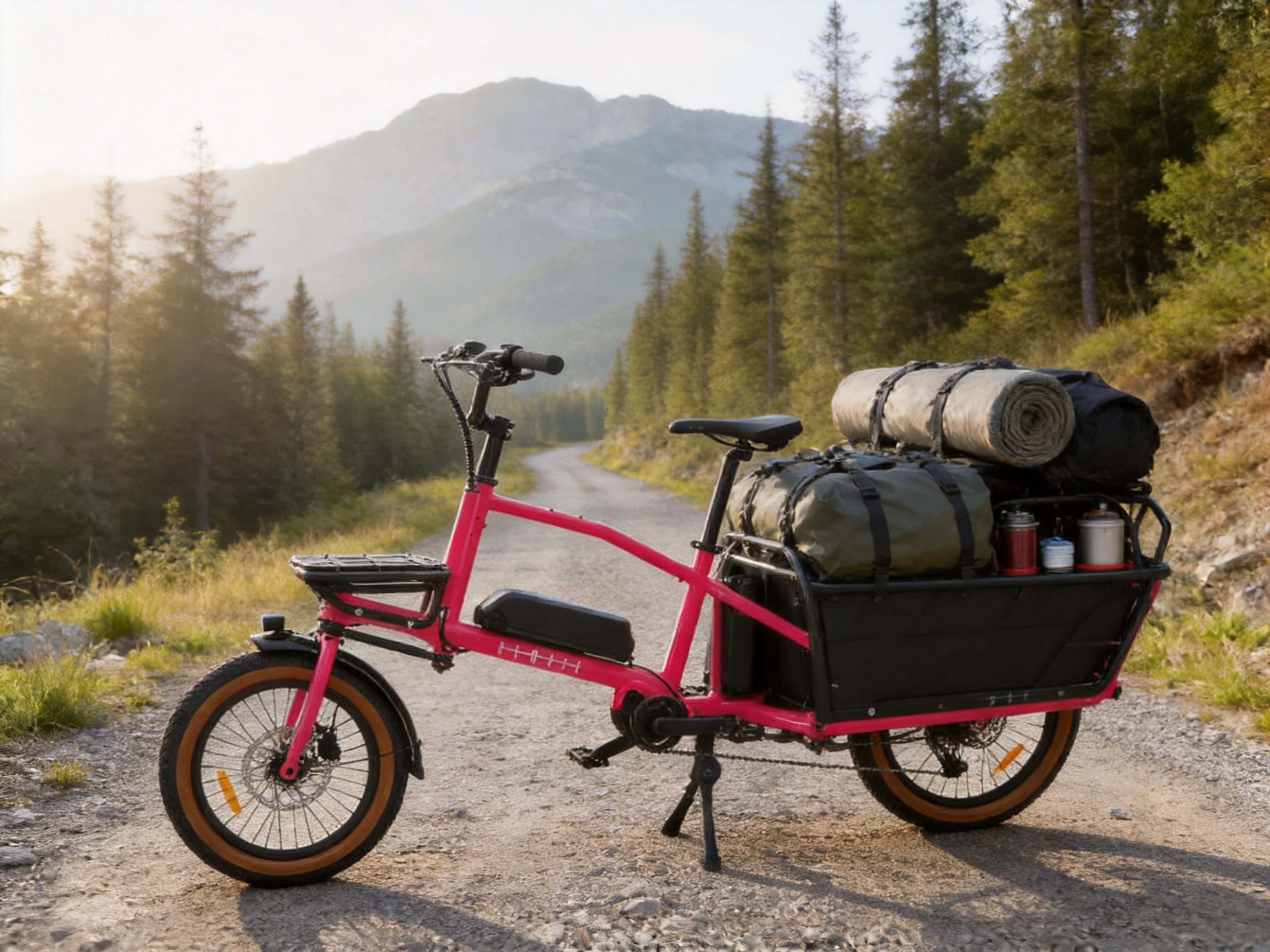
Carrying more weight changes every aspect of bicycle control, but braking is one of the most important differences. A loaded bike has greater momentum, especially when traveling downhill. Wet surfaces, mud, gravel, and loose soil can further reduce available traction. The ESV1 uses Tektro hydraulic disc brakes to provide controlled stopping power in these conditions.
Hydraulic disc brakes transmit braking force through fluid rather than a traditional mechanical cable. This can provide smooth lever action and consistent pad movement when the system is properly maintained. Disc brakes also remain effective in conditions where rim brakes may lose performance because of water, mud, or contamination on the wheel rim.
For adventure riding, braking technique remains as important as brake hardware. Riders should reduce speed before entering loose or technical sections rather than waiting until the last moment. On descents, controlled braking helps manage heat and preserves traction. Both brakes should be used progressively, with the rider maintaining a stable body position and avoiding abrupt inputs on slippery surfaces.
Hydraulic brakes offer a meaningful advantage over basic mechanical braking systems often found on entry-level cargo bicycles. The benefit is especially noticeable when the bike carries a heavy load or operates in wet environments. Consistent braking increases rider confidence, and confidence makes it easier to choose practical routes without treating every downhill section as a major hazard.
Routine inspection is still required. Brake pads wear over time, rotors should remain straight and clean, and hydraulic systems should be checked if the lever feel changes. Riders who frequently travel through mud or carry maximum loads should pay particular attention to maintenance intervals.
The ESV1 frame is made from 6061 T4T6 aluminum alloy. This alloy family is widely used in bicycle construction because it can provide a useful combination of low weight, strength, corrosion resistance, and manufacturing flexibility. For a cargo bicycle, frame material must support not only the rider but also the storage system, battery, motor, equipment, and the forces created by uneven terrain.
The stated maximum load is 170 kilograms. This figure should be understood as a total system limit rather than simply the amount placed in the front basket. Riders should account for their own body weight, cargo, accessories, and any additional equipment mounted to the bicycle. Staying within the limit is essential for safe operation and long-term durability.
A cargo frame must manage forces that are different from those encountered by a lightweight road bicycle. Acceleration, braking, turning, loading, and trail impacts all place demands on the frame. The front rack structure must work with the steering system, while the main frame must support the motor and battery without compromising handling. The ESV1’s design reflects an integrated approach in which the cargo function is considered from the beginning rather than added as an afterthought.
Aluminum also supports efficient production of shaped frame components. Modern bicycle manufacturing commonly uses controlled forming, welding, alignment, finishing, and inspection stages to create repeatable frame assemblies. While the supplied product information does not claim a particular certification or proprietary fabrication method, the choice of 6061 T4T6 alloy indicates attention to the structural and practical requirements of a cargo platform.
Durability is not determined by the frame material alone. Welding quality, joint design, component compatibility, fastener installation, surface protection, and final inspection all matter. A reliable cargo bike depends on the coordination of these factors. The ESV1’s component selection—including its hydraulic brakes, puncture-resistant tires, mid-drive system, and multi-speed transmission—shows that the product is configured as a complete working system rather than as a collection of unrelated parts.
The Shimano 11-speed Cues transmission gives the ESV1 a broad range of mechanical ratios. This is valuable on adventure routes because the rider may encounter flat roads, steep climbs, gradual descents, loose surfaces, and sections where precise speed control is needed.
Lower gears make it easier to maintain a steady cadence on hills, especially when the basket is full. Higher gears allow efficient travel when the terrain becomes easier. The transmission also helps the rider manage battery consumption. By selecting the correct gear, the rider can avoid forcing the motor to work inefficiently or pedaling at an uncomfortable cadence.
The 11-speed system is a considerable advantage over simpler cargo bikes equipped with only a few gears. A limited transmission may be adequate for short urban trips, but it can feel restrictive when conditions change. Adventure riders benefit from having more steps between climbing and cruising ratios, allowing them to make small adjustments instead of large jumps.
Gear selection should be made before a difficult section whenever possible. Shifting early on a climb reduces strain on the drivetrain and helps maintain momentum. Riders should avoid applying excessive force while shifting and should keep the chain, cassette, and derailleur clean, particularly after riding through mud or dust.
The ESV1 competes with several different types of bicycles, including ordinary trekking e-bikes, small front-basket commuter bikes, long-tail cargo e-bikes, and heavy commercial cargo platforms. Its advantage is not that it replaces every category. Instead, it occupies a useful middle ground: more capable than a standard commuter, more adventure-oriented than a basic delivery bike, and more compact than some large cargo platforms.
Compared with a standard electric trekking bicycle, the ESV1 offers much greater front-loading capacity. A trekking bicycle may be efficient for a rider carrying a backpack or panniers, but it is not usually designed for a bulky cooler, large equipment box, or substantial camping load. The ESV1’s front basket makes those tasks part of its intended use.
Compared with a small front-basket e-bike, the ESV1 has a stronger cargo focus, a higher stated load capacity, a 250-watt mid-drive system, an 11-speed transmission, and hydraulic disc brakes. These specifications make it better suited to hills, variable terrain, and heavier loads.
Compared with a rear long-tail cargo bicycle, the ESV1 provides direct visibility of the main load. The rider can see whether a bag has shifted and can access frequently used equipment without dismounting. Its shorter overall concept may also appeal to users who do not need a long rear passenger deck.
Compared with a heavy commercial cargo platform, the ESV1 is more balanced for personal exploration and mixed use. It provides substantial carrying ability without being defined solely by business delivery. The front cargo area can support recreation, home projects, family outings, and local transport in a single product.
The following table summarizes the key features that shape the ESV1’s positioning.
| Feature | Specification | Practical Benefit |
|---|---|---|
| Frame | 6061 T4T6 aluminum alloy | Structural platform designed for cargo use with a balance of durability and manageable weight |
| Battery | Samsung 36V, 15Ah, 540Wh lithium battery | Energy reserve for assisted travel across varied terrain |
| Motor | Starunion CM2503 mid-drive, 250W | Centralized propulsion and useful climbing support through the bicycle’s gearing |
| Transmission | Shimano 11-speed Cues | Fine control over climbing, cruising, and energy use |
| Front basket | 470 × 470 × 375 mm folding basket | Large, low-positioned storage space for camping and practical equipment |
| Wheels and tires | Front 18 × 2.4 inches; rear 24 × 2.4 inches, puncture-resistant | Compact cargo geometry, comfort, and improved resistance to trail-related hazards |
| Brakes | Tektro hydraulic disc brakes | Strong and controlled stopping in wet or muddy conditions |
| Maximum load | 170 kg total stated capacity | Supports rider and substantial equipment when loaded responsibly |
| Overall dimensions | 1,910 × 750 × 1,060 mm | Useful cargo volume while remaining practical for storage and everyday routes |
A capable cargo bicycle depends on manufacturing discipline as much as on its published specifications. The ESV1 brings together a structural aluminum frame, an integrated front cargo system, a mid-drive motor, a battery, a multi-speed drivetrain, hydraulic brakes, and mixed-size wheels. Each element must fit the others accurately and perform consistently in real use.
The company behind the product combines American product thinking with European design and research-and-development input. Its stated background includes origins in California, an international design and R&D team based in Paris, and manufacturing experience supported by an established supply chain. This combination gives the brand a cross-market perspective: practical utility is considered alongside visual refinement, comfort, reliability, and everyday usability.
Design and manufacturing are connected through the product’s central concept. The oversized front basket is not simply a standard rack enlarged after the frame was completed. The frame, steering, wheel sizes, load position, and braking requirements must be considered together. This type of product development can help avoid the compromises that occur when accessories are added without rethinking the bicycle’s complete geometry.
The use of established component suppliers is another strength. Samsung battery cells, Shimano transmission components, Tektro hydraulic brakes, and a Starunion mid-drive system give the bicycle a recognizable technical foundation. Brand-name components do not remove the need for proper integration, but they can simplify specification, maintenance, replacement, and user familiarity.
Manufacturing quality should be evaluated across several stages. Frame assemblies require accurate alignment so that the wheels, drivetrain, and steering system work together correctly. Welded areas should be consistent and free from visible defects. Mounting points for the motor, battery, basket, and braking components must be properly positioned. Finishing should protect the frame from ordinary environmental exposure. Final assembly should include checks of fasteners, cable routing, drivetrain adjustment, brake operation, wheel alignment, and electrical connections.
The company’s manufacturing strengths are also reflected in its ability to develop products for different use cases. Its wider product category includes family cargo bikes, urban companion cargo bikes, adventure cargo bikes, heavy-duty cargo bikes, kids’ learning cargo bikes, and flexible folding mobility cargo bikes. This range suggests an approach based on matching frame architecture and equipment to specific customer needs rather than treating every cargo bicycle as identical.
For international buyers, design flexibility and wholesale support can be important. The company describes itself as supporting custom design and wholesale orders for global customers. In practice, such support may involve product configuration, branding, accessory selection, packaging, market requirements, and volume planning. Any specific customization should be confirmed directly, but the stated capability indicates an interest in serving more than one retail niche.
The company also emphasizes sustainability, reliability, practicality, and fun. Those values are particularly relevant to electric cargo bicycles because the environmental benefit of replacing short car trips depends on whether the bicycle is convenient enough to use regularly. A durable, versatile, and comfortable cargo bike has a better chance of becoming a genuine transportation tool rather than an occasional novelty.
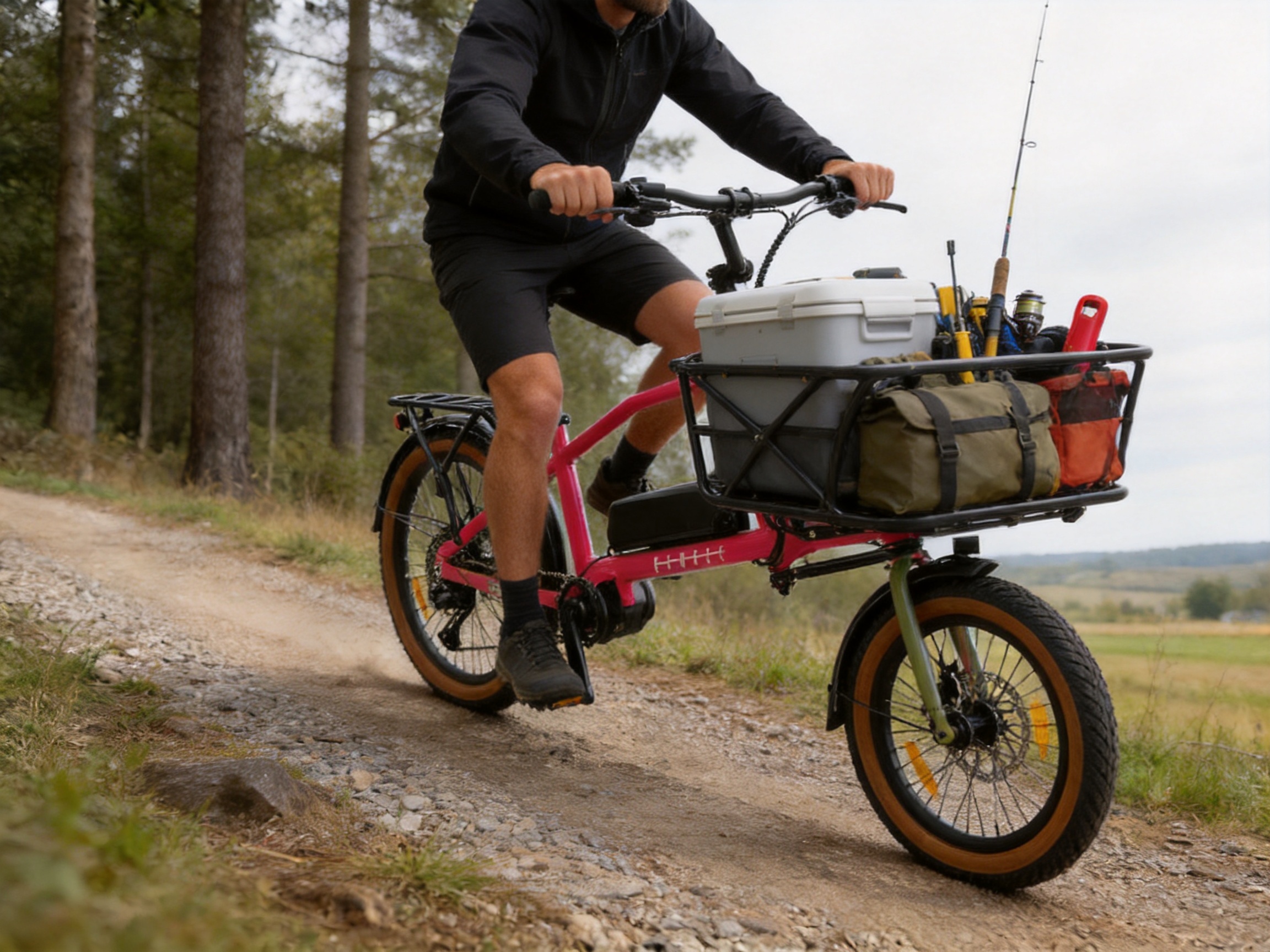
Although the ESV1 is presented as an adventure cargo bike, its large front basket supports a wide range of everyday uses. A rider may carry groceries, gardening supplies, picnic equipment, sports bags, musical equipment, or small tools. The bike can serve as a car-replacement option for short trips where carrying capacity is more important than speed.
For families, the front cargo area can hold outdoor supplies for a day at the park or a visit to a recreation area. Parents may use it for blankets, food containers, games, helmets, and other items that are inconvenient to carry in a backpack. The bike’s usefulness does not depend on a single specialized adventure trip; it can earn its place through repeated local tasks.
For rural users, the ESV1 may function as a lightweight utility vehicle. It can carry hand tools, maintenance supplies, feed containers, or equipment between buildings and work areas. The electric motor becomes especially useful when the route includes slopes or when the rider needs to complete several trips in a day.
For mobile businesses and local services, the front storage area can support equipment that must remain accessible. A maintenance worker, photographer, market vendor, guide, or event service provider may use the bike to move supplies without relying on a car for every short-distance assignment. The 170-kilogram maximum total load offers flexibility, although commercial users must calculate their complete operating weight carefully.
These uses reinforce the product’s central advantage: it is designed for carrying meaningful objects while remaining a rideable bicycle. The rider does not have to choose between a purely recreational e-bike and a purely utilitarian cargo platform. The ESV1 combines both roles.
A cargo bicycle handles differently from a lightweight road or mountain bike. The front basket, cargo weight, smaller front wheel, and long overall load path all affect steering feel. New riders should begin with an empty or lightly loaded basket in a quiet area. Practice should include starting, stopping, slow turns, tight turns, shifting, braking, and controlled riding over mild uneven surfaces.
Loading changes handling progressively. A few kilograms of soft equipment may have little effect, while a dense cooler or heavy equipment box can noticeably influence steering. Riders should distribute weight evenly from side to side and keep dense objects low. The load should never obstruct the headlight, steering movement, brake cables, or front wheel.
The front cargo system offers excellent visibility of the load, but the rider must still inspect it before every trip. Straps should be tight, lids should be closed, and small items should be contained. On rough routes, even a well-balanced load can shift if it is not secured. A short pre-ride check can prevent problems later.
Assisted acceleration should be smooth. Applying high motor support abruptly while the front basket is heavily loaded may surprise a new rider. Gradual pedal input helps maintain balance and traction. The same principle applies to braking: progressive use of both hydraulic brakes is safer and more comfortable than sudden lever application.
Because the ESV1 is intended for exploration, riders should also respect route limitations. Puncture-resistant tires and hydraulic brakes improve capability, but they do not turn the bicycle into a technical mountain bike. Deep mud, loose rock, extreme drops, flooded paths, and unstable ground may exceed the design’s intended operating conditions. Good route selection protects both the rider and the bicycle.
Adventure cargo bikes experience a broad range of conditions, so preventative maintenance is essential. After riding through mud, sand, or rain, the bicycle should be cleaned without forcing water into electrical components, bearings, or brake interfaces. The drivetrain should be checked for contamination, and the chain should be lubricated with a product appropriate for the riding environment.
Tire inspection should include tread condition, sidewalls, embedded debris, and pressure. Puncture-resistant tires still require attention, particularly when the bike is used on thorny trails or rough access roads. Wheel spokes and axles should be checked periodically because cargo loads and uneven surfaces place additional stress on the wheels.
The front basket and its mounting points deserve special attention. Fasteners can loosen through vibration, especially when the bike regularly carries heavy equipment. The basket should remain rigid, and any unusual movement should be investigated before the next trip. Riders should not exceed the stated maximum capacity or use improvised extensions that interfere with steering.
Brake pads, rotors, and hydraulic lines should be inspected according to the use environment. Mud and grit can accelerate wear. A change in lever feel, unusual noise, vibration, or reduced stopping performance should be treated as a maintenance signal rather than ignored.
The battery should be charged and stored according to the manufacturer’s instructions. It should be protected from extreme heat, excessive cold, impact, and moisture exposure beyond its rated design. Riders planning a long trip should confirm the battery’s charge level and inspect the connection area before departure.
Regular inspection is part of the ESV1’s value proposition. A well-designed product performs best when its owner maintains the systems that make its design effective. The combination of a robust frame and quality components can support long-term use, but reliability remains a shared responsibility between manufacturer, retailer, service provider, and rider.
The ESV1 is a strong choice for riders who regularly carry bulky equipment and want electric assistance for hills or longer routes. It is especially appropriate for outdoor enthusiasts, campers, rural users, families, property managers, local service providers, and practical commuters who need more cargo volume than a standard e-bike can provide.
It is also suitable for riders who prefer a front-loading layout. The ability to see the cargo while riding can be reassuring, and the low basket position can make heavy equipment easier to manage. People who want to combine recreation with everyday transport may find the ESV1 more useful than a highly specialized touring or delivery bicycle.
It may be less suitable for someone seeking an extremely lightweight bicycle, a high-speed road e-bike, or a technical mountain bike. The cargo frame and basket add capability, but they also add size and weight. Buyers should consider storage space, route conditions, maintenance access, local electric-bike regulations, and the type of cargo they expect to carry.
Potential buyers should also distinguish between total load and basket load. The 170-kilogram stated maximum includes the rider and cargo system as a whole unless the manufacturer specifies otherwise. Before purchasing, users should confirm the permitted basket load, operating range, charging requirements, warranty terms, spare parts availability, and service arrangements for their region.
The bike combines a large front folding basket, a 250-watt mid-drive motor, an 11-speed transmission, wide puncture-resistant tires, hydraulic disc brakes, and a substantial battery. These features are intended to support outdoor travel with camping gear and other bulky equipment rather than only short urban trips.
The stated maximum load is 170 kilograms. Riders should treat this as the total permitted system load, including body weight, cargo, and accessories, unless official documentation defines it differently. The basket’s individual capacity should also be confirmed before carrying dense or unusually heavy items.
The front folding basket measures approximately 470 millimeters long, 470 millimeters wide, and 375 millimeters high. Its broad shape is designed for equipment such as tents, coolers, outdoor cooking supplies, and fishing gear.
A mid-drive motor places propulsion near the bicycle’s center and works through the mechanical gearing. This allows the rider to select lower gears for steep climbs and higher gears for level travel. It can also help maintain balanced weight distribution when the bicycle is loaded.
The bike uses a Samsung 36-volt, 15 amp-hour lithium battery with a stated capacity of 540 watt-hours. Actual riding range will depend on rider weight, cargo, terrain, speed, weather, tire pressure, and assistance level.
Yes. Although the ESV1 is designed for outdoor exploration, its cargo capacity and compact overall width make it useful for groceries, errands, family outings, tools, and local transportation. The folding front basket can help adapt the bike when a full cargo load is not needed.
The 2.4-inch puncture-resistant tires are intended to provide useful traction and comfort on mixed surfaces such as gravel, compacted earth, rough pavement, and access roads. Riders should still avoid terrain beyond the bicycle’s design limits and maintain suitable tire pressure.
Hydraulic disc brakes provide strong, controlled stopping performance and are less dependent on clean wheel rims than traditional rim brakes. This is valuable when the bike is heavily loaded or ridden in wet and muddy conditions. Regular inspection and maintenance remain necessary.
Its large front cargo area, substantial stated load capacity, and electric assistance can support certain local service or delivery applications. Commercial users should evaluate daily mileage, cargo weight, charging access, local regulations, insurance, and service support before deployment.
Suitable items include camping equipment, coolers, tents, sleeping bags, fishing gear, tools, groceries, picnic supplies, and work materials. Heavy items should be positioned low and centrally, while all equipment should be secured so that it cannot shift or interfere with steering.
A standard e-bike is generally designed around the rider rather than a substantial cargo load. The ESV1 adds a purpose-built front storage system, a cargo-oriented frame, wide tires, hydraulic brakes, a high-capacity battery, and gearing intended to manage heavier loads and varied terrain.
Buyers should look for accurate frame alignment, consistent welds, secure component mounting, clean cable routing, dependable electrical connections, proper brake adjustment, correctly installed fasteners, and a clear maintenance and service process. Component selection is important, but integration and final inspection are equally significant.
The Atmose Model V ESV1 is built around a clear and practical proposition: carry more equipment, travel farther from ordinary roads, and retain the versatility of a bicycle that can still serve everyday needs. Its oversized front folding basket gives the bike a distinct advantage for camping supplies, outdoor equipment, tools, and bulky personal cargo.
The rest of the specification supports that central purpose. The 6061 T4T6 aluminum frame provides a cargo-oriented foundation. The 540 watt-hour Samsung battery supplies meaningful energy capacity. The Starunion 250-watt mid-drive motor supports loaded climbs, while the Shimano 11-speed Cues transmission allows the rider to adapt to changing terrain. Wide puncture-resistant tires add comfort and resilience, and Tektro hydraulic disc brakes provide confident control in wet or muddy conditions.
Its broader strength comes from integration. The ESV1 is not merely a commuter bicycle fitted with a large basket. Its frame, storage area, wheel sizes, gearing, motor, battery, and brakes are selected around the demands of carrying equipment beyond the city. The company’s American origins, European design and R&D presence, established industry experience, and stated interest in custom and wholesale solutions further support a product-development approach focused on practical mobility.
For riders who want a dependable platform for camping trips, rural transport, family outings, local work, or mixed-surface exploration, the ESV1 offers a compelling balance of carrying ability and rideability. It is most effective when loaded thoughtfully, maintained regularly, and used within its stated limits. Under those conditions, it can function as both an adventure machine and a practical electric utility bicycle.
1. Atmose Bikes. ESV1 Adventure Cargo Bike Product Specifications and Product Description.
2. Atmose Bikes. Company Information, Product Development Background, and Cargo Bike Category Overview.
3. Shimano. Cues Drivetrain Technical and Maintenance Principles.
4. Tektro. Hydraulic Disc Brake System Care and Inspection Principles.
5. Samsung SDI. General Lithium-Ion Battery Handling and Storage Guidance.
6. Bicycle Engineering and Design Practice. Principles of Cargo Distribution, Frame Loading, Wheel Sizing, and Bicycle Stability.
7. Electric Bicycle Maintenance Practice. Battery Management, Tire Pressure, Brake Inspection, and Drivetrain Service Considerations.
Nov 27, 2026
Nov 25, 2026
Nov 21, 2026


info@atmosecargobike.com

200 rue de la Croix Nivert 75015 Paris

Custom Electric Bakfiets
 English
 Français
 Deutsch