Oct 12, 2026
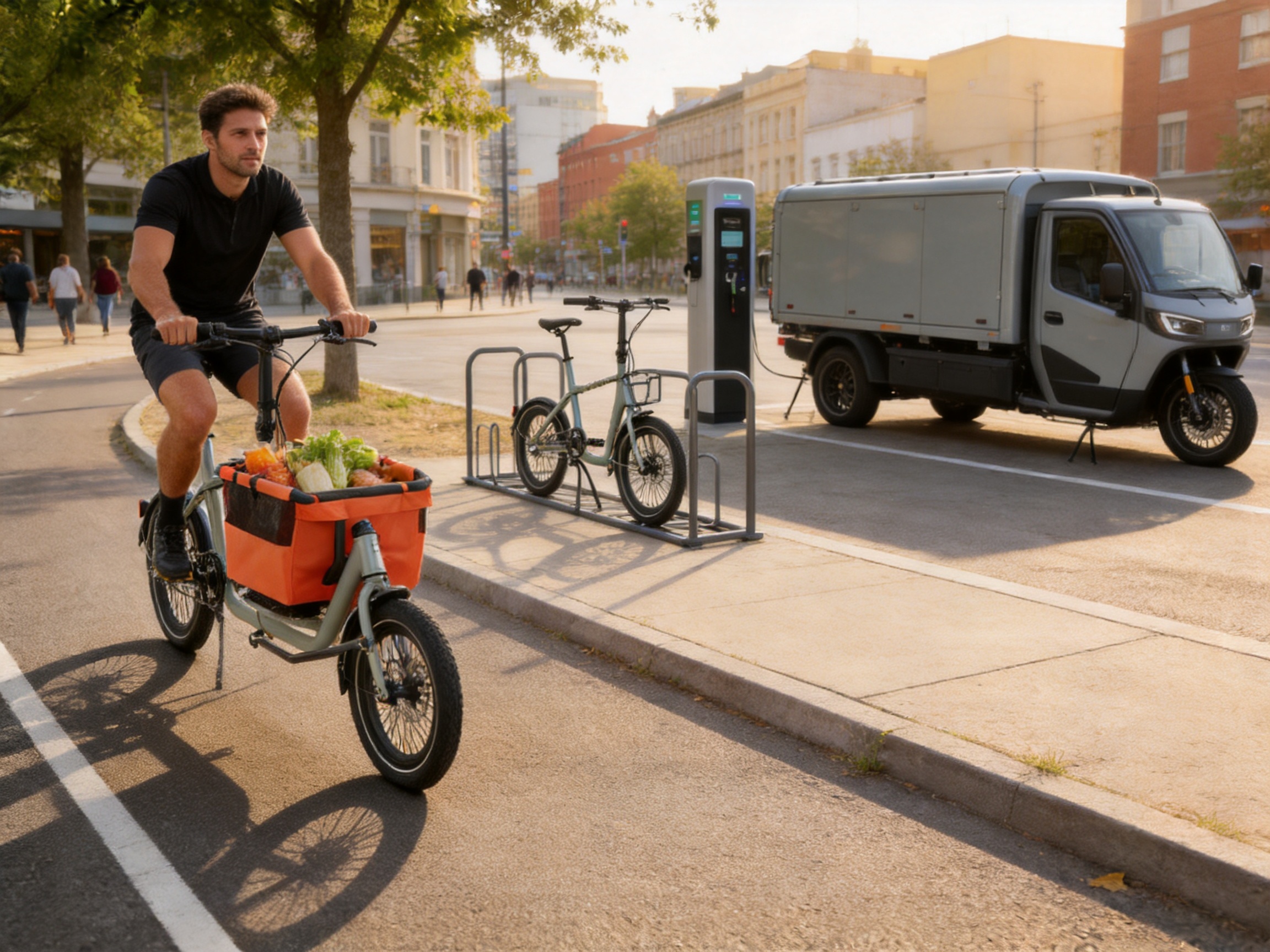
Urban transportation does not always need to be complicated. For many daily journeys, the most useful vehicle is one that starts immediately, feels natural to ride, carries practical loads, and fits easily into ordinary routines. The Q1 lightweight manual mini cargo bike is designed around this straightforward idea. It provides the carrying ability of a compact cargo bike while preserving the direct, responsive feel of a conventional bicycle.
Unlike electric cargo bikes, the Q1 does not depend on a battery, motor, charger, or electronic control system. Its power comes entirely from the rider. This makes it especially suitable for people who enjoy cycling as exercise, live in relatively flat neighborhoods, or want a dependable utility bike for short trips. Grocery shopping, commuting, collecting packages, visiting local businesses, and carrying everyday equipment can all become part of an active lifestyle.
The bike combines a lightweight 6061 T4T6 aluminum alloy frame, a front folding basket, a three-speed Shimano Sora system, hydraulic disc brakes, and puncture-resistant wide tires. Its dimensions remain compact enough for urban use, while the front basket provides meaningful carrying capacity. The result is a practical compromise between a standard bicycle and a larger cargo bike: more useful than a traditional city bike, yet easier to manage than many heavy electric cargo models.
Most modern cargo-bike discussions focus on electric assistance. Electric motors have transformed the market by helping riders transport children, groceries, tools, and commercial goods with less physical effort. However, electric power is not the ideal answer for every rider or every route. Batteries need charging, motors add weight, electrical systems require additional maintenance, and some users simply prefer the physical involvement of traditional cycling.
The Q1 addresses this overlooked part of the market. It is intended for riders who want cargo utility without turning their bicycle into a powered vehicle. The experience is closer to riding a well-equipped conventional bicycle, but with a purpose-built front loading area and a frame designed for practical urban transport.
This distinction is important. The Q1 is not an electric cargo bike with the motor removed. It is designed as a manual cargo bike from the beginning. Its component selection, compact dimensions, gearing, braking system, and basket structure work together to support human-powered riding. The design therefore focuses on balance, controllability, weight reduction, and everyday durability rather than battery range or motor output.
For short journeys, many riders may find this approach more efficient than expected. A trip to a nearby supermarket or café does not require charging. There is no need to monitor battery percentage, locate a charging outlet, or plan around battery capacity. The rider simply checks the tires, loads the basket, and begins moving.
The Q1 belongs to the Urban Companion Cargo Bike category, a segment aimed at practical local transportation. It is not positioned as a long-distance touring machine, an off-road expedition bike, or a heavy commercial hauler. Its strongest use cases are the journeys that make up everyday urban life: errands, neighborhood commuting, light shopping, and active transportation.
Its compact form is one of its most important advantages. The bike measures approximately 1,780 millimeters in length, 620 millimeters in width, and 1,070 millimeters in height. These proportions help it occupy less space than many long-tail or front-loader cargo bikes. A narrower profile can make it easier to guide through city streets, store in a residential entryway, or position beside other bicycles.
The dimensions also contribute to a familiar riding experience. Riders who are comfortable on standard bicycles can adapt to the Q1 without learning the handling characteristics of a very large cargo platform. The front load is visible and accessible, while the bike remains compact enough for normal urban maneuvering.
At the same time, the Q1 is more capable than a regular commuter bicycle. Its front basket measures approximately 470 millimeters in length, 470 millimeters in width, and 375 millimeters in height. This creates a defined carrying space for grocery bags, small parcels, work supplies, sports equipment, or other daily items. The basket is not merely an accessory added to a normal bicycle; it is integrated into the bike’s overall utility concept.
The absence of a battery and motor is the defining characteristic of the Q1. This choice produces several practical advantages over powered alternatives.
First, the bike is always ready to ride. A manual bicycle does not need overnight charging or a spare battery. This can be particularly useful for riders who live in apartments, share storage areas, or do not have convenient access to electrical outlets near their bicycle. It also eliminates the need to remember a charger before an extended day of errands.
Second, the Q1 is lighter than comparable electric cargo bikes. The exact complete-bike weight is not provided in the product specifications, but removing the battery, motor, controller, wiring, and related support hardware reduces system complexity and contributes to a lighter design. A lighter bicycle is easier to turn, lift, carry, and store. This matters when the bike must be moved over a curb, up a few steps, into a storage area, or onto a wall rack.
Third, the Q1 avoids many electrical maintenance concerns. There is no battery health to monitor, no motor firmware to update, and no electronic drive system to diagnose. Routine care is closer to that of a traditional bicycle: keeping the tires inflated, checking the brakes, lubricating the chain, inspecting fasteners, and maintaining the drivetrain.
Fourth, manual riding supports regular physical activity. A short shopping trip can become a modest workout without requiring a separate visit to a gym. Riders can control the intensity through gear selection, route choice, cadence, and pace. On flat streets, the Q1 can provide an efficient and enjoyable way to combine transportation and exercise.
These advantages do not mean that a manual cargo bike is suitable for every rider. People who regularly travel up steep hills, carry very heavy loads, or need to cover long distances with minimal effort may prefer an electric model. The Q1’s strength is its clear focus: lightweight, simple, human-powered urban utility.
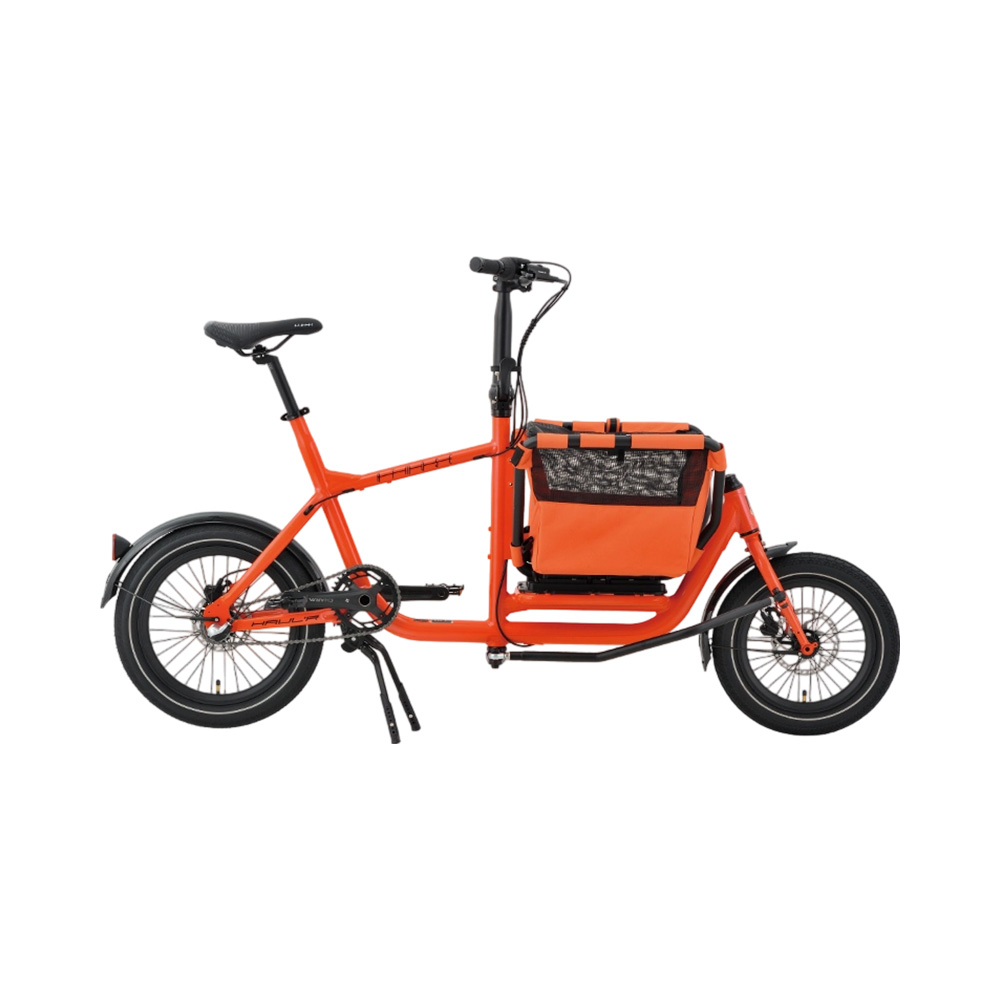
Atmose Model Q Q1 Lightweight Manual Mini Cargo Bike for Fitness and Errands
The Q1 uses a 6061 T4T6 aluminum alloy frame. This material is widely valued in bicycle manufacturing because it offers a useful balance of low weight, structural strength, corrosion resistance, and forming flexibility. In a cargo bike, the frame must do more than support the rider. It must also manage the additional forces created by a front basket and its contents.
A cargo frame experiences changing loads during acceleration, braking, cornering, and riding over uneven surfaces. The structure must remain stable when the basket is empty and predictable when it contains a practical load. The Q1’s frame selection supports this goal while avoiding the unnecessary mass often associated with larger cargo platforms.
The T4T6 designation indicates a controlled heat-treatment approach within the aluminum alloy manufacturing process. While the final riding characteristics depend on tube profiles, joints, welding quality, finishing, and assembly, the use of a recognized structural aluminum alloy reflects an effort to combine durability with portability.
For the rider, this translates into several everyday benefits. The bike feels easier to position in tight spaces, less demanding to lift, and more responsive when changing direction. For the manufacturer, aluminum also allows designers to develop a practical frame shape with a favorable strength-to-weight relationship.
The frame must work as part of a complete system. A light frame alone cannot create a good cargo bike. The basket mounting structure, wheel sizes, brake system, drivetrain, steering geometry, and tire selection all influence the final result. The Q1’s design brings these elements together around short-distance urban use.
The front folding basket is central to the Q1 experience. Many standard bicycles can carry a small bag or rear pannier, but those solutions often have limited volume or make the load difficult to access. A front basket provides an open, visible, and convenient carrying area directly in front of the rider.
The stated basket capacity is 25 kilograms, while the rider load limit is 120 kilograms. These values provide a useful reference for planning everyday loads. Riders should distribute cargo evenly, keep the center of gravity as low as practical, and ensure that bags or objects cannot interfere with the front wheel, steering movement, brakes, or rider visibility.
The basket’s approximate dimensions of 470 by 470 by 375 millimeters make it suitable for common urban items. Reusable shopping bags, small boxes, backpacks, household supplies, and work materials can be placed inside without requiring specialized cargo containers. The broad shape can also make loading simpler than a narrow pannier system.
Because the basket is located at the front, the rider can see the load while riding. This is valuable when carrying fragile items or when checking that a bag has not shifted. It also keeps the rear section of the bicycle available for other accessories, personal equipment, or a more open riding position.
The basket is designed to fold and detach. This gives the Q1 greater flexibility than a permanently fixed cargo platform. When the basket is not needed, folding or removing it can make the bike easier to store and may reduce the space required in a narrow hallway, garage, or shared bicycle area.
The installation process is designed around three basic actions. First, the rider aligns the basket base with the pre-installed mounting holes near the handlebar. Second, the basket is lowered vertically until the clips make contact. Third, the basket is pushed backward toward the saddle. A click indicates that the basket has engaged correctly.
This approach offers a useful advantage over permanently mounted cargo accessories. The rider can switch between a full utility configuration and a lighter, more open configuration without complex tools or extensive mechanical work. The mounting points are prepared in advance, reducing uncertainty during installation.
As with any detachable cargo component, the rider should verify that the basket is fully engaged before every ride. A visual inspection and a gentle upward pull can help confirm that the mounting system is secure. Cargo should also be positioned so that it does not obstruct the attachment mechanism.
Removing the basket is equally straightforward. The rider first locates the pin at the bottom of the basket mount and pulls it downward firmly. The entire basket is then pushed forward toward the front wheel until it reaches the end of its track. Finally, the basket is lifted upward to complete removal.
This system is useful for storage, transportation, maintenance, and changing the bike’s configuration. For example, a rider might use the basket for a market trip, remove it when storing the bicycle in a limited space, and reinstall it later without visiting a workshop.
The ability to remove a front basket also improves flexibility for different users. One household member may use the Q1 for shopping, while another may prefer a more streamlined bicycle for exercise or commuting. The bike can adapt to both roles.
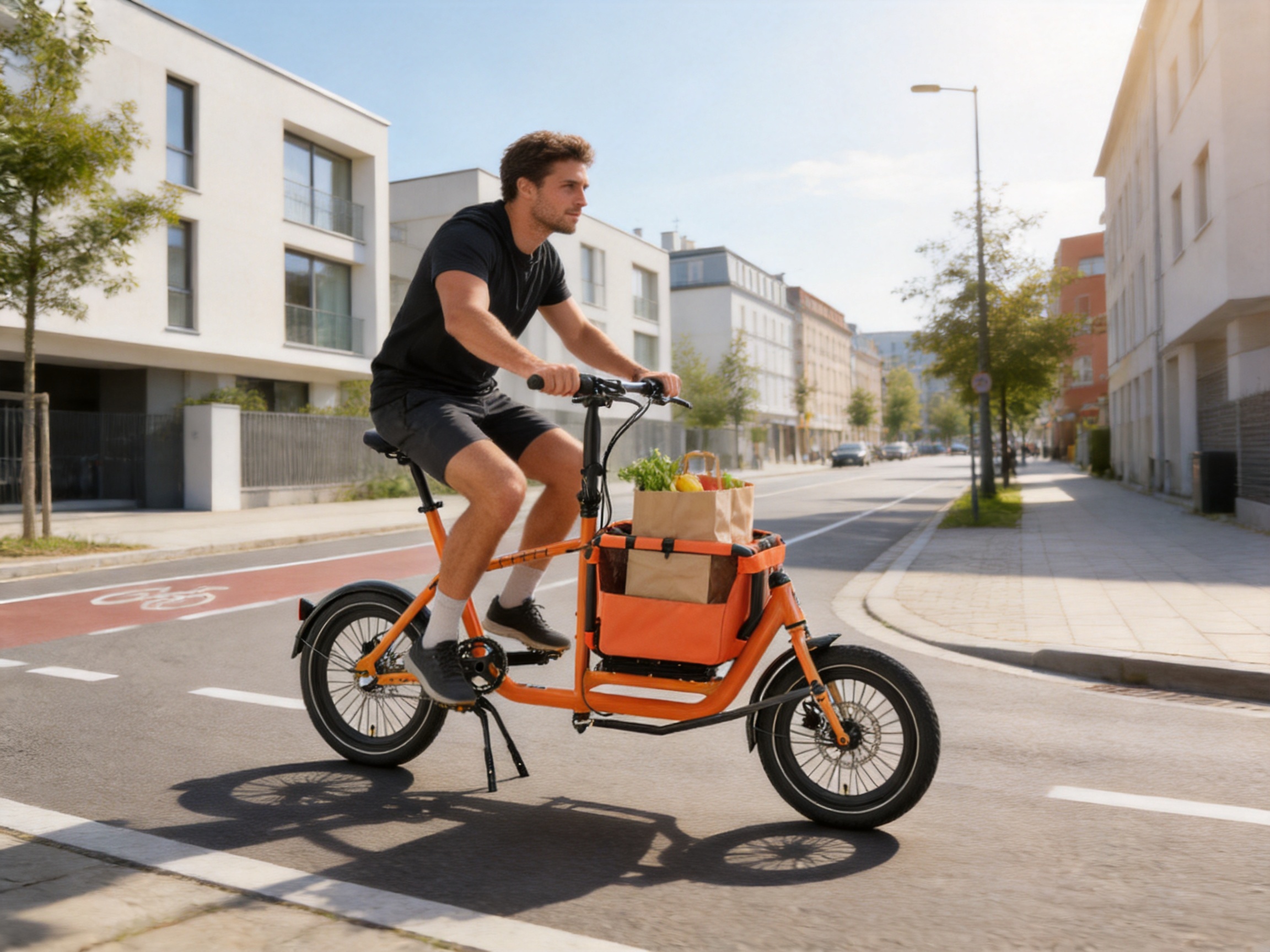
The Q1 uses a Shimano three-speed Sora system. A three-speed setup is deliberately simple compared with the wide-range gearing found on touring or mountain bikes. For a compact manual cargo bike intended for short, relatively flat urban journeys, this simplicity can be an advantage.
The rider can select a lower gear when starting, carrying a heavier basket, or moving through a crowded area. A middle gear can support ordinary cruising, while a higher gear may be appropriate on open, flat roads. The system gives riders enough adjustment to manage common urban conditions without creating unnecessary complexity.
Because the Q1 has no motor, gear selection becomes an important part of the riding experience. Riders can anticipate stops, shift before climbing a small incline, and maintain a comfortable cadence. This encourages active participation in the ride and can help conserve energy during practical errands.
Three speeds may not be appropriate for steep terrain or long-distance touring. However, limiting the drivetrain to a compact range can help reduce weight, simplify maintenance, and make controls easier to understand. The system suits the bike’s intended role as an urban companion rather than a specialized expedition machine.
The Q1 is equipped with Tektro hydraulic disc brakes. Cargo bikes benefit significantly from predictable braking because their loads can change handling and stopping behavior. Even a light basket load can affect momentum, particularly when the bike is traveling downhill or approaching a busy intersection.
Hydraulic disc brakes transmit braking force through a sealed fluid system rather than a traditional mechanical cable. This can provide smooth lever action and consistent braking performance when properly adjusted and maintained. Disc brakes also remain effective across a range of weather conditions and wheel loads.
The braking system complements the Q1’s urban purpose. City riding involves frequent stops, traffic signals, pedestrians, parked vehicles, and sudden changes in direction. Reliable braking allows the rider to respond with confidence while keeping the bike under control.
Riders should still adapt their speed to the load and road surface. Braking performance depends on tire contact, brake-pad condition, rotor condition, correct adjustment, and rider technique. Cargo should be secured so that it does not shift forward during hard braking.
The Q1 uses wide tires measuring 16 inches by 2.4 inches at the front and 20 inches by 2.4 inches at the rear. The tires are described as puncture proof, providing an important advantage for urban use where riders may encounter glass, gravel, metal fragments, rough pavement, or other road debris.
The wide tire profile creates a larger contact patch than a narrow road tire. This can improve comfort and stability on uneven city surfaces, including patched asphalt, brick paths, driveway transitions, and compacted surfaces. Wider tires can also contribute to a more planted feeling when the front basket contains cargo.
The smaller front wheel and larger rear wheel support the compact cargo-bike layout. The front wheel can help keep the cargo area low and accessible, while the rear wheel supports the rider and contributes to efficient rolling. Together, the wheel sizes help the Q1 maintain a distinctive but manageable urban profile.
Puncture resistance reduces the likelihood of interruptions, but no tire is invulnerable. Proper inflation, regular inspection, and avoidance of sharp obstacles remain important. Riders should check the tires before carrying a full basket, since pressure influences steering, braking, comfort, and rolling resistance.
Comparing the Q1 with an electric cargo bike requires considering the intended journey. An electric bike may be superior for steep hills, long routes, heavy loads, and riders who want maximum assistance. The Q1 can be superior in a different set of circumstances.
For short, flat trips, the Q1 avoids the weight and operational requirements of a powered system. Its rider does not need to wait for charging, protect a battery from extreme conditions, or budget for replacement battery capacity over time. The bike remains ready even when stored away from a power outlet.
Its manual configuration can also provide a more direct connection between effort and movement. Some cyclists value the quietness of a non-motorized bicycle, the absence of electrical noise, and the feeling of controlling their own pace. The Q1 supports that experience while adding practical cargo capacity.
Storage is another area where the Q1 can be advantageous. Electric cargo bikes may be difficult to lift or reposition because of their battery and motor systems. A lighter manual bike is more suitable for homes with steps, wall-mounted racks, compact storage rooms, or shared bicycle facilities.
Maintenance simplicity is also meaningful. Mechanical bicycle parts still require care, but the Q1 does not add a motor, battery, display, charger, or electronic controller to the maintenance schedule. For owners who prefer familiar bicycle service, this can reduce complexity.
Against a conventional bicycle with a small basket, the Q1 offers more cargo volume and a stronger utility orientation. Against a large cargo bike, it offers a more compact footprint and a lighter, more approachable riding experience. Its competitive advantage comes from occupying the middle ground effectively.
| Feature | Q1 Manual Cargo Bike | Typical Standard Bicycle | Typical Electric Cargo Bike |
|---|---|---|---|
| Power source | Rider-powered | Rider-powered | Battery and motor assisted |
| Charging requirement | None | None | Regular charging required |
| Cargo solution | Large detachable folding front basket | Usually smaller basket or pannier | Often larger fixed or modular cargo platform |
| Maintenance complexity | Primarily mechanical bicycle maintenance | Primarily mechanical bicycle maintenance | Mechanical and electrical system maintenance |
| Exercise potential | High, because all propulsion is manual | High | Adjustable, depending on assistance level |
| Best suited to | Short urban errands, flat commutes, active utility riding | Light personal transport | Longer trips, hills, and heavier assisted loads |
| Frame material | 6061 T4T6 aluminum alloy | Varies by model | Varies by model |
| Brakes | Tektro hydraulic disc brakes | Varies by model | Varies by model |
The Q1 is supported by the broader capabilities of Atmose, a cargo-bike company that combines American product thinking with European design and research-and-development influence. The company originated in California and developed an international design and R&D structure based in Paris. This combination creates a useful bridge between practical mobility requirements and design-led urban transportation.
The company’s stated background includes an established American beach-cruiser heritage through MOTIV, along with experience in manufacturing, supply-chain coordination, and product development. That history is relevant to the Q1 because a useful cargo bike depends on more than an attractive frame. It requires coordinated decisions across structure, component selection, cargo mounting, assembly, finishing, quality control, and user instructions.
A mature manufacturing approach begins with identifying a real transportation problem. In this case, the problem is the gap between an ordinary bicycle and a heavier powered cargo model. The product development process must then translate that need into measurable requirements: a manageable frame size, practical cargo capacity, straightforward installation, dependable braking, useful gearing, and resistance to everyday wear.
The use of 6061 T4T6 aluminum alloy shows attention to the relationship between material selection and product purpose. Aluminum can support a lighter structure, but its performance depends on engineering design and manufacturing execution. Tube dimensions, joint design, weld consistency, surface treatment, alignment, and final inspection all contribute to the finished frame.
The Q1’s integrated basket mounting system also reflects product-level manufacturing coordination. A detachable basket must align accurately with pre-installed mounting points, engage securely, release when intended, and remain stable during riding. This requires consistency in the frame interface, basket hardware, clips, pins, and assembly process.
Component integration is another manufacturing strength. The Shimano three-speed drivetrain, Tektro hydraulic brakes, puncture-resistant tires, folding basket, aluminum frame, and control points must operate together rather than as unrelated parts. A cargo bike is successful when the complete system feels predictable, not simply when individual components appear impressive on a specification sheet.
The company emphasizes functionality, comfort, reliability, sustainability, and fun as core product values. These priorities align with the Q1’s simple architecture. By avoiding unnecessary electrical complexity, the design can focus resources on the areas that affect daily use: carrying utility, handling, braking, storage, and ease of ownership.
International design and R&D can strengthen a product when it brings together different perspectives on mobility. American product development traditions often emphasize practical use, usability, and broad lifestyle applications. European urban design experience can contribute a close understanding of compact streets, bicycle storage, mixed traffic, and short-distance transportation.
The Q1 reflects this combination through its emphasis on compact dimensions, everyday utility, and approachable styling. Its purpose is not limited to one type of rider. It can serve an urban commuter, a fitness-oriented cyclist, a household shopper, or a small-business user who needs to move light goods locally.
Research and development also involves refining details that may not appear in a basic specification list. Basket removal, mounting alignment, rider access, tire dimensions, control position, and storage behavior all influence whether a bicycle becomes part of a person’s daily routine. The Q1’s design places these practical interactions at the center of the product experience.
A cargo bike relies on a coordinated supply chain. The frame, wheels, tires, brakes, drivetrain, basket hardware, and finishing materials must arrive with compatible specifications and consistent quality. Production planning must account for component availability, assembly sequencing, inspection, packaging, and distribution.
The company’s stated manufacturing and supply-chain experience provides a foundation for managing these requirements. Although the supplied product information does not list specific factories, certifications, or proprietary production technologies, the product itself demonstrates the importance of organized component integration. The Q1 is built as a complete mobility system rather than a collection of loosely related accessories.
Consistent assembly is especially important for hydraulic brakes, wheel alignment, basket engagement, and folding mechanisms. These parts require careful adjustment and functional checking. A disciplined production process helps ensure that the bicycle delivered to a customer matches the intended design behavior.
Quality also extends to communication. Clear installation and removal instructions reduce user error and help preserve the intended function of the cargo system. The Q1’s three-step installation and two-step removal explanations are examples of design information being connected to the ownership experience.
The Q1 is well suited to small and medium grocery trips. The front basket can hold reusable bags, packaged food, household supplies, and other purchases. Its open design makes loading and unloading quick, while the front position allows the rider to keep an eye on the cargo during the journey.
For heavier items, the rider should distribute the weight across the basket rather than concentrating it in one location. Fragile products can be placed inside a protective bag or container, and tall items should be secured so they do not affect visibility or steering. The stated 25-kilogram basket limit should not be exceeded.
For a flat commute, the Q1 provides a practical alternative to driving. A laptop bag, lunch, change of clothes, small tools, or office supplies can be carried without occupying the rider’s back. The three-speed drivetrain offers enough adjustment for common starts, stops, and cruising conditions.
The manual format may be especially appealing for commuters who want daily activity. Rather than separating transportation from exercise, the Q1 combines the two. The rider can choose a relaxed pace for ordinary travel or increase effort when seeking a more active ride.
Small retailers, cafés, florists, repair services, and independent professionals may use the Q1 for short local deliveries. Its compact size can be helpful in dense areas where a larger vehicle is inconvenient. The basket provides a defined area for documents, parcels, tools, or packaged products.
Businesses should evaluate the route, payload, terrain, and delivery frequency before selecting a manual cargo bike. The Q1 is most appropriate for light local operations and relatively flat routes. Its low-complexity design can help reduce charging infrastructure needs, but the rider must be comfortable supplying the necessary physical effort.
The Q1 turns practical trips into opportunities for movement. Riders who prefer cycling for fitness can use the bike for short training loops, errands, and regular commuting. The absence of motor assistance means that effort is directly connected to speed and distance.
The cargo capacity adds variety to training. A rider can carry groceries on the return journey, transport equipment to a local activity, or combine exercise with useful household tasks. This practical integration may make regular cycling easier to maintain than exercise that requires a separate schedule.
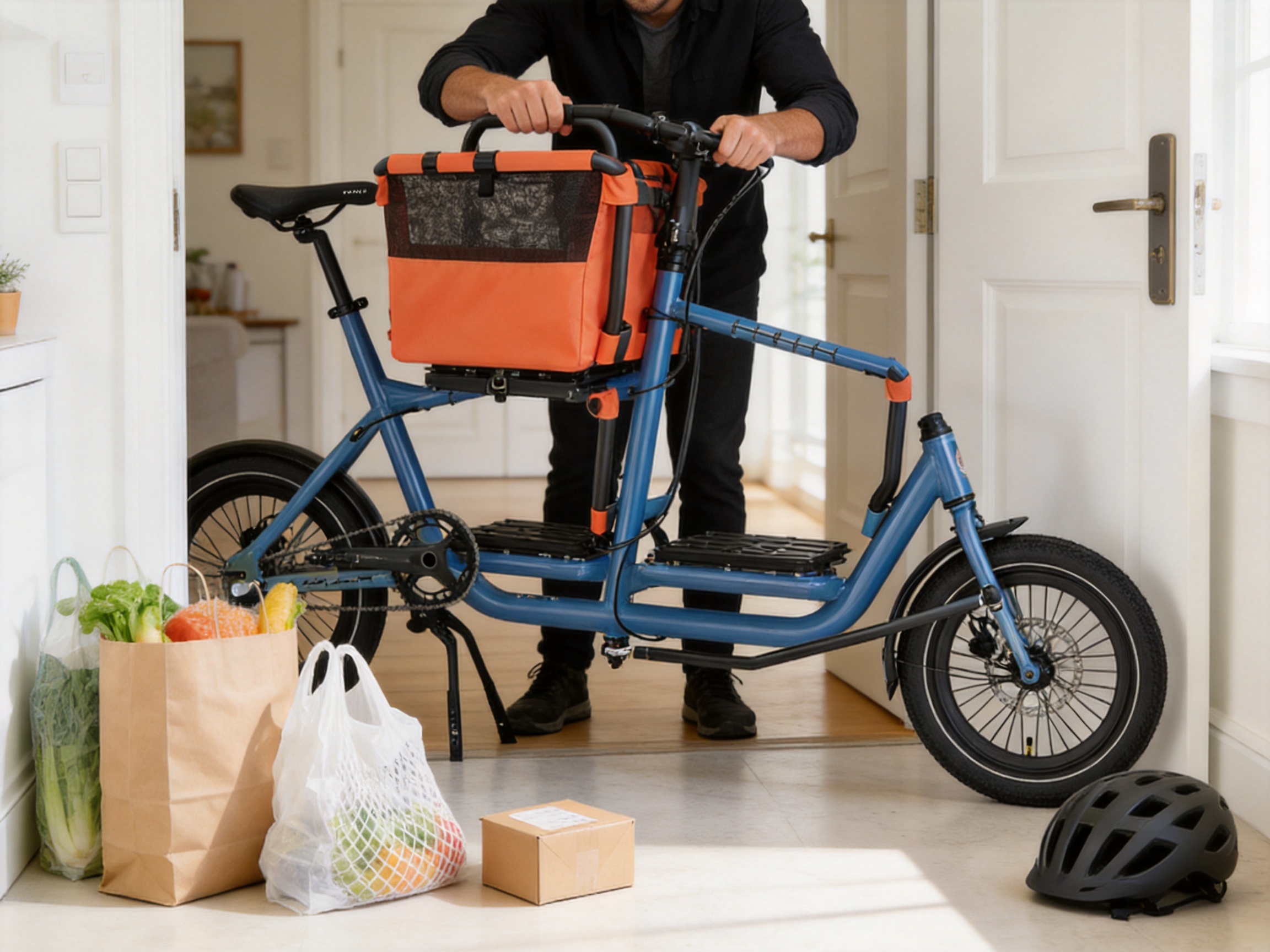
A product’s value depends partly on how easy it is to live with. The Q1 is designed to reduce several common ownership barriers. Its compact dimensions can simplify storage, while the removable basket can reduce the bicycle’s effective footprint when cargo capacity is not required.
The lack of a battery also changes storage requirements. Owners do not need to remove and separately store a battery for charging, nor do they need to plan around a charging station. The bicycle can remain in a secure, dry storage area and be ready for use when needed.
Routine maintenance should include checking tire pressure, inspecting the tread and sidewalls, examining brake pads and rotors, checking the hydraulic brake feel, lubricating the chain, and confirming that the basket attachment hardware remains secure. Fasteners should be inspected periodically, especially if the bike is used frequently on rough streets.
Hydraulic disc brakes should be serviced by a qualified bicycle technician when the lever feels unusually soft, braking power decreases, fluid leakage is visible, or the system requires bleeding. The three-speed drivetrain should be adjusted if shifting becomes hesitant or noisy. Regular service protects performance and extends component life.
The basket should also receive attention. Riders should check the clips, pin, track, and mounting points for wear or damage. The basket should never be used if it does not click securely into position or if the release pin cannot be operated correctly. A detachable cargo system is safe only when it is properly engaged.
Safe cargo-bike riding begins with respecting the product’s intended limits. The maximum rider load is specified as 120 kilograms, and the basket load is specified as 25 kilograms. These figures should be treated as upper limits, not targets. The best handling usually comes from keeping the load moderate, balanced, and low.
Loose objects should be secured so they cannot fall into the front wheel or interfere with steering. The rider should maintain a clear view ahead and avoid placing cargo so high that it blocks visibility. Long, unstable, or unusually shaped items require special caution and may not be appropriate for the basket.
Stopping distance can increase when the basket is heavily loaded. Riders should brake earlier, especially on wet roads, downhill sections, or surfaces with loose gravel. Corners should be taken at a controlled speed because cargo can influence steering response.
Before each ride, the rider should check the brakes, tires, wheels, handlebar, saddle, drivetrain, and basket attachment. A short inspection is particularly important after removing and reinstalling the basket. The bike should not be ridden if a component is loose, damaged, or behaving unexpectedly.
The Q1 is a strong choice for riders who enjoy traditional cycling and want additional carrying ability. It suits people who live in flat or moderately rolling areas, travel mostly short distances, and value simplicity over motor assistance.
It is also suitable for owners who have limited storage space. A lighter, compact bicycle with a removable basket can be more practical than a larger electric cargo bike in an apartment, townhouse, office, or small garage.
Fitness-focused cyclists may appreciate the direct effort of the manual drivetrain. The Q1 allows utility and exercise to coexist, making routine journeys more active without requiring a dedicated sports bicycle.
Small businesses and local organizations may find value in the bike’s low operating complexity. For appropriate routes and loads, it can support low-speed neighborhood delivery without fuel, battery charging, or large vehicle access.
The Q1 may be less suitable for riders who need substantial electric assistance, regularly climb steep hills, transport very heavy loads, carry multiple passengers, or travel long distances. Understanding this distinction is essential. The bike’s advantage is not universal superiority; it is strong performance within its intended urban role.
Simple products can provide lasting value because they are easier to understand, maintain, and integrate into daily life. The Q1 avoids dependence on a complex energy system and focuses on the essential functions of a cargo bicycle: carrying, steering, braking, durability, and ease of use.
A manual bike can also remain useful when technology changes. There is no concern about software support, battery compatibility, or electronic obsolescence. Mechanical bicycle components may eventually need replacement, but the basic riding concept remains stable and familiar.
The product’s aluminum frame, practical component selection, detachable basket, and compact architecture create a platform that can adapt to different routines. It can serve first as a shopping bike, later as a commuter, and eventually as a general-purpose household vehicle. This flexibility improves the likelihood that the bicycle will be used regularly rather than left as a specialized purchase.
From a sustainability perspective, using a bicycle for short local trips can reduce dependence on cars and support lower-impact transportation habits. The absence of a motor and battery also reduces the number of electrical components involved in ownership. Sustainable benefits depend on actual use, responsible maintenance, and a product lifespan long enough to offset manufacturing impacts, but the Q1’s durable and serviceable concept supports that direction.
No. The Q1 is a manual cargo bike with no battery and no motor. It is powered entirely by the rider through the three-speed drivetrain.
It is designed for short-distance urban errands, flat commutes, neighborhood transportation, light local delivery, and fitness-oriented riding. It is especially appropriate for riders who want cargo capacity without electric assistance.
The specified maximum basket load is 25 kilograms. Cargo should be distributed evenly and secured so that it does not interfere with steering, braking, visibility, or the front wheel.
The stated maximum rider load is 120 kilograms. Riders should also consider clothing, carried accessories, and road conditions when evaluating the total operating load.
Yes. The basket can be removed by pulling down the pin at the bottom of the mount, pushing the basket forward along its track, and lifting it upward. It can be reinstalled using the alignment, lowering, and backward-pushing procedure.
The basket aligns with pre-installed mounting holes, lowers into position, and pushes backward toward the saddle. A click indicates that the clips have engaged. The rider should always confirm that the basket is secure before riding.
No. Because it has no battery or motor, it does not require charging. This makes it ready to ride whenever the mechanical components are in good condition.
The frame is made from 6061 T4T6 aluminum alloy, selected to provide a balance of structural performance and relatively low weight.
The Q1 uses a Shimano three-speed Sora system. The gearing is intended for practical urban riding rather than steep mountain routes or long-distance touring.
The bike uses Tektro hydraulic disc brakes. These are designed to provide controlled braking for urban riding and changing cargo conditions when properly adjusted and maintained.
The front tires measure 16 inches by 2.4 inches, and the rear tire measures 20 inches by 2.4 inches. They are described as puncture proof and are designed to support stability and comfort on urban surfaces.
The Q1 is primarily intended for flat or moderately rolling routes. Because it is fully manual and has only three speeds, riders who regularly face steep hills or very heavy loads may prefer an electric cargo model.
It offers more carrying capacity and a stronger utility focus than a typical standard bicycle. The front basket is larger and integrated into the cargo-bike design, while the compact frame preserves manageable urban handling.
The Q1 is lighter in concept, simpler to maintain, and free from charging requirements. A large electric cargo bike may provide more assistance and capacity for hills, long trips, or heavy loads, but it will generally involve greater weight and system complexity.
The product is developed by Atmose, a cargo-bike brand with California origins, Paris-based design and R&D involvement, and stated experience connected to MOTIV, manufacturing, product development, and supply-chain coordination.
Riders should inspect the tire condition and pressure, brake operation, wheel security, handlebar and saddle, drivetrain, basket attachment, and overall frame condition. Any loose or damaged component should be repaired before riding.
The Q1 offers a clear alternative to the assumption that every cargo bike must be electric. By combining a lightweight aluminum frame, a practical detachable folding basket, three-speed gearing, hydraulic disc brakes, and wide puncture-resistant tires, it creates a focused solution for everyday urban transport.
Its greatest advantage is coherence. The frame, basket, drivetrain, brakes, and storage concept all support the same purpose: helping riders carry useful loads while preserving the direct, active, and uncomplicated character of a traditional bicycle. There is no charging schedule, no motor to manage, and no electronic system required for ordinary operation.
The product is strongest on flat or moderately rolling routes, short commutes, neighborhood errands, active transportation, and light local delivery. It is not intended to replace every electric cargo bike, but it provides a compelling option for riders whose priorities are low weight, simple maintenance, physical activity, and everyday convenience.
Behind the product is a broader company approach that combines American mobility experience, European design and R&D influence, manufacturing knowledge, supply-chain coordination, and a stated commitment to practical, reliable, sustainable transportation. Those strengths are reflected in the Q1’s emphasis on usable details rather than unnecessary complexity.
For riders who want a cargo bicycle that is easy to understand, easy to store, and ready whenever they are, the Q1 presents a balanced and purposeful choice. It turns ordinary trips into active journeys and demonstrates that practical cargo transportation can remain simple, responsive, and enjoyable.
Atmose Bikes. Product specifications for the Q1 lightweight manual mini cargo bike.
Atmose Bikes. Product description and operational guidance for the Q1 front folding basket.
Atmose Bikes. Corporate information concerning product development, design, research and development, and manufacturing experience.
Shimano. General technical information regarding three-speed bicycle drivetrain systems.
Tektro. General technical information regarding hydraulic disc-brake systems.
General bicycle engineering references concerning 6061 aluminum alloy frames, cargo-bike load distribution, tire pressure, braking, and routine maintenance.
Nov 27, 2026
Nov 25, 2026
Nov 21, 2026


info@atmosecargobike.com

200 rue de la Croix Nivert 75015 Paris

Custom Electric Bakfiets
 English
 Français
 Deutsch