Nov 07, 2026
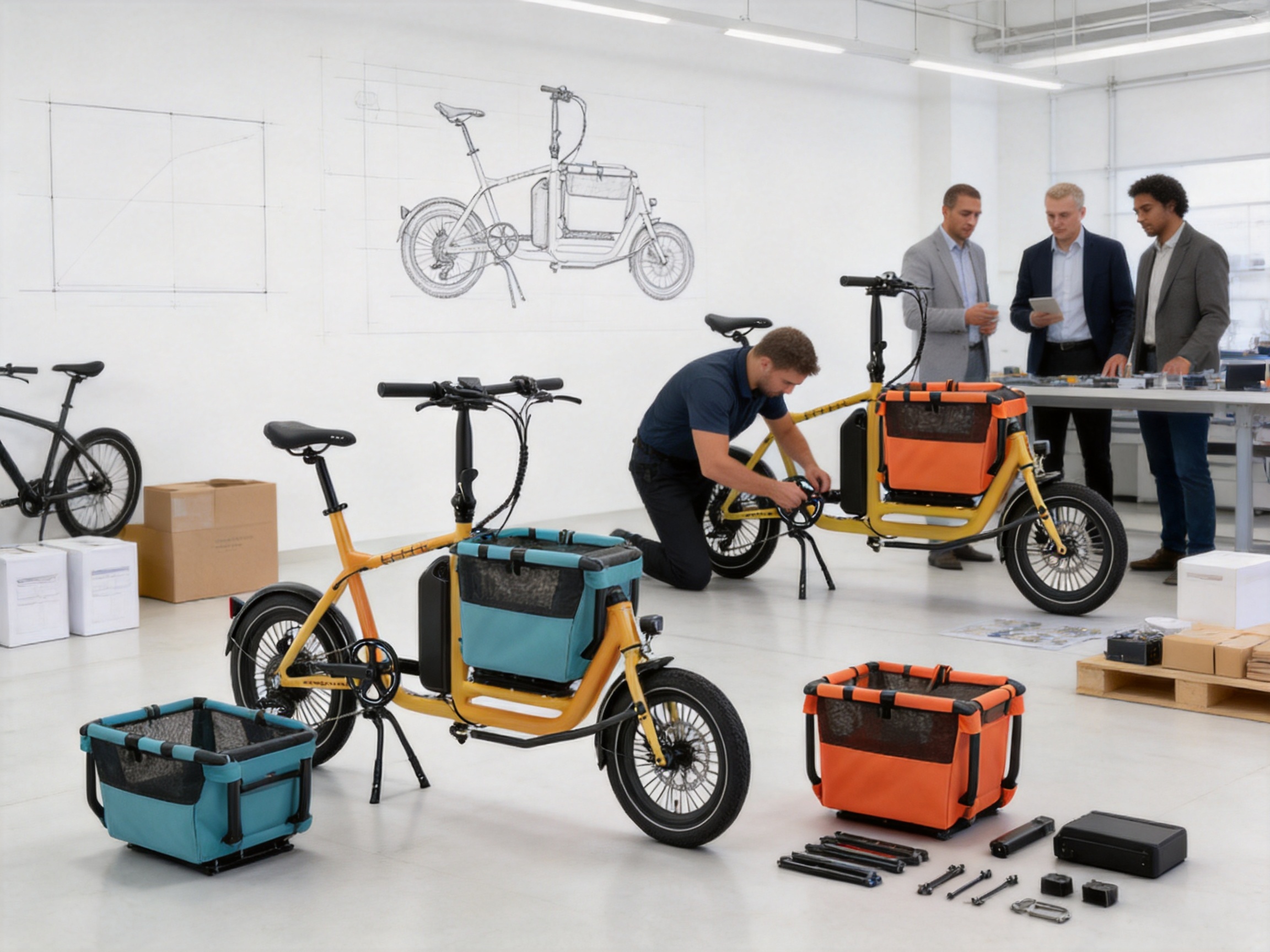
Urban transportation is changing quickly. Families, commuters, independent retailers, service providers, and local delivery businesses are looking for practical alternatives to cars and conventional bicycles. In this environment, an electric cargo bike must do more than provide pedal assistance. It must be dependable, easy to use, comfortable in daily traffic, simple to maintain, and capable of carrying meaningful loads without becoming unnecessarily complicated.
The EQ1, positioned within the Urban Companion Cargo Bike category as Model Q, is designed around these everyday requirements. It is a compact, front-basket cargo e-bike intended for flat to moderate urban terrain. Its rear hub motor, 36V battery system, seven-speed drivetrain, hydraulic disc brakes, folding front basket, and relatively narrow overall width give it a practical balance between carrying capacity and maneuverability.
Rather than pursuing an overly complex premium configuration, the EQ1 focuses on useful equipment and accessible ownership. Its design is especially relevant to riders who need a dependable daily driver for shopping, commuting, errands, school-related trips, small business transport, and neighborhood delivery work. For overseas retailers, wholesalers, and mobility partners, the model also provides a clear platform for custom urban cargo-bike development.
Traditional bicycles are efficient but limited when carrying groceries, work materials, packages, or personal belongings. Cars provide space but introduce fuel costs, parking difficulties, traffic congestion, and higher operating expenses. Large cargo bicycles can solve the carrying problem, but their size, weight, and turning requirements may make them less convenient for narrow streets, apartment storage, or mixed-use urban environments.
The EQ1 addresses this middle ground. It is designed to provide more carrying capability than a standard bicycle while remaining closer to the dimensions and handling expectations of an ordinary city bike. Its listed dimensions are approximately 1,780 millimeters in length, 620 millimeters in width, and 1,070 millimeters in height. A width of 620 millimeters is particularly relevant in cities where riders must pass through cycle lanes, residential access points, shop entrances, and compact storage areas.
The front basket is a central part of the design. It measures approximately 470 millimeters in length, 470 millimeters in width, and 375 millimeters in height. This gives the rider a dedicated carrying area positioned ahead of the handlebar and front wheel. The basket can be useful for grocery bags, backpacks, parcels, tools, sports equipment, or other loads that would otherwise require a rear rack or shoulder bag.
The cargo format also improves visibility of the load. A rider can see the basket while moving, which makes it easier to monitor loosely packed items, check whether a bag has shifted, and maintain better awareness of the load during turns and stops. For commercial users, the front position can also make packages more accessible during short-distance deliveries.
Unlike a large long-tail or front-loader cargo bike, the EQ1 is not presented as a substitute for every type of heavy transport. Its specified basket capacity is 25 kilograms, while the rider load limit is listed as 120 kilograms. This makes the model especially suitable for personal urban hauling and moderate commercial use rather than oversized family loads or industrial freight.
The EQ1 is built for riders who value straightforward performance. The product description emphasizes a robust rear hub motor, lower drivetrain wear, quick starting assistance, and accessible pricing. These characteristics distinguish it from cargo bikes that rely on more complicated drive systems or extensive premium features that may increase purchase price and maintenance requirements.
A practical urban e-bike should perform consistently in the situations that occur most often: starting from traffic lights, moving away from a curb, climbing a short bridge or moderate incline, carrying a grocery load, and traveling through stop-and-go traffic. These moments place different demands on the bike than a long recreational ride. The EQ1 is organized around those frequent, practical use cases.
Its design can be attractive to several groups. A household may use it for shopping and errands. A commuter may use it to carry a laptop, work clothing, or daily provisions. A small retailer may use it for local delivery. A property manager or campus operator may use it for light-duty transport. A mobility partner may adapt it as part of a broader urban transportation program.
The product’s simplicity is not a lack of capability. Instead, it is a deliberate attempt to focus the equipment package on the needs of everyday riders. A rear hub motor, a conventional seven-speed transmission, a removable or detachable front basket design, hydraulic braking, and puncture-resistant wide tires form a clear and understandable system.
The EQ1 uses a Bafang rear motor rated at 36 volts and 250 watts. The rear hub configuration places the motor directly in the rear wheel, allowing the bicycle to deliver electric assistance without routing motor power through the chain and cassette. This architecture has several practical advantages for urban users.
Because the motor operates independently of the bicycle’s mechanical drivetrain, the chain and gears are not responsible for transmitting all motor torque. In daily use, this can help reduce drivetrain stress compared with systems that apply motor power through the crank and chain. The drivetrain still requires normal care, but the separation between motor and gear system can make the overall ownership experience easier to understand.
This configuration is especially useful for riders who may not be experienced bicycle mechanics. A conventional rear hub motor system generally allows the rider to think of the electric drive and the pedal drivetrain as two related but distinct functions. The motor provides assistance; the rider selects a suitable gear; the brakes control speed; and the battery supplies electrical energy.
Starting from a complete stop is one of the most demanding moments in urban riding. A loaded cargo bike must overcome its own mass, the rider’s weight, the basket load, and rolling resistance. A rear hub motor is well suited to delivering a noticeable push during acceleration from rest.
This characteristic can make departures from traffic lights feel more manageable. It can also help when leaving a parking position, moving away from a delivery location, or restarting after a short stop on a moderate incline. The benefit is not simply speed. Smooth initial assistance can improve rider confidence and reduce the effort required during repeated stop-and-go journeys.
The EQ1 is described as intended for flat to moderate terrain. This positioning is important because it gives prospective users a realistic framework for selecting the product. The bike is well aligned with city streets, paved paths, neighborhood roads, and ordinary commuting routes. It should not be marketed as a specialized mountain cargo bike or as a high-power solution for sustained steep climbing.
Clear terrain positioning is also valuable for retailers and distributors. A product that is properly matched to its operating environment is more likely to deliver customer satisfaction. The EQ1 can be presented as a reliable urban workhorse for cities where most journeys are flat or moderately rolling, rather than as a universal solution for every landscape.
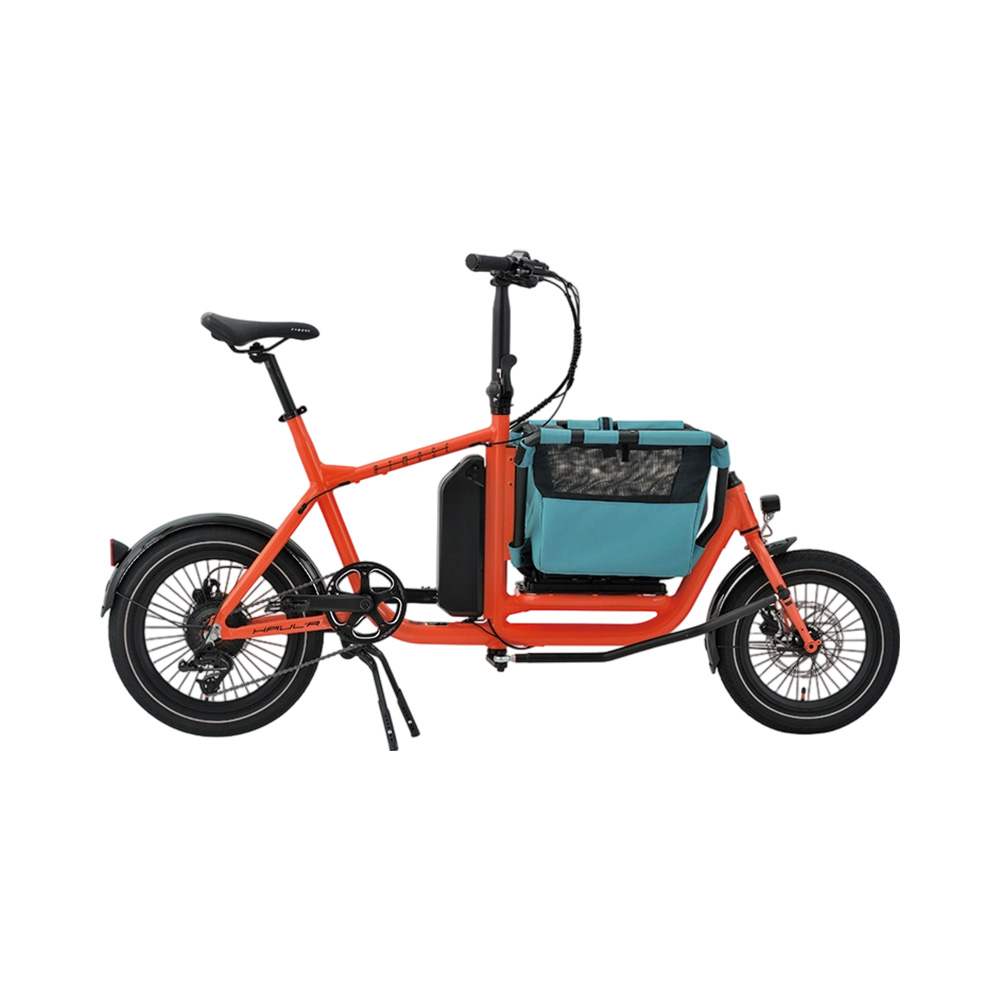
Atmose Model Q EQ1 Reliable Hub-Motor Urban Cargo E-Bike for Flat Cities
The EQ1 is equipped with a Samsung 36V 15Ah lithium battery, listed with a capacity of 540 watt-hours. The watt-hour figure is calculated from the voltage and amp-hour rating and provides a useful way to understand the battery’s energy capacity. A 540Wh battery gives the bike a meaningful energy reserve for routine urban journeys, although actual range depends on many conditions.
Rider weight, basket load, wind, tire pressure, road surface, temperature, stop frequency, assist level, and terrain all influence consumption. A lightly loaded rider on flat roads may use considerably less energy than a heavily loaded rider who accelerates frequently or travels against strong wind. For this reason, responsible product communication should describe the battery as suitable for practical city use without promising one fixed range in every situation.
The battery capacity is well matched to the EQ1’s intended role. Urban trips often include repeated starts, stops, intersections, and short detours. A battery chosen only for a very short recreational ride may require frequent charging, while an unnecessarily large battery could add cost and weight. The 540Wh configuration provides a balanced foundation for a daily urban cargo bike.
For a family or commuter, the battery can support errands before or after work. For a small business, it can support a planned delivery schedule when charging routines are managed properly. For a retailer, the specification is easy to explain to customers because it combines a recognizable brand cell supplier with a clear electrical rating.
Battery care remains important regardless of the motor architecture. Users should follow the supplied charging instructions, avoid exposing the battery to extreme heat or moisture, and store it according to the manufacturer’s recommendations. Retailers and mobility partners should provide clear guidance about charging, inspection, and eventual battery replacement.
From a product-development perspective, a standardized 36V architecture can also simplify support across a model range. Service personnel can become familiar with the electrical system, diagnostic approach, and replacement procedures. This can be useful for distributors managing several units or supporting customers in different locations.
The EQ1 uses a Shimano seven-speed Sora system. Multiple gears allow the rider to adjust pedaling effort according to speed, load, and terrain. Even with electric assistance, gear selection remains important. A lower gear can make starting or climbing more comfortable, while a higher gear can support efficient pedaling on level roads.
A seven-speed arrangement offers a useful balance. It gives the rider more flexibility than a single-speed bicycle while avoiding the complexity of a very large gear range. For daily urban journeys, seven ratios are generally enough to manage traffic starts, moderate slopes, steady cruising, and changes in load.
The independent rear hub motor and mechanical drivetrain work together in a practical way. The motor provides assistance, while the rider can select a gear that keeps pedaling comfortable. This arrangement is easy to explain to new e-bike users and familiar to people who have previously ridden conventional bicycles.
Routine maintenance should include checking chain lubrication, inspecting the gear cable and derailleur, and ensuring that the shifting system remains properly adjusted. The rear hub motor does not remove the need for normal bicycle maintenance, but its independent configuration can reduce the amount of motor force transmitted through the chain and gears during assisted riding.
Carrying a load changes the way a bicycle responds to braking. The combined mass of the rider, bike, and cargo means that reliable stopping control is essential. The EQ1 uses Tektro hydraulic disc brakes, a specification that supports controlled braking in everyday urban conditions.
Hydraulic systems transfer lever force through fluid rather than a conventional mechanical cable. This can provide smooth lever operation and consistent braking feel when the system is correctly installed and maintained. Disc brakes also perform independently of the wheel rim, which can be valuable when riding through wet conditions or when the wheels carry wider tires.
For a cargo bike, braking is not only about emergency stops. It also affects confidence when approaching intersections, descending moderate slopes, maneuvering around pedestrians, and controlling speed with a basket load. A predictable brake lever and progressive stopping response can make daily riding feel less stressful.
Retailers should still emphasize correct brake bedding, periodic inspection, pad replacement, and professional servicing when required. Hydraulic brakes are an important advantage, but their performance depends on proper assembly, adjustment, and maintenance.
The EQ1 uses wide 16-inch by 2.4-inch tires at the front and a 20-inch by 2.4-inch tire at the rear. The product information describes them as punch-proof tires. Wide tires can provide a larger contact patch and help the bike feel stable when carrying a basket load.
Urban surfaces are rarely perfect. Riders may encounter painted lane markings, drainage covers, small potholes, uneven paving, driveway transitions, and rough patches near construction zones. A wider tire can help absorb minor surface irregularities and provide a more planted feeling than a narrow road tire.
The different front and rear wheel sizes also contribute to the bicycle’s compact cargo-bike layout. Smaller wheels can help keep the front cargo area close to the ground and support a lower center of gravity, while the rear wheel remains appropriately sized for propulsion and rider positioning. The result is a configuration designed for practical handling rather than high-speed racing.
Tire pressure should be adjusted according to rider weight, basket load, road conditions, and tire manufacturer guidance. Underinflation may increase rolling resistance and create unnecessary tire wear, while excessive pressure can reduce comfort and grip. Regular pressure checks are particularly important for cargo bikes because load changes can significantly affect handling.
The EQ1’s front basket is more than a fixed storage container. It is designed for quick installation and removal, and the product information describes a three-step installation process. The user aligns the basket base with pre-installed mounting holes, lowers it vertically, and then pushes it backward toward the saddle until a click indicates engagement.
This attachment approach has several advantages. First, it reduces installation time. A customer does not need to perform a complex assembly procedure involving multiple loose bolts. Second, it makes the basket easier to remove when the bicycle is being transported or stored. Third, the click-based engagement provides a clear tactile and audible indication that the basket has reached its intended position.
The basket removal process is also designed around a simple sequence. The rider pulls down the pin at the bottom of the basket mount, pushes the basket forward along its track, and lifts it away. This can be useful for cleaning, storage, maintenance access, or changing the bicycle’s configuration for a particular journey.
Quick-change accessories are valuable in urban mobility because users do not always perform the same task every day. A commuter may want a basket for groceries in the evening but prefer a lighter configuration when transporting the bicycle. A retailer may demonstrate the bike with the basket installed while explaining how customers can remove it for storage.
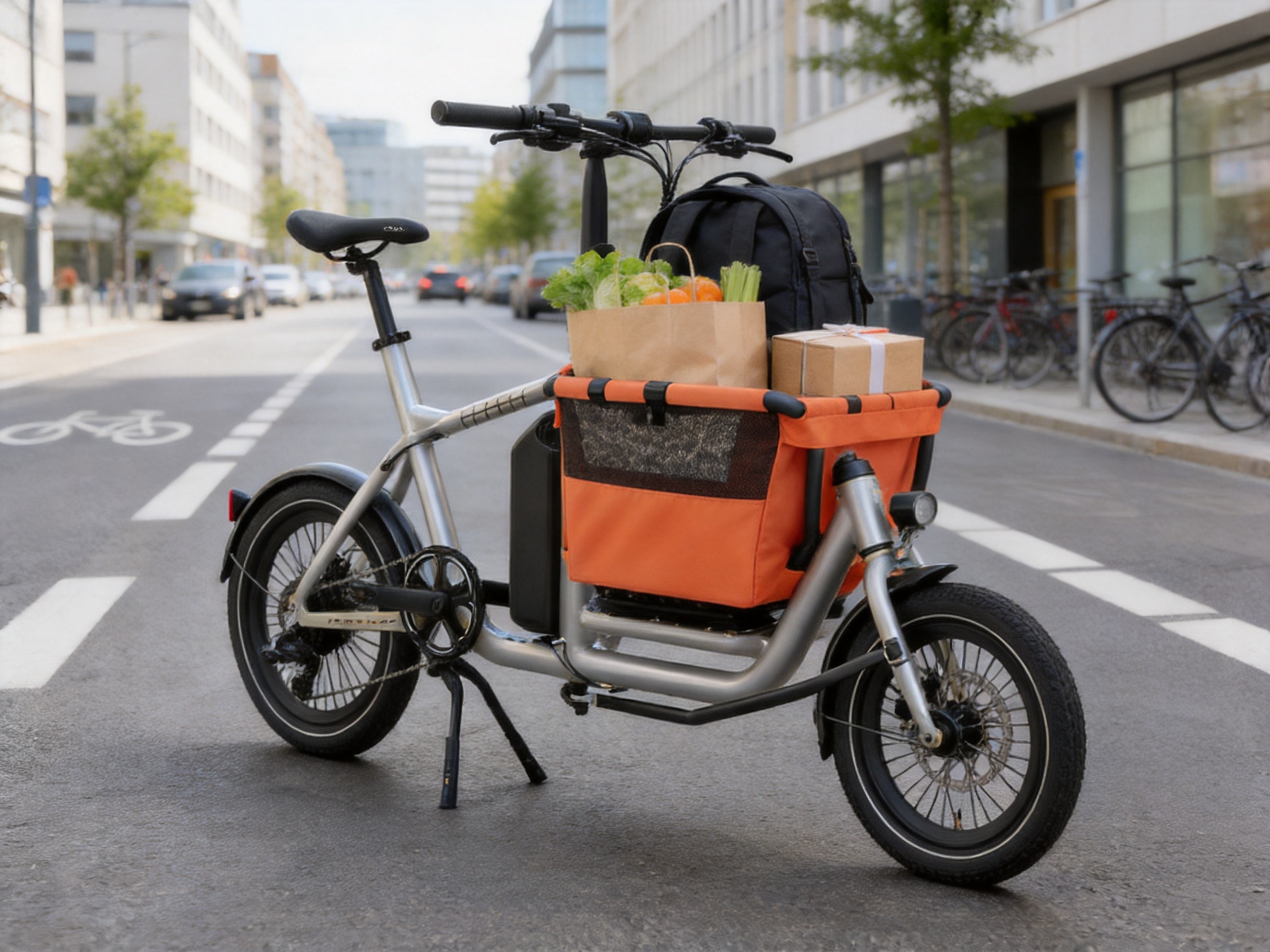
The listed maximum load is 120 kilograms for the rider and 25 kilograms for the basket. These figures should be treated as important operating limits rather than suggestions. The rider and cargo should be distributed safely, and the basket should not be overloaded or packed in a way that blocks visibility, interferes with steering, or creates an unstable center of gravity.
Front cargo placement affects steering more directly than rear cargo placement. Users should pack heavier items low and evenly, secure loose objects, and avoid allowing bags or straps to contact the front wheel. The basket’s size is useful for daily goods, but the rider should recognize that a full basket can influence turning and braking behavior.
A cargo bike becomes more useful when its carrying area fits actual routines. The EQ1 can serve grocery shoppers who need to carry produce and household products. It can help commuters transport clothing, lunch, books, and electronics. It can support small delivery businesses that move documents, packaged food, retail products, or service equipment across short urban distances.
The bike is also suitable for organizations that need a visible, practical mobility tool. A maintenance team may use it to move small tools around a site. A hospitality business may use it for local collection work. A campus or residential community may use it for light logistics. The front basket can make the bike immediately understandable to users who are unfamiliar with cargo bicycles.
Every cargo-bike category contains different technical approaches. Some products use mid-drive motors, large integrated displays, extensive electronic controls, or specialized suspension systems. These features can be beneficial in particular situations, but they may also increase purchase cost, service complexity, and the learning curve for new riders.
The EQ1 offers a different value proposition. Its rear hub motor is mechanically separate from the gear system. Its seven-speed drivetrain is familiar and serviceable. Its 36V battery configuration is clear. Its front basket is removable through a defined mechanical process. Its hydraulic disc brakes and wide tires concentrate on practical control and stability.
This approach can provide several competitive advantages:
1. Accessible ownership: A simpler system can make the initial product proposition easier for price-sensitive customers and fleet buyers.
2. Straightforward maintenance: Separating the motor from the drivetrain may reduce drivetrain-related wear caused by motor power transmission through the chain.
3. Familiar operation: Riders can use a conventional gear selector, brake levers, and cargo-basket arrangement without learning a highly specialized interface.
4. Urban maneuverability: The relatively narrow 620-millimeter width is suitable for many city environments where larger cargo bikes may feel cumbersome.
5. Flexible storage: The removable front basket allows the bicycle to adapt to different errands and storage requirements.
6. Value-focused specification: The EQ1 combines electric assistance, useful cargo capacity, hydraulic braking, and a recognized battery-cell supplier without relying on excessive equipment that may not benefit every rider.
These advantages do not mean the EQ1 is superior for every possible application. A rider seeking maximum hill-climbing performance, very large cargo capacity, or off-road suspension may require another category of bicycle. The EQ1’s strength is its clarity: it is an urban cargo e-bike designed around ordinary daily transportation.
The product reflects a “fun and practical” approach to cargo mobility. Practicality appears in the carrying basket, manageable width, independent hub motor, seven-speed drivetrain, and hydraulic brakes. Fun appears in the intention to make daily errands easier and more enjoyable than driving short distances in traffic or riding a conventional bicycle without assistance.
A successful cargo bike must balance competing requirements. More cargo capacity can increase dimensions. More battery capacity can add weight. More equipment can increase price and service needs. More compact geometry can reduce storage space but may affect load placement. The EQ1’s configuration indicates an effort to balance these factors for the urban companion segment.
The 6061 T4T6 aluminum alloy frame provides a foundation that combines structural function with a relatively manageable bicycle weight compared with many steel alternatives. Aluminum alloy is widely used in modern bicycle manufacturing because it can support shaped frame designs and offer a practical strength-to-weight relationship when engineered and assembled correctly.
Frame material alone does not determine ride quality. Geometry, weld quality, mounting design, component selection, load distribution, and inspection procedures all matter. For that reason, the value of the EQ1 should be understood as a complete system rather than as a list of isolated parts.
The company behind the product combines American product origins with European design and research-and-development activity. The brand originated in California and was developed from the experience of MOTIV, an established American beach cruiser brand. The company later established ATMOSE SASU in France, accompanied by a new design and R&D team.
This international structure can support a useful division of strengths. American product thinking may contribute an emphasis on approachable transportation, recreational usability, and practical customer experience. European design influence can support attention to urban form, compact dimensions, visual integration, and the needs of dense city environments.
The company describes itself as supported by manufacturing expertise and a mature supply chain. These capabilities are especially important for cargo bicycles because a cargo model requires more than a standard bicycle with a motor added. The frame, basket mount, wheel configuration, brake system, electrical system, and load limits must work together as a coherent product.
For a wholesale or private-label customer, a mature supply chain can provide benefits in component coordination, production planning, quality consistency, replacement-part support, and model adaptation. These benefits are important when a buyer is supplying multiple markets or building a fleet rather than purchasing a single personal bicycle.
Although specific factory procedures are not provided, the product itself illustrates several stages of considered development. First, the intended use case is defined: practical urban hauling on flat to moderate terrain. Second, the component system is selected to support that use case: a rear hub motor, a 540Wh battery, a seven-speed drivetrain, hydraulic disc brakes, and wide tires. Third, the cargo interface is designed for quick installation and removal. Finally, the product is presented with dimensions and load specifications that help buyers understand its operating boundaries.
This type of application-led development is valuable because it avoids choosing components in isolation. A motor should match the terrain and intended riding style. A battery should match expected use and system voltage. Brakes should match the combined load. Tires should support stability and urban surface conditions. The basket should be integrated into the frame and steering arrangement rather than treated as an afterthought.
A cargo e-bike manufacturer must coordinate several production disciplines. Aluminum frame fabrication requires consistent tube preparation, fixture alignment, welding, surface treatment, and inspection. Wheel assembly requires correct spoke tension, hub installation, tire fitting, and runout checks. Electrical assembly requires secure cable routing, connector protection, battery fitment, and functional testing. Final assembly requires alignment of the brakes, drivetrain, basket mount, and steering components.
The EQ1’s component combination shows why supply-chain coordination matters. The frame must accept the rear hub motor and battery system. The fork and wheel must accommodate the specified tire dimensions. The basket mount must remain stable under its stated load. The hydraulic brake system must be correctly matched to the wheel and rotor arrangement. The seven-speed drivetrain must be adjusted so that gear shifting remains reliable after assembly and transport.
For international buyers, these details affect more than production output. They affect warranty rates, dealer confidence, customer reviews, and the total cost of ownership. A company with product-development experience and an established manufacturing network is better positioned to coordinate these requirements than a business that simply sources unrelated components and assembles them without a unified design process.
Quality should be considered at multiple stages rather than only at the end of production. Incoming inspection can verify that frames, motors, batteries, brakes, tires, and hardware meet the intended specifications. In-process checks can confirm frame alignment, torque application, cable routing, and basket-mount installation. Final inspection can verify braking, shifting, electrical assistance, wheel alignment, and general fit and finish.
For a cargo bike, functional testing should reflect real use. The bicycle should be assessed not only when unloaded but also with appropriate attention to the basket attachment, steering response, braking feel, and stability associated with its intended load. Documentation and traceability can further support consistent service across different production batches.
The available product information does not specify particular certifications, factory audit results, or test standards. Therefore, buyers should request the relevant documentation for their destination market. The company’s manufacturing strength is best evaluated through a combination of product consistency, technical documentation, sample inspection, after-sales support, and the ability to meet agreed specifications over repeated orders.
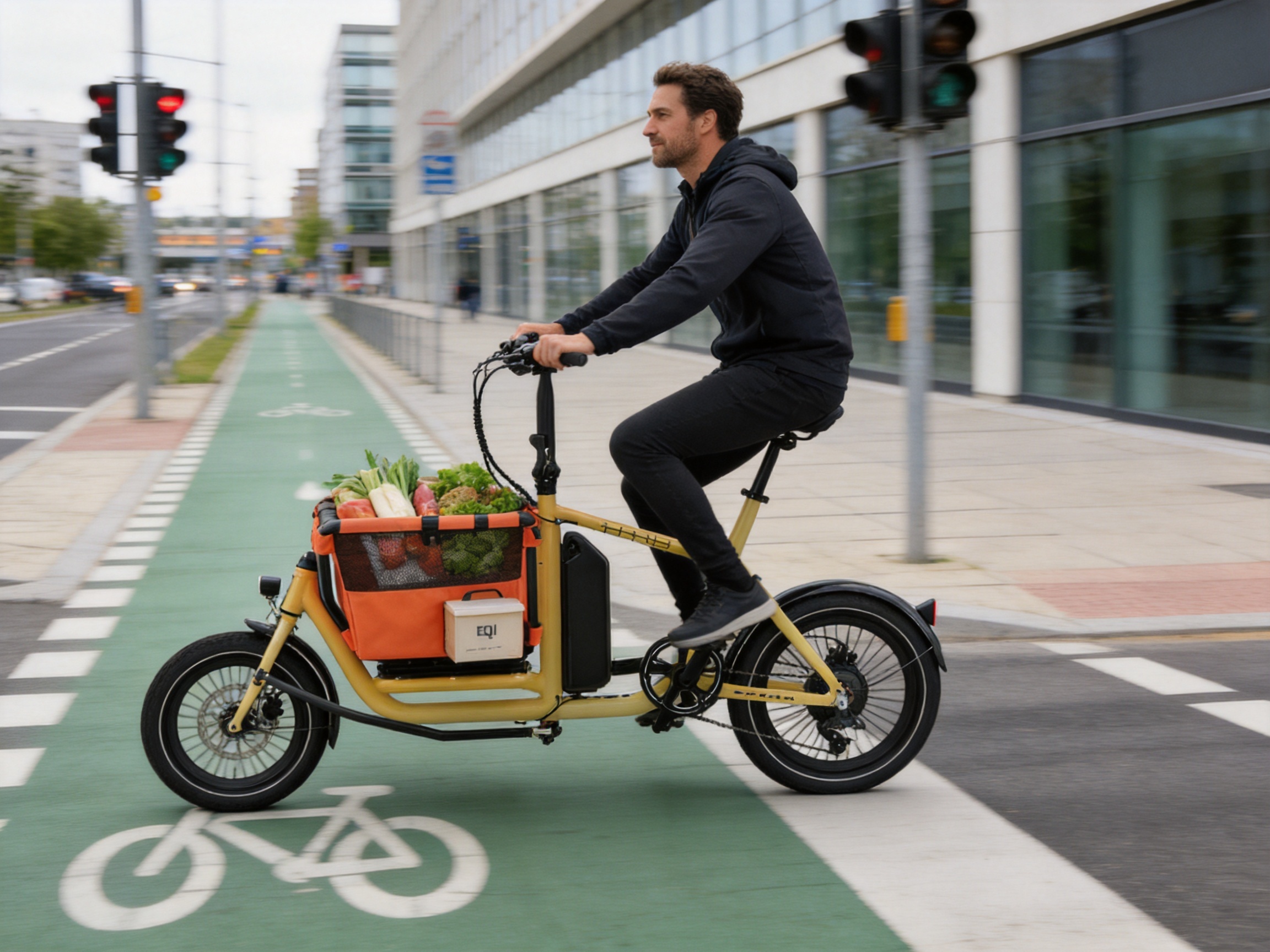
The company provides custom design services for businesses developing electric cargo-bike solutions for different markets. This is a significant strength for overseas retailers, wholesalers, and mobility partners because urban transportation needs vary by region.
A distributor in a flat European city may prioritize compact width, front cargo capacity, and commuter-friendly appearance. A retailer serving a suburban market may focus on battery configuration, accessory options, and family errands. A delivery company may require branding, fleet identification, service parts, and a cargo setup tailored to its operating process.
Customization can involve more than color or decals. Depending on technical feasibility and regulatory requirements, a buyer may discuss basket configuration, accessories, lighting, display equipment, contact points, packaging, documentation, or market-specific product positioning. Any modification should be evaluated against structural safety, electrical compatibility, braking performance, load limits, and applicable local regulations.
The EQ1 can serve as a strong starting platform because its purpose is clearly defined. A buyer does not need to begin with a completely blank design brief. The existing architecture establishes a baseline for urban cargo transportation, while the custom-development process can explore adaptations for particular customer groups or distribution channels.
For wholesalers, a coherent base model also simplifies sales training. Staff can explain the motor type, battery rating, basket procedure, braking system, tire design, dimensions, and intended terrain without presenting an overly complicated technical story. Clear product communication is especially important when selling e-bikes to first-time users.
The EQ1 can replace many short car trips involving groceries, household supplies, pharmacy purchases, and neighborhood errands. The front basket provides space for everyday items, while electric assistance helps offset the extra effort caused by the cargo.
Commuters can use the basket for work bags, clothing, meals, and personal equipment. The electric system can make daily riding more practical for people who want to avoid arriving overheated or fatigued. The seven-speed drivetrain also allows the rider to remain active rather than relying exclusively on the motor.
Small businesses can use the EQ1 for short-distance deliveries where a full-size van would be inefficient. Bakeries, florists, specialty food shops, repair services, and local retailers may benefit from a compact vehicle that can navigate streets and stop close to customers.
Schools, campuses, residential developments, and community organizations may use the bicycle for light-duty transport. Its approachable format can be easier for multiple authorized users to understand than a specialized commercial cargo platform.
In suitable locations, the EQ1 could support guided urban activities, rental operations, or visitor services. Any rental application would require clear user instructions, regular inspections, and operating policies that account for varying rider experience and cargo loads.
Even a low-maintenance e-bike requires regular care. Before each ride, the user should check tire pressure, brake lever feel, wheel security, steering movement, battery installation, and basket attachment. The cargo should be distributed evenly and secured so that it cannot shift or fall into the wheel.
Periodic maintenance should include cleaning the drivetrain, lubricating the chain, inspecting brake pads and rotors, checking fasteners, examining tire condition, and confirming that the basket mechanism remains secure. Electrical connectors and cables should be kept clean and protected from damage. Any unusual motor noise, intermittent assistance, battery issue, or braking change should be investigated promptly.
The basket’s installation and removal mechanism deserves particular attention because it is used repeatedly. The rider should verify that the basket is fully seated and that the locking pin or engagement feature is properly positioned. A click should not be treated as the only safety check; the user should also pull gently on the basket to confirm that it is secure before riding.
Maintenance requirements may vary by market, climate, usage intensity, and local service practices. Fleet operators should establish inspection schedules based on mileage or operating hours. Retailers should provide customers with maintenance documentation and identify qualified service support.
Prospective buyers can evaluate the EQ1 by asking several practical questions:
Is the intended route primarily flat or moderately rolling?
Does the 25-kilogram basket capacity meet the expected carrying requirement?
Will the 620-millimeter width fit the user’s storage area, doorway, elevator, or cycle lane?
Does the 540Wh battery suit the planned trip frequency and charging routine?
Is a rear hub motor appropriate for the local terrain and service expectations?
Will the seven-speed drivetrain provide enough flexibility for the rider?
Are hydraulic disc brakes and wide tires desirable for the local weather and road conditions?
Can the buyer obtain the required technical documentation, warranty terms, spare parts, and regulatory information?
For commercial buyers, additional questions should cover sample approval, production lead time, packaging, labeling, customization options, quality-control procedures, and after-sales training. The company’s international design and R&D structure may be particularly useful for buyers who need communication across different markets and product requirements.
| Item | EQ1 Specification | Practical Significance |
|---|---|---|
| Product category | Urban Companion Cargo Bike, Model Q | Designed for daily urban transport and moderate cargo use |
| Frame | 6061 T4T6 aluminum alloy | Supports a practical, relatively lightweight urban frame structure |
| Battery | Samsung 36V 15Ah lithium battery, listed as 540Wh | Provides a useful energy platform for routine city journeys |
| Motor | Bafang rear motor, 36V 250W | Offers independent rear-wheel assistance and strong starting support |
| Drivetrain | Shimano seven-speed Sora | Provides gear flexibility for stops, moderate inclines, and cruising |
| Brake system | Tektro hydraulic disc brakes | Supports controlled stopping with a loaded bicycle |
| Front basket | Approximately 470 × 470 × 375 mm | Provides practical space for shopping, commuting, and local delivery |
| Basket capacity | 25 kilograms | Suitable for moderate urban loads when packed safely |
| Rider load | 120 kilograms | Defines the listed rider operating limit |
| Tires | Front 16 × 2.4 inches; rear 20 × 2.4 inches | Wide tires support urban stability and comfort |
| Overall dimensions | Approximately 1,780 × 620 × 1,070 mm | Balances cargo usability with urban maneuverability |
| Intended terrain | Flat to moderate urban terrain | Helps buyers match the product to suitable routes |
The EQ1 is designed for urban riders who need electric assistance and moderate cargo capacity for errands, commuting, shopping, and local transport. It is particularly suitable for flat to moderately rolling city routes.
The rear hub motor operates independently from the mechanical drivetrain. This can help reduce motor-related stress on the chain and gears, while also providing useful starting assistance from traffic lights and other stops.
The product is positioned for flat to moderate terrain. Riders who regularly face long or steep climbs should compare the EQ1 with a model specifically engineered for demanding hills and should consider local regulations, rider weight, cargo weight, and route conditions.
The listed maximum basket load is 25 kilograms. Cargo should be distributed evenly, secured properly, and packed so that it does not obstruct steering, braking, lighting, or the rider’s view.
Yes. The supplied procedure describes a release pin, a forward sliding movement, and an upward lift to detach the basket. Users should confirm that the basket is fully secure after reinstalling it.
The EQ1 uses a Samsung 36V 15Ah lithium battery, listed as 540Wh. Actual range depends on assist level, rider and cargo weight, terrain, wind, tire pressure, temperature, and riding behavior.
Cargo bikes carry more total mass than ordinary bicycles. Hydraulic disc brakes can provide smooth lever operation and controlled stopping when properly installed, adjusted, and maintained.
The wide 2.4-inch tires are intended to support stability and comfort on common urban surfaces. The product information describes them as punch-proof tires. Tire pressure and condition should still be checked regularly.
The company provides custom design services for overseas retailers, wholesalers, and mobility partners. Customization should be reviewed for technical feasibility, regulatory compliance, safety, production requirements, and after-sales support.
The EQ1 focuses on compact urban usability rather than maximum cargo volume. Its 620-millimeter width, removable front basket, rear hub motor, and moderate load capacity make it appropriate for daily city errands and smaller delivery tasks.
Yes. Regular checks should include tires, brakes, chain, gears, wheel security, battery fitment, cables, and basket attachment. Its hub-motor layout may simplify some drivetrain demands, but it does not eliminate normal bicycle and electrical-system maintenance.
A wholesale buyer should request samples, technical specifications, regulatory documents, warranty terms, spare-parts information, packaging details, customization options, quality-control procedures, and expected production timelines.
The EQ1 is a focused urban cargo e-bike that prioritizes usefulness over unnecessary complexity. Its rear hub motor offers accessible electric assistance and independent operation from the drivetrain. The 540Wh battery supports routine city use, while the seven-speed Shimano system gives the rider practical control over pedaling effort. Tektro hydraulic disc brakes, wide tires, and a removable folding front basket strengthen the model’s suitability for everyday carrying.
Its strongest competitive position lies in balance. It is more capable than a conventional city bicycle but less intimidating and potentially less complicated than a large commercial cargo platform. It offers useful cargo space without being defined exclusively by heavy freight. It provides electric assistance without requiring a highly specialized riding style. It is compact enough for many urban environments while still offering a meaningful basket capacity.
The company’s American origins, European design and R&D presence, manufacturing experience, and custom-development capability further expand the product’s value for international buyers. Retailers and mobility partners can treat the EQ1 as both a finished urban cargo-bike model and a foundation for market-specific solutions.
For the right user, the EQ1 can turn many short car journeys into practical bicycle trips. It can help families manage errands, commuters transport daily essentials, and small businesses complete local deliveries. Its purpose is clear: deliver a reliable, approachable, and cost-conscious electric cargo-bike experience for modern city life.
1. Product specification materials for the EQ1 Urban Companion Cargo Bike, including frame, battery, motor, drivetrain, brake, tire, dimension, and load information.
2. Product installation and removal instructions for the EQ1 front folding basket.
3. Company background information concerning American origins, California operations, French design and research-and-development activities, manufacturing experience, and custom design services.
4. General bicycle engineering principles concerning load distribution, tire pressure, hydraulic braking, drivetrain maintenance, and electric-assist bicycle operation.
5. General urban mobility planning principles concerning cargo bicycles, short-distance transportation, active travel, and low-emission delivery.
6. General product-development principles concerning frame integration, component coordination, assembly inspection, supply-chain management, and after-sales support.
Nov 11, 2026
Nov 07, 2026
Nov 05, 2026


info@atmosecargobike.com

200 rue de la Croix Nivert 75015 Paris

Custom Electric Bakfiets
 English
 Français
 Deutsch