Sep 08, 2026
Adventure cargo cycling has moved beyond the idea of simply adding a basket to a conventional bicycle. Riders who travel beyond paved roads need a machine that can carry substantial equipment, remain stable on uneven terrain, climb confidently when loaded, and stop reliably when conditions become wet or unpredictable. The Atmose Model V ESV1 is designed around that more demanding use case. It combines a compact cargo-bike footprint with a large front storage platform, a mid-drive motor, puncture-resistant tires, hydraulic disc brakes, and a high stated maximum load of 170 kilograms.
This combination gives the ESV1 a distinctive role within the cargo-bike market. It is not positioned solely as a family transporter, a city delivery bike, or a lightweight recreational e-bike. Instead, it is intended for riders who want to carry camping equipment, fishing supplies, touring luggage, tools, coolers, or other bulky items while exploring mixed surfaces and back-country routes.
The central idea behind the model is straightforward: make the cargo area large enough for real outdoor equipment without turning the bicycle into an unwieldy vehicle. The front folding basket measures approximately 470 millimeters in length, 470 millimeters in width, and 375 millimeters in height. Combined with the bike’s relatively narrow overall width of approximately 750 millimeters, this creates a useful balance between cargo capacity and route accessibility.
The ESV1 also benefits from the broader capabilities of its manufacturer, Atmose. The company presents itself as a U.S.-origin cargo e-bike brand with design and research-and-development activities in Paris. Its product philosophy centers on practical, enjoyable, and reliable mobility. That philosophy is particularly relevant to an adventure cargo bike, where comfort and usability matter just as much as motor output or carrying capacity.
Rather than treating the ESV1 as a collection of isolated specifications, this article examines how its individual systems work together. It also considers where the model may hold advantages over more conventional cargo bikes, what its manufacturing and development strengths suggest about product quality, and which types of riders are most likely to benefit from its design.

Atmose Model V ESV1 Adventure Cargo Bike with Oversized Front Camping Rack
Traditional cargo bicycles are often divided into several familiar categories. Longtail models extend the rear portion of the frame to carry passengers or panniers. Box bikes place a large container in front of the rider. Compact utility bikes prioritize maneuverability for errands and urban delivery. Touring e-bikes usually focus on personal luggage rather than very large or unusually shaped loads.
The ESV1 occupies an interesting position between these categories. Its defining feature is an oversized front folding basket that is intended to accept the kinds of items that are difficult to carry on a standard bicycle. A tent, sleeping bag, portable stove, cooler, fishing equipment, camp chair, repair kit, or waterproof storage case can be arranged on a broad front platform rather than being distributed across the rider’s back or attached to a narrow rear rack.
Front cargo placement has several practical advantages. First, it allows the rider to monitor the load easily. A bag that shifts, a strap that loosens, or an item that begins to interfere with the wheel can be noticed quickly. Second, a low and broad load can feel more stable than a tall stack of luggage mounted behind the saddle. Third, the cargo area remains accessible while riding, which is useful when equipment must be reached frequently during a day outdoors.
Of course, a front cargo system must be engineered carefully. Excessive weight placed too high or too far forward can affect steering. The ESV1’s design addresses this challenge through a wide, stable front structure intended to keep equipment low and organized. Riders still need to observe the manufacturer’s load guidance and distribute weight sensibly, but the basic architecture is appropriate for bulky adventure equipment.
The folding function adds another practical benefit. When the basket is not required at full capacity, a folding structure can reduce the bike’s storage footprint and make it easier to position in a garage, workshop, transport vehicle, or apartment entrance. This is especially valuable for a cargo bike because cargo-oriented frames are naturally larger than ordinary bicycles.
An adventure cargo bike must tolerate a wider range of conditions than a purely urban model. Paved streets, gravel tracks, forest access roads, compacted earth, muddy sections, and uneven paths can all form part of the same journey. The ESV1 is equipped with puncture-resistant tires in a wide configuration: an 18-inch by 2.4-inch front tire and a 24-inch by 2.4-inch rear tire.
The combination of different wheel sizes supports a practical cargo-bike layout. The smaller front wheel helps keep the cargo deck and steering assembly compact, while the larger rear wheel can contribute to rolling efficiency and rider comfort. The 2.4-inch tire width provides a larger contact patch than a narrow road tire, which can be helpful on gravel, loose soil, damp paths, and irregular surfaces.
Puncture resistance is particularly important for remote riding. A flat tire near a repair shop is an inconvenience; a flat tire several kilometers from the nearest road can disrupt an entire trip. No tire is immune to sharp debris, and riders should still carry a pump, tire levers, patches, and suitable replacement equipment. Nevertheless, puncture-resistant construction offers an additional layer of protection for a bike that is explicitly intended to travel into less predictable environments.
The frame is made from 6061 T4T6 aluminum alloy. This material is widely used in bicycles because it can provide a useful combination of low weight, corrosion resistance, stiffness, and manufacturability. For an adventure cargo bike, the frame must also manage forces from the motor, the cargo platform, uneven terrain, braking, and a heavily loaded rear wheel. The material choice is therefore aligned with the need for a strong but manageable utility bicycle.
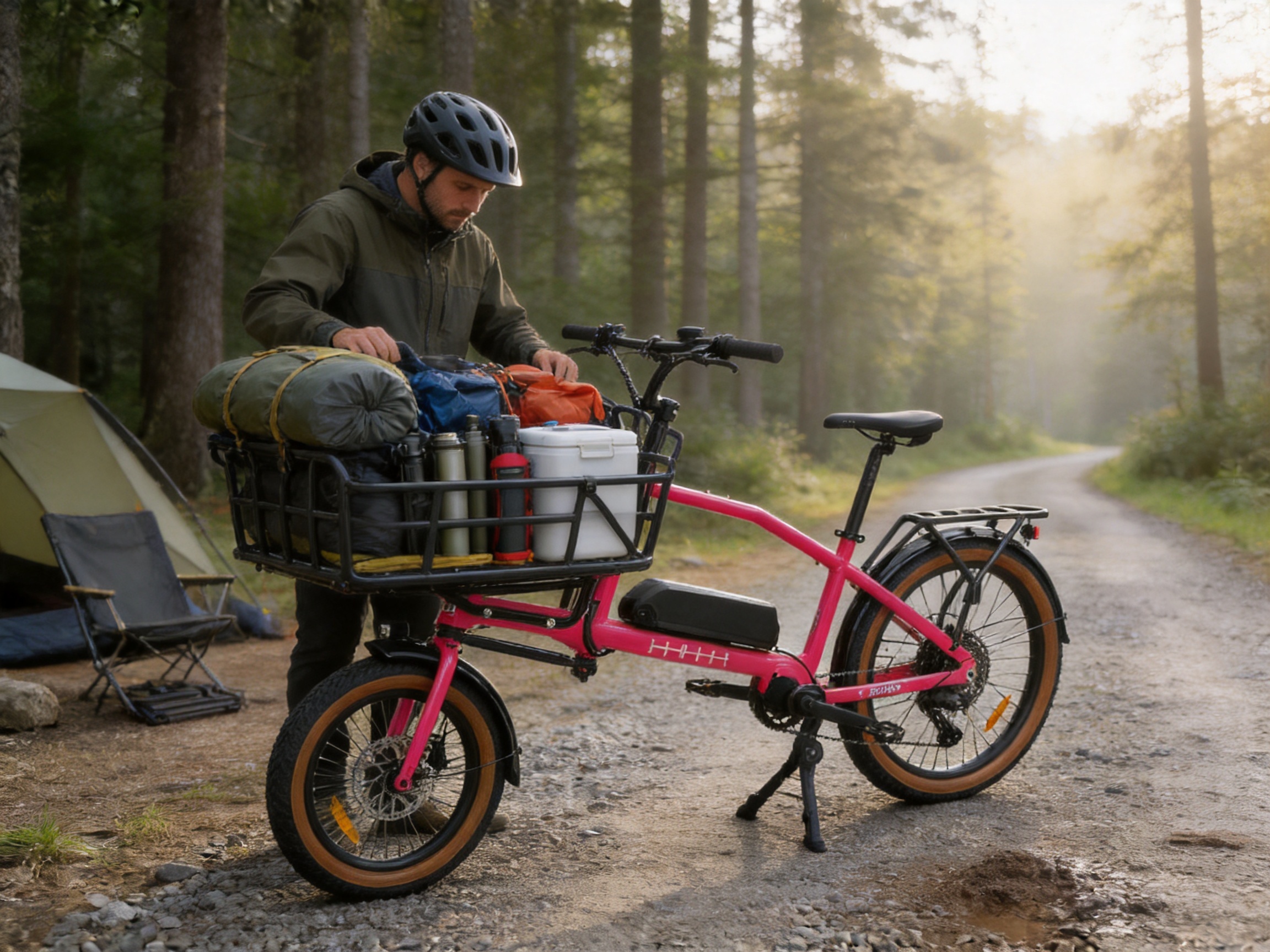
The ESV1 has a stated maximum load of 170 kilograms. This figure should be interpreted as a total system limit according to the manufacturer’s applicable guidance, rather than as a promise that the front basket alone can carry 170 kilograms. Riders must account for their own body weight, luggage, accessories, and any additional equipment when planning a load.
Even when used within the correct limit, a high-capacity cargo rating offers meaningful flexibility. Adventure equipment is often bulky rather than exceptionally heavy, but some items can quickly add up. A loaded cooler, cooking equipment, water, tools, spare clothing, and shelter materials may be difficult to carry on a standard bicycle. The ESV1 provides a dedicated space for these items, allowing the rider to avoid an overloaded backpack or an unstable collection of bags.
The basket dimensions of approximately 470 by 470 by 375 millimeters create a substantial volume for daily and outdoor use. The nearly square footprint is useful for equipment such as compact coolers, storage crates, dry bags, and folded camp furniture. The basket’s height also helps contain loose items, although all cargo should be secured with straps or an appropriate retention system before riding.
Good cargo organization affects handling as much as convenience. Heavy objects should be placed low and near the center of the available deck. Lighter or soft items can fill gaps and help prevent movement. Long objects should be tied down so that they cannot contact the front wheel, steering components, brake lines, or the rider. Weather-sensitive equipment should be placed in waterproof containers, especially when riding through rain or muddy conditions.
Compared with a conventional rear-rack touring bicycle, the ESV1 can offer a more centralized and visible cargo arrangement. Compared with a large box bike, it may be easier to load irregular objects and easier to store when the front basket is folded. Compared with a compact utility e-bike, it is better suited to substantial equipment because the cargo area is an integral part of the design rather than an accessory added later.
The oversized front basket supports several use cases:
Camping trips: A tent, sleeping system, cooking equipment, lantern, food, and clothing can be organized in separate bags and placed where they remain accessible.
Fishing and outdoor recreation: Rods must be secured carefully, but tackle boxes, coolers, waders, and folding chairs can be carried without relying on a car for the final portion of the journey.
Photography and field work: Cameras, tripods, survey tools, batteries, and protective cases can be transported with less strain on the rider’s body.
Rural errands: The bike can carry groceries, gardening materials, animal supplies, or small work tools over roads and tracks that may not be suitable for a conventional city bike.
Touring: The front cargo area can complement rear panniers, allowing riders to separate frequently used equipment from clothing and personal luggage.
The key advantage is adaptability. The same cargo space can be reconfigured for a weekend trip, a daily errand, or a professional outdoor task. That flexibility can reduce the need for multiple specialized bicycles.
The ESV1 uses a Starunion CM2503 mid-drive system rated at 250 watts according to the supplied product information. A mid-drive motor places the drive unit near the bicycle’s crank area rather than inside one of the wheel hubs. This arrangement allows the motor to work through the bicycle’s gearing, which is valuable when climbing or carrying a heavy load.
When a loaded cargo bike encounters a steep gradient, the motor must produce useful torque at low speed. A hub motor can perform well in many conditions, but a mid-drive system can take advantage of the selected gear ratio. By choosing a lower gear for a climb, the rider can help the motor operate in a more favorable range while maintaining controlled cadence and traction.
This is particularly relevant to the ESV1 because its intended use involves camping gear and outdoor equipment. A lightly loaded bicycle may climb a hill comfortably, but the same hill becomes more demanding when the bike is carrying a cooler, water, shelter, cooking supplies, and tools. A torque-oriented mid-drive configuration is therefore a logical choice for the model’s mission.
The Shimano 11-speed Cues drivetrain provides a broad range of gears for adapting to changing terrain. Lower gears assist with steep climbs and heavy loads. Higher gears allow more efficient progress on flat roads or gradual descents. Multiple closely spaced ratios also make it easier to maintain a comfortable cadence when conditions change repeatedly.
For the rider, the most important benefit is control rather than speed. Adventure riding often involves surfaces where sudden acceleration is undesirable. Smooth, predictable assistance helps preserve traction and reduces fatigue. The rider can choose an appropriate assistance level and gear rather than relying entirely on maximum motor output.
The 36-volt, 15-amp-hour Samsung lithium battery is listed with a capacity of 540 watt-hours. Actual range depends on terrain, rider weight, cargo, temperature, tire pressure, assistance level, wind, and riding style. A heavily loaded bike climbing rough trails will consume energy much faster than a lightly loaded bike traveling on flat pavement. The stated capacity nevertheless provides a useful energy reserve for mixed-use riding and extended day trips, especially when the rider manages assistance intelligently.
Mid-drive systems are often selected for cargo bicycles because the motor’s output is integrated with the drivetrain. This can improve climbing behavior and help distribute mechanical forces through the central frame area. It also avoids adding motor weight directly to a wheel, which may benefit wheel service and handling.
There are trade-offs. A mid-drive system places more demand on the chain, cassette, and gear selection, particularly when the bike is ridden with heavy cargo. Riders should shift smoothly, avoid forcing the highest assistance level in an unsuitable gear, and maintain the chain and drivetrain regularly. These are normal considerations for a performance cargo bike rather than disadvantages unique to the ESV1.
The combination of 250-watt assistance, 11-speed gearing, and a 540-watt-hour battery suggests that the ESV1 is designed around balanced, sustained utility rather than extreme acceleration. It is intended to help riders move efficiently with equipment, climb practical gradients, and continue exploring without making the bike feel like a small motorcycle.
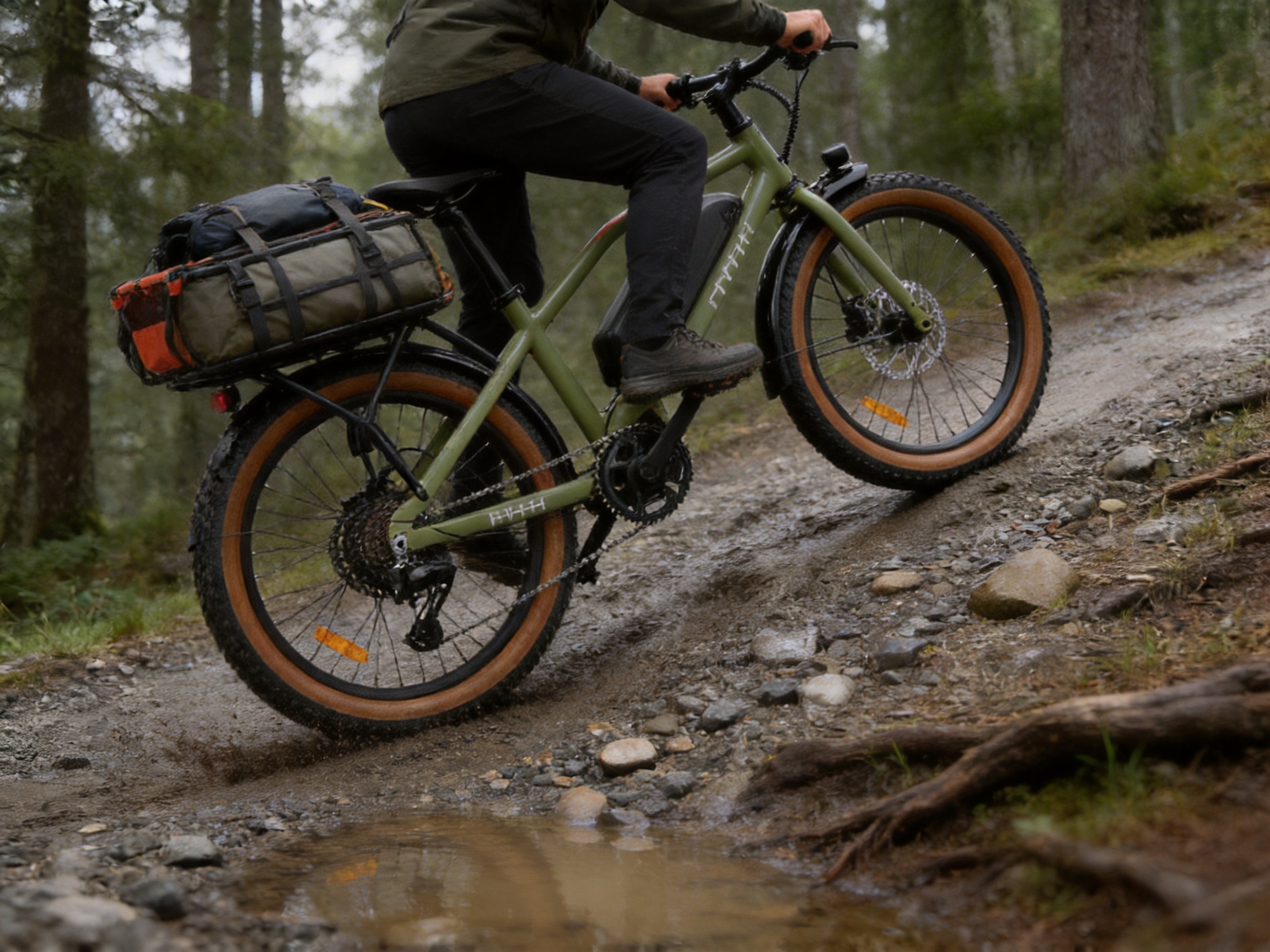
Stopping a loaded cargo bike requires more braking authority than stopping a lightweight commuter bicycle. The ESV1 uses Tektro hydraulic disc brakes, a system well suited to cargo applications because hydraulic actuation can provide strong and consistent braking with relatively low hand effort.
Hydraulic disc brakes also perform well in wet conditions compared with many traditional rim-brake arrangements. Since the braking surface is located at the hub rather than on the wheel rim, mud, rain, and rim contamination have less direct effect on braking response. Riders should still inspect pads, rotors, hoses, and fluid systems regularly, particularly if the bike is used on muddy trails or transported frequently.
Braking technique matters as much as hardware. With a front cargo load, the rider should apply both brakes progressively and maintain a stable body position. Sudden braking on loose ground can cause a tire to lose traction. On a descent, controlling speed early is generally safer than waiting until the bike is moving too quickly. The hydraulic system provides the capability, but the rider remains responsible for selecting a safe speed and route.
The wide 2.4-inch tires complement the brakes by supporting traction. Their larger volume can absorb some small surface irregularities and reduce the harshness transmitted through the frame and cargo. Correct tire pressure is essential. Excessive pressure may reduce grip on loose surfaces, while insufficient pressure can increase the risk of rim impacts, tire damage, and imprecise steering when heavily loaded.
The different front and rear wheel sizes also contribute to the bike’s overall geometry. A compact front wheel helps place the cargo platform close to the rider, while the larger rear wheel supports efficient rolling. This type of arrangement is common in practical cargo-bike design because it balances loading height, stability, and maneuverability.
The performance of a cargo bike depends heavily on the frame and on the consistency of the manufacturing process. A motor, battery, brakes, and tires cannot compensate for poor alignment, weak joints, inadequate load paths, or inconsistent quality control. The ESV1’s 6061 T4T6 aluminum alloy frame indicates a material and heat-treatment approach commonly used for durable bicycle structures.
Aluminum frame production typically involves carefully formed tubes, welded joints, controlled alignment, surface preparation, and finishing. The exact manufacturing sequence used for a particular production batch is not specified in the supplied materials, so it would be inappropriate to claim unverified factory methods. However, the frame specification itself points to the importance of engineering around strength, stiffness, corrosion resistance, and manageable mass.
A cargo bike frame must transfer several types of force:
The rider and cargo create vertical loads that act through the wheels, fork, frame, and cargo supports.
Pedaling and motor assistance create longitudinal and torsional forces through the bottom-bracket and rear-triangle areas.
Braking produces forces that travel from the tires through the fork, frame, brake mounts, and wheel assemblies.
Uneven terrain creates repeated impact and vibration, especially when the bike is carrying equipment.
Steering inputs act through the front cargo structure and fork, making front-end stiffness and alignment important.
Designing for these forces requires more than simply increasing tube thickness. Engineers must consider geometry, joint placement, weld accessibility, load distribution, fatigue behavior, and serviceability. A well-designed cargo frame distributes stress across multiple structural members instead of concentrating it in a small number of vulnerable points.
Atmose describes itself as combining American product thinking with European design aesthetics and as maintaining an international design and research-and-development team based in Paris. That combination can be valuable in cargo-bike development because the product must meet both practical and lifestyle expectations.
American utility-oriented thinking can emphasize function, versatility, and real-world durability. European design influence may bring attention to compact dimensions, visual integration, urban compatibility, and refined everyday usability. The ESV1 reflects these priorities through its adventure-focused cargo capacity, compact stated width, folding front basket, and integrated electric drivetrain.
The company also identifies its origins in MOTIV, an established American beach cruiser brand with manufacturing experience and a mature supply chain. This background suggests a foundation in bicycle product development, supplier coordination, and market-oriented design. Atmose further states that ATMOSE BIKES INC. was founded in Long Beach, California, in 2023, followed by the establishment of ATMOSE SASU in France in 2026.
For a cargo bike, a mature supply chain can support more consistent access to frames, motors, batteries, drivetrain parts, braking systems, tires, and finishing components. It can also help a manufacturer coordinate compatibility across systems. The value of such coordination is visible in a model like the ESV1, where the cargo frame, mid-drive system, 11-speed drivetrain, hydraulic brakes, and wheel sizes must work together as one complete vehicle.
Advanced manufacturing should not be understood only as the use of expensive machinery. It also includes design verification, controlled assembly, repeatable specifications, component traceability, inspection, and the ability to improve a product based on field feedback. These process strengths are especially important for cargo bikes because they operate under higher loads and more varied conditions than ordinary leisure bicycles.
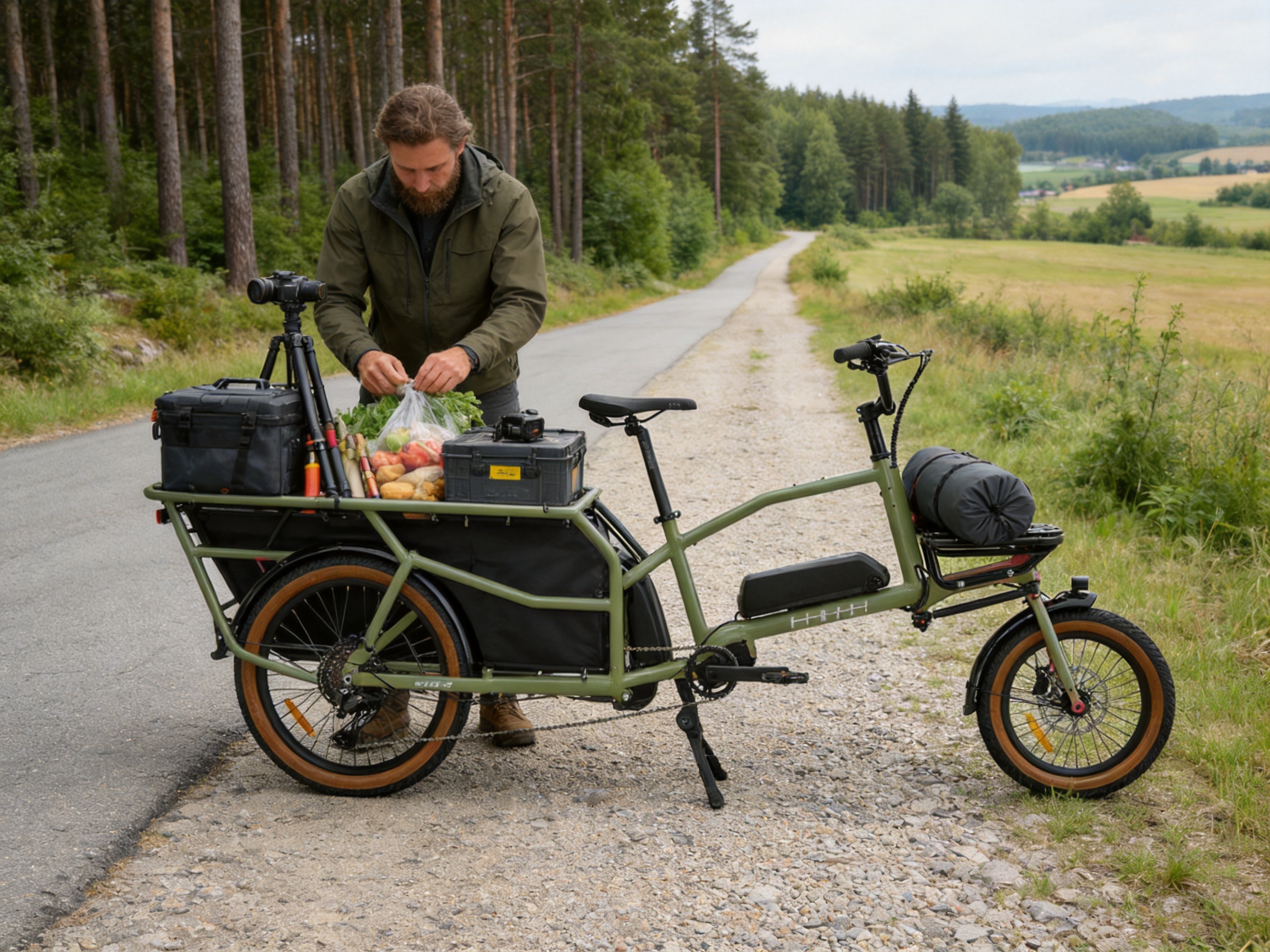
The ESV1’s advantages become clearer when it is compared with different categories of competing bicycles. The comparison below is based on design priorities rather than claims that every competing model performs identically.
| Category | Typical Strength | Common Limitation | ESV1 Differentiation |
|---|---|---|---|
| Standard commuter e-bike | Light weight, easy urban handling, simple storage | Limited room for bulky outdoor equipment | Oversized front basket and high cargo orientation |
| Longtail cargo bike | Rear passenger or pannier capacity | Long rear profile and less convenient access to front-loaded equipment | Broad front cargo deck with visible, accessible storage |
| Large box cargo bike | Very high enclosed cargo volume | Greater size, storage demands, and potentially less flexibility for irregular loads | More compact stated width and folding front basket |
| Light touring e-bike | Efficient personal travel with moderate luggage | Not designed for heavy or bulky cargo | 170-kilogram stated maximum load and utility-focused frame |
| Basic utility e-bike | Affordable everyday carrying ability | May use smaller racks, narrower tires, or less specialized climbing support | Mid-drive system, 11-speed gearing, wide puncture-resistant tires, and hydraulic brakes |
| Off-road bicycle with accessories | Trail-oriented geometry and equipment flexibility | Accessory racks may not be designed for large front loads | Cargo platform is integrated into the product concept |
One of the ESV1’s strongest competitive advantages is integration. A conventional bicycle can be equipped with a front rack, bags, wider tires, and an electric conversion system, but the result may involve compromises in steering, wiring, load support, and component compatibility. The ESV1 is designed from the beginning as a cargo e-bike, allowing its main systems to be selected around the requirements of loaded riding.
Its second major advantage is the balance between capacity and footprint. Large box bikes can carry more enclosed cargo, but they may be difficult to store, transport, or use on narrow trails. The ESV1’s approximately 750-millimeter width is still substantial compared with a standard bicycle, but it remains practical for many urban lanes, paths, gates, and storage areas.
The third advantage is its adventure orientation. Many cargo bikes are optimized for school runs, grocery shopping, or commercial delivery. Those are useful applications, but the ESV1 adds features that make sense for outdoor travel: puncture-resistant tires, hydraulic brakes, a high-torque mid-drive configuration, and a front platform designed for camping equipment.
The Samsung 36-volt, 15-amp-hour battery is listed at 540 watt-hours. This is a meaningful capacity for a cargo bike, but range should always be planned conservatively. The more weight carried, the more energy is required to accelerate and climb. Soft ground, headwinds, cold temperatures, frequent stops, and high assistance levels can all reduce the distance available from a single charge.
Adventure riders should plan routes around charging opportunities rather than relying only on an optimistic maximum-range estimate. Before a trip, the rider should consider total elevation gain, surface conditions, expected weather, cargo weight, and whether a return journey must be completed without charging. A portable charger may be useful where appropriate, but it should be protected from moisture and transported in a way that avoids damage.
Battery care also affects long-term performance. The battery should be charged with the approved charger, kept within the manufacturer’s recommended temperature range, and stored according to the supplier’s instructions when the bike will not be used for an extended period. Riders should avoid exposing the battery to unnecessary heat, severe impact, or standing water.
Efficient riding can extend practical range. Use lower assistance when riding on level ground, shift to an appropriate gear before climbing, maintain correct tire pressure, and avoid carrying unnecessary items. Smooth acceleration is generally more efficient than repeated hard starts. Because the ESV1 uses a multi-speed drivetrain, the rider has more opportunities to match gearing and assistance to the terrain.
An adventure cargo bike must be enjoyable to ride when it is not carrying a full camping load. If the bicycle is difficult to maneuver, awkward to park, or frustrating to load, owners may use it less often. The ESV1’s design attempts to retain everyday usefulness through a relatively compact cargo-bike layout and folding basket.
At approximately 1,910 millimeters long, 750 millimeters wide, and 1,060 millimeters high, the bike is larger than a normal city bicycle but not necessarily as imposing as the longest box-bike formats. Riders should measure storage doors, elevators, vehicle racks, and tight passages before purchase. The stated dimensions are especially important for customers who plan to keep the bicycle indoors or transport it in a van.
The low front-wheel diameter can make the cargo area easier to access and may help the rider manage the bike at low speed. The larger rear wheel supports normal riding efficiency and can roll over minor surface irregularities more smoothly than a small wheel. The result is a layout suited to controlled, practical travel rather than high-speed road racing.
Cargo stability contributes directly to comfort. When equipment is properly secured, the rider does not need to compensate constantly for shifting weight. The front basket’s broad dimensions can help organize cargo so that bags do not hang unpredictably from narrow racks. This also makes loading more repeatable: riders can develop a familiar arrangement for camping or work equipment.
Visibility is another advantage of front cargo placement. A rear load can be difficult to monitor, while a front platform remains within the rider’s field of view. The rider can quickly check whether straps remain tight or whether a bag has moved. This does not eliminate the need for pre-ride inspection, but it makes ongoing awareness easier.
Reliability depends on both product design and maintenance behavior. The ESV1 is equipped with components selected for demanding utility use, but no cargo bike can remain dependable without regular inspection.
The chain and drivetrain should be cleaned and lubricated according to riding conditions. Mud and dust can accelerate wear, particularly when the motor assists the rider under high load. The rider should check shifting performance and replace worn chains or sprockets before poor engagement creates additional damage.
Hydraulic brakes require inspection of pad thickness, rotor condition, lever feel, and hose integrity. A soft lever, unusual noise, vibration, or reduced braking power should be addressed promptly. Because the bike may be used on wet or muddy routes, cleaning should be performed without forcing water into sensitive bearings, electrical connectors, or the battery interface.
Tire pressure should be checked before loaded trips. Riders should inspect the tread and sidewalls for cuts, embedded debris, bulges, or other damage. The higher the load, the more important correct inflation becomes. A puncture-resistant tire reduces risk but does not remove the need for inspection.
The cargo basket and its mounting points deserve special attention. Screws, hinges, supports, and straps can loosen under repeated vibration. Before an adventure ride, the rider should confirm that the folding mechanism is locked in the intended position and that cargo cannot interfere with the front wheel or steering assembly.
Battery contacts and electrical connections should be kept clean and dry. Any unusual motor noise, intermittent assistance, error indication, or heat should be investigated through an authorized service channel. Proper service is not merely about preserving performance; it protects the rider and reduces the possibility of a minor issue becoming a major failure far from home.
The ESV1 is particularly suitable for riders who want one electric bicycle to perform several roles. A weekend explorer may use it for camping and gravel-road travel. A rural resident may use it for errands and equipment transport. A photographer, angler, gardener, or field technician may appreciate the ability to carry bulky tools without a trailer. A city rider may use the bike for shopping during the week and outdoor travel on weekends.
It is also appropriate for buyers who value an integrated solution. Instead of assembling a standard e-bike with aftermarket racks, wide tires, upgraded brakes, and a larger battery, the customer receives a model developed around cargo transport from the beginning.
The bike may be less suitable for someone seeking an extremely light bicycle, a compact folding commuter, or a high-speed road machine. Its cargo capacity and structural equipment naturally add mass and size. It should also not be treated as an unrestricted off-road motorcycle. Riders must respect local electric-bicycle regulations, trail rules, load limits, and environmental requirements.
People who regularly carry children should verify whether the specific configuration includes approved passenger seating, foot protection, restraints, and other required safety equipment. The supplied product information emphasizes adventure cargo storage rather than child transportation. The front basket should not be used as an improvised passenger compartment.
The ESV1 is an adventure-oriented electric cargo bike designed to carry camping gear, outdoor equipment, tools, and other bulky loads. Its oversized front folding basket is the central feature, supported by a mid-drive motor, wide puncture-resistant tires, hydraulic disc brakes, and a high stated maximum load.
The supplied specification lists a maximum load of 170 kilograms. Riders should confirm how the manufacturer defines this limit and include the rider, cargo, accessories, and any additional equipment when calculating total weight. The front basket itself should be loaded according to its structural and safety guidance.
A mid-drive motor works through the bicycle’s gearing. This can provide useful climbing support when the bike is heavily loaded because the rider can select a lower gear for steep terrain. The ESV1 uses a Starunion CM2503 mid-drive system rated at 250 watts in the supplied information.
The bike is listed with a Samsung 36-volt, 15-amp-hour lithium battery, corresponding to approximately 540 watt-hours. Actual range depends on rider weight, cargo, terrain, assistance level, weather, tire pressure, and riding style.
Its puncture-resistant tires and Tektro hydraulic disc brakes are appropriate features for wet or muddy riding. However, riders should reduce speed on slippery surfaces, inspect the bike after muddy trips, maintain braking components, and avoid routes beyond their experience or the bicycle’s intended limits.
The front folding basket is listed at approximately 470 millimeters long, 470 millimeters wide, and 375 millimeters high. Cargo should be distributed low, secured firmly, and kept clear of the wheel, steering components, and brake lines.
Yes. The product information identifies it as a front folding basket. Folding the structure can make storage and everyday use more convenient when the full cargo volume is not needed.
The ESV1 uses a Shimano 11-speed Cues drivetrain. The wide range of gears helps the rider adapt between steep climbs, flat roads, loaded travel, and changing outdoor surfaces.
The frame is made from 6061 T4T6 aluminum alloy. This material is commonly used in bicycle frames because it combines strength, corrosion resistance, stiffness, and manageable weight when properly engineered and manufactured.
For some short trips, errands, and outdoor journeys, it can reduce the need for car use. It is not a universal replacement for a motor vehicle, especially for long-distance travel, extreme weather, very large loads, or routes without suitable cycling access. Its greatest value is as a practical, efficient tool for local mobility and exploration.
Owners should maintain tire pressure, inspect tires and cargo mounts, clean and lubricate the drivetrain, check hydraulic brake condition, protect electrical components from unnecessary water exposure, and follow the manufacturer’s battery and service recommendations.
The ESV1 is designed around cargo use from the beginning. Its large integrated front basket, high stated load rating, mid-drive system, 11-speed gearing, wide puncture-resistant tires, and hydraulic brakes are selected to work together for loaded travel. A normal e-bike with an added rack may not offer the same structural integration or cargo volume.
The Atmose Model V ESV1 is a specialized electric cargo bike for riders who want to carry substantial equipment beyond ordinary urban errands. Its defining advantage is the integration of an oversized front folding basket with a capable electric drivetrain and a chassis designed for practical load carrying.
The product’s 6061 T4T6 aluminum alloy frame provides a suitable foundation for a durable utility bicycle. The 250-watt Starunion mid-drive system and Shimano 11-speed Cues drivetrain are well matched to climbing and loaded travel. The 540-watt-hour Samsung battery offers useful energy capacity, while the Tektro hydraulic disc brakes and wide puncture-resistant tires support control on changing surfaces.
Compared with a conventional commuter e-bike, the ESV1 provides substantially more cargo utility. Compared with a large box bike, it may offer a more manageable footprint and greater flexibility for irregular outdoor equipment. Compared with a standard bicycle fitted with accessories, it offers a more integrated approach in which the frame, cargo area, motor, gearing, tires, and brakes are developed around the same purpose.
Atmose’s stated combination of American product development, Paris-based design and research activity, manufacturing experience, and international supply-chain coordination further supports the model’s positioning. The company’s emphasis on practical, reliable, and enjoyable mobility is reflected in a bicycle that aims to make adventure equipment easier to transport without turning every trip into a logistical challenge.
The ESV1 is not intended to be the smallest, lightest, or fastest bicycle in every category. Its purpose is more useful than that: to provide a dependable platform for carrying real equipment across a mixture of urban roads, gravel paths, rural tracks, and outdoor routes. For riders who want to explore farther, pack more effectively, and rely less on a car for short adventure journeys, that combination can be a compelling alternative.
Atmose product specification sheet for the Model V ESV1 Adventure Cargo Bike.
Atmose product description and technical information for the oversized front camping rack.
Shimano technical information concerning Cues bicycle drivetrain systems.
Tektro technical literature concerning hydraulic disc-brake systems.
General bicycle engineering references concerning 6061 aluminum alloy frame construction.
General electric-bicycle maintenance guidance concerning lithium batteries, drivetrain care, tire pressure, and hydraulic braking systems.
General cargo-bicycle design references concerning load distribution, frame geometry, braking performance, and utility-bike stability.
Nov 27, 2026
Nov 25, 2026
Nov 21, 2026


info@atmosecargobike.com

200 rue de la Croix Nivert 75015 Paris

Custom Electric Bakfiets
 English
 Français
 Deutsch