Oct 20, 2026
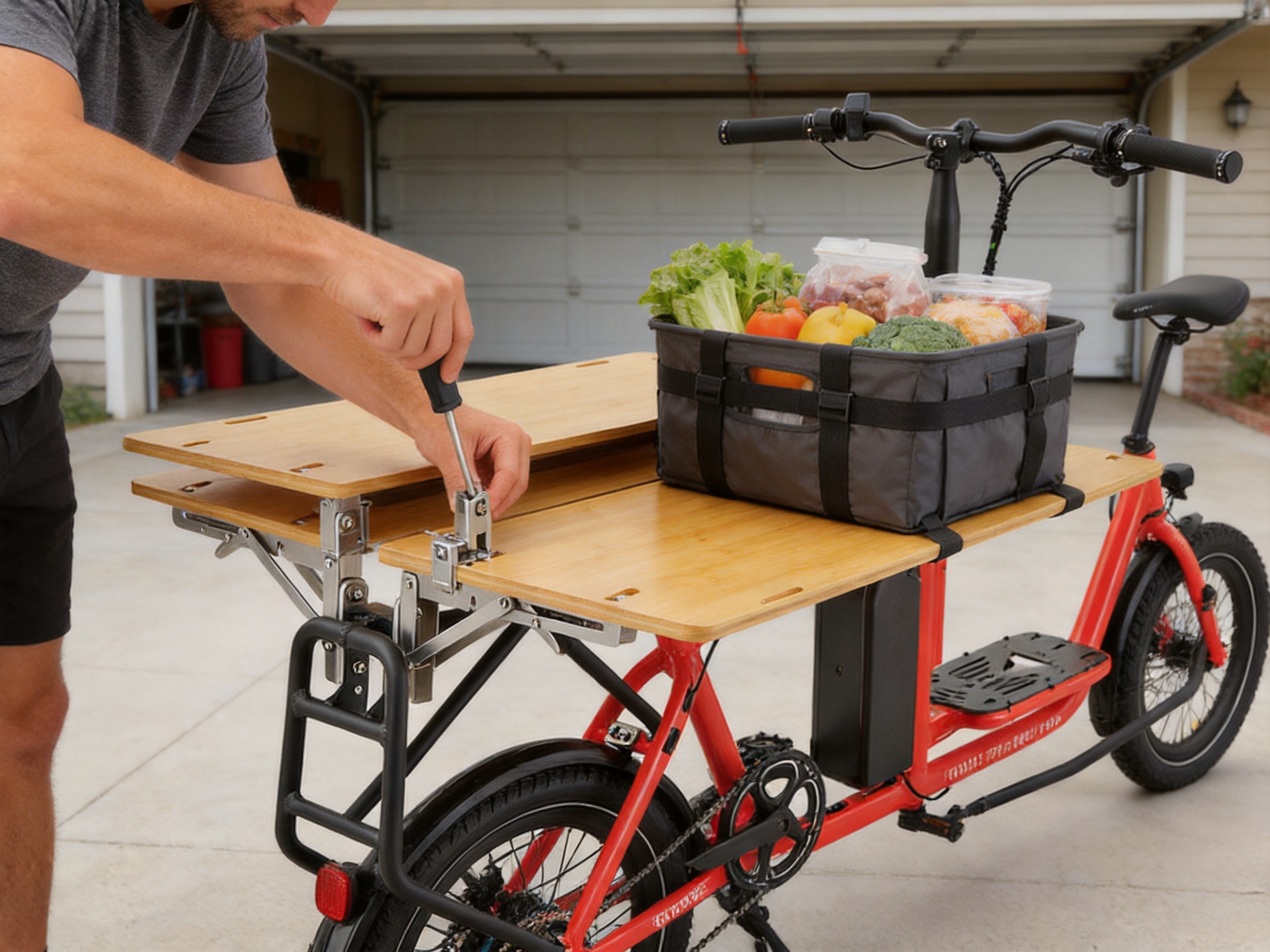
Urban cargo bikes are increasingly used for more than family transportation, grocery shopping, and parcel delivery. They are also becoming mobile business tools for independent sellers, market traders, caterers, florists, food entrepreneurs, and small retailers. A compact electric cargo bike can travel through streets that are difficult for vans, park close to customers, and operate with lower energy consumption than a motor vehicle. However, a standard cargo bike is not always ready to function as a practical sales or presentation platform. Riders may need a stable surface for product display, insulated food containers, sample boxes, baskets, or small retail equipment.
The Bamboo Folding Deck Kit for the Urban Companion Cargo Bike, Model Q, addresses this need with a removable, foldable front cargo platform. Measuring 33.5 by 24.0 inches, or 85 by 61 centimeters, the deck creates a broad working surface while preserving the compact character of the underlying electric cargo bike. Its natural bamboo deck is combined with a powder-coated steel support frame, stainless steel hinges, and locking folding brackets. Together, these components create a platform intended for mobile vending, pop-up retail, cargo transport, and everyday utility.
The kit is designed around a simple principle: one bicycle should support several different activities without requiring a permanent conversion. A rider can use the bike for ordinary commuting, fold or remove the platform when appropriate, and then configure the front cargo area for a sales activity or delivery task. This flexibility is particularly valuable for small businesses that cannot justify a dedicated vending vehicle or for households that use the same cargo bike for work and personal transportation.
Rather than treating the cargo deck as a decorative accessory, the design presents it as a working system. The deck provides a visible and usable surface, the steel frame carries the structural role, the hinges support folding, and the anchor points help secure straps, banners, and display accessories. This coordinated design gives the Model Q a broader range of practical uses while maintaining a manageable footprint for urban streets.
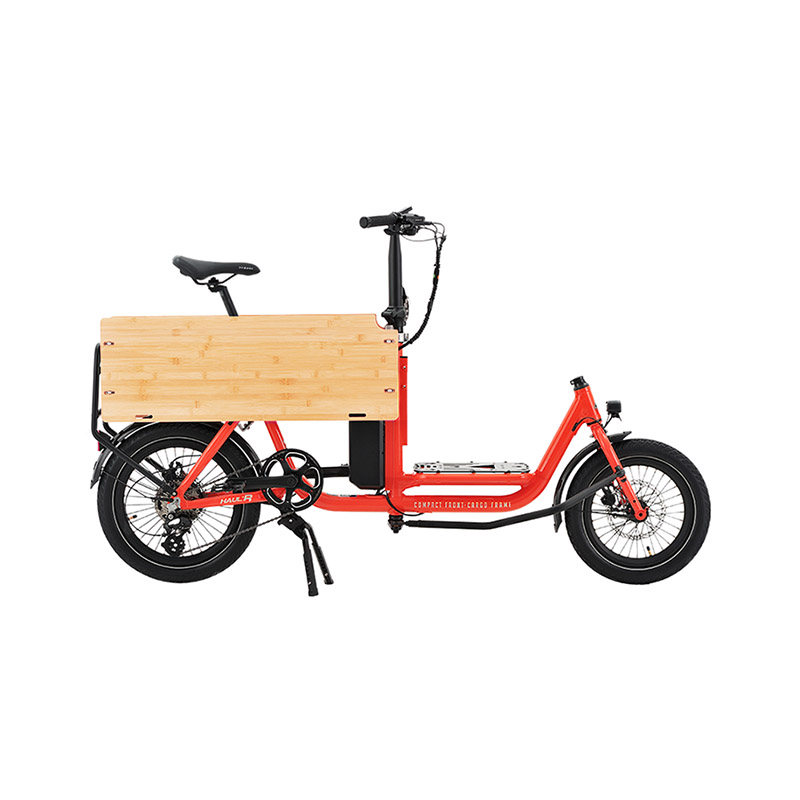
Bamboo Folding Deck Kit 33.5x24in for Model Q E-Cargo Bike Street Vending
The product consists of a natural bamboo deck supported by a powder-coated steel frame. The platform measures 85 by 61 centimeters, offering a rectangular working area suitable for merchandise trays, food containers, coolers, sample boxes, delivery totes, and similar equipment. The dimensions are large enough to support a meaningful display but still proportioned for a compact front-loading cargo e-bike.
The frame construction is based on powder-coated steel. Powder coating provides a finished protective layer over the steel surface and contributes to a clean appearance suitable for commercial use. The support structure is intended to provide a stable base for the bamboo deck, while the folding brackets allow the platform to be stored flat when it is not in service.
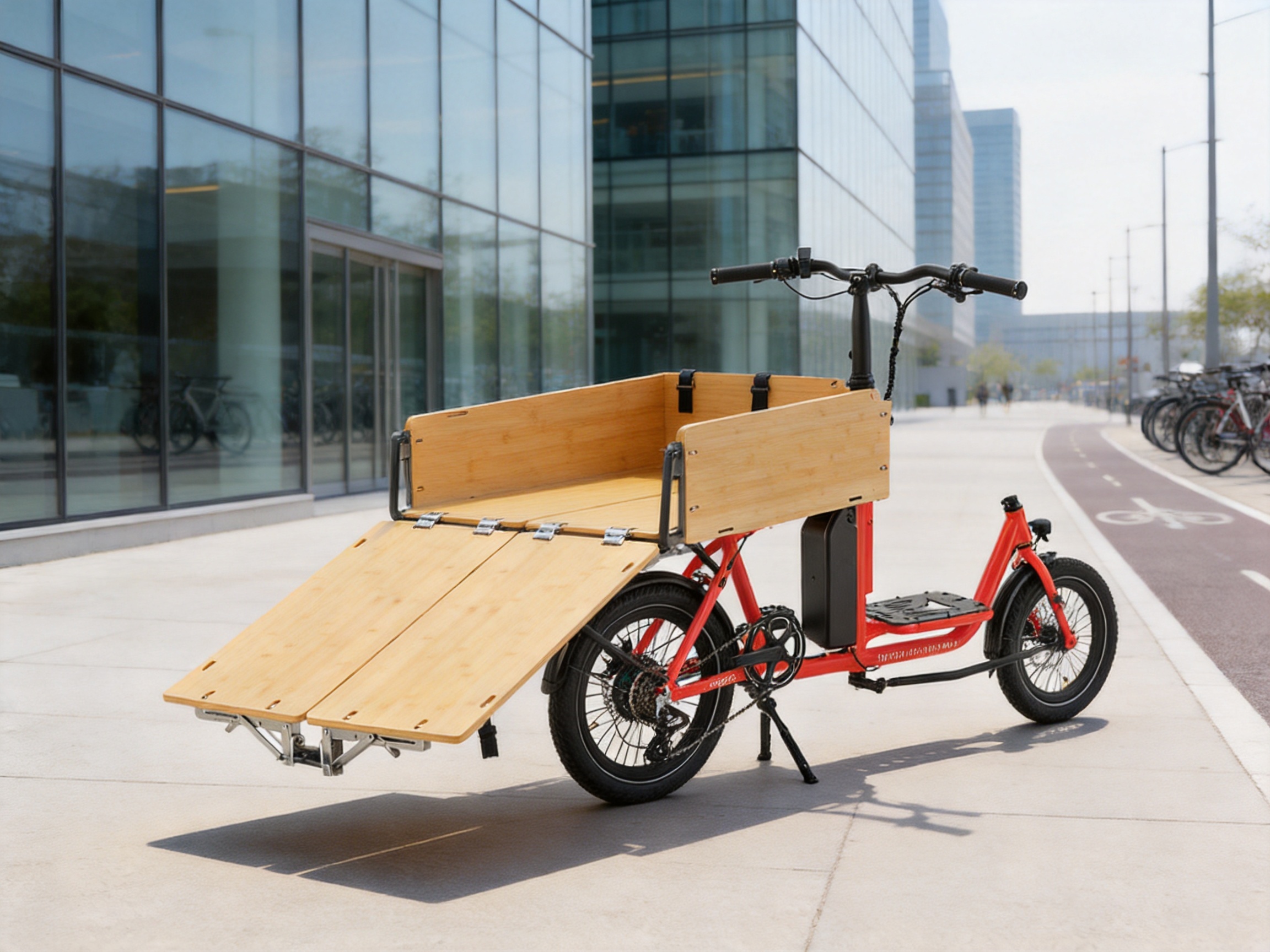
Stainless steel hinges connect the folding sections and are selected for their resistance to corrosion and their suitability for repeated movement. The locking folding brackets are important because a folding deck must do more than collapse conveniently. It must also remain properly supported when opened. The locking mechanism helps hold the deck in its working position, although users should always confirm that the brackets are fully engaged before loading or riding.
The kit uses a bolt-on installation method and is designed not to require permanent modification of the bicycle. This means the bike frame does not need to be cut, drilled, or structurally altered for the conversion described in the product information. A reversible mounting approach is valuable to owners who may want to preserve the original configuration of the Model Q or change between personal and commercial use.
Integrated strap and banner anchor points add another layer of utility. Straps can help stabilize containers, trays, or transport boxes, while banner points can support basic visual branding or pricing information. These mounting points also help reduce the temptation to improvise attachment methods that could interfere with steering, braking, lighting, or rider visibility.
| Feature | Specification or Function | Practical Benefit |
|---|---|---|
| Deck dimensions | 85 × 61 cm / 33.5 × 24.0 in | Provides a useful display and cargo surface |
| Main deck material | Natural bamboo | Creates a distinctive, lightweight-looking presentation surface |
| Support frame | Powder-coated steel | Provides structural support and a finished protective surface |
| Hinges | Stainless steel | Supports repeated folding and resistance to corrosion |
| Folding hardware | Locking folding brackets | Helps secure the deck in its open position |
| Installation | Bolt-on, without permanent bike modification | Supports reversible use and easier configuration changes |
| Storage format | Flat-folding design | Reduces the space required when the deck is not in use |
| Attachment points | Strap and banner anchors | Supports cargo restraint and simple visual merchandising |
| Recommended applications | Vending, pop-up retail, cargo transport | Expands the range of uses for the Model Q |
A permanent vending body can be useful for a dedicated commercial vehicle, but it is not always appropriate for a compact electric cargo bike. A fixed structure may add weight, make storage more difficult, reduce everyday flexibility, and limit the bike to one commercial purpose. The folding approach offers a different balance. It provides a working surface when needed and a more compact arrangement when the bike is being used for commuting or ordinary transport.
For a small operator, this adaptability can affect the economics of a business. One bike may serve as a delivery vehicle during the week, a market display on weekends, and a personal transport solution between events. The owner does not necessarily need to purchase a separate trailer or a second commercial vehicle. The platform can support seasonal activities, temporary promotions, and occasional sales without forcing a permanent change to the bicycle.
The flat-folding format is also relevant to storage. A shop owner may need to keep the bike inside a narrow retail space, shared workshop, apartment garage, or secure bicycle room. When the deck is not deployed, folding it flat can make the overall arrangement easier to manage. This is especially useful in dense urban environments where every square meter has a practical cost.
The platform can also help separate transport and presentation. Standard cargo boxes are excellent for protecting goods during movement, but they may not be ideal for displaying products to customers. A flat deck can support trays, shallow bins, coolers, baskets, or portable display elements. This allows the user to arrive with products protected and then create a more open arrangement at the point of sale.
A basic flat rack may provide a cargo surface, but it often lacks a dedicated folding system, locking hardware, and integrated presentation features. The Bamboo Folding Deck Kit is designed specifically around the transition between transport and public-facing display. Its dimensions provide a defined rectangular area, while the anchor points help the user organize the surface instead of treating it as an unstructured platform.
The presence of folding brackets is another distinction. A permanently fixed rack can remain in the way when it is not needed. By contrast, a foldable deck is intended to change configuration. This gives the user greater control over the bike’s daily form and makes the accessory more suitable for owners who have mixed personal and commercial requirements.
A dedicated vending box can offer enclosed storage and visual identity, but its fixed shape may make it less suitable for different product categories. A coffee seller, florist, produce vendor, and craft seller may all need different arrangements. The bamboo platform allows the operator to choose the containers, trays, baskets, signage, and insulation systems that fit the business.
This modular approach is particularly useful for early-stage businesses. A new vendor may begin with several storage crates and a banner, then add an insulated box, product risers, or display fixtures later. The deck serves as a stable base without forcing the operator to commit to a single interior layout.
Permanent bicycle modifications can affect resale value, warranty discussions, maintenance access, and future configuration. The bolt-on concept reduces these concerns by avoiding a permanent alteration to the vehicle structure. Owners can adapt the bike for a specific project and return it to a more conventional cargo arrangement later.
A reversible accessory also has value for shared use. One family member may use the Model Q for school or grocery transportation, while another may use it for local vending. A system that can be folded or reconfigured is more practical than an accessory that permanently defines the bicycle’s purpose.
Natural bamboo gives the deck a warmer, more approachable appearance than a purely industrial metal surface. This can be valuable in retail environments where the vehicle itself contributes to the customer experience. A bamboo surface can complement flowers, baked goods, fresh produce, coffee equipment, handmade products, and other goods that benefit from a natural or crafted presentation.
The visual character of the deck does not replace the need for safe loading and secure attachment, but it can make the mobile stall feel more inviting. For independent sellers, the bicycle becomes part of the brand environment. A clean, organized platform may help communicate care, quality, and practicality before a customer has even examined the products.
The product information emphasizes a low-mounted platform. Keeping the cargo area close to the ground can help maintain a lower center of gravity than a high-mounted display arrangement. In practical terms, a lower load position may make the bike feel more predictable when starting, stopping, or maneuvering at low speed. It can also make it easier for a rider to reach products without lifting them to a high shelf.
However, the deck should not be treated as permission to exceed the bicycle’s applicable weight limits. The kit information does not specify a separate maximum load rating. Users should follow the Model Q bicycle’s official cargo capacity, the instructions supplied with the kit, and any applicable local regulations. The weight of the deck, support frame, containers, goods, and accessories should be considered together.
Load distribution is as important as total weight. Heavy items should be placed low and close to the center of the platform whenever possible. Uneven loading may affect steering, braking, and handling. Tall items can catch wind or interfere with visibility. Loose items may shift during acceleration or over uneven surfaces. Proper straps and suitable containers should be used, and the rider should test the bicycle at low speed after every major configuration change.
The locking folding brackets should be checked before each ride. The deck should be fully opened, the hinges should be positioned correctly, and the support hardware should be visibly engaged. A pre-ride check should also confirm that straps, banners, boxes, and coolers do not obstruct the front wheel, steering movement, brakes, lights, reflectors, or the rider’s view.
These considerations do not reduce the value of the product. Instead, they explain how the platform should be integrated into responsible cargo-bike operation. A well-designed accessory performs best when its structural features are matched with disciplined loading practices and regular inspection.
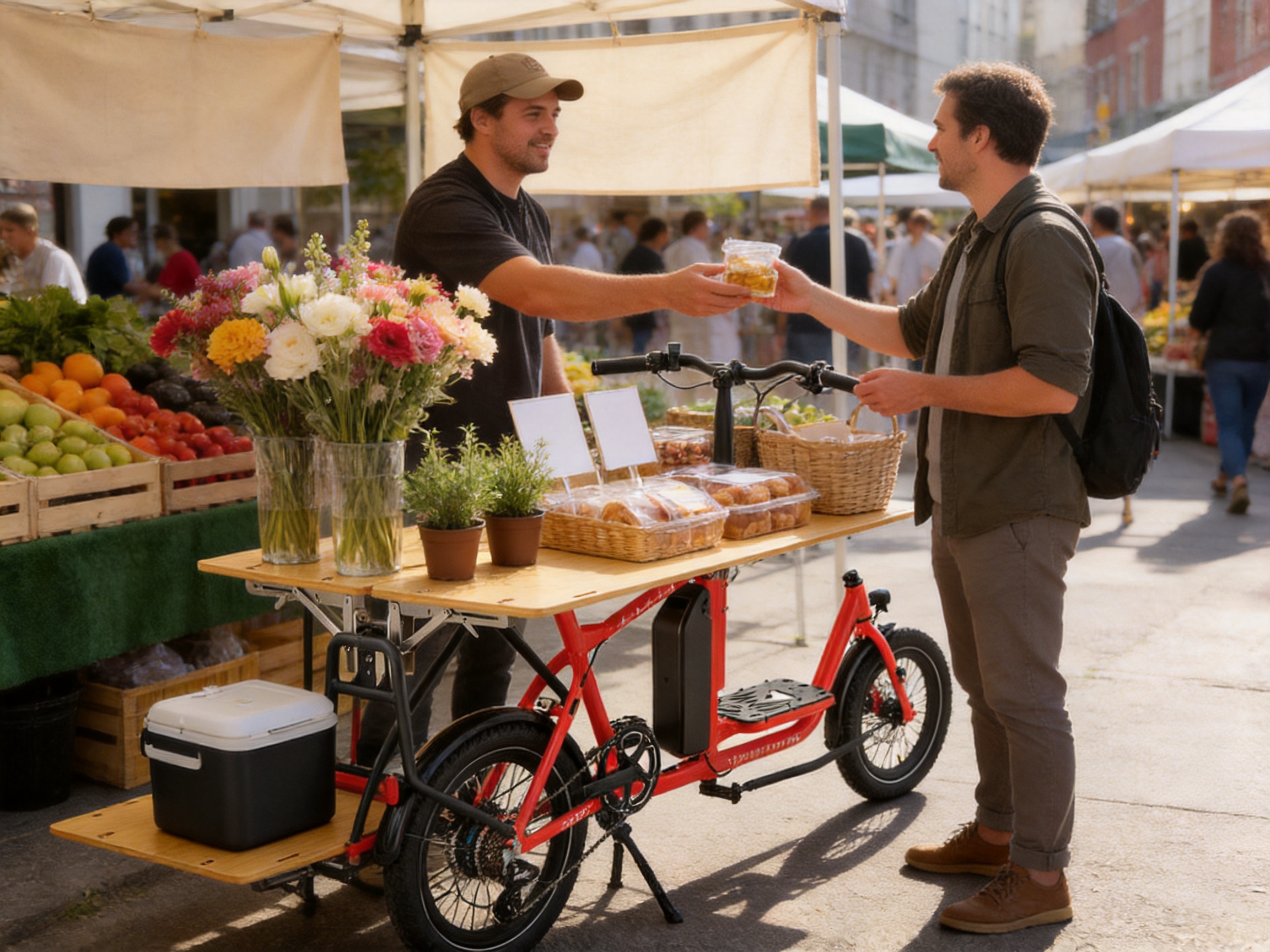
The 85 by 61 centimeter surface can support a compact arrangement of food containers, takeaway packaging, sample trays, napkins, menus, and payment equipment. A coffee operator may use the deck as a base for an insulated beverage carrier, cups, flavor additions, and small display items. The platform does not claim to replace a complete commercial kitchen or beverage preparation system, but it can help transport and present equipment used for a limited mobile service model.
Food sellers should select containers that are stable, sealed, and suitable for the relevant food-handling requirements. Hot liquids and food products should be secured against tipping. The natural bamboo deck should be protected from spills and cleaned according to appropriate care instructions. Users should also separate food-contact surfaces from general cargo surfaces when necessary.
Florists and plant sellers can use the platform to transport buckets, wrapped bouquets, small planters, and seasonal arrangements. The open deck makes it easier for customers to see products than a fully enclosed box would. A banner anchor can support a simple sign, while straps can help keep containers stable during movement.
Flowers and plants can be delicate, so the operator may place a shallow tray or removable liner over the bamboo. This can help contain water, soil, or plant debris. The platform’s value lies in its adaptable base: the vendor can select a layout that changes according to the size and fragility of the products.
Farmers, community growers, and local food producers may use the deck to carry small crates of fruit, vegetables, herbs, baked goods, or packaged products. A low platform can make loading and unloading easier, especially when the seller needs to set up quickly at a market, neighborhood event, or temporary street location.
Product weight should be distributed evenly, and crates should be restrained to prevent movement. The deck should not be overloaded simply because it offers a large surface. The best results come from combining the platform with appropriately sized containers that keep products organized and protect them from road vibration.
Craft makers can use the bicycle as a compact traveling display for candles, ceramics, textiles, artwork, accessories, books, or small household products. The deck can hold shallow boxes and trays during transport, then become the foundation for a simple open-air display. This can reduce setup time at small events and allow a seller to move between several nearby locations.
Because the platform is not tied to one merchandise category, it can support seasonal changes. A seller may present handmade decorations in winter, garden products in spring, and picnic accessories in summer. The same bike and deck can therefore support multiple revenue opportunities throughout the year.
The deck is not limited to commercial use. A household may use it to move groceries, sports equipment, parcels, picnic supplies, or other everyday cargo. When the user does not need a display arrangement, the deck can be folded flat. This helps maintain the bike’s flexibility instead of forcing the owner to remove a large fixed structure after every vending activity.
For commuters, the platform can serve as a base for a backpack, work case, delivery tote, or weather-resistant container. Straps can help stabilize the load, but cargo should always be placed so that it does not block the rider’s controls or sight lines. If the bike is used in poor weather, the owner should consider suitable waterproof bags or covers rather than assuming that the bamboo surface or steel frame alone will protect cargo from rain.
For local delivery work, the deck can support insulated containers and sample boxes. A small business may use the platform for bakery deliveries, flower orders, neighborhood grocery drops, or promotional sampling. The accessory is particularly appropriate when the operator values quick loading and unloading and does not need a fully enclosed commercial body.
Bamboo gives the visible working surface a distinctive combination of natural appearance and practical utility. In a mobile retail setting, surface appearance matters because customers see the deck at close range. A clean, well-maintained bamboo platform can provide a warmer impression than an uncoated industrial sheet or a purely utilitarian metal rack.
Users should treat natural bamboo as a material that benefits from sensible care. It should not be left permanently exposed to harsh weather without protection, and spills should be cleaned promptly. The exact care method should follow the supplied product instructions. Regular inspection can identify loose fasteners, surface damage, swelling, or other changes before they affect the platform’s usefulness.
The steel support frame performs the structural role beneath the deck. Powder coating is applied as a finished surface treatment that helps protect the steel and gives the frame a consistent appearance. It also supports the product’s suitability for repeated use in a commercial environment where the bicycle may be loaded, unloaded, folded, and stored frequently.
A coated frame is not maintenance-free. Scratches or exposed areas should be monitored, especially if the bike is used in wet or salty environments. Fasteners and connection points should be inspected periodically. Preventive maintenance is particularly important for an accessory that experiences vibration, repeated folding, and outdoor exposure.
The folding mechanism is one of the most important parts of the product. Stainless steel hinges support repeated movement and offer useful resistance to corrosion. The locking brackets provide the functional transition between a folded storage position and an opened working position.
These parts also illustrate the product’s design priorities. A folding deck is not simply a board placed on a bicycle. It is a coordinated mechanical system that must be convenient to store, stable when open, and manageable during regular use. The use of dedicated hinges and locking hardware is an advantage over improvised folding arrangements that may lack a positive support or repeatable operating method.
The company behind the product combines American product origins with European design and research-and-development activity in Paris. This international structure gives the product development process access to different perspectives on mobility, styling, urban use, and practical transportation. The company describes its approach through the philosophy of “Fun & Practical,” emphasizing usability, comfort, reliability, and riding experience.
The company’s manufacturing strength is supported by established industry experience, a mature supply chain, and ongoing product innovation. These factors are relevant to an accessory such as the Bamboo Folding Deck Kit because a successful conversion requires coordination between the bicycle platform, mounting points, frame geometry, hardware, and everyday use conditions. A cargo accessory cannot be evaluated only as an isolated piece of furniture; it must function as part of the vehicle system.
The product reflects a manufacturing process in which different material roles are clearly defined. Bamboo provides the visible deck surface. Powder-coated steel provides the supporting frame. Stainless steel is used for the hinges. Locking brackets control the folding function. Bolt-on mounting keeps installation reversible. This material separation helps the manufacturer target appearance, structural support, movement, corrosion resistance, and serviceability in the areas where each is most relevant.
Product development also appears to be guided by real use scenarios rather than by a single visual concept. The recommended applications include mobile vending, pop-up retail, and cargo transport. The integrated strap and banner anchor points show that the design team considered both transportation and presentation. The folding style shows attention to storage and configuration changes. The deck dimensions show an effort to provide meaningful working space within the proportions of a compact cargo e-bike.
The company’s background in cargo e-bikes and its continued investment in design and research support a product philosophy centered on practical mobility. Its history includes origins in California, an established relationship with an American beach cruiser brand, and the creation of a design and R&D team in France. This combination contributes to a product identity that aims to balance functional transportation with approachable design.
For commercial buyers, manufacturing strength also involves consistency and supply capability. A mature supply chain can help support repeat orders, replacement components, and wholesale requirements, although buyers should confirm availability, lead times, and after-sales arrangements for their specific market. The company’s stated experience with manufacturing and global buyers suggests an orientation toward scalable product supply rather than one-off fabrication alone.
It is important to distinguish stated strengths from specifications that have not been supplied. The available product information does not provide a formal load rating, weatherproof certification, safety certification, or detailed production tolerances. Buyers should request those details when they are essential to a particular business or regulatory application. A responsible purchasing decision combines the visible design benefits with confirmation of the technical information required for the intended use.
The kit is described as bolt-on and does not require permanent bike modification. This installation approach is a major practical benefit because it allows the owner to use the Model Q in more than one role. Before installation, the user should review the instructions, identify all supplied hardware, and confirm that the bicycle is the correct model and configuration for the kit.
Installation should take place on a stable surface with the bicycle secured. Bolts should be installed in the correct order and tightened according to the supplied instructions. If a torque specification is provided, it should be followed rather than estimated. After mounting, the deck should be opened and folded several times to confirm that the hinges move smoothly and that the locking brackets engage correctly.
The user should also examine clearance. The deck must not interfere with the steering system, front wheel, brakes, lights, cables, or rider position. Any banner or strap should remain within a safe arrangement and should not be able to enter the wheel or steering area. A short, unloaded test ride should be completed before the platform is used for business operations.
Configuration can be adjusted according to the goods being carried. A vendor may use two shallow trays for small products, one insulated container for food, or several strapped boxes for delivery work. The deck should remain as level and balanced as possible. Adjustable accessories should be attached only at secure anchor points or through suitable containers, not through fragile deck areas or moving hardware.
A mobile stall can reduce the infrastructure required for certain forms of local commerce. Instead of transporting goods in a van and assembling a full table at every location, a seller can arrive with a compact display platform that already forms part of the vehicle. This may shorten setup and departure times, particularly for small events, neighborhood markets, and short promotional stops.
The bicycle can also help a business become more visible in the community. A mobile display can travel between offices, residential areas, parks, campuses, and events. Because the Model Q is an electric cargo bike, it can be suitable for short urban journeys where a larger vehicle would be inconvenient. The deck extends this capability by allowing the vehicle to carry and present goods in a single coordinated unit.
For businesses that test new locations, the folding kit offers a lower-commitment entry point than a dedicated retail vehicle. An entrepreneur can evaluate demand, refine the product mix, and adjust the display layout before investing in a larger setup. The platform is not a guarantee of commercial success, but it creates a practical foundation for experimentation.
The visual presentation may also improve customer interaction. Products placed at a comfortable viewing height and arranged on an open surface can be easier to browse than goods hidden inside a delivery box. The banner anchors allow a simple message, price board, or business name to be displayed without requiring a large permanent sign structure.
One alternative is a separate folding table carried by the bicycle. This can provide a large surface, but it adds another item to transport and requires setup at the destination. The Bamboo Folding Deck Kit integrates the working surface with the cargo bike, reducing the number of separate components that must be carried and assembled.
Another alternative is a trailer. A trailer can offer substantial capacity, but it increases the length of the vehicle combination and may be more difficult to maneuver, store, or park in crowded urban areas. The front-mounted deck keeps the working area within the main bicycle footprint, although users must still account for the platform’s width and its effect on maneuvering.
A rigid commercial box may offer strong protection and security, but it is less adaptable to different product types. The folding bamboo platform has a more open format and allows the operator to select containers and display accessories independently. This openness can be an advantage for presentation, while a rigid box may remain preferable for goods requiring high security or weather protection.
A simple metal rack may cost less or weigh less in some circumstances, but it may not include the same combination of natural presentation, folding capability, locking brackets, and dedicated banner and strap points. The value of this kit is therefore found in the complete system rather than in the deck material alone.
Regular inspection should be part of the operating routine. The user should check the deck surface, frame, hinges, locking brackets, mounting bolts, and anchor points. Any unusual movement, noise, looseness, cracking, corrosion, or difficulty engaging the folding mechanism should be investigated before continued use.
The bamboo surface should be kept clean and dry when possible. Food residues, standing water, soil, and other contaminants should not be allowed to accumulate. If the product is used for food or plant sales, cleaning routines should be adapted to the business’s hygiene requirements and to the deck manufacturer’s care guidance.
The powder-coated frame should be cleaned with suitable methods that do not unnecessarily damage the finish. Abrasive tools and aggressive chemicals should be avoided unless specifically approved. Stainless steel hinges may require periodic cleaning and appropriate lubrication if recommended by the manufacturer. Lubricant should not be applied in a way that contaminates food or attracts excessive dirt to the folding mechanism.
When the deck is folded for storage, it should be secured so that it cannot fall or be struck by other equipment. Long-term storage in a dry, protected location can help preserve the bamboo and metal components. If the bicycle is stored outdoors, a suitable cover may reduce exposure to rain and ultraviolet light, but the user should still allow damp components to dry rather than trapping moisture under the cover.
Maintenance is especially important for commercial users because frequent daily folding and loading can produce more wear than occasional household use. A simple maintenance log can record inspections, fastener checks, cleaning, and any replacement of worn hardware. This approach helps the operator identify patterns before a small issue becomes an interruption to business operations.
The platform should be used within the limitations of the Model Q and the kit’s official instructions. Since a specific load rating is not included in the available product information, the operator should obtain the applicable capacity before planning a commercial layout. The total weight should include goods, containers, display fixtures, banners, straps, coolers, and any other accessories.
Businesses should consider the dimensions of doors, market stalls, elevators, bicycle lanes, and storage areas before selecting display equipment. A deck that works well at an open market may need a more compact arrangement for a narrow sidewalk or indoor event. Local rules may also regulate street vending, food handling, signage, parking, and the use of electric cargo bicycles.
Safety should take priority over visual presentation. A banner should not block lights or obscure the rider’s view. Display items should not extend into a path where they may contact pedestrians or other vehicles. Containers should be stable, and fragile merchandise should be packed for vibration. If a product requires temperature control, the operator should use an appropriate insulated system rather than relying on the bamboo deck or bicycle alone.
The deck is most effective when it supports a clear operating plan. Before beginning a vending route, the operator can decide how goods will be packed, where the first display items will be placed, how payments will be handled, and how unsold inventory will be protected. These practical details help turn a flexible platform into a reliable business tool.
The kit is designed for the Urban Companion Cargo Bike, identified as Model Q. Buyers should confirm the exact bicycle version, mounting configuration, and compatibility requirements before ordering or installing the product.
The deck measures 85 by 61 centimeters, or approximately 33.5 by 24.0 inches. This provides a rectangular surface for product display, food containers, sample boxes, coolers, and general cargo.
Yes. It uses a flat-folding design with stainless steel hinges and locking folding brackets. The deck can be stored in a flatter configuration when it is not being used as a display or cargo platform.
The product is described as a bolt-on kit that does not require permanent bike modification. Users should still follow the official installation instructions and use only the specified mounting hardware.
The main deck is made from natural bamboo. The support frame is made from powder-coated steel, and the folding mechanism includes stainless steel hinges and locking brackets.
It is recommended for food containers, coolers, and mobile vending applications. However, the kit is a transport and display platform, not a complete food-service system. Operators must use suitable sealed containers, follow food-safety requirements, and confirm the applicable cargo capacity.
Yes. The open surface is suitable for arrangements such as flower buckets, wrapped bouquets, small plants, produce crates, and similar goods. Containers should be secured and arranged to maintain balanced loading.
The supplied product information does not state a separate maximum load rating. Users should consult the official Model Q and kit documentation before carrying commercial loads and should include all cargo and accessories in the total weight.
The integrated points can be used to secure suitable straps and support simple banners or signs. Attachments must be arranged so that they cannot interfere with steering, wheels, brakes, lights, or rider visibility.
The folding platform is more adaptable. It provides an open working surface that can accept different trays, containers, coolers, baskets, and display accessories. It can also be folded for commuting or storage instead of permanently defining the bicycle as a vending vehicle.
The deck is intended for cargo and vending applications, but natural bamboo should receive appropriate care. Users should clean spills, avoid unnecessary prolonged exposure to moisture, and follow the manufacturer’s maintenance guidance.
The product’s modular format may be useful for small business fleets, delivery operators, event vendors, and mobile retail programs. Commercial buyers should confirm supply, compatibility, replacement hardware, load requirements, and after-sales support for their market.
The rider should confirm that the deck is properly mounted, the folding brackets are locked, the hinges are functioning, the cargo is secured, and no accessory interferes with steering, braking, lighting, wheels, or visibility. A short test ride is recommended after changing the load arrangement.
The Bamboo Folding Deck Kit gives the Model Q Urban Companion Cargo Bike a practical new role as a mobile display and transport platform. Its 33.5 by 24.0 inch surface offers meaningful room for merchandise, food containers, flowers, produce, sample boxes, coolers, and delivery equipment. The natural bamboo deck contributes a distinctive presentation, while the powder-coated steel support frame provides the structural foundation. Stainless steel hinges, locking folding brackets, and integrated anchor points complete the system.
Its most important advantage is flexibility. The kit is designed to help a rider move between commuting, cargo transport, and mobile vending without permanently changing the bicycle. Compared with a fixed box, a separate table, or a basic rack, the folding deck offers a balanced combination of reversibility, presentation, storage convenience, and configuration freedom.
The product also reflects a broader manufacturing and development philosophy. American product origins, European design and R&D activity, established industry experience, a mature supply chain, and continuous innovation support a practical approach to cargo mobility. The clearly defined use of bamboo, powder-coated steel, stainless hardware, and bolt-on mounting demonstrates attention to both appearance and function.
For vendors and small businesses, the kit can provide a lower-complexity way to test mobile retail ideas, serve local customers, and transport goods through urban areas. For private owners, it can expand the usefulness of a cargo e-bike without locking it into a single purpose. With proper installation, responsible loading, regular inspection, and suitable maintenance, the folding deck can become a durable and adaptable part of an urban mobility strategy.
1. Product specification sheet for the Bamboo Folding Deck Kit for the Urban Companion Cargo Bike, Model Q.
2. Product information covering deck dimensions, materials, folding hardware, mounting method, anchor points, and recommended applications.
3. General principles of cargo-bike loading, balance, visibility, safe attachment, and urban cycling operation.
4. General guidance on powder-coated steel maintenance and stainless steel hardware care.
5. General considerations for mobile vending, pop-up retail, food-container transport, and small-scale urban commerce.
6. Company background information concerning American product origins, European design and research activity, manufacturing experience, supply-chain development, and cargo-bike innovation.
Nov 17, 2026
Nov 03, 2026
Oct 26, 2026


info@atmosecargobike.com

200 rue de la Croix Nivert 75015 Paris

Custom Electric Bakfiets
 English
 Français
 Deutsch