Oct 04, 2026
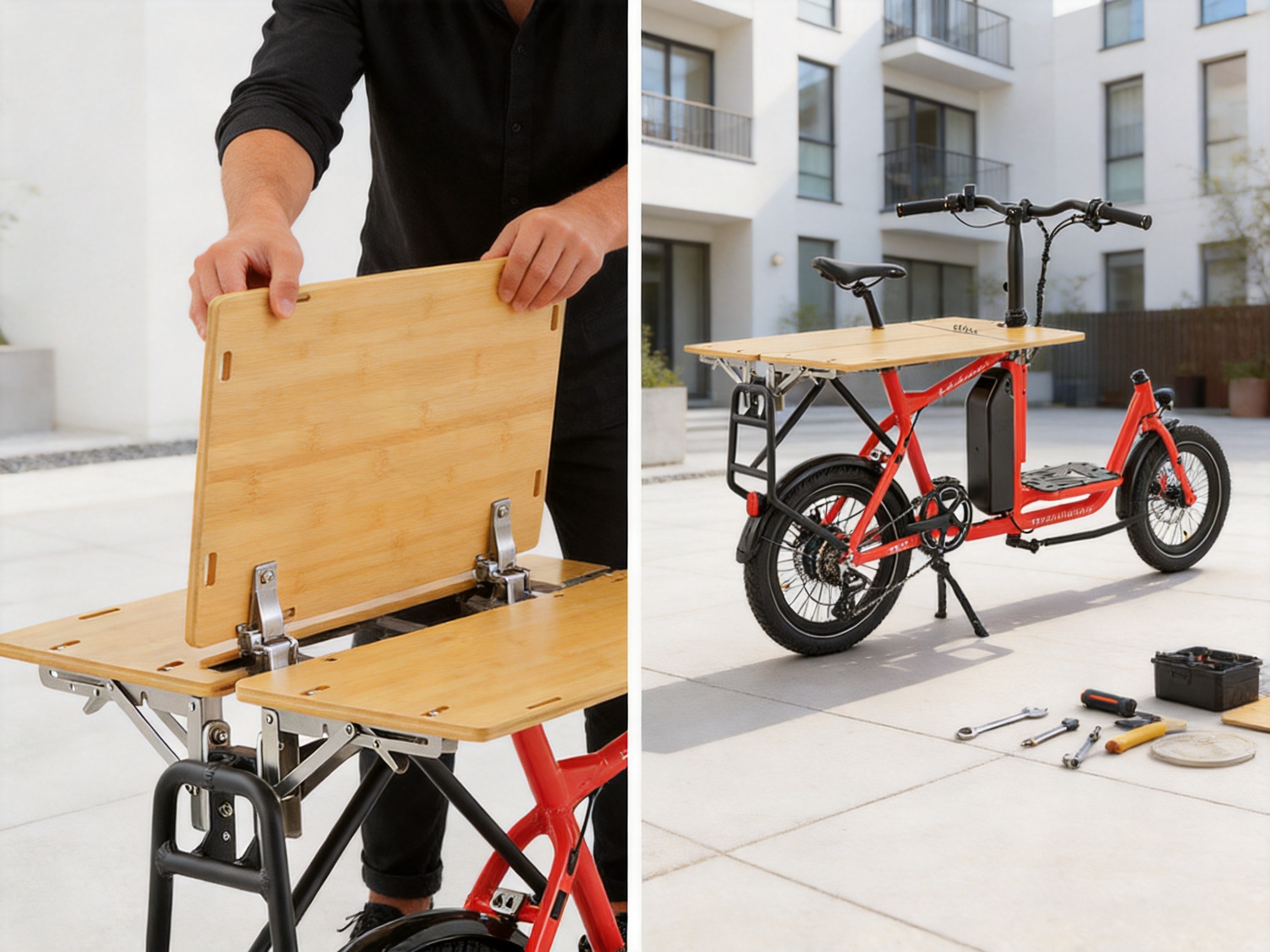
Urban cargo cycling is developing beyond the traditional role of carrying children, groceries, parcels, and daily necessities. Increasingly, compact cargo e-bikes are being used as mobile workspaces, delivery platforms, promotional vehicles, and temporary retail stands. This change creates a practical need for accessories that can transform a bicycle without permanently changing its structure or sacrificing everyday rideability. The Bamboo Folding Deck Kit, sized at 33.5 × 24.0 inches, is designed for this purpose. It converts a compatible Model Q urban companion cargo bike into a flexible platform for vending, product display, small-scale delivery, and mobile commercial activity.
The concept is straightforward but highly useful: a foldable natural bamboo deck is combined with a powder-coated steel support frame, stainless steel hinges, and locking folding brackets. When deployed, the kit creates a stable, low-mounted surface for food containers, sample boxes, coolers, trays, flowers, produce, or retail merchandise. When the platform is no longer needed, it folds flat to make the bike easier to use as a commuter or general-purpose cargo bicycle.
This combination of mobility, modularity, and visual appeal gives the platform an advantage over many fixed cargo boxes, improvised wooden boards, temporary baskets, and bulky commercial trailers. Instead of forcing a rider to choose between a dedicated vending vehicle and a conventional bicycle, the kit supports two uses in one compact system.
The kit is a bolt-on cargo platform developed for the Urban Companion Cargo Bike, Model Q. Its primary purpose is to create a practical work surface or display deck at the front of a compact front-loading cargo e-bike. The platform can support the organization of commercial goods while preserving the bike’s usefulness for everyday transportation.
With dimensions of 85 × 61 centimeters, or 33.5 × 24.0 inches, the deck provides a broad rectangular area without becoming unnecessarily oversized. The available surface is suitable for arranging several small trays, insulated containers, boxed products, promotional materials, or display accessories. It can also function as a flexible cargo floor when the rider needs to carry goods rather than present them to customers.
The kit is particularly appropriate for mobile coffee service, street food preparation support, flower sales, farmers’ market transport, craft products, neighborhood delivery, event merchandising, and short-term promotional campaigns. It is not limited to one commercial category. Its value comes from providing a stable base that users can configure according to the goods they carry and the way they interact with customers.
Unlike a permanent vending body, the folding deck does not require the bicycle to remain in commercial configuration at all times. A rider can use the bike for commuting during the morning, deploy the platform for a market or event during the day, and fold the deck afterward for ordinary cargo transport. That flexibility is important for small businesses, independent sellers, community organizations, and users who cannot justify a vehicle dedicated exclusively to vending.
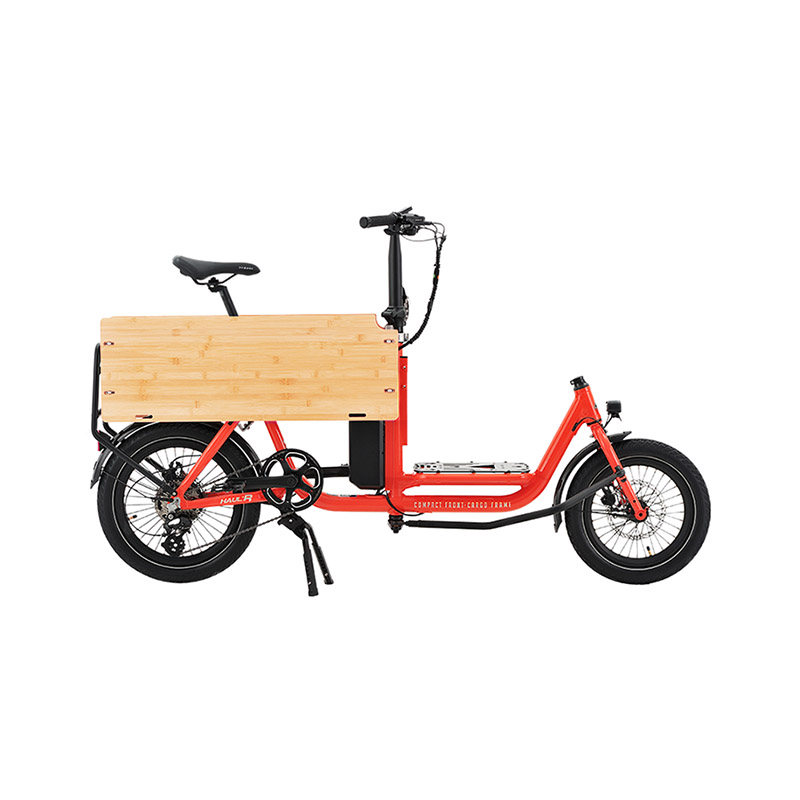
Bamboo Folding Deck Kit 33.5x24in for Model Q E-Cargo Bike Street Vending
The main deck is manufactured from natural bamboo. Bamboo offers a warm, recognizable appearance that is well suited to customer-facing retail environments. Compared with an entirely metal platform, the bamboo surface can give a mobile stall a more approachable and handcrafted appearance. This is especially useful for businesses selling coffee, baked goods, flowers, organic products, handmade items, and other products where presentation influences customer perception.
The supporting structure uses a powder-coated steel frame. Steel gives the platform a strong structural foundation and allows the deck to remain stable when properly installed and used for suitable cargo applications. Powder coating adds a durable surface finish that helps protect the frame from routine handling, urban use, and exposure to normal environmental conditions.
Stainless steel hinges and locking folding brackets are included in the hardware system. These components are important because the platform must perform two different functions: it must remain secure while deployed, and it must fold in a controlled and compact manner when stored. The locking brackets help keep the deck supported during use, while the hinges provide the repeated movement required for folding and unfolding.
| Specification | Product Detail | Practical Significance |
|---|---|---|
| Deck dimensions | 85 × 61 cm / 33.5 × 24.0 in | Provides a useful display and cargo area while remaining suited to a compact urban e-bike |
| Main deck material | Natural bamboo | Combines a lightweight visual character with a distinctive retail-friendly appearance |
| Frame construction | Powder-coated steel support frame | Provides a rigid foundation and a protective finish for regular urban use |
| Hardware | Stainless steel hinges and locking folding brackets | Supports repeated folding and helps secure the platform in its operating position |
| Folding style | Flat folding design | Allows the deck to be stored with minimal obstruction when not required |
| Installation | Bolt-on installation | Supports accessory replacement or installation without permanent vehicle modification |
| Accessory provisions | Integrated strap and banner anchor points | Helps secure cargo and attach simple promotional or identification materials |
| Recommended applications | Mobile vending, pop-up retail, and cargo transport | Allows one bicycle to support several forms of daily use |
Fixed cargo bodies can be useful when a vehicle has one specialized purpose. However, they often add permanent weight, increase the visual size of the bicycle, and limit the ways in which the vehicle can be used. A fixed cabinet, enclosed box, or permanently mounted sales counter may be effective for a full-time operator, but it can be inconvenient for a household or small business that needs a bicycle to perform several roles.
The folding platform takes a different approach. It provides a defined working surface only when that surface is needed. The user can install the kit for a vending project, run a seasonal business, or use it during weekend markets without converting the entire bicycle into a dedicated commercial vehicle. When the commercial activity ends, the platform can be folded flat rather than removed completely.
This arrangement may also be more accessible than a trailer-based vending solution. A trailer adds a second wheel system, increases the turning envelope, and can complicate storage. It may be difficult to maneuver through narrow streets, crowded pedestrian areas, or small market aisles. A front-mounted folding platform keeps the vending surface integrated with the bicycle, allowing the rider to manage one compact vehicle rather than a bicycle and a separate trailer.
Compared with a rigid wooden board installed by the owner, the kit offers a more coordinated solution. The deck, folding mechanism, support frame, and attachment provisions are designed as one accessory system. This reduces the need for improvised brackets, exposed fasteners, or uncertain mounting methods. The bolt-on approach also helps preserve the original bike structure because it does not require permanent drilling, welding, or cutting of the bicycle frame.
A useful vending platform must be more than visually attractive. It must also support predictable handling. The kit is designed as a low-mounted platform, keeping the cargo surface closer to the ground than a high shelf or elevated box. A lower cargo position generally helps keep the center of gravity lower, which can contribute to more stable handling when the platform is loaded appropriately.
This characteristic is important in urban environments. Riders may need to stop frequently, make tight turns, move around parked vehicles, navigate shared streets, or position the bicycle beside a customer. A high and top-heavy display can make these movements less comfortable. A low deck allows products and containers to be arranged in a more stable position and can make it easier for the rider to maintain control.
At the same time, users should distribute cargo carefully. The platform should not be treated as an invitation to place all weight at one edge or to carry objects that exceed the capabilities of the bicycle and accessory mounting system. Heavy items should be centered and secured with appropriate straps. Tall objects should be evaluated for wind exposure and stability. The manufacturer’s applicable installation and use guidance should always be followed.
The deck’s integrated strap anchor points support this approach. Instead of placing loose cargo directly on the bamboo surface, users can attach straps to help prevent movement during starts, stops, and turns. The same points can be used to organize removable containers, small display frames, or lightweight banners. Properly secured cargo is safer, easier to present, and less likely to damage the deck.
Material selection strongly influences the character of a mobile stall. Natural bamboo has a distinctive grain and color that can make a compact bicycle display look warmer and more refined than a plain painted metal platform. This appearance can support businesses that want to communicate freshness, craft, sustainability, or quality.
Bamboo is also visually compatible with many types of products. Coffee equipment, bakery boxes, fresh flowers, produce baskets, reusable containers, and handmade goods can all be displayed against a natural surface without the platform visually competing with the merchandise. The deck can therefore become part of the brand presentation even when the user adds only a small banner or sign.
As with any natural material, bamboo should be treated as a functional surface that benefits from proper care. Users should avoid allowing standing water, spilled liquids, or food residue to remain on the deck for extended periods. Wiping the surface after use, keeping it dry during storage, and following any recommended care instructions can help maintain its appearance. Operators handling food should also use suitable food-safe containers and protective trays rather than treating the bamboo itself as an unrestricted food preparation surface.
The bamboo deck also reflects a broader product philosophy: commercial equipment does not need to look industrial or permanent in order to be practical. The combination of bamboo and steel gives the platform a balance between approachable design and structural seriousness. This balance is one of its strongest differentiating features.
The deck surface is only one part of the product. The steel support frame carries the structural role beneath the bamboo and connects the accessory to the bicycle. A properly designed frame helps distribute loads and provides the rigid base needed for a folding platform to operate consistently.
Powder coating is a dry finishing process in which a protective coating is applied to a prepared metal surface and cured to form a continuous finish. In a product such as this, the process offers several advantages over an uncoated steel frame. It can create a more uniform appearance, help shield the steel from routine moisture and abrasion, and provide a finish suitable for a consumer-facing accessory.
Stainless steel hinges are appropriate for a mechanism that may be exposed to outdoor conditions and repeated handling. The hinges must allow smooth movement while maintaining alignment between the folded and deployed positions. Locking folding brackets add another important layer of function by helping keep the deck supported once opened. The folding system is therefore not simply a hinge attached to a board; it is a coordinated mechanism intended to combine storage convenience with operating stability.
From a manufacturing perspective, dependable performance depends on more than selecting appropriate materials. It also requires consistent hole placement, accurate bracket alignment, correct fastener installation, and inspection of moving parts. These details are particularly important for bolt-on accessories because even small alignment errors can affect installation, folding action, or contact between the accessory and the bicycle.
The platform benefits from a product-development approach that combines practical cargo-bike use with design and engineering input. Atmose originated in California and developed an international design and research-and-development structure based in Paris. This combination brings together American product thinking, European design aesthetics, and an understanding of the practical requirements of urban cycling.
A cargo accessory intended for daily use should be developed around real operating conditions rather than appearance alone. The design process must consider how a rider approaches the bicycle, how the platform is opened, where cargo is placed, how the bike is stored, and how quickly the user can change between transport and vending modes. The folding deck reflects this use-oriented development by concentrating on a simple transformation: deploy the platform when needed, secure goods, operate the bicycle, and fold the deck when the commercial task is complete.
Manufacturing quality begins with suitable material preparation. The bamboo deck must be cut to consistent dimensions, finished so that exposed edges are comfortable to handle, and prepared for secure attachment to the support structure. The steel frame requires accurate forming or fabrication, clean joining, and careful preparation before powder coating. Hardware must be selected and installed so that the folding mechanism moves correctly without excessive play.
Inspection should include visual checks of the deck, frame, finish, hinges, brackets, and mounting points. Functional checks can include confirming that the deck opens fully, that the locking brackets engage correctly, that the folded platform lies as intended, and that the bolt-on mounting points align with the compatible bicycle. These types of checks are essential for a product whose value depends on repeatable transformation between two operating modes.
The company’s manufacturing strengths also include access to an established supply chain and years of experience associated with its parent brand and bicycle industry background. Such experience can support more consistent sourcing, better coordination between bicycle and accessory development, and a stronger understanding of how individual components work as part of a complete vehicle.
Atmose’s stated commitment to sustainability, reliability, practicality, and fun is relevant to this product. The folding design extends the usefulness of one cargo bike instead of requiring a separate bicycle for every activity. That does not eliminate the environmental impact of manufacturing, but it can encourage more versatile use of an existing vehicle and reduce the need for unnecessary dedicated equipment for occasional vending.
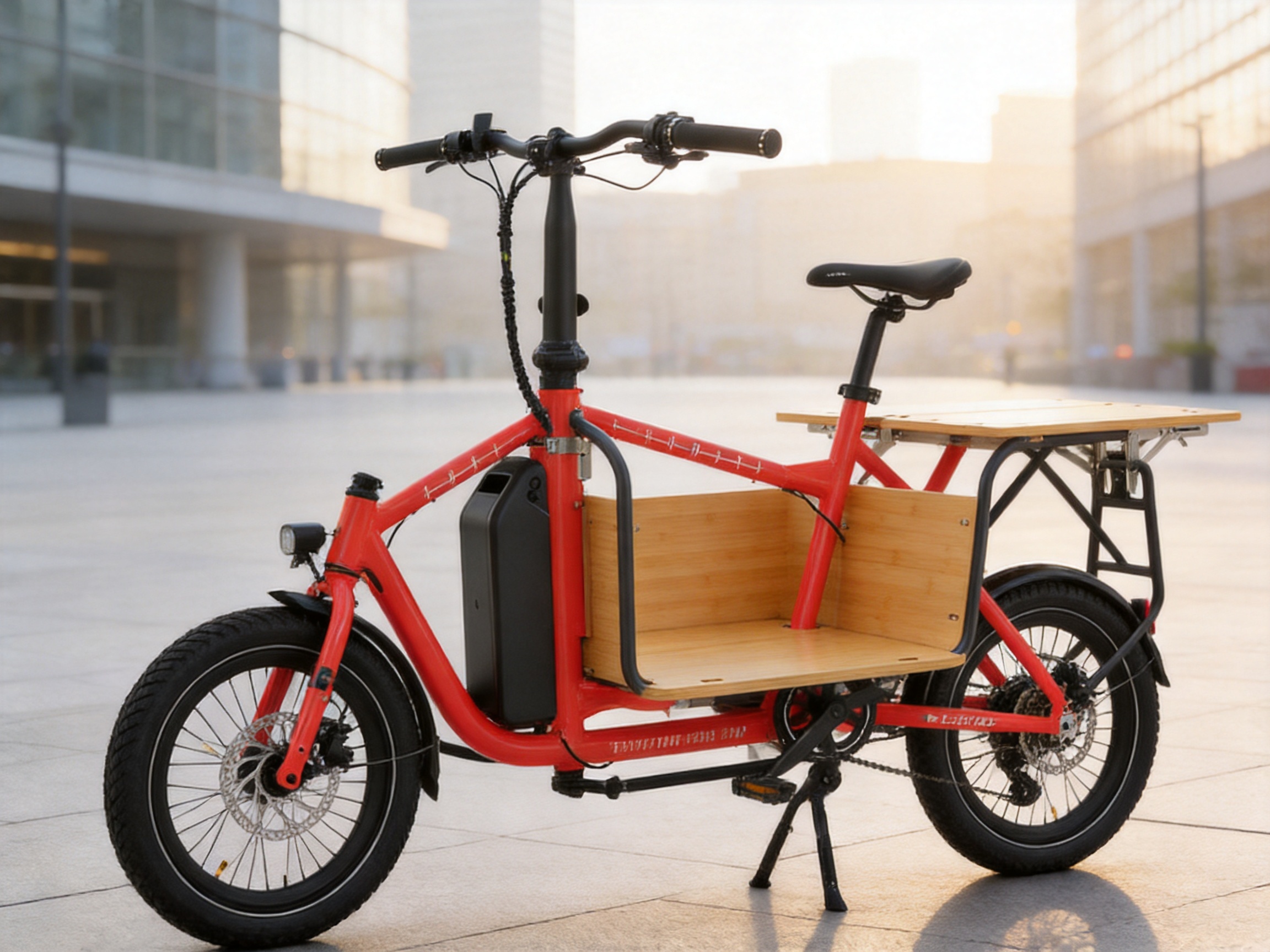
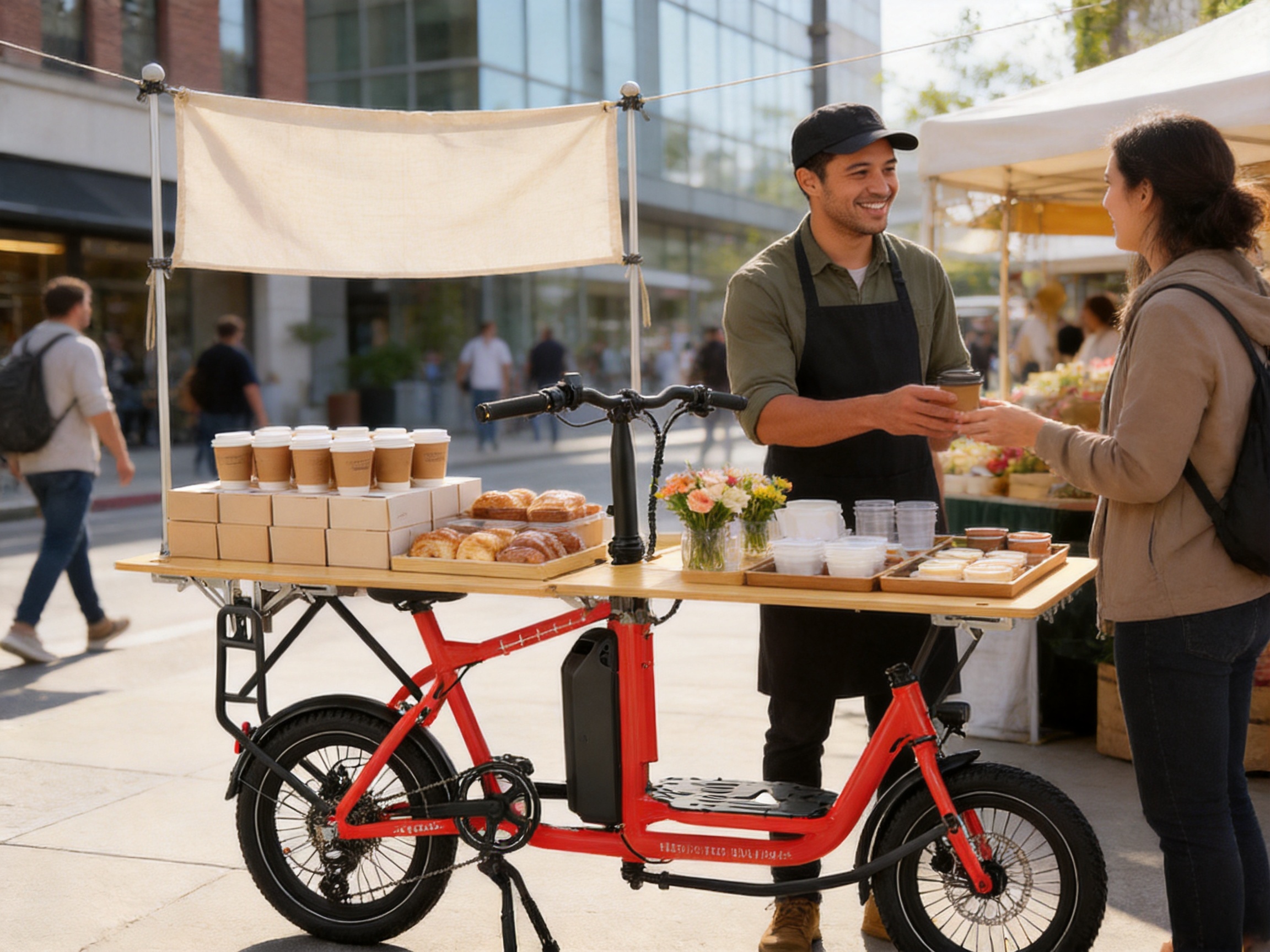
Small food and beverage operators often need a platform that is easy to set up, visually appealing, and compact enough for urban movement. The deck can provide space for insulated containers, ingredient boxes, serving accessories, menus, or packaged products. Its low position can make it easier to arrange a stable base for equipment while keeping the bicycle’s profile relatively compact.
A coffee seller might use the platform to transport cups, sealed beverage containers, beans, napkins, and a small service setup. A bakery seller could use it for boxed products and a display tray. A street-food operator could organize insulated containers and packaging while using a separate approved preparation or serving arrangement. The platform itself should be considered a transport and display surface; food safety, local licensing, hygiene, and operating requirements remain the responsibility of the business operator.
The integrated banner anchor points can help a seller identify the business from a distance. A lightweight sign or banner can communicate the product category without requiring a large permanent signboard. Because the platform folds, the business can also change its presentation for different events or remove promotional materials when using the bicycle for private transportation.
Flowers and produce benefit from open, accessible presentation. A low deck can hold baskets, crates, or trays that allow customers to view goods from the side of the bicycle. This arrangement may be more inviting than an enclosed box, especially at farmers’ markets, neighborhood events, and temporary street locations.
For flowers, the surface can support wrapped bouquets, buckets designed for transport, small display stands, or packaging materials. For produce, reusable crates and containers can be arranged to keep items organized. Sellers should consider weight distribution, liquid containment, and secure fastening, particularly when transporting goods over uneven streets.
Handmade-goods sellers can use the deck as a compact exhibition surface. Jewelry, candles, small ceramics, textiles, printed products, and craft accessories can be presented in trays or modular display boxes. The natural bamboo finish helps create a less utilitarian appearance and can complement a craft-oriented identity.
The platform is also useful for pop-up retail because it can function as both a transport base and a display table. Goods can be transported to a location, arranged on the deck, and packed away afterward without requiring a separate folding table for every small event. This can reduce the amount of equipment the seller must carry.
The bolt-on installation method is a major practical advantage. Permanent modifications can create concerns about resale value, warranty conditions, structural integrity, and future accessory changes. A bolt-on kit allows the user to add functionality while preserving the underlying bicycle in a more reversible configuration.
Installation should be performed carefully and according to the appropriate instructions. The user should confirm that all mounting surfaces are clean, that the correct fasteners are used, and that bolts are tightened to the specified requirements. After installation, the platform should be opened and closed several times before carrying cargo. The rider should also verify that the deck does not interfere with steering, braking, lighting, pedals, wheels, or other bicycle components.
Regular inspection is advisable, especially during the first period of use. Fasteners can be checked for tightness, while hinges and folding brackets can be examined for dirt, damage, or unusual movement. If the deck does not lock securely, the bicycle should not be used with the platform deployed until the issue has been resolved.
The reversible nature of the system also supports changing business needs. A user may install the platform for a seasonal market, remove it for another project, or adapt the bicycle as a family and commuting vehicle. This flexibility can be more valuable than maximum specialization for a small operator.
The flat folding design is intended to simplify the transition between commercial and personal use. A good daily workflow might begin with the platform folded during travel to a vending location. Once the bicycle is safely parked, the user can unfold the deck, engage the locking brackets, attach a banner or straps, and arrange the goods. At the end of the activity, products can be removed, the surface wiped clean, the promotional materials detached, and the deck folded again.
This process is different from dismantling a large box or removing a heavy trailer. The less effort required to change configurations, the more likely users are to take advantage of the bicycle’s full potential. A system that takes only a short time to deploy can support short selling sessions, spontaneous local events, and mixed work-and-commute schedules.
Storage should be considered before installation. The user should identify a dry location where the folded platform and bicycle can be kept without exposing the bamboo to prolonged dampness or placing stress on the hinges. If the bicycle is stored outdoors, a suitable cover and additional protection may be appropriate, depending on local weather conditions.
The platform’s competitive advantages become clearer when compared with common alternatives. A front basket is useful for small personal loads but may not provide enough surface area for a display or organized vending arrangement. A large fixed box offers protection and capacity but limits access and adds permanent bulk. A trailer can provide more volume but increases maneuvering complexity and storage requirements. A homemade board may be inexpensive but often lacks an integrated folding mechanism, coordinated hardware, and purpose-designed mounting points.
| Alternative | Typical Strength | Common Limitation | Advantage of the Folding Deck Kit |
|---|---|---|---|
| Small front basket | Simple and lightweight for everyday items | Limited display area and limited organization for vending | Offers a broad, defined platform for products and containers |
| Permanent cargo box | Enclosed protection and dedicated capacity | Less flexible and always adds bulk to the bicycle | Folds for commuting and general cargo use |
| Trailer | Can provide substantial additional volume | Requires extra storage and changes turning behavior | Keeps the vending function integrated with one compact bicycle |
| Improvised wooden platform | Can be customized by the owner | May lack proper brackets, alignment, finish, and tested attachment points | Combines a finished bamboo deck with a coordinated steel folding system |
| Fixed metal display table | Rigid and potentially durable | Usually cannot be folded or used conveniently during cycling | Supports both transport and customer-facing display |
The kit is not intended to replace every alternative in every application. A high-volume delivery company may require enclosed commercial bodies, while a family user may prefer a simple basket. Its advantage is strongest for users who need a medium-sized, open, adaptable platform that can change roles during the day.
The product is offered by Atmose, a cargo e-bike company focused on mobility solutions for families, urban commuters, and commercial users. The company describes its design philosophy as “Fun & Practical,” emphasizing usability, comfort, reliability, and the overall riding experience. These principles are visible in the decision to make the platform useful without making the bicycle permanently specialized.
The company originated in California and was developed from the experience of MOTIV, an established American beach cruiser brand. ATMOSE BIKES INC. was founded in Long Beach, California, in 2023 by Cameron Perstein and Guojie Shen. In 2026, ATMOSE SASU was established in France with a new design and research-and-development team.
This international structure can support product development from multiple perspectives. American product development traditions often emphasize practical usability and straightforward ownership, while European urban design environments place strong attention on compactness, aesthetics, sustainability, and integration into dense city life. A commercial cargo accessory benefits from both perspectives because it must be practical for work but acceptable in public and residential environments.
The company also identifies manufacturing expertise, a mature supply chain, and continuous innovation as important parts of its foundation. For an accessory such as the folding deck, these strengths may contribute to better compatibility between the accessory and the base bicycle, more reliable component sourcing, and greater consistency in production.
Atmose’s emphasis on custom design and wholesale support is also relevant to professional users. Different markets may require different display arrangements, straps, signs, containers, or commercial workflows. The standard platform provides a base for such adaptations while retaining a common bicycle and mounting concept.
Before every commercial outing, the user should inspect the folding brackets, hinges, mounting bolts, deck surface, and strap anchor points. The platform should be fully opened and the locking system should be engaged before cargo is added. Any unusual looseness, cracking, distortion, or movement should be investigated before riding.
Cargo should be distributed across the deck rather than concentrated at one corner. Heavy objects should be positioned as low and centrally as practical. Loose objects should be placed in containers or secured with straps. Banners should be lightweight and attached in a way that does not interfere with steering or create excessive wind resistance.
Users should also consider visibility. Merchandise, boxes, or signs should not obstruct lights, reflectors, the rider’s view, or the movement of the steering system. The platform’s dimensions are generous for a compact cargo bike, but the bicycle must still remain manageable in traffic and around pedestrians.
After use, the deck should be cleared of debris and wiped down with a suitable cloth. Moisture should not be left standing on the bamboo. Hinges and brackets should be kept free from dirt and inspected for smooth operation. The product is designed for practical urban use, but care remains essential for maintaining appearance and function.
The Bamboo Folding Deck Kit is particularly suitable for independent vendors who need a mobile and recognizable sales platform but do not operate a full-size food truck or commercial van. It can also benefit local retailers that want to test pop-up sales with a modest investment in equipment.
Community organizations, event organizers, libraries, schools, farms, florists, and neighborhood delivery services may also find the platform useful. Its open format makes it easy to adapt for information distribution, sampling, product demonstrations, seasonal sales, or local campaigns.
For individual riders, the product is attractive when a single cargo bike must support both personal and commercial activities. The ability to fold the deck means the accessory does not have to define the bicycle permanently. This is valuable for users who commute during the week and vend on weekends, or who alternate between family transportation and occasional business work.
The platform may be less appropriate for users who require a fully enclosed, weatherproof, high-capacity cargo body or who need to transport extremely heavy equipment. It is a display and transport platform, not a replacement for every type of commercial vehicle. Its strength lies in flexibility, moderate scale, presentation, and rapid conversion.
The kit is designed for the Urban Companion Cargo Bike, Model Q. Users should confirm model compatibility before ordering or installing the product, particularly if the bicycle has been modified with other accessories.
The deck measures 85 × 61 centimeters, or approximately 33.5 × 24.0 inches. This provides a practical surface for display trays, food containers, sample boxes, coolers, flowers, produce, and other organized cargo.
Yes. Its folding design allows the user to switch between vending and commuting configurations. When the deck is not needed as a display surface, it can be folded flat to reduce obstruction and preserve the bike’s everyday usefulness.
The product uses bolt-on installation and is designed not to require permanent bicycle modification. Installation should still be completed carefully, with the correct mounting hardware and appropriate checks for clearance and secure attachment.
Natural bamboo provides a distinctive appearance that works well in customer-facing environments. It offers a warmer and more retail-oriented visual character than a plain industrial metal plate. It should be kept clean and dry and used with suitable containers when transporting food or liquids.
A powder-coated steel support frame provides the main structural foundation. Stainless steel hinges and locking folding brackets support the opening and folding functions.
The platform includes integrated strap and banner anchor points. These points can be used for lightweight identification materials, promotional banners, or cargo straps, provided that the attachments do not interfere with safe bicycle operation.
The recommended uses include food containers and mobile vending, but the deck should not automatically be treated as a food-preparation surface. Food businesses must use suitable containers, maintain hygiene, and comply with applicable local health and operating regulations.
No accessory should be overloaded or used outside its intended purpose. Cargo must be compatible with the bicycle, platform, mounting system, and applicable manufacturer guidance. Users should distribute weight evenly and secure items against movement.
The folding platform keeps the commercial function integrated with the cargo bicycle. This can make storage and maneuvering simpler than using a separate trailer. A trailer may offer greater volume for some applications, so the better option depends on cargo size, operating conditions, and storage space.
It allows one bicycle to support transport, vending, display, and occasional delivery. Small businesses can use it for markets, events, neighborhood sales, or seasonal activities without committing to a permanently specialized vehicle.
Users should inspect bolts, hinges, brackets, the bamboo surface, and anchor points regularly. The deck should be cleaned after use and protected from prolonged moisture. The folding mechanism should remain free from dirt and should be checked for secure locking before every loaded trip.
The Bamboo Folding Deck Kit provides a focused solution to a growing urban mobility need: turning a practical cargo bicycle into a temporary mobile retail or vending platform without permanently changing the vehicle. Its 33.5 × 24.0-inch natural bamboo deck creates a useful customer-facing surface, while the powder-coated steel support frame supplies a rigid foundation. Stainless steel hinges and locking folding brackets make the platform adaptable between deployed and folded positions.
Its key advantages over fixed boxes, trailers, basic baskets, and improvised boards are flexibility, compact storage, integrated mounting, visual appeal, and compatibility with both commercial and personal use. The low-mounted design supports a stable cargo arrangement, while strap and banner anchor points allow users to secure goods and personalize the display.
The product also reflects the broader strengths of its manufacturer: a focus on practical cargo-bike mobility, international design and research-and-development resources, established manufacturing experience, supply-chain knowledge, and an emphasis on sustainability and usability. By combining a carefully considered material palette with a reversible installation method, the platform gives independent sellers and urban riders a way to make one cargo bicycle serve several purposes.
For mobile coffee sellers, flower vendors, produce growers, craft businesses, pop-up retailers, and mixed-use cargo-bike owners, the kit can become more than an accessory. It can serve as a compact operating base, a transport surface, and a visual point of contact with customers. Its greatest strength is not simply that it folds, but that it allows the bicycle to change roles while remaining useful, approachable, and manageable in everyday urban life.
Atmose product specification sheet for the Bamboo Folding Deck Kit, including dimensions, materials, hardware, folding design, installation method, and recommended applications.
Atmose company information concerning product philosophy, cargo-bike development, design and research-and-development operations, manufacturing experience, and sustainability objectives.
General principles of cargo-bike load distribution, accessory mounting, safe cargo restraint, and urban bicycle maneuverability.
General manufacturing references concerning powder-coated steel components, stainless steel hardware, natural bamboo product care, and folding mechanical assemblies.
General guidance for mobile vending equipment, temporary retail displays, food-container handling, and local commercial operating considerations.
Nov 23, 2026
Nov 09, 2026
Nov 01, 2026


info@atmosecargobike.com

200 rue de la Croix Nivert 75015 Paris

Custom Electric Bakfiets
 English
 Français
 Deutsch