Aug 23, 2026
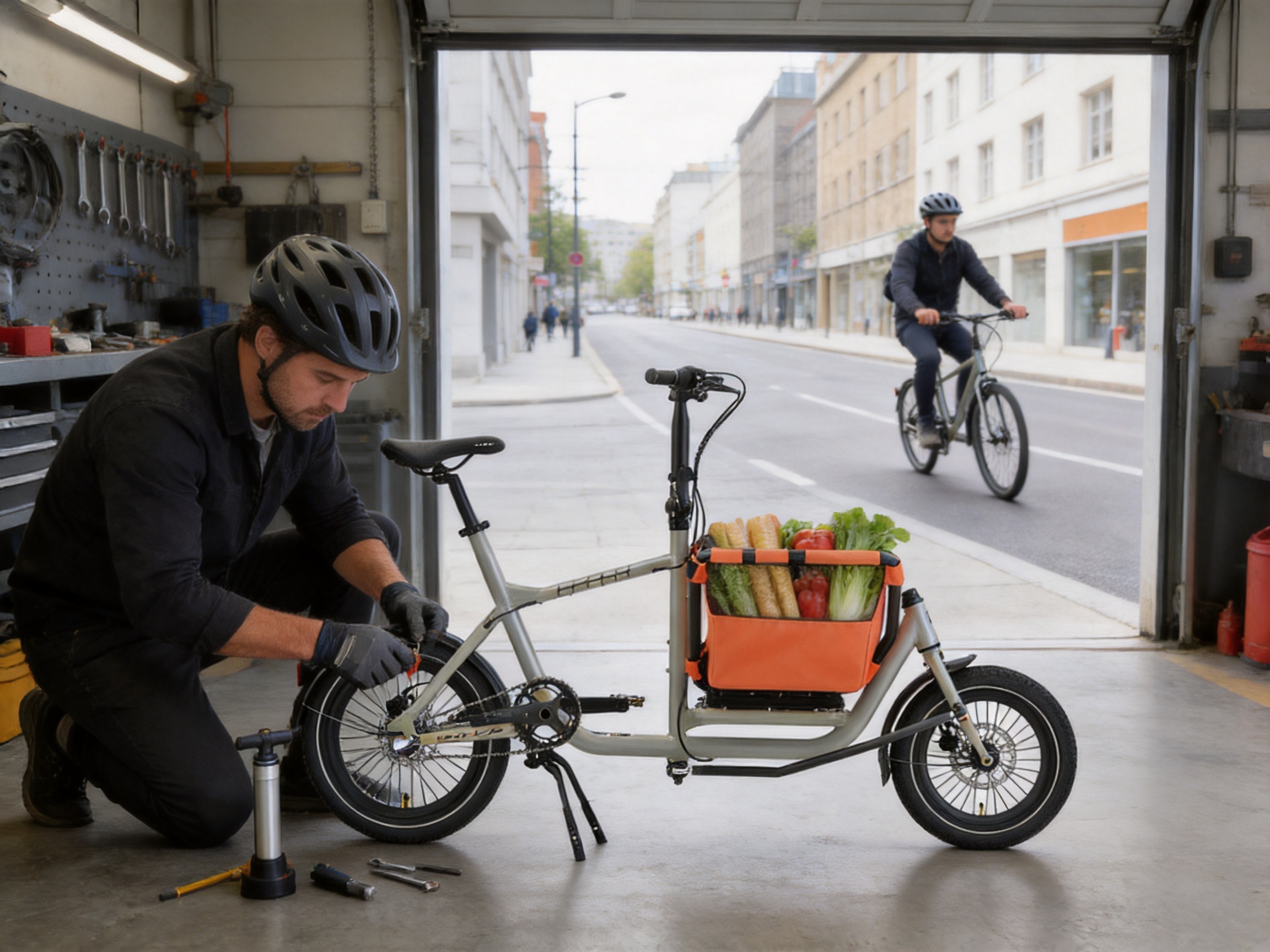
Cargo bikes are often associated with electric motors, large batteries, and high-capacity transport. Those features are valuable for riders who travel long distances, climb steep hills, or carry especially heavy loads. However, they are not the ideal answer for every journey. Many urban riders need a practical bicycle for short errands, neighborhood trips, market visits, and everyday transportation without the additional weight, charging requirements, or electronic complexity of an electric system.
The Q1 manual cargo bike is designed for this specific type of rider. It combines the familiar feel of a traditional bicycle with the carrying ability of a front cargo platform. Its aluminum frame, three-speed drivetrain, hydraulic disc brakes, wide puncture-resistant tires, and removable folding basket create a practical package for daily urban mobility. The result is a cargo bike that is lighter, mechanically simpler, and more physically engaging than a typical electric cargo model.
Rather than attempting to compete with powerful long-range e-cargo bikes on their own terms, the Q1 follows a different philosophy. It is intended to be nimble, accessible, and ready to ride without a battery or motor. This makes it particularly suitable for flat commutes, short-distance shopping, exercise-oriented trips, and riders who prefer direct control over their bicycle.
This article examines the Q1’s design, specifications, usability, manufacturing strengths, competitive advantages, cargo system, maintenance requirements, and practical applications. It also explains which riders are most likely to benefit from a manual cargo bike and how the Q1 compares with other cargo-bike categories.
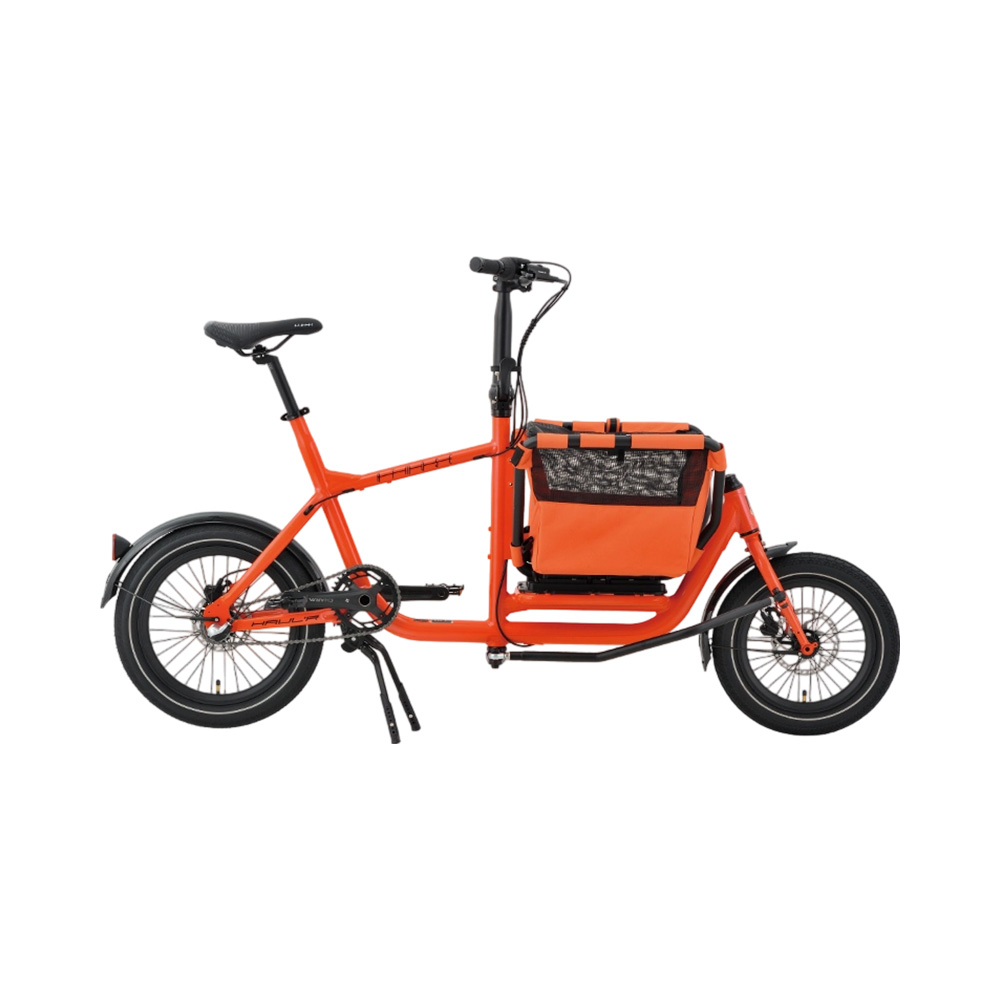
Atmose Model Q Q1 Lightweight Manual Cargo Bike for Fitness and Errands
The central idea behind the Q1 is straightforward: provide useful cargo capacity while preserving the riding character of a conventional bicycle. The bike does not rely on an electric motor to move the rider or the load. Instead, propulsion comes entirely from the rider, supported by a three-speed Shimano Sora system.
This approach brings several important consequences. First, the bicycle can be lighter than an equivalent electric cargo bike because it does not need a battery, motor, controller, wiring harness, or charging hardware. Second, the rider does not need to plan around battery range or charging availability. Third, the mechanical layout is less complicated, which can make routine ownership more familiar to people who already understand standard bicycles.
The Q1 is especially appropriate for relatively flat environments. A rider traveling through a level neighborhood, residential district, market area, university campus, or compact city center may not need electric assistance for every trip. In these settings, the lower weight and direct pedaling response can be more valuable than motorized assistance.
The bike also supports a fitness-oriented lifestyle. A grocery trip, café visit, or short commute can become moderate daily exercise without requiring a separate workout session. Because the cargo basket provides practical carrying space, the bicycle remains useful even when the rider’s goal is not simply recreation.
Its intended use is therefore broader than ordinary cycling but more focused than heavy commercial transport. The Q1 is not primarily a replacement for a delivery tricycle, a high-capacity family e-bike, or a mountain bicycle. It is a compact urban utility tool for people who want to carry everyday items while remaining active and independent from charging infrastructure.
The stated dimensions are 1,780 millimeters in length, 620 millimeters in width, and 1,070 millimeters in height. These measurements provide useful cargo space without creating the broad footprint associated with some larger long-tail or front-loading cargo bikes.
A 620-millimeter width is particularly relevant for urban maneuverability. It allows the rider to navigate ordinary bicycle lanes, residential streets, and many shared paths with less difficulty than a very wide cargo platform. The 1,780-millimeter length gives the bicycle a stable, useful stance while remaining manageable for storage in many homes, workshops, and apartment spaces.
The front basket is designed for everyday objects rather than oversized commercial freight. Its dimensions are approximately 470 millimeters long, 470 millimeters wide, and 375 millimeters high. This is enough room for shopping bags, backpacks, work materials, small parcels, picnic items, or other goods typically carried during daily errands.
Electric cargo bikes are highly capable, but their advantages can involve trade-offs. Motors and batteries add weight, and batteries require charging, storage, and eventual replacement. Electronic systems also introduce additional components that may require specialized diagnosis or service.
The Q1 removes these concerns by using no battery and no power system. This does not mean that it is maintenance-free; all bicycles need inspection and adjustment. It does mean that the ownership routine is closer to that of a conventional bicycle. The rider can focus on tire pressure, chain care, brake inspection, wheel alignment, and other familiar mechanical tasks without managing an electrical drive system.
For riders who live close to their destinations and value simplicity, this can be a meaningful advantage. The bike is always ready to ride, provided the tires are inflated and the mechanical components are in proper condition.
| Specification | Q1 Configuration | Practical Meaning |
|---|---|---|
| Frame | 6061 T4T6 aluminum alloy frame | Low weight, corrosion resistance, and a practical balance of stiffness and durability |
| Battery | None | No charging, battery storage, or electrical range limitations |
| Power system | None | Fully rider-powered operation |
| Maximum rider load | 120 kilograms | Supports a broad range of adult riders when used within the specified limit |
| Maximum basket load | 25 kilograms | Suitable for groceries, bags, parcels, and everyday cargo |
| Drivetrain | Shimano three-speed Sora | Simple gear selection for flat routes and moderate changes in effort |
| Front tires | 16 inches by 2.4 inches | Compact steering response with a wide contact profile |
| Rear tires | 20 inches by 2.4 inches | Stable rolling support and increased cushioning compared with narrow tires |
| Brakes | Tektro hydraulic disc brakes | Controlled braking with reduced hand effort and useful modulation |
| Basket | 470 mm by 470 mm by 375 mm | Practical front-loading volume for routine urban errands |
| Bike dimensions | 1,780 mm by 620 mm by 1,070 mm | Compact enough for urban use while retaining cargo functionality |
The Q1 uses a 6061 T4T6 aluminum alloy frame. Aluminum is a common choice for lightweight utility bicycles because it offers a useful combination of low mass, corrosion resistance, and structural performance. The alloy designation also indicates a material selected for engineering applications rather than a purely decorative frame construction.
For a manual cargo bike, frame weight has a direct effect on usability. The rider must accelerate the bicycle using personal effort, push it when walking, lift it over thresholds, and maneuver it during storage. A carefully designed aluminum frame can reduce these demands while still providing the stiffness required for a front cargo load.
Frame design is particularly important on a cargo bicycle because the basket is positioned ahead of the rider. The structure must support the basket and its contents while maintaining predictable steering. A well-integrated frame and mounting arrangement help prevent unnecessary flex and can make the bike feel more controlled when loaded.
The three-speed Shimano Sora system is intentionally simple. It provides enough range to adjust pedaling effort for flat streets, gentle inclines, headwinds, and loaded starts without introducing the complexity of a large multi-speed drivetrain.
A three-speed arrangement can be easier for new riders to understand. Instead of managing many gear combinations, the rider can select a lower gear when starting with cargo, a middle gear for ordinary cruising, and a higher gear when the route permits faster riding. The limited number of gears also supports the Q1’s clean, utility-focused character.
Riders should understand that three speeds are not intended for steep hills or highly mountainous terrain. On such routes, a motorized cargo bike or a bicycle with a wider gear range may be more appropriate. The Q1 is best matched with level or moderately undulating urban environments where efficient, uncomplicated gear changes are more important than extreme climbing capability.
Tektro hydraulic disc brakes provide an important safety and control advantage. Cargo bikes can carry more weight than standard bicycles, and additional load affects stopping distance, handling, and braking feel. Hydraulic systems generally offer smooth modulation and require less hand force than many basic mechanical brake systems.
The braking system is also useful in wet or changing urban conditions. Disc brakes are positioned away from the tire’s outer surface, helping them maintain consistent performance when road spray or minor contamination affects the wheel area. As with all brakes, regular inspection remains essential. Pads, rotors, hoses, and lever feel should be checked periodically, especially when the bicycle is used frequently or carries heavy loads.
The Q1 uses 16-inch by 2.4-inch tires at the front and 20-inch by 2.4-inch tires at the rear. Their relatively wide profile can improve comfort and stability on ordinary urban surfaces such as asphalt, paving stones, painted bicycle lanes, and lightly uneven roads.
The product information identifies these tires as punch proof. This feature is valuable for practical transportation because commuting and shopping routes may include broken glass, sharp debris, or rough edges near curbs. No bicycle tire is completely immune to punctures, but puncture-resistant construction can reduce interruptions and improve confidence for daily riders.
The different wheel sizes also contribute to the bike’s compact format. The smaller front wheels can support a lower, more responsive cargo arrangement, while the larger rear wheel helps maintain a comfortable rolling character beneath the rider. Proper tire pressure is essential because pressure influences steering, comfort, grip, and the bicycle’s ability to carry cargo safely.
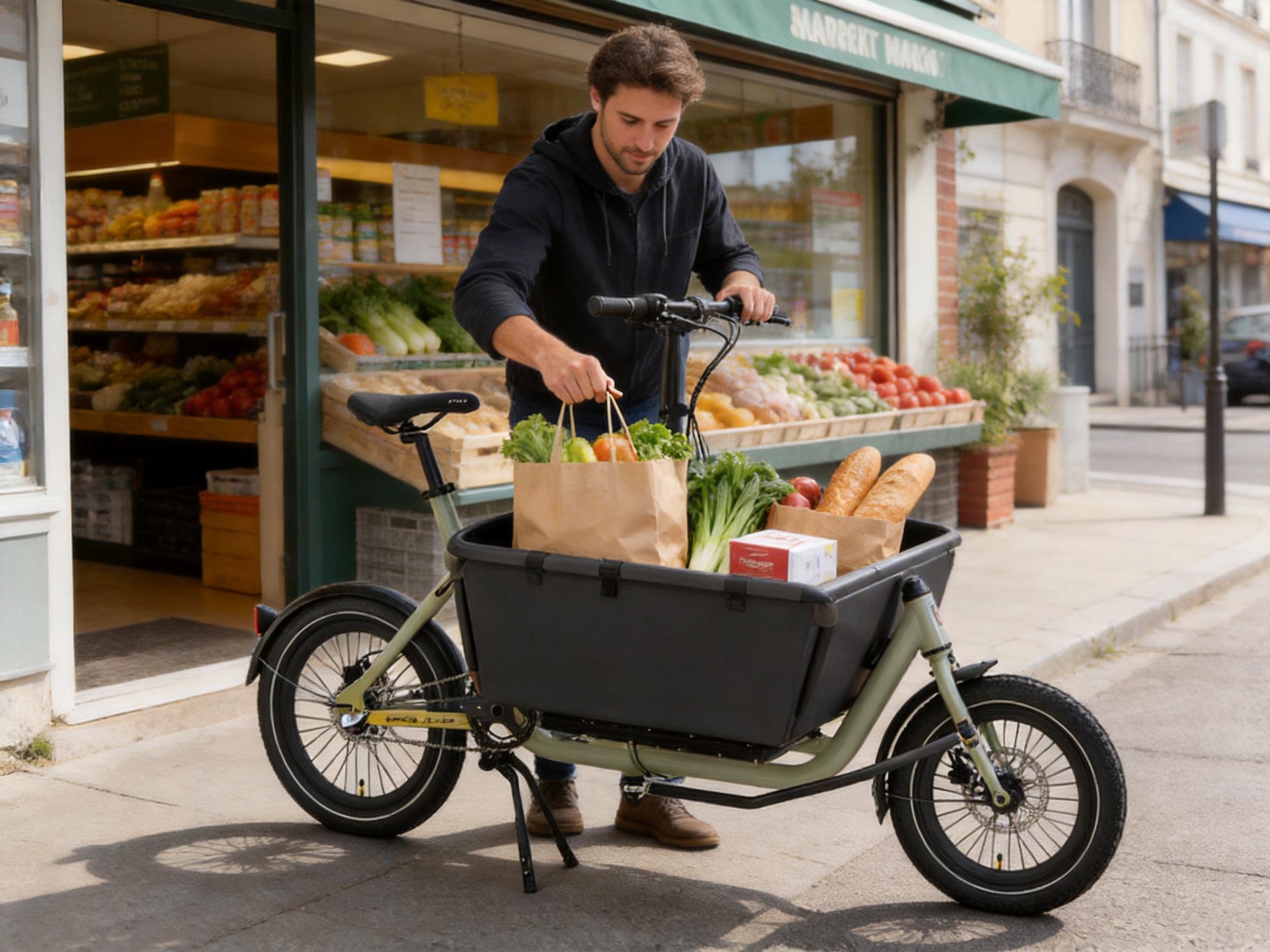
The front basket is one of the Q1’s defining features. Instead of treating cargo capacity as an afterthought, the bicycle is built around a dedicated front-loading system. This provides a clear and convenient place for shopping bags, parcels, personal belongings, or recreational equipment.
The basket’s dimensions create a broad platform for objects that may be awkward to carry on a traditional rear rack. A paper grocery bag, backpack, small box, or basket of produce can be placed in front of the rider, where it remains visible and accessible. This arrangement can be more convenient than carrying a bag on the shoulder or attaching several small panniers.
The basket is designed for quick installation using a three-step process. First, the rider aligns the basket base with the pre-installed mounting holes near the handlebar. Second, the basket is lowered vertically until the clips make contact. Third, the basket is pushed backward toward the saddle.
A click indicates that the basket has reached its intended locked position. This design reduces the need for tools during normal attachment and allows the rider to prepare the bicycle quickly. The guided movement also helps ensure that the basket is aligned with the mounting hardware before the rider begins a journey.
Simple installation is more than a convenience feature. A cargo accessory that is difficult to attach may remain permanently mounted, even when the rider does not need it. A quick-release design gives the bicycle more than one practical configuration. With the basket installed, the bike becomes a daily utility vehicle. With the basket removed, it can be easier to store, transport, or use for lighter recreational rides.
Removal begins by locating the pin at the bottom of the basket mount and pulling it downward. The rider then pushes the basket forward toward the front wheel until it reaches the end of its track, after which the basket can be lifted upward.
This forward-sliding and lifting movement is designed to provide a controlled release rather than requiring the rider to pull the basket upward immediately. The sequence helps keep the basket engaged with its guide system during the initial part of removal.
Users should always verify that the basket is fully locked before riding. The click provides an audible confirmation, but riders should also perform a brief physical check. The basket should not move excessively, the pin should be in its proper position, and the load should be distributed evenly. Cargo should never obstruct the rider’s view, interfere with the front wheel, or exceed the stated 25-kilogram basket limit.
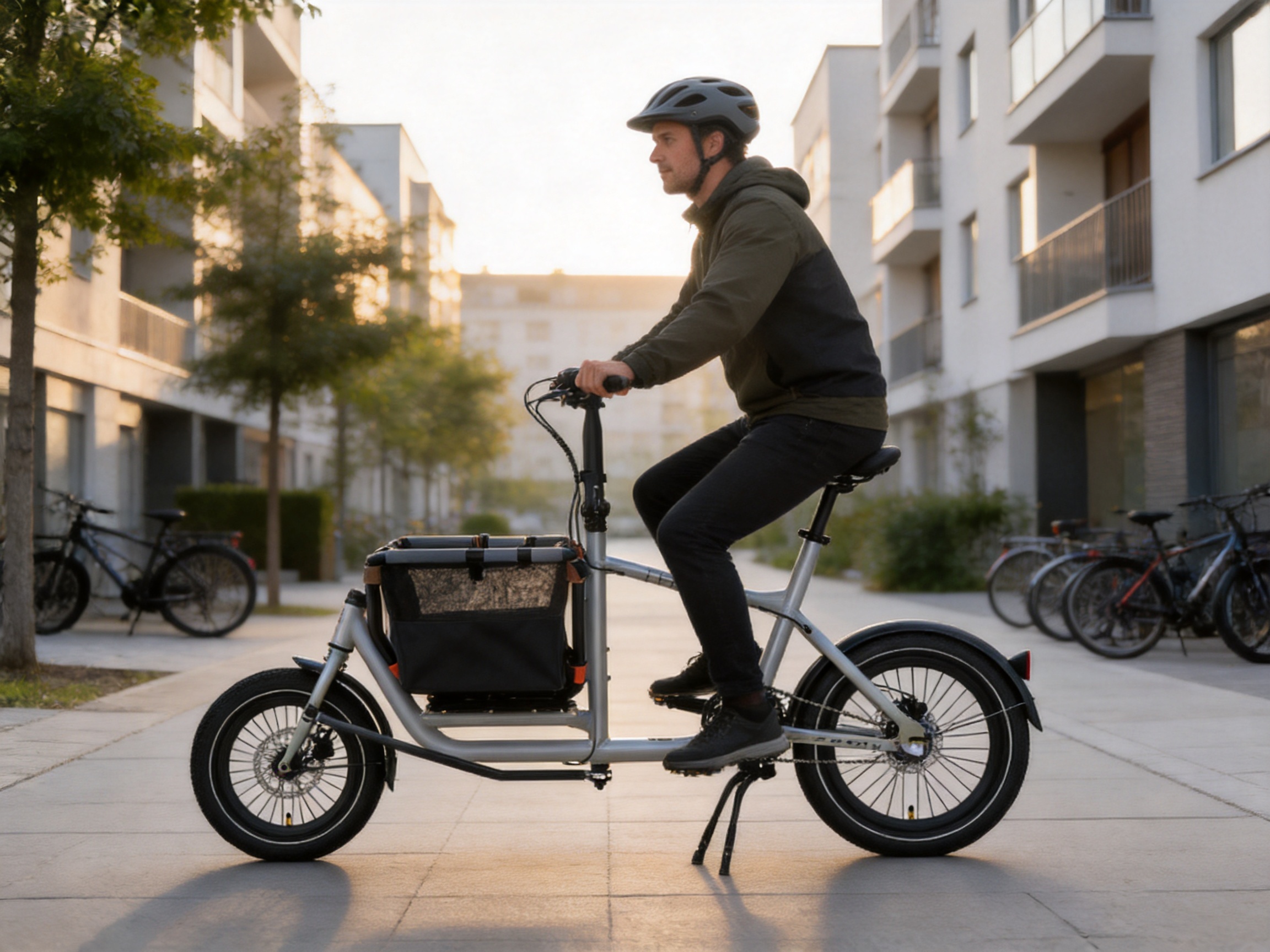
A manual cargo bike responds directly to the rider’s input. When the rider pedals harder, the bicycle accelerates; when the rider eases off, the bike slows naturally. This direct relationship can make the Q1 feel more like a traditional bicycle than a motor-assisted utility vehicle.
The absence of a motor also means there is no motor engagement delay, assistance cutoff, or electronic control mode to manage. Riders who enjoy cadence, momentum, and body-driven speed may appreciate this simplicity. The bicycle’s behavior is determined primarily by the rider, the selected gear, the terrain, and the load.
Front cargo bicycles require a short adjustment period for riders who are accustomed to a standard bicycle. The load is positioned ahead of the steering area, and the basket may influence the feel of turns. Starting with an empty basket is recommended. After becoming familiar with the steering response, riders can gradually add light cargo before using the full capacity.
The Q1’s dimensions and wheel configuration support urban maneuverability. A 620-millimeter width helps it fit through many common city spaces, while the relatively compact length makes low-speed turning and storage more manageable than on larger cargo platforms.
However, maneuverability depends on how cargo is loaded. Heavy objects placed high or concentrated on one side can affect steering. The best practice is to keep heavier items low, centered, and secure. Soft goods can fill empty spaces around harder objects, reducing movement during braking and turning.
Riders should also allow extra clearance around the front basket. Even when the bicycle itself fits through a gap, the basket may extend farther than the handlebar or carry a load that increases its effective width. Urban riding requires attention to parked vehicles, pedestrians, bollards, door openings, and uneven curb edges.
The wide tires can help absorb small road imperfections and provide a more forgiving ride than narrow urban tires. This is particularly useful when cargo is present, because the additional load can otherwise make bumps feel sharper.
Comfort also depends on correct tire inflation, saddle adjustment, handlebar position, and cargo distribution. Riders should not assume that maximum tire pressure is always best. The correct pressure should follow the tire and wheel specifications, while remaining appropriate for the rider’s weight and the carried load.
The Q1 is primarily intended for paved roads and ordinary urban surfaces. Its tires may handle compact paths and light roughness, but it should not be treated as a technical off-road bicycle. Large potholes, deep gravel, stairs, and aggressive trail riding can place excessive stress on the wheels, frame, basket mount, and rider.
A standard bicycle is often lighter and may be faster when carrying no cargo, but it usually requires the rider to wear a backpack, use a small rear rack, or attach panniers. These solutions can be less convenient for bulky or irregularly shaped items.
The Q1 offers a dedicated front cargo area with a 25-kilogram maximum basket capacity. This makes it more useful for grocery shopping, work equipment, small deliveries, and neighborhood errands. The rider can carry items without placing all the weight on their back.
The Q1 also provides greater stability for cargo than a backpack. A properly distributed load remains supported by the bicycle rather than shifting with the rider’s upper body. This can improve comfort on trips where the rider would otherwise carry heavy objects for several kilometers.
The Q1’s most obvious difference from an electric cargo bike is its lack of a motor and battery. This gives it several advantages for the right use case. It can be lighter, does not need charging, and avoids battery-related ownership concerns. It also tends to have a simpler mechanical and electrical architecture.
The lower system complexity may reduce the number of components requiring specialized attention. There is no battery management system, motor controller, charging port, pedal-assistance sensor, or software interface. Routine maintenance remains important, but the service process is familiar to many bicycle technicians.
The Q1 may also be easier to carry up a few steps, place on a wall rack, or maneuver into compact storage. This is especially relevant for residents who lack ground-floor bicycle storage or who need to bring their bike indoors.
Its limitation is equally clear: the rider supplies all propulsion. A heavy load, long route, steep incline, or strong headwind will demand more physical effort than the same journey on an assisted cargo bike. The Q1 is therefore not universally superior; its advantage appears when simplicity, lower weight, exercise, and short-distance utility are the priorities.
Large front-loading cargo bikes can carry children, bulky freight, or multiple containers. They are useful for family transportation and commercial operations, but they are also typically longer, wider, and heavier. Their turning radius and storage requirements can be more demanding.
The Q1 is more focused on individual urban utility. Its basket is large enough for everyday shopping and personal cargo but not intended to replace a high-capacity cargo box. This narrower mission allows the design to remain more compact and easier to handle for a single rider.
Rear racks and panniers are effective for many cyclists, but they can make cargo less visible and may require the rider to reach behind the saddle. The Q1 places the load directly in front of the rider, making it easier to monitor during a trip.
A front basket is also convenient for fast loading and unloading. The rider can place bags into the basket without opening pannier covers or attaching multiple straps. This can be particularly helpful during repeated short stops, such as visiting a market, collecting a parcel, and continuing to another destination.
The Q1’s manufacturing strengths are reflected in its integrated component selection and purpose-specific construction. Although the product is mechanically simple compared with an electric cargo bike, simplicity does not eliminate the need for careful engineering. A manual cargo bike must balance low weight, structural strength, steering control, braking performance, and ease of service.
The use of 6061 T4T6 aluminum alloy reflects an emphasis on reducing unnecessary mass while maintaining a durable frame platform. Aluminum frame production requires accurate tube preparation, controlled joining, alignment, finishing, and inspection. A cargo bike places additional demands on these steps because the frame must resist not only rider weight but also changing loads in the front basket.
Manufacturing quality is especially important around the head tube, fork interface, basket mounting points, bottom bracket region, and rear dropout areas. These locations experience forces generated by steering, braking, pedaling, and cargo movement. Accurate alignment helps the bicycle track predictably and reduces uneven stress on wheels, brakes, and drivetrain components.
A well-produced aluminum frame should also receive appropriate finishing and corrosion protection. While aluminum is naturally more resistant to corrosion than many untreated steels, surface preparation and coating quality remain important for long-term appearance and durability. Urban bicycles are exposed to rain, road dirt, cleaning chemicals, and occasional contact with metal racks or building surfaces.
The front basket mounting system demonstrates an effort to integrate utility into the bicycle rather than relying on a generic accessory. Pre-installed mounting holes, clips, a retaining pin, and a guided installation track create a repeatable attachment process.
From a manufacturing perspective, repeatability matters. Mounting points must be positioned accurately so that the basket can align smoothly and lock reliably. The basket itself must maintain its shape under normal loading, while the clips and pin must work together to prevent unintended release during riding.
The design also separates attachment and removal into controlled movements. This supports user convenience while reducing the likelihood that the basket will be installed at an angle. A well-designed accessory system should be easy for the customer to understand without sacrificing retention security.
The Q1 pairs the aluminum frame with hydraulic disc brakes, wide tires, and a simple three-speed drivetrain. These components support the intended use rather than adding features for their own sake. The braking system addresses the need for control when a front basket is loaded. The tires support comfort and puncture resistance. The drivetrain keeps operation straightforward.
This type of component matching is an important product-development strength. A cargo bike is not simply a standard bicycle with a larger basket attached. Its parts must work together as a complete system. Steering geometry, wheel size, brake performance, frame stiffness, cargo position, and rider posture all influence the final experience.
Atmose’s broader company background also supports this product philosophy. The brand combines American product thinking with European design and research-and-development involvement in Paris. Its roots in the established MOTIV beach cruiser business provide experience in bicycle design, manufacturing coordination, and consumer-oriented product development. The creation of ATMOSE BIKES INC. in Long Beach and ATMOSE SASU in France reflects an international structure intended to connect product strategy, design, and market support.
For a product such as the Q1, effective quality control should focus on frame alignment, weld integrity, wheel trueness, brake operation, drivetrain adjustment, tire seating, basket locking, and final assembly torque. These are the areas most directly connected to safety and everyday reliability.
Pre-delivery inspection is particularly important for a bike with a removable basket. The locking pin and clips should be checked repeatedly during assembly verification. Brake levers should provide consistent resistance, wheels should rotate freely, and the handlebars should remain securely aligned with the front wheel.
Manufacturing strength is not only measured by the materials used. It is also demonstrated through consistency from one unit to the next, clear assembly instructions, serviceable components, and a design that reduces opportunities for user error. The Q1’s relatively straightforward configuration helps support these goals.
Because the Q1 has no battery or motor, its maintenance routine is similar to that of a conventional bicycle. The chain should be cleaned and lubricated at suitable intervals, particularly after riding in rain or on dusty roads. The drivetrain should be checked for smooth shifting, and the cables or control components should be inspected for damage.
Tire pressure should be checked before regular rides. Underinflated tires can increase rolling resistance, make steering feel less precise, and expose the rims to impact damage. Overinflated tires may reduce comfort and grip on uneven surfaces. The correct pressure depends on the tire specification, rider weight, and cargo load.
Brake pads and rotors should be inspected for wear or contamination. Hydraulic brakes should feel firm and predictable at the levers. Any spongy sensation, fluid leakage, unusual noise, or major reduction in stopping performance should be addressed by a qualified technician.
The basket mounting hardware should be checked regularly. Riders should confirm that the clips are not damaged, the retaining pin moves correctly, and the basket does not develop excessive play when loaded. Fasteners should be checked according to the recommended service schedule.
Loads should be distributed so that the basket remains balanced. Heavy objects should be placed toward the center and lower portion of the basket. Items should not protrude into the wheel, block the headlight if one is installed, interfere with the handlebar, or create a risk for pedestrians and other road users.
The Q1’s lack of a battery simplifies storage because there is no separate energy pack to remove or maintain. Nevertheless, the bicycle should be stored in a dry, secure location whenever possible. Long-term exposure to rain, humidity, and road salt can affect chains, bearings, brake components, fasteners, and finishes.
Removing the front basket can make storage easier in narrow spaces. It may also reduce the chance of the basket being struck when the bicycle is moved through a doorway or placed beside other bicycles.
The maximum specified rider load is 120 kilograms, while the basket is rated for up to 25 kilograms. These limits should be treated as important operating boundaries rather than casual guidelines. The rider, clothing, accessories, and cargo all contribute to the total system load.
Carrying the maximum basket load can change steering and braking behavior. Riders should practice with progressively heavier cargo and become familiar with how the bicycle accelerates, turns, and stops. Initial practice should take place in an open, low-traffic area.
Loose cargo should be secured so that it cannot bounce out or move suddenly during braking. Fragile goods may require padding. Tall objects should be avoided if they can obstruct the rider’s view or raise the center of gravity. Liquids should be sealed, and bags should not hang outside the basket where they could contact the wheel.
Riders should use appropriate protective equipment, including a properly fitted helmet where required or recommended. Visibility accessories, lights, and reflective elements are important for low-light conditions. The bicycle should be operated according to local traffic regulations and path restrictions.
Because the Q1 is designed for urban use, riders should take particular care around pedestrians, parked cars, opening doors, intersections, and uneven road edges. The front cargo area can make the bicycle’s overall profile appear different from that of a standard bike. Extra attention during low-speed maneuvering is advisable.
The Q1 is a strong option for riders who want transportation and exercise in the same activity. It allows the rider to control the level of effort through gear selection, pace, route planning, and cargo weight. A short commute can become a consistent daily fitness habit.
People who frequently visit local shops, bakeries, farmers’ markets, pharmacies, or cafés can benefit from the front basket. The bicycle is suitable for trips where the destination is close enough to reach without electric assistance but where carrying goods by hand would be inconvenient.
The absence of a battery and motor can make the bike easier to move through stairs, corridors, and storage areas. The removable basket may further reduce the space required for indoor storage. Riders should still consider the actual weight of the assembled bicycle and their own ability to lift it safely.
Some cyclists prefer products that are easy to understand and maintain. The Q1 offers a familiar mechanical structure without the additional electronic systems found on e-cargo models. It can be a sensible choice for users who want to perform basic care themselves or rely on ordinary bicycle service shops.
Terrain is one of the most important factors in selecting a manual cargo bike. In flat or gently rolling cities, the Q1’s three-speed drivetrain can be sufficient for many daily journeys. In steep areas, riders should carefully evaluate the combined effect of hills, cargo, route length, and personal fitness.
The Q1 is not designed for every transportation requirement. Families carrying multiple children, businesses moving heavy packages over long distances, and riders facing steep hills may prefer an electric cargo bike with a larger load rating and broader gearing.
Likewise, riders who expect to travel many kilometers every day with a heavy basket may find motor assistance more comfortable. The Q1’s 25-kilogram basket limit is useful for everyday errands, but it should not be confused with the capacity of a commercial cargo platform.
Riders who regularly travel on rough trails or unpaved terrain should also investigate bicycles specifically designed for those environments. The Q1’s wide tires provide useful urban comfort, but its primary role is practical city transportation rather than technical off-road riding.
Before purchasing, prospective users should evaluate their typical routes, storage conditions, cargo habits, and desired level of physical effort. The most important question is not whether a manual cargo bike is universally better than an electric one. The better question is whether the rider’s daily needs match the Q1’s design priorities.
Consider the following points:
Route profile: Flat roads and short distances favor the Q1. Frequent steep climbs may favor electric assistance.
Cargo type: Groceries, bags, small parcels, and personal equipment fit the front basket concept. Oversized or very heavy freight may require another platform.
Storage: Measure doorways, hallways, elevators, racks, and available floor space before ordering.
Physical effort: The rider must provide all propulsion, including when the basket is full.
Maintenance preference: The Q1 has a simple mechanical system, but regular bicycle care is still necessary.
Riding confidence: Practice with an empty or lightly loaded basket before carrying heavier items in traffic.
No. The Q1 is a fully manual cargo bike. It has no battery, motor, or power system. The rider provides propulsion through the pedals and drivetrain.
A manual cargo bike can be lighter, simpler, and free from charging requirements. It may also be easier to store and can provide more physical exercise. The best choice depends on terrain, distance, cargo weight, and the rider’s preferred experience.
The stated maximum basket load is 25 kilograms. Cargo should be distributed evenly and secured so that it cannot shift, fall out, or interfere with steering and braking.
The specified maximum rider load is 120 kilograms. Riders should also account for clothing, accessories, and any other equipment carried on the bicycle.
Yes. The basket can be installed through a three-step alignment, lowering, and backward-pushing process. Removal involves pulling down the mounting pin, sliding the basket forward, and lifting it away.
The supplied removal procedure is designed as a tool-free process. Users should still follow the installation instructions carefully and confirm that the basket is locked securely before riding.
The Q1 is best suited to flat or moderately rolling urban routes. Its three-speed drivetrain is practical for everyday city riding, but riders facing long, steep hills may prefer a bicycle with electric assistance or a wider gear range.
The product information identifies the tires as punch proof, meaning they are designed to resist punctures. No bicycle tire can guarantee complete protection from every sharp object, so riders should continue to check tire condition and pressure.
Hydraulic disc brakes generally provide smooth braking control and reduced hand effort. They are useful on a cargo bike because additional load can increase braking demands. Regular inspection and professional service are still required when wear or abnormal performance appears.
The Q1 is presented as an adult manual cargo bike for fitness, errands, and urban utility. The supplied information does not specify a child passenger seat, child restraint system, or approval for transporting passengers. It should not be used to carry children unless an appropriate, approved configuration and local legal requirements are confirmed.
It can support light neighborhood deliveries and small parcels within its load limits. However, commercial users carrying heavy, bulky, or high-volume freight may need a larger cargo platform designed specifically for professional delivery work.
Routine care includes tire-pressure checks, chain cleaning and lubrication, gear adjustment, brake inspection, wheel checks, fastener inspection, and basket-mount verification. The lack of an electrical system simplifies maintenance but does not eliminate it.
Its relatively compact dimensions and removable basket can help with storage in smaller spaces. The rider should measure the intended storage route and consider whether the bicycle can be safely lifted or moved through stairs and doorways.
The Q1 is designed as a cargo bicycle from the beginning. Its frame, front mounting system, wheel configuration, braking equipment, and basket are developed as part of one utility platform rather than as unrelated accessories added to a conventional bicycle.
It may be used for longer recreational rides by experienced cyclists, but its main purpose is short-distance urban transportation and errands. Riders planning long trips should evaluate comfort, gear range, cargo needs, route elevation, and access to service.
The Q1 manual cargo bike offers a clear alternative to the increasingly common electric cargo-bike format. Its greatest strengths are not motor power or battery range. They are low-complexity ownership, direct riding feel, compact urban dimensions, practical front cargo capacity, and the opportunity to combine transportation with daily exercise.
The 6061 T4T6 aluminum alloy frame supports the goal of keeping the bicycle manageable, while the three-speed drivetrain provides straightforward control for flat urban routes. Hydraulic disc brakes add confident stopping performance, and wide punch-resistant tires improve comfort and everyday resilience. The removable folding basket gives the bicycle flexibility, allowing it to serve as both a cargo carrier and a lighter city bicycle.
Its manufacturing and design strengths come from treating the bicycle as an integrated product. The frame, mounting system, wheels, tires, brakes, and drivetrain are selected to support a specific use case rather than to maximize specifications without purpose. The company’s international design and development structure, American product background, and European design involvement further support an approach centered on practical mobility and user experience.
For riders in flat cities who want a capable errand bike without charging routines, the Q1 can be an appealing and efficient choice. It is especially well suited to people who value simplicity, physical activity, easy cargo access, and a bicycle that is ready whenever they are. Its limitations are equally important to understand: the rider must provide all power, the basket has a defined load limit, and steep or heavily loaded routes may require a different type of cargo bike.
Used within its intended environment, the Q1 demonstrates that cargo transportation does not always require a motor. A thoughtfully engineered manual bicycle can provide genuine everyday utility while remaining engaging, serviceable, and efficient for the modern urban rider.
1. Atmose Q1 Product Information Sheet, including frame, drivetrain, load, wheel, brake, basket, and dimensional specifications.
2. Atmose Q1 Product Installation Instructions, including front-basket installation and removal procedures.
3. General bicycle engineering principles concerning aluminum alloy frame construction, wheel sizing, braking systems, tire pressure, and cargo distribution.
4. Urban cycling and cargo-bike planning guidance concerning load management, rider safety, route selection, and bicycle storage.
5. Manufacturer-provided company information concerning product design philosophy, international research and development, manufacturing experience, and sustainable urban mobility.
Nov 11, 2026
Nov 07, 2026
Nov 05, 2026


info@atmosecargobike.com

200 rue de la Croix Nivert 75015 Paris

Custom Electric Bakfiets
 English
 Français
 Deutsch