Aug 31, 2026
Urban transportation is changing. More people are looking for alternatives to private cars, crowded public transport, and short trips made by oversized vehicles. Cargo bikes have become an important part of that shift because they combine personal transportation with useful carrying capacity. However, not every rider needs an electric motor, a large battery, or a heavy-duty commercial platform. For many flat-city commutes and everyday errands, a lightweight manual cargo bike can provide a simpler, more direct, and more engaging solution.
The Atmose Model Q Q1 is designed specifically for this use case. It is a non-electric cargo bike built for riders who enjoy the traditional feeling of cycling while still needing practical front-loading capacity. Rather than adding a motor and battery to increase assistance, the Q1 focuses on low weight, responsive handling, straightforward maintenance, and useful carrying space. It is intended for short-distance errands, neighborhood transportation, fitness-oriented riding, and everyday tasks that do not require electric assistance.
That positioning gives the Q1 a distinct place in the cargo-bike market. Many competing cargo bicycles are designed around high-capacity electric systems, long-range commuting, steep terrain, or commercial delivery. Those features can be valuable, but they also add weight, cost, charging requirements, electrical complexity, and maintenance considerations. The Q1 takes the opposite approach. It preserves the utility of a cargo bike while removing components that are unnecessary for riders with moderate loads, manageable distances, and relatively flat routes.
This article examines the Q1 in detail, including its construction, carrying capability, handling characteristics, installation system, maintenance advantages, manufacturing background, and suitability for different riders. It also compares the product concept with common alternatives and explains why a manually powered cargo bike can remain highly relevant in an increasingly electrified mobility market.
The central idea behind the Q1 is easy to understand: a cargo bicycle does not always need to be electric to be useful. By omitting the battery and motor, the design becomes lighter, mechanically simpler, and more closely connected to the rider’s own effort. This makes the bike especially appropriate for users who enjoy cycling as physical activity rather than treating the bicycle only as a transportation appliance.
The Q1 is described as a lightweight companion for fitness and errands. Its intended environment is the neighborhood, where trips may include grocery shopping, carrying personal belongings, collecting small parcels, or moving daily necessities from one location to another. These trips are often short enough that a rider can comfortably provide the required power without electric assistance.
A manual cargo bike can also be more convenient in situations where charging is difficult. Riders who live in apartments, store their bikes in shared areas, or do not have access to a private electrical outlet may prefer a vehicle that is always ready to ride. The Q1 does not depend on a charged battery, a compatible charger, or an electronic control system. It can be taken from a storage area and used immediately.
The simplicity of the platform also makes the riding experience more familiar. The rider controls speed through pedaling and gear selection, while braking and steering remain based on conventional bicycle controls. For cyclists who already appreciate the responsive feel of an analog bicycle, the Q1 offers cargo capacity without changing the basic character of the ride.
The Q1 combines a 6061 T4T6 aluminum alloy frame with a compact cargo-bike layout. Its listed dimensions are 1,780 millimeters in length, 620 millimeters in width, and 1,070 millimeters in height. This footprint is substantial enough to provide front cargo space while remaining comparatively compact for an urban cargo bicycle.
| Specification | Q1 Details | Practical Significance |
| Product name | Q1 | Manual cargo bike for urban errands and fitness-oriented use |
| Frame | 6061 T4T6 aluminum alloy | Lightweight structural material with a balance of strength and manageable weight |
| Battery | Not included | No charging, battery storage, or electrical replacement requirements |
| Motor or power system | Not included | Rider-powered operation and mechanically direct cycling experience |
| Rider load rating | 120 kilograms | Supports a broad range of adult riders when used within the stated limit |
| Basket load rating | 25 kilograms | Suitable for groceries, personal items, parcels, and everyday cargo |
| Drivetrain | Shimano 3-speed Sora | Simple gear selection for flat routes and moderate variations in terrain |
| Front basket dimensions | 470 millimeters long by 470 millimeters wide by 375 millimeters high | Provides a useful open carrying area for daily transportation needs |
| Tires | Front 16-inch by 2.4-inch; rear 20-inch by 2.4-inch puncture-proof tires | Wide contact patches and additional protection for urban surfaces |
| Brakes | Tektro hydraulic disc brakes | Controlled braking performance with hydraulic actuation |
| Overall dimensions | 1,780 millimeters long by 620 millimeters wide by 1,070 millimeters high | Designed for practical city use and everyday storage considerations |
The frame is particularly important because cargo bikes must manage loads without becoming unnecessarily cumbersome. Aluminum alloy is commonly valued in bicycle construction for its favorable balance between structural performance and weight. The Q1’s 6061 T4T6 designation identifies the alloy and heat-treatment condition specified for the frame. In practical terms, the material choice supports the product’s lightweight positioning while providing a durable foundation for daily use.
The bike is rated for a rider load of up to 120 kilograms and a basket load of up to 25 kilograms. These figures should be treated as operating limits rather than targets to exceed. A responsible rider should also distribute cargo evenly, secure loose objects, and account for the combined effect of rider weight, cargo, accessories, and road conditions.
The front basket measures 470 millimeters in length, 470 millimeters in width, and 375 millimeters in height. This creates a broad, useful container for shopping bags, work equipment, packages, or recreational supplies. The basket is not merely an ornamental rack; it is a central part of the bike’s transportation function.
Weight affects almost every aspect of bicycle ownership. It influences acceleration, carrying, storage, maneuverability, and the amount of effort required when starting from a stop. On an electric cargo bike, the motor helps compensate for added mass, but the extra weight remains present whenever the bike is lifted, pushed, parked, or moved through a building.
The Q1 addresses this issue by removing the motor and battery from the design. This can make the bike easier to carry up a few steps, position in a storage area, or place on a wall rack. For apartment residents and riders with limited storage space, that difference may be more important than maximum electric range.
Lower weight can also make the bike feel more responsive. Steering inputs may feel more direct, and the rider can more easily adjust speed through pedaling and gear selection. This is valuable for navigating neighborhood streets, bike paths, parking areas, and other spaces where frequent changes in direction are necessary.
Another benefit is reduced dependence on infrastructure. An electric cargo bike may require a secure charging location, battery care, and periodic attention to electrical connectors and controls. The Q1 can be stored and used in a wider range of settings because its operation does not depend on a power source.
Compared with a conventional bicycle, the Q1 still offers substantially greater carrying utility. A standard city bike may support a rear rack or small panniers, but the Q1’s dedicated front basket allows larger and more visible loads to be transported directly in front of the rider. The result is a middle ground between a normal bicycle and a larger electric cargo platform.
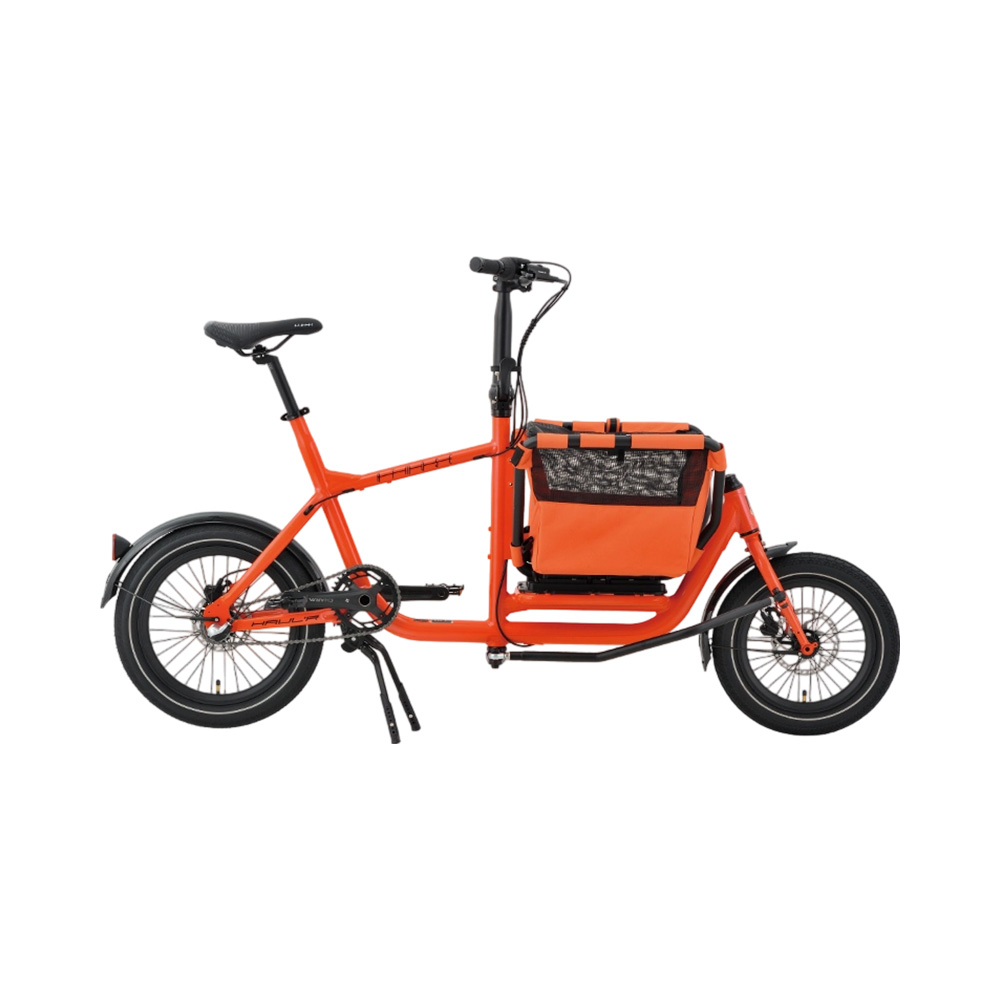
Atmose Model Q Q1 Lightweight Manual Cargo Bike for Fitness and Errands
The Q1 is especially appealing to riders who want transportation and physical activity to coexist. Every journey provides an opportunity to pedal, and routine activities such as grocery shopping or collecting a parcel can become part of a daily exercise pattern. This does not mean that every ride must be intense. The three-speed system allows the rider to choose a comfortable cadence and adjust effort according to distance, cargo, wind, and road conditions.
Manual power also creates a more predictable ownership experience. There is no battery capacity to monitor and no question about whether electrical assistance will be available at the end of a trip. The rider’s energy is the primary power source, which can encourage a more deliberate and active relationship with transportation.
For flat commutes, this arrangement can be highly practical. A rider traveling a few kilometers to a local market, café, workplace, school, or community facility may not need the assistance of a motor. The bike’s cargo capacity adds convenience, while the manual drivetrain preserves the feel and exercise benefits of cycling.
However, the Q1 should be selected with route conditions in mind. Riders who regularly face long distances, steep hills, strong winds, heavy cargo, or mobility limitations may benefit more from an electric model. The Q1 is not intended to replace every type of cargo bike. Its strength lies in serving users whose needs align with a lightweight and human-powered platform.
The Q1 uses a Shimano 3-speed Sora system. A three-speed drivetrain is intentionally simpler than the wide-range gearing found on touring bicycles or performance mountain bikes. For an urban cargo bike intended primarily for relatively flat routes, this can be an appropriate balance between usability and mechanical simplicity.
The rider can select a lower gear when starting with cargo or approaching a modest incline, a middle gear for ordinary cruising, and a higher gear when traveling faster on a clear, level road. This arrangement avoids the need to manage a large number of gear combinations while still providing meaningful adjustment.
Fewer gears may also make the control system easier for casual riders to understand. Family members or occasional users can quickly learn the basic relationship between gear choice and pedaling effort. The design is therefore accessible without being completely single-speed.
At the same time, a three-speed system requires appropriate expectations. It is not designed for mountainous terrain or high-speed athletic riding. Its purpose is to support practical city mobility, where reliability, straightforward operation, and low mental overhead can matter more than an extensive gear range.
The Q1 is equipped with Tektro hydraulic disc brakes. Hydraulic disc brakes use fluid pressure to transmit force from the brake lever to the caliper. Compared with basic mechanical systems, hydraulic actuation can provide smooth lever operation and consistent braking control when properly maintained.
Braking performance is particularly important on a cargo bike because the rider may carry additional mass in the front basket. The load can affect momentum and stopping distance, especially on wet pavement, downhill sections, or crowded streets. Disc brakes are positioned away from the rim, which can help maintain braking function in conditions where wheel rims become dirty or wet.
The Q1 uses wide 2.4-inch tires on both wheels, with a 16-inch front wheel and a 20-inch rear wheel. The wide profile creates a substantial contact patch that can contribute to stability and comfort on ordinary urban surfaces. The smaller front wheel also supports the compact cargo-bike geometry, while the larger rear wheel helps maintain efficient rolling and familiar pedaling dynamics.
The listed tires are described as puncture-proof. No tire is completely immune to every possible type of damage, so riders should still maintain suitable pressure, inspect the tread, and avoid hazardous debris where possible. Nevertheless, puncture-resistant construction can be valuable for commuters who want to reduce interruptions caused by common urban road hazards.
Proper loading remains essential. Cargo should be placed so that it does not block the rider’s view, interfere with steering, touch the tires, or shift during braking. The broad front basket is useful precisely because it provides space, but that space should be used responsibly.
One of the Q1’s practical features is its front folding basket. The basket is designed to be installed without a complex tool-based process. The installation sequence involves three basic actions: aligning the basket base with the pre-installed mounting holes, lowering the basket vertically until the clips contact the mounting points, and pushing the basket backward toward the saddle.
A clicking sound indicates that the basket has engaged successfully. This type of guided attachment system can make the bike more flexible for owners who sometimes need cargo capacity and sometimes prefer a more open front profile. It also reduces the time required to configure the bike for different activities.
Removal follows a similarly direct process. The rider pulls down the pin located at the bottom of the basket mount, pushes the basket forward toward the front wheel until it reaches the end of its track, and then lifts it upward. The sequence is designed to provide a clear separation between the locked carrying position and the removal process.
Although the installation process is simple, users should confirm that the basket is fully engaged before riding. The mounting points, clips, and retaining pin should be checked regularly for dirt, damage, or unusual looseness. A cargo container is part of the bike’s load-bearing system, so its connection should be treated as a safety-related component.
The removable design also improves storage flexibility. When the basket is detached, the bike may be easier to position in a narrow space. Owners can keep the basket installed for shopping or transport and remove it when cleaning, storing, or using the bike for lighter rides.
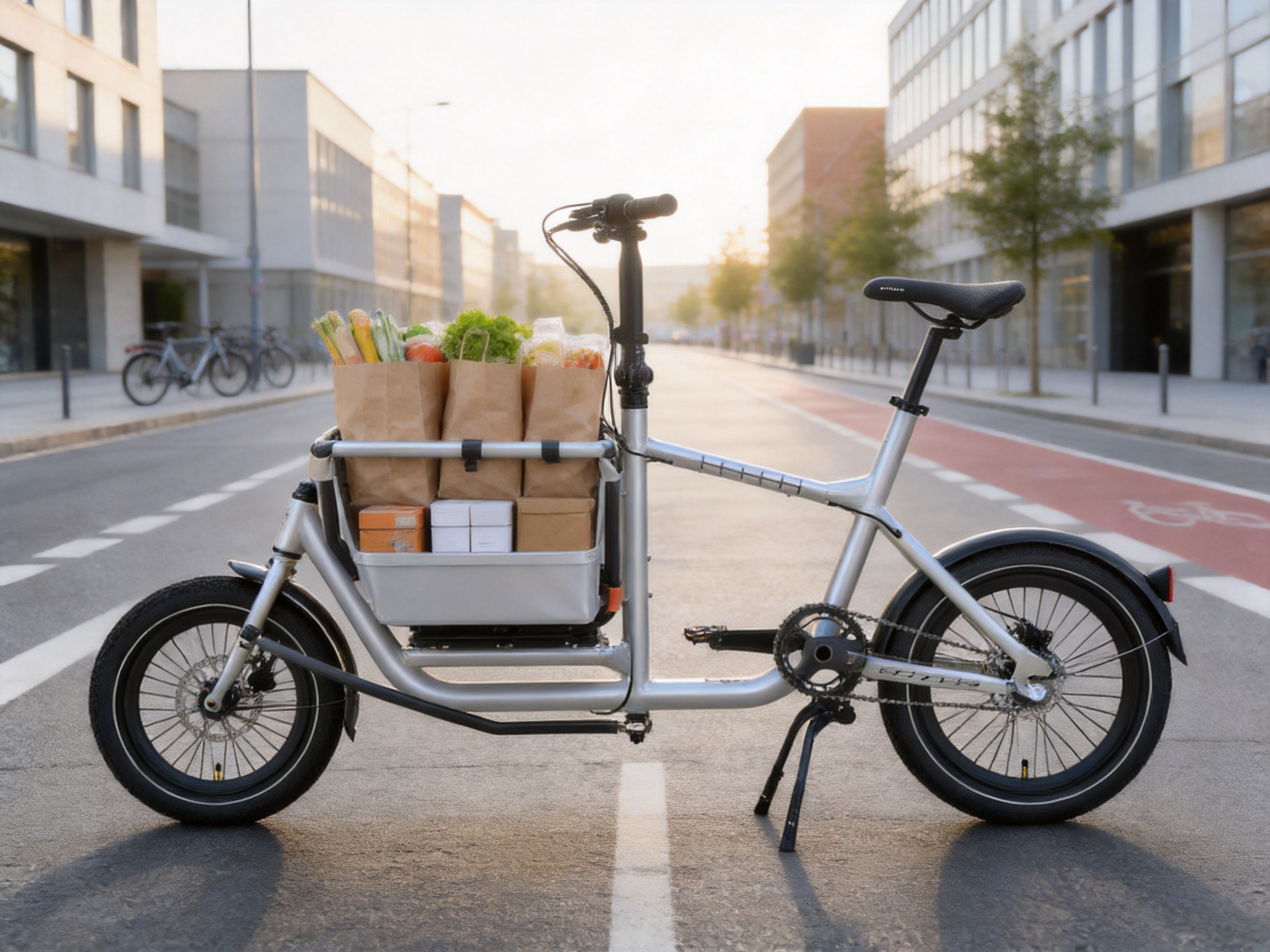
The Q1 competes in a market that includes standard bicycles, electric cargo bikes, long-tail cargo bikes, front-loading bakfiets-style bicycles, folding utility bikes, and larger commercial delivery platforms. Its advantage is not maximum capacity or maximum motor power. Instead, it combines useful cargo space with a low-complexity riding experience.
A standard city bicycle is often lighter and smaller, but it may not provide enough dedicated space for groceries or bulky personal items. Riders may need backpacks, panniers, baskets, or improvised straps. The Q1 offers a purpose-built front basket and a stronger cargo-oriented structure, making regular carrying tasks more organized and convenient.
Compared with a basic bicycle equipped with a small handlebar basket, the Q1 provides a substantially larger carrying area. The rider can transport more without placing the entire load on the back or shoulders. This can make errands more comfortable and reduce the need to use a car for short trips.
Electric cargo bikes provide assistance, but that assistance comes with additional components. Batteries, motors, controllers, displays, wiring, sensors, and charging systems all contribute to overall weight and ownership complexity. The Q1 removes those elements, which can make it easier to lift, store, understand, and maintain.
The Q1 also avoids battery degradation and charging downtime. A battery-powered vehicle may gradually lose usable capacity over time, particularly if the battery is exposed to unsuitable storage conditions or frequent extreme charge levels. The Q1 does not face that category of concern because it relies on conventional mechanical cycling.
Cost can also be a consideration. Without an electric drive system, a manual cargo bike may offer a more accessible entry point for customers who want cargo utility but do not need powered assistance. The exact purchase and ownership costs depend on local pricing and maintenance conditions, but the underlying product architecture is less electrically complex.
Large front-loading cargo bikes can carry children, multiple passengers, or commercial loads. Their size and capacity are valuable for specific users, but they may be difficult to store and maneuver in compact residential environments. The Q1 provides a smaller-scale cargo solution for riders who need everyday carrying space rather than a full passenger compartment.
Its 620-millimeter width and 1,780-millimeter length create a practical urban footprint. While it is still larger than a normal bicycle, it is designed to remain manageable for neighborhood riding and storage. This makes it relevant to customers who want more utility without committing to the dimensions of a full-size family or delivery cargo bike.
A single-speed bicycle can be mechanically simple, but it may become uncomfortable when carrying a meaningful load or starting from a stop. The Q1’s three-speed arrangement gives the rider more control over pedaling effort while preserving a relatively straightforward drivetrain.
This is a useful compromise for urban riders. The system is not overloaded with adjustment options, but it provides enough range for ordinary errands, moderate inclines, and different cargo conditions.
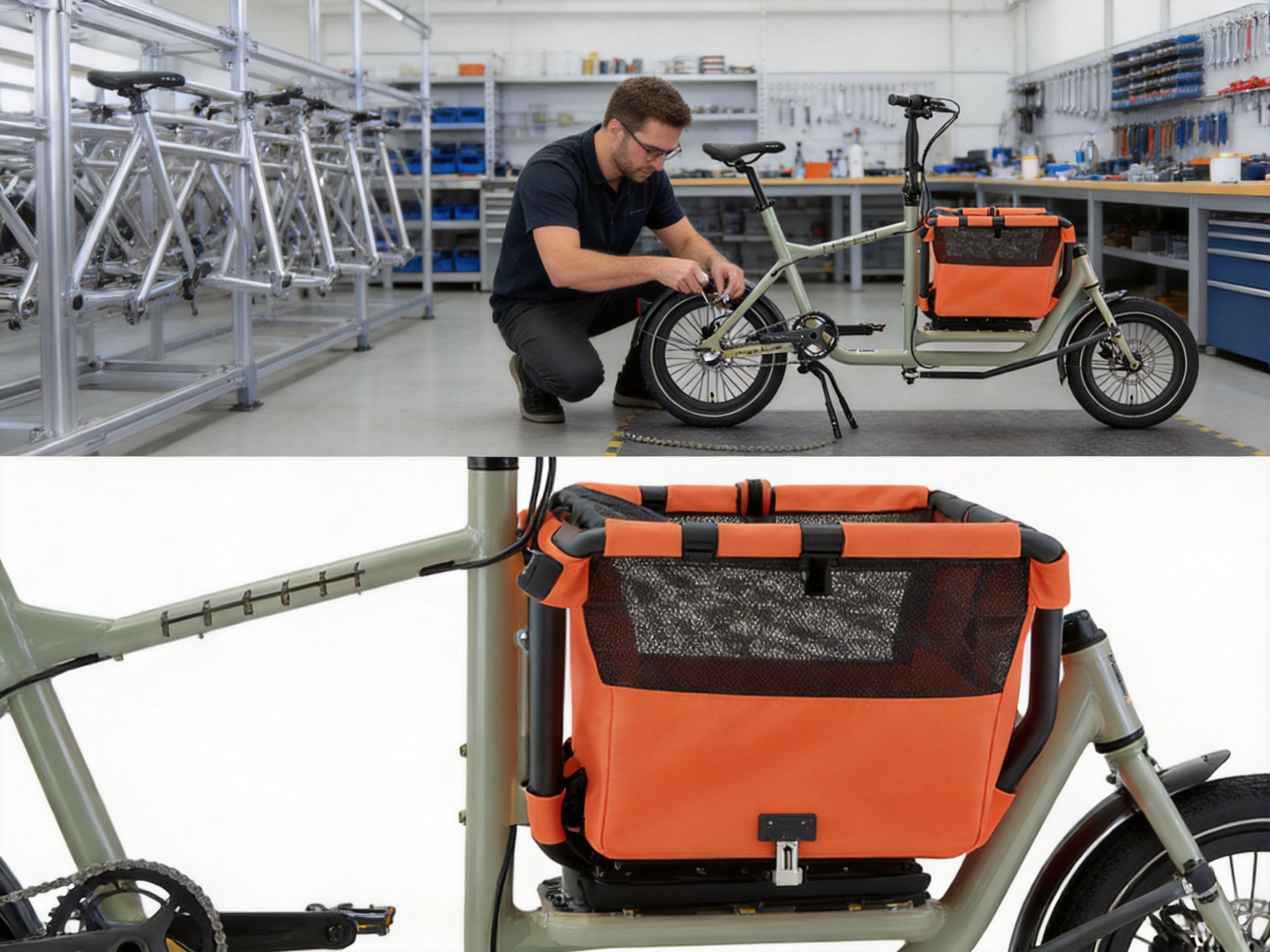
The materials supplied for the Q1 identify several strengths in the company’s development and manufacturing approach. Atmose combines American product thinking with European design and research-and-development involvement based in Paris. The company’s background includes an established American beach-cruiser brand and experience with manufacturing, supply-chain coordination, and product development.
These resources matter because a cargo bike is more than a frame with a basket attached. The frame, steering structure, basket interface, wheel sizes, braking system, tire selection, and load ratings must function together. A company with experience in bicycle production can apply established knowledge of geometry, component integration, assembly, sourcing, and quality control to a specialized cargo platform.
The use of 6061 T4T6 aluminum alloy reflects a deliberate engineering choice. The alloy is widely used in bicycle frames because it can support lightweight construction while providing a practical strength-to-weight balance. The specified temper designation also indicates that the frame material is selected and treated according to a defined engineering standard rather than being described only in general marketing language.
The Q1’s component selection shows a similar emphasis on established suppliers and recognizable systems. Shimano drivetrain components, Tektro hydraulic disc brakes, and puncture-resistant wide tires are identifiable technologies that allow riders and service technicians to understand the bike’s main wear and control systems. This can support easier maintenance and replacement planning compared with a platform built around entirely proprietary parts.
The removable basket mounting system demonstrates attention to user-centered assembly. Its three-step installation and two-step removal processes reduce the difficulty of converting the bike between cargo and lighter configurations. A well-designed interface should guide the user toward correct positioning and provide a clear indication of engagement, such as the described click sound.
Atmose’s manufacturing strength also comes from its stated combination of mature supply-chain experience and continuous innovation. This does not mean that every component is manufactured in one location or that all processes are identical across product lines. Rather, it indicates an organizational capability to coordinate design requirements, component sourcing, production, assembly, and product refinement across an international development structure.
For customers and wholesale buyers, this type of organizational foundation can be important. A product must be repeatable, serviceable, and supportable beyond the first shipment. Consistent specifications, reliable component sourcing, clear assembly procedures, and ongoing product development all contribute to a stronger ownership experience.
The Q1’s architecture appears to prioritize straightforward assembly and use. The basket mounting instructions are clearly sequenced, while the mechanical drivetrain and hydraulic braking system rely on familiar bicycle-service principles. A product that can be understood by dealers and technicians is generally easier to support than one with an unnecessarily complicated structure.
The absence of a battery and motor also reduces the number of electrical systems that must be inspected during assembly. This can simplify production checks and lower the number of potential electrical fault points in later service. The bike still requires proper mechanical assembly, brake adjustment, wheel alignment, tire inflation, and fastener inspection, but its service profile remains closer to that of a conventional bicycle.
Durability in an urban cargo bike depends on more than a strong frame. The bike must tolerate repeated starts and stops, uneven pavement, changing loads, frequent parking, and weather exposure. The Q1 addresses these demands through a cargo-oriented aluminum frame, hydraulic disc brakes, wide tires, and a dedicated basket structure.
Its design philosophy emphasizes reliability, practicality, comfort, and enjoyment. These priorities are consistent with an everyday vehicle that is expected to perform repeatedly rather than only during occasional recreational rides. The product does not rely on an elaborate electrical experience to create value. Its value comes from dependable mechanical transportation and useful carrying capacity.
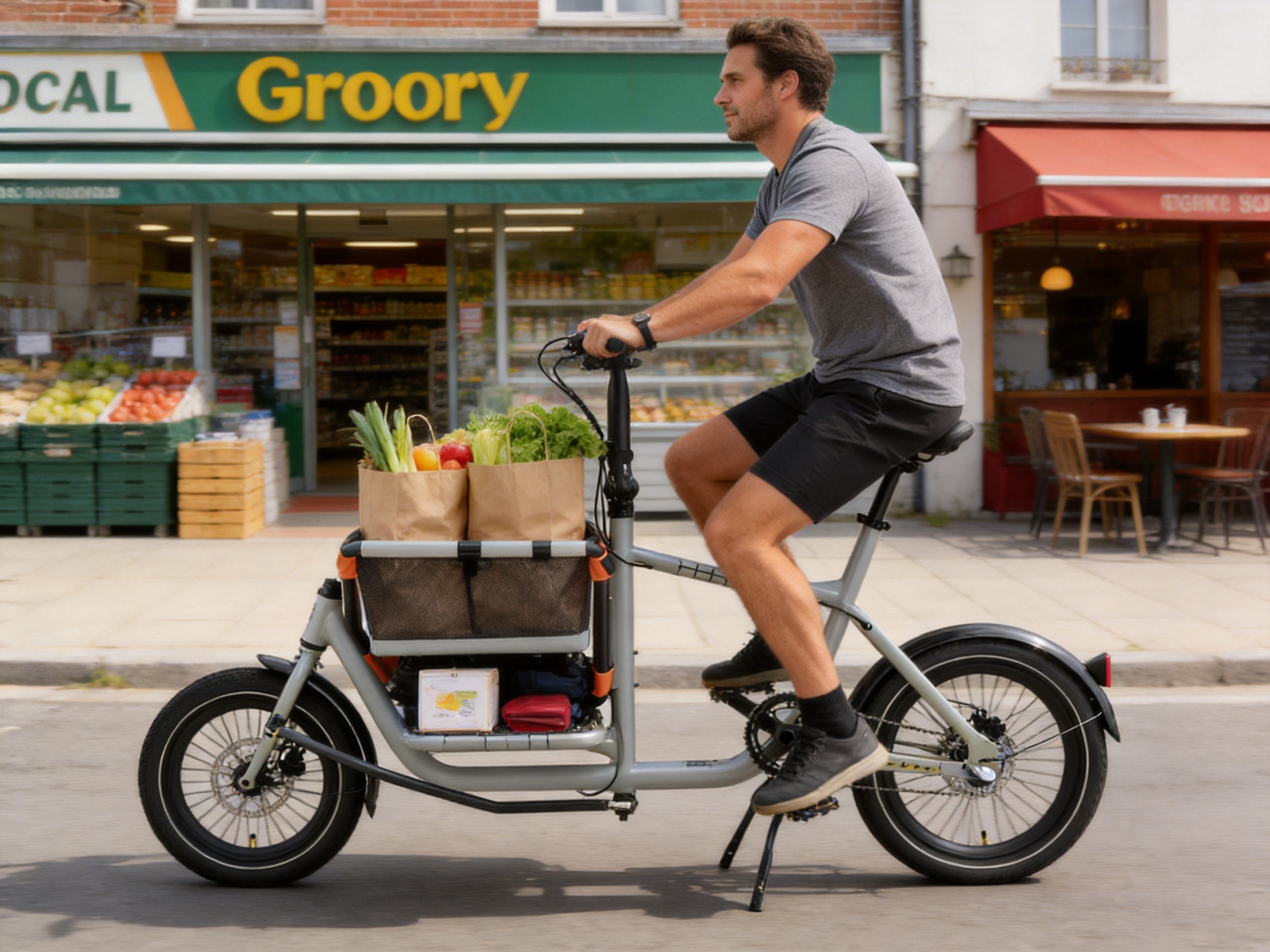
The Q1 is well suited to grocery shopping. The front basket can accommodate reusable bags, packaged food, household supplies, and other purchases within the stated weight limit. Keeping the load in front of the rider may make it easier to monitor the cargo than carrying items in a backpack.
It can also serve as a workplace commuter. Office clothing, a laptop in a protective case, lunch, and small work materials can be carried without requiring a car. Riders should use appropriate protective cases and secure cargo so that it remains stable over uneven surfaces.
Parents and caregivers may use the Q1 for small family errands, although the listed basket rating and design should be respected. The product is a cargo carrier, not automatically a passenger carrier. Children or other passengers should not be transported unless the bike has an approved, properly installed seating system designed for that purpose.
For local business users, the Q1 may be useful for lightweight deliveries, mobile service work, neighborhood marketing, or equipment transport. Its manual format can be particularly suitable for short service zones where parking a motor vehicle is inconvenient and electric range is unnecessary.
The Q1 can also support recreational activities. A rider may carry a picnic, sports equipment, art supplies, or supplies for a small outdoor project. Removing the basket can create a lighter configuration for rides where cargo capacity is not required.
In mixed transportation, the bike may help connect homes with public transport stations, local commercial districts, and community facilities. Its non-electric design avoids battery restrictions that may apply in certain storage or transit situations, although users should always check local regulations and carrier policies.
The Q1’s lack of electrical components is one of its clearest maintenance advantages. There is no battery to charge, store, replace, or monitor, and no motor system requiring diagnostic support. Routine care is therefore centered on familiar bicycle tasks.
These tasks include checking tire pressure, inspecting brake pads and rotors, lubricating the chain as appropriate, cleaning the drivetrain, verifying that the wheels are secure, and checking the basket mounting hardware. Hydraulic disc brakes may require professional bleeding or servicing at intervals determined by use and performance. The absence of a motor does not eliminate maintenance; it simply reduces the number of systems involved.
Storage is also more flexible. The bike can be kept in a location without a power outlet, and the basket can be removed when the available space is limited. The aluminum frame should still be protected from unnecessary impact, prolonged moisture, and unsuitable storage conditions.
Owners should conduct a quick inspection before carrying heavy loads. The basket should be firmly locked, the retaining pin should be correctly positioned, tires should be inflated to the recommended pressure, and both brake levers should feel consistent. Any unusual movement, noise, or braking change should be addressed before riding.
Cargo-bike safety begins with load management. The Q1’s basket rating is 25 kilograms, and this limit should not be exceeded. Heavy items should be placed low and toward the center of the basket when possible. Fragile or unstable objects should be secured with suitable straps or bags.
The rider should maintain a clear view over and around the cargo. Items must not cover lights, reflectors, brake controls, or the front wheel. Long objects should not extend into the steering path or create a hazard for pedestrians and other cyclists.
Extra weight affects handling and stopping. A fully loaded bike may accelerate more slowly, require greater braking distance, and respond differently to turns. Riders should practice in a low-traffic area before carrying a heavy or unfamiliar load on public streets.
Helmet use, visible clothing, appropriate lighting, and compliance with local traffic rules are strongly recommended. Riders should adapt speed to road conditions and remember that wide tires improve stability but do not remove the risks associated with wet surfaces, potholes, loose gravel, or sudden obstacles.
The Q1 is a strong match for riders who live in relatively flat areas, travel short or moderate distances, and enjoy active cycling. It is especially appropriate for people who want a practical alternative to the car but do not need motor assistance for every trip.
It may also suit owners who have limited charging access, prefer low electrical complexity, or want a cargo bike that is easier to lift and store than a full electric model. Fitness-oriented riders can use the bike to integrate exercise into ordinary transportation rather than scheduling separate workouts for every activity.
Small businesses and local organizations may appreciate the Q1 for lightweight neighborhood tasks. Its carrying capacity is useful for supplies and parcels, while its manual operation can be economical for short service routes.
The Q1 may be less suitable for riders who regularly carry very heavy loads, transport multiple passengers, travel long distances, climb steep hills, or require continuous powered assistance. In those situations, a larger electric cargo bike from another category may be more appropriate. The important point is to choose the platform that matches the route and workload rather than assuming that one cargo-bike design can serve every user.
Atmose presents itself as a cargo e-bike and mobility brand focused on families, urban commuters, commercial users, and outdoor riders. Although the Q1 itself is manually powered, it benefits from a product ecosystem that includes broader experience in cargo-bike design and urban transportation.
The company’s stated “Fun & Practical” philosophy is relevant to the Q1. Practicality is represented by the cargo basket, manageable dimensions, three-speed drivetrain, hydraulic disc brakes, and straightforward maintenance. Fun comes from the responsive analog riding experience and the ability to turn ordinary errands into active travel.
The company’s international structure is another strength. Its origins in California are combined with European design and research-and-development activity in Paris. This creates a cross-market perspective: American product experience can contribute to usability and market awareness, while European urban design influence can support compact mobility, efficient use of space, and everyday practicality.
Atmose also identifies mature manufacturing expertise and an established supply chain as part of its foundation. For a bicycle brand, these capabilities can support more reliable production planning, component coordination, assembly consistency, and ongoing improvements. They are particularly valuable when developing cargo bikes, because cargo products require closer integration between frame design and accessory systems than many ordinary bicycles.
The establishment of ATMOSE BIKES INC. in Long Beach, California, in 2023, followed by the creation of ATMOSE SASU in France in 2026, reflects an expanding international structure. The company’s continuing emphasis on sustainability, reliability, practicality, and innovation aligns with the broader goal of replacing some short car trips with efficient human-powered or electrically assisted transportation.
The growth of electric mobility does not make manual cargo bikes obsolete. Instead, it creates a wider range of choices. Electric assistance is valuable for hills, heavy loads, long distances, and riders who need reduced physical effort. Manual power remains valuable for simplicity, exercise, lower system complexity, and direct control.
The Q1 demonstrates that cargo utility and traditional cycling do not have to be separate concepts. A rider can transport meaningful daily loads without committing to the weight and infrastructure of an electric system. This can encourage more people to replace short car journeys with cycling, particularly in neighborhoods where distances are modest and roads are relatively level.
There is also an environmental dimension. A manual bicycle does not consume electricity during use and has no traction battery requiring production, charging, and eventual replacement. The overall environmental impact of any product depends on materials, manufacturing, shipping, maintenance, and service life, but extending human-powered transportation into practical cargo tasks can reduce dependence on motor vehicles for local trips.
Most importantly, the Q1 treats utility as a daily experience rather than a specification contest. It does not attempt to win by offering the highest motor output or the largest battery. It aims to be available, understandable, maneuverable, and useful whenever the rider needs to move people’s belongings around the neighborhood.
No. The Q1 does not include a battery or motor. It is powered entirely by the rider and is intended for users who prefer a traditional cycling experience.
It is designed for riders who want a lightweight cargo bike for short-distance errands, flat commutes, neighborhood transportation, fitness, and everyday carrying needs.
The listed maximum basket load is 25 kilograms. Users should stay within this limit, distribute weight evenly, and secure all cargo before riding.
The listed maximum rider load is 120 kilograms. Total use should also account for clothing, accessories, and any additional equipment mounted on the bike.
The front folding basket measures approximately 470 millimeters long, 470 millimeters wide, and 375 millimeters high.
The basket is installed by aligning its base with the pre-installed mounting holes, lowering it until the clips contact the mounts, and pushing it backward toward the saddle. A click indicates that the basket has engaged.
The retaining pin at the bottom of the basket mount is pulled downward. The basket is then pushed forward toward the front wheel along its track and lifted upward once it reaches the end.
The bike uses a Shimano 3-speed Sora system. This provides a simple selection of lower, middle, and higher gears for ordinary urban riding.
The Q1 uses Tektro hydraulic disc brakes. These provide hydraulic lever actuation and are suited to the controlled stopping needs of a cargo bike.
The front tires are 16 inches by 2.4 inches, and the rear tires are 20 inches by 2.4 inches. The tires are described as puncture-proof and are designed for practical urban use.
The Q1 can handle ordinary urban variations in terrain, but it is primarily intended for flat or moderately varied routes. Riders who frequently face steep hills or heavy loads may prefer an electric cargo-bike model.
No. Since it has no battery or motor, it can be ridden immediately without charging.
Its lack of electrical components simplifies maintenance compared with an electric cargo bike. Regular bicycle care is still required, including tire, brake, chain, wheel, and basket-mount inspections.
The supplied specifications identify a front basket for cargo, not a passenger seat. Children should not be transported unless an approved and compatible passenger system is installed and local regulations permit it.
The Q1 provides a dedicated front cargo structure, a larger basket, a cargo-oriented frame, wide tires, and load ratings designed for practical carrying. It offers more utility than a typical city bicycle while remaining manually powered.
Atmose combines American origins, European design and research-and-development activity, bicycle manufacturing experience, a mature supply chain, and a product philosophy centered on practical, reliable, and enjoyable mobility.
The Q1 is a focused response to a specific urban transportation need. It is not intended to be the most powerful cargo bike, the longest-range cargo bike, or the largest family platform. Its purpose is different: to provide useful carrying capacity in a lightweight, manually powered, and mechanically straightforward package.
Its 6061 T4T6 aluminum alloy frame, three-speed Shimano drivetrain, Tektro hydraulic disc brakes, wide puncture-resistant tires, and removable folding front basket create a practical foundation for everyday use. The 25-kilogram basket rating gives the bike meaningful utility, while the compact dimensions help it remain suitable for neighborhood streets and storage-conscious households.
Compared with electric competitors, the Q1 eliminates charging, battery aging, motor servicing, and much of the additional weight associated with powered systems. Compared with ordinary bicycles, it offers substantially greater cargo capability. That balance makes it especially attractive to active riders, flat-city commuters, local businesses, and households seeking a car-light transportation option.
Atmose’s combination of international design, manufacturing experience, supply-chain coordination, and continuous product development provides a solid foundation for this approach. The company’s emphasis on practical mobility is reflected in the Q1’s user-oriented basket system, familiar mechanical components, serviceable construction, and direct riding experience.
For riders whose routes and loads do not require electric assistance, the Q1 offers a compelling reminder that useful urban transportation can remain simple. It turns routine errands into active journeys, carries more than a standard bicycle, and avoids many of the complications associated with electric mobility. In that role, it is not merely a non-electric alternative. It is a purpose-built manual cargo bike for people who value fitness, independence, practicality, and the enduring pleasure of riding under their own power.
Atmose Bikes. Product specification sheet for the Model Q Q1 lightweight manual cargo bike.
Atmose Bikes. Product information regarding the Model Q urban companion cargo-bike category.
Atmose Bikes. Corporate information concerning product philosophy, design, research and development, and manufacturing experience.
Shimano. Technical information concerning three-speed bicycle drivetrain systems.
Tektro. Technical information concerning hydraulic disc-brake systems for bicycles.
General bicycle-industry references concerning 6061 aluminum alloy frame construction, cargo-bike loading practices, and urban cycling safety.
Nov 27, 2026
Nov 25, 2026
Nov 21, 2026


info@atmosecargobike.com

200 rue de la Croix Nivert 75015 Paris

Custom Electric Bakfiets
 English
 Français
 Deutsch