Sep 16, 2026
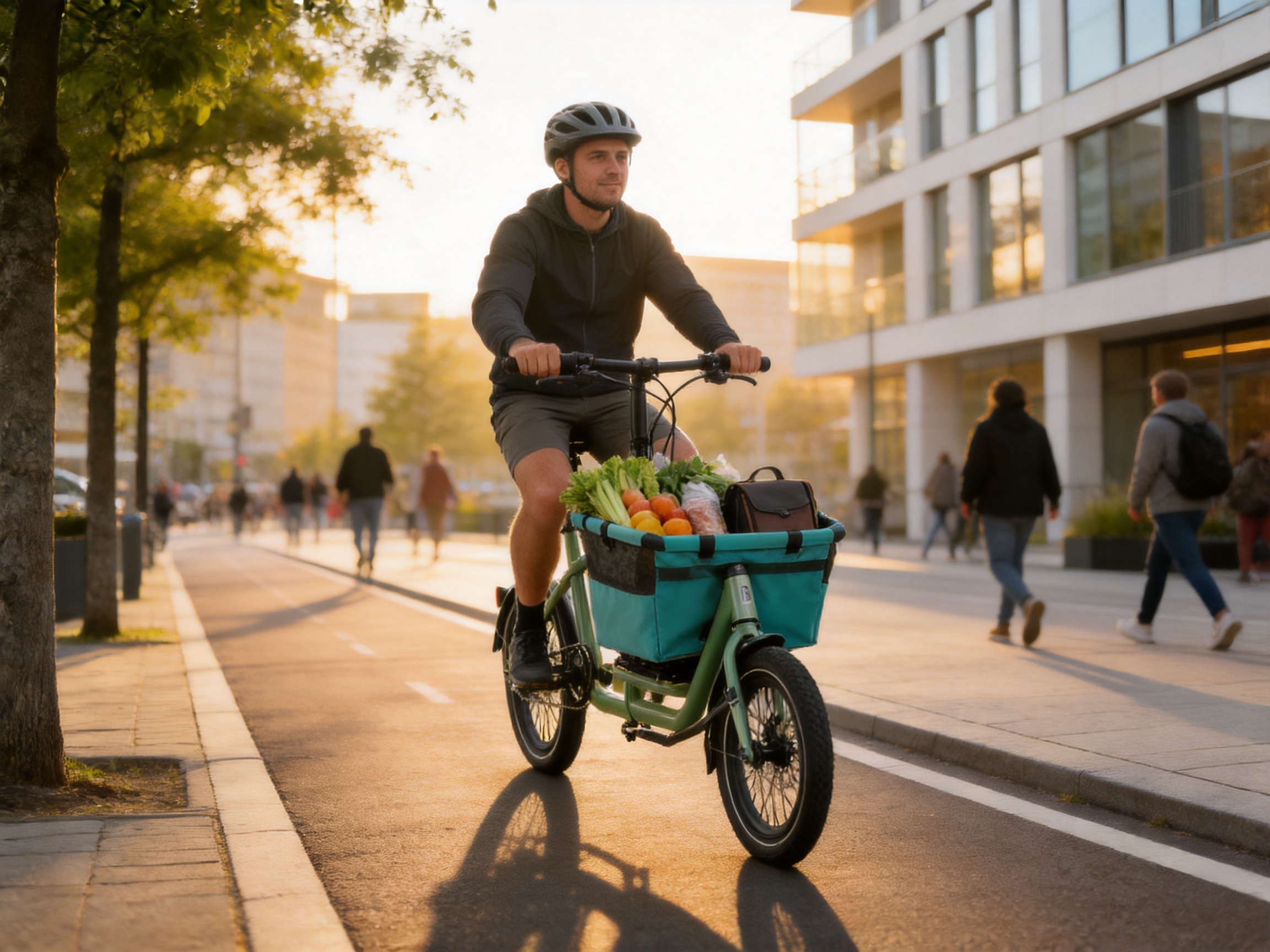
Urban transportation is changing. More people are looking for practical alternatives to private cars, crowded public transport, and heavy electric bicycles. At the same time, many riders do not need a large motor, a high-capacity battery, or a complicated digital control system for every journey. A short trip to the market, a ride to a local café, or a quick commute across a flat neighborhood can often be completed more naturally with a simple, lightweight bicycle designed to carry useful cargo.
The Atmose Model Q Q1 is designed for precisely this type of journey. It is a lightweight manual mini cargo bike intended for fitness, errands, and everyday urban mobility. By removing the motor and battery used by electric cargo bikes, the Q1 focuses on direct pedal power, uncomplicated ownership, nimble handling, and a straightforward riding experience. Its front folding basket creates practical carrying capacity without making the bicycle feel like a large commercial vehicle.
This approach gives the Q1 a distinct position in the cargo-bike market. It is not designed to compete with a high-powered electric cargo bike on steep hills, long distances, or heavy commercial hauling. Instead, it addresses a different need: a compact, responsive, easy-to-maintain cargo bicycle for riders who enjoy the physical experience of cycling and want enough carrying capacity for ordinary urban tasks.
For people living in relatively flat areas, the Q1 can provide a useful combination of mobility and exercise. It can carry groceries, personal items, work supplies, or other small loads while remaining significantly simpler than an electric model. Its aluminum frame, three-speed drivetrain, hydraulic disc brakes, wide puncture-resistant tires, and folding front basket provide a practical foundation for everyday use.
Many cargo bikes are built around electric assistance. That design makes sense for riders who regularly travel long distances, climb hills, carry children, or transport substantial commercial loads. However, electric systems also add weight, cost, charging requirements, and additional components that must be inspected and maintained.
The Q1 takes another path. It treats the cargo bike first as a bicycle and second as a utility vehicle. The rider supplies the power, while the frame and basket provide the carrying function. This creates an experience that is closer to a traditional bicycle than to a motorized vehicle.
That distinction matters in daily use. A rider can take the Q1 out without checking a battery level or planning around a charging point. There is no motor assistance setting to adjust and no battery to remove before carrying the bicycle upstairs. The bike is always ready as long as the tires are inflated, the chain is lubricated, and the standard mechanical components are in good working order.
The result is a direct and predictable riding experience. Pedaling effort is immediately connected to forward movement. Riders who value exercise can use the bike as part of a healthy routine rather than treating every trip as passive transportation. A short shopping trip can become a moderate workout, while a longer ride can provide a more substantial fitness benefit.
One of the Q1’s principal advantages is its lightweight character. Cargo bikes are often larger and heavier than standard bicycles because they must support additional equipment and carrying capacity. Electric cargo bikes are generally heavier still because of their motors, batteries, wiring, controllers, and reinforced mounting structures.
By eliminating the electric drive system, the Q1 can be easier to move when it is not being ridden. This is important for apartment residents, office workers, and anyone who must negotiate stairs, narrow corridors, lifts, storage rooms, or wall racks. A lighter bicycle is also easier to turn around in a small space and simpler to position inside a home or workplace.
Light weight can improve the riding experience as well. A nimble bicycle responds more readily to steering input and requires less effort when accelerating from a stop. This is especially useful on neighborhood streets where riders frequently slow down for intersections, pedestrians, parked vehicles, and delivery activity.
The Q1’s compact mini-cargo format supports this urban role. Its stated dimensions are approximately 1,780 millimeters in length, 620 millimeters in width, and 1,070 millimeters in height. These proportions give the bike useful front-loading capacity without creating the long footprint associated with some large family or commercial cargo bicycles.
Compact dimensions can also make parking easier. The rider may be able to use bicycle storage areas that would be inconvenient for a full-size cargo bike. In dense urban environments, the ability to fit into limited storage space can be as valuable as the ability to carry additional cargo.
The Q1 is equipped with a front folding basket measuring approximately 470 millimeters in length, 470 millimeters in width, and 375 millimeters in height. This basket is designed to provide a convenient loading area for groceries, bags, packages, work equipment, and other everyday items.
The stated basket load capacity is 25 kilograms. This is a substantial amount for routine errands, but riders should distribute cargo evenly and keep the load secured. Heavy objects should be placed low and centrally whenever possible. Loose items should be contained in bags or boxes so that they cannot shift into the steering area or fall onto the road.
The basket’s front position keeps the cargo visible to the rider. This can make it easier to monitor bags and confirm that objects remain stable during a journey. It also leaves the rear portion of the bicycle clear for a natural riding position and allows the bike to maintain a compact overall layout.
A folding basket adds another practical advantage. When the bike is being stored or moved without cargo, the front structure can be made more convenient to handle. The design is intended to support regular installation and removal, which is useful for riders who switch between carrying duties and storage requirements.
Compared with a conventional bicycle equipped only with a rear rack, the Q1 offers a more substantial and more accessible loading area. Compared with a large box-style cargo bike, it avoids the size and visual bulk that may be unnecessary for small daily loads. This middle position makes the Q1 suitable for riders who need more utility than a standard bicycle but less capacity than a family or delivery vehicle.
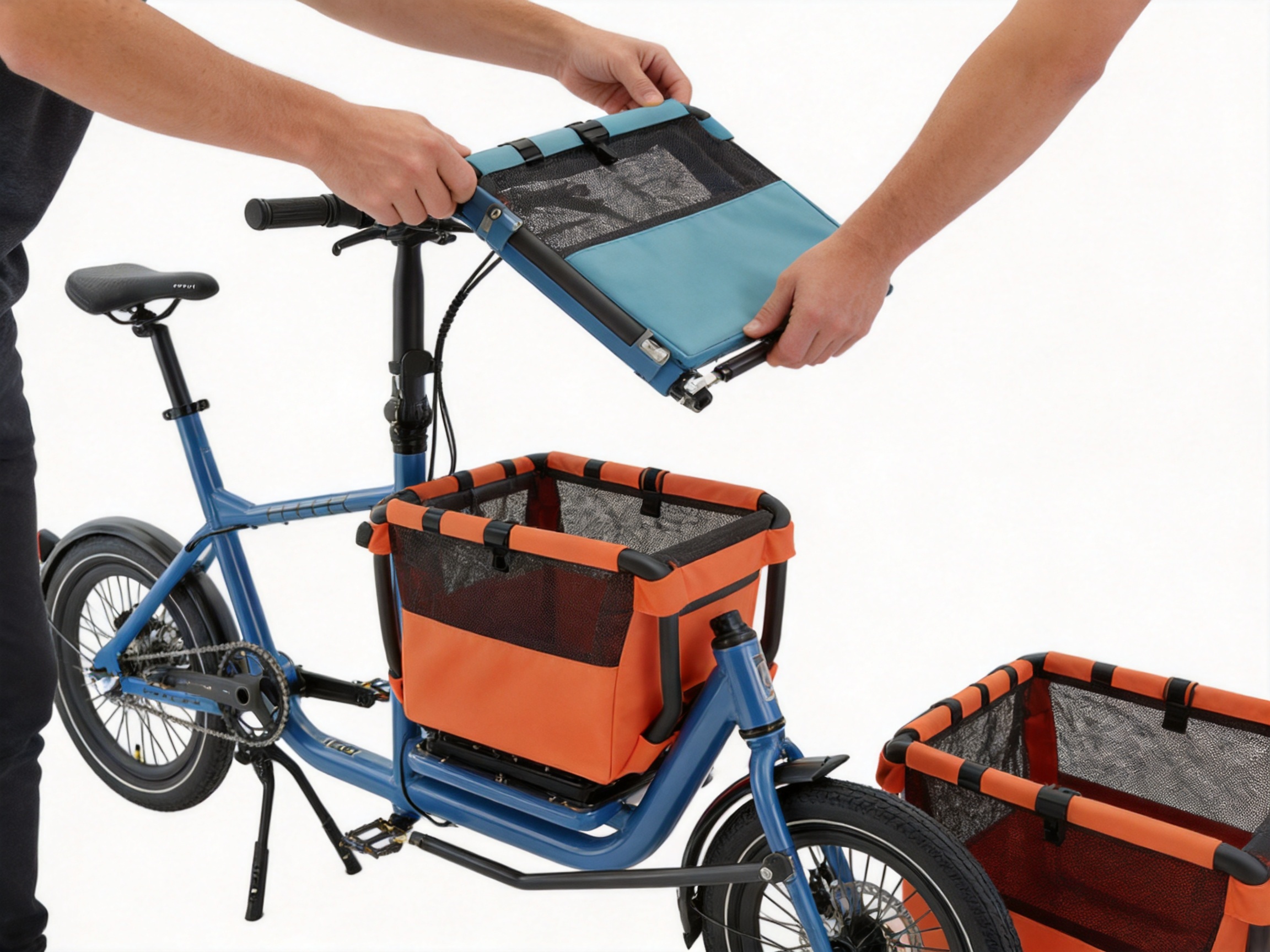
The front basket is designed for fast installation. The process begins by aligning the basket base with the pre-installed mounting holes near the handlebar. Once the holes are aligned, the basket is lowered vertically so that the clips make contact with the mounting structure. The final movement is a gentle push toward the saddle.
A clear clicking sound indicates that the basket has engaged correctly. Riders should always confirm that the basket is fully seated and secure before loading it or beginning a ride. A visual inspection of the clips and mounting points is a sensible part of every installation.
This three-step procedure is valuable because accessories are more useful when they are easy to operate. If a basket requires tools, complicated adjustments, or extensive preparation, riders may leave it installed permanently even when they do not need it. A quick mounting system gives the owner greater flexibility.
The system also supports household sharing. One family member may use the Q1 for a grocery run with the basket attached, while another may prefer to ride with a lighter, more open front configuration. The ability to adapt the bike to the task helps extend its usefulness throughout the week.
Basket removal is also designed to be straightforward. The rider first locates the pin at the bottom of the basket mount and pulls it downward firmly. The basket is then pushed forward toward the front wheel until it reaches the end of its track. After that movement, the rider can lift the basket upward to complete removal.
As with installation, removal should be performed while the bicycle is stationary and supported securely. Riders should avoid forcing the mechanism if the basket is carrying cargo or if the mounting points are not properly aligned. Keeping the track and pin area clean can help maintain smooth operation over time.
A removable basket can be useful in homes with limited storage space. It may be possible to store the bicycle and basket separately, place the basket inside a vehicle, or carry it into a shop after parking the bike. This type of flexibility is not always available with permanently integrated cargo boxes.
The removable structure also gives the Q1 a less specialized appearance when cargo capacity is not required. It can function as an everyday personal bicycle during one ride and a practical shopping vehicle during the next.
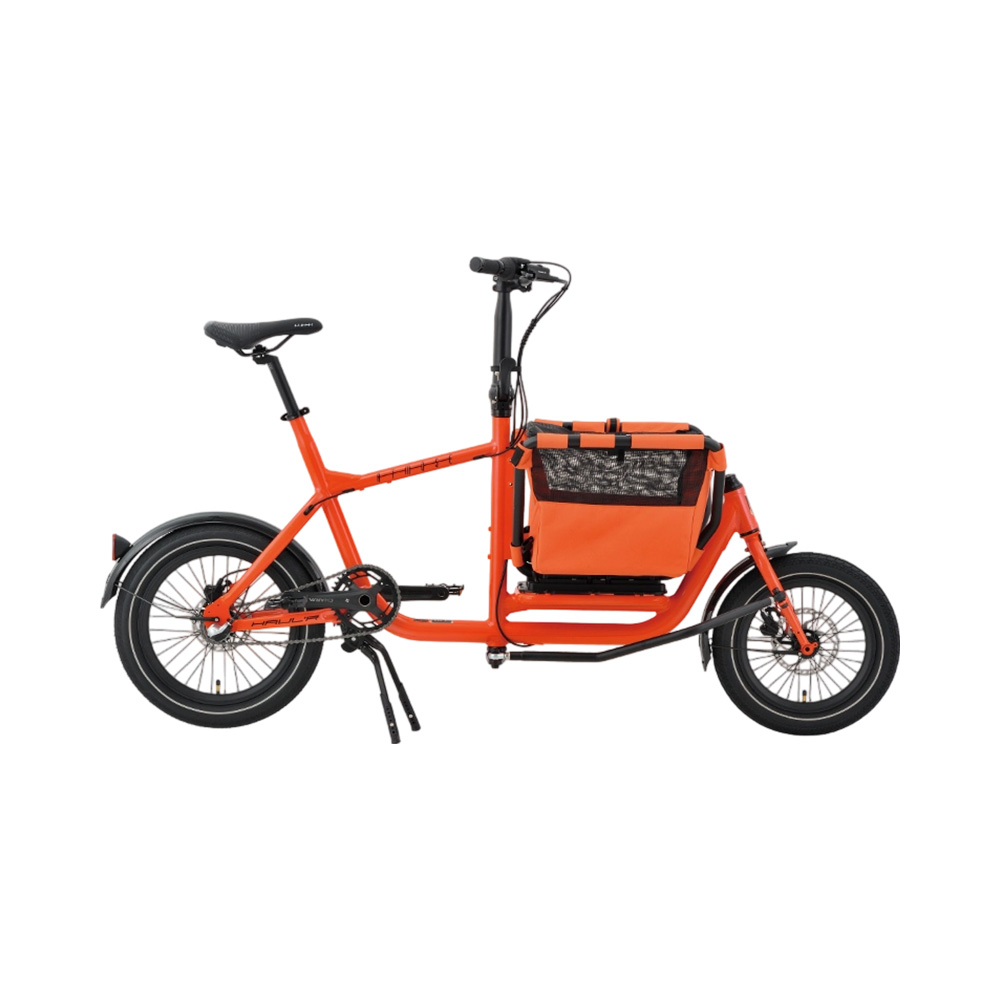
Atmose Model Q Q1 Lightweight Manual Mini Cargo Bike for Fitness and Errands
The Q1 uses a 6061 T4T6 aluminum alloy frame. Aluminum is widely used in modern bicycle construction because it can provide a favorable balance between weight, stiffness, corrosion resistance, and manufacturing practicality. For a lightweight manual cargo bike, these characteristics are particularly relevant.
A cargo frame must support more than the rider alone. It must manage the additional forces created by a front basket and its load, including braking forces, steering inputs, road vibrations, and acceleration from a stop. The frame therefore needs to combine low weight with appropriate structural strength.
The 6061 alloy family is commonly valued for its versatility in formed and welded bicycle structures. The T4 and T6 designations refer to heat-treatment conditions that influence the material’s mechanical properties. The use of this alloy reflects an engineering focus on making the Q1 strong enough for practical utility while avoiding unnecessary mass.
The frame is specified for a maximum rider load of 120 kilograms, while the basket is rated for up to 25 kilograms. These figures should not be treated as interchangeable. The rider limit concerns the person using the bicycle, and the basket limit concerns the cargo carried at the front. The total operating load should always be managed responsibly and within the manufacturer’s stated specifications.
Frame strength alone does not determine carrying safety. Correct loading, tire pressure, brake condition, fastener inspection, and riding technique are equally important. Cargo should not obstruct the rider’s view, interfere with the brake levers, touch the wheel, or shift during cornering.
The Q1 uses a Shimano three-speed Sora speed system. A three-speed drivetrain provides a useful range for everyday flat-city travel without introducing the complexity of a large multi-speed system. The rider can select a lower gear for starting or carrying a heavier basket load and a higher gear for maintaining speed on open, level roads.
This arrangement is consistent with the Q1’s intended use. The bike is designed for short-distance errands, neighborhood travel, and fitness-oriented riding rather than extreme climbing or high-speed touring. A small number of carefully selected gears can make operation intuitive, especially for riders who prefer a clean and uncomplicated control layout.
Three speeds can also reduce the number of shifting decisions during a busy urban ride. Riders need to pay attention to traffic, pedestrians, road surfaces, and cargo stability. A straightforward drivetrain allows them to choose an appropriate gear quickly and concentrate on the route.
Because the Q1 does not have motor assistance, gear selection has a direct effect on effort. Riders should shift into an easier gear before reaching a stop or a short incline rather than waiting until the bicycle is nearly stationary. On a flat route, a moderate gear can support comfortable cadence and efficient pedaling.
Regular maintenance remains important. The chain should be kept clean and lubricated, the shifting mechanism should be adjusted when necessary, and the drivetrain should be inspected for wear. These are familiar bicycle maintenance tasks and are generally less involved than servicing an electric drive system.
The Q1 is equipped with Tektro hydraulic disc brakes. Reliable braking is especially important on a cargo bicycle because the rider may be carrying additional weight in the front basket. Hydraulic disc brakes can provide strong and controlled stopping performance when properly maintained.
Disc brakes operate independently of the rim surface, which can be advantageous in wet or dirty conditions. They also allow braking performance to remain more consistent as the wheel rim becomes worn. For an urban utility bicycle, this can support confident stopping at intersections, crossings, and congested streets.
Hydraulic systems use fluid pressure to transmit force from the brake lever to the caliper. This can provide a smooth lever feel and efficient braking response. Riders should still apply the brakes progressively, particularly when the basket is heavily loaded or when the road surface is slippery.
Brake inspection should include the condition of the pads, rotors, levers, hoses, and mounting hardware. Any unusual noise, reduced stopping power, soft lever feel, or visible fluid leakage should be addressed before continued use. Professional service may be appropriate when hydraulic components require bleeding or replacement.
Compared with basic mechanical rim brakes found on some utility bicycles, hydraulic disc brakes can provide a more capable braking package for a compact cargo platform. This equipment supports the Q1’s practical role without requiring the bike to become heavy or overbuilt.
The Q1 uses wide tires specified as 16-inch by 2.4-inch tires at the front and a 20-inch by 2.4-inch tire at the rear. The tires are described as puncture proof in the product information. In practical use, riders should still understand that no pneumatic bicycle tire is completely immune to every sharp object or road hazard.
Wide tires can improve comfort by creating a larger contact area and allowing the bicycle to absorb minor imperfections in the road. They may also provide a more stable feel when the front basket is loaded. This can be helpful on streets with uneven paving, drainage covers, painted markings, or shallow potholes.
The smaller front wheel contributes to the compact cargo-bike layout, while the larger rear wheel supports efficient rolling and a familiar pedaling position. The combination is suited to a vehicle that prioritizes maneuverability and cargo access rather than racing performance.
Tire pressure should be checked regularly. Underinflation can increase rolling resistance and make steering feel imprecise, while excessive pressure can reduce comfort and grip. The appropriate pressure depends on rider weight, cargo load, road conditions, and tire specifications.
Wide tires do not eliminate the need for careful riding. Riders should slow down before potholes, avoid sharp-edge impacts, and keep both hands available for steering when carrying cargo. A balanced load and sensible speed are essential to maintaining control.
The Q1’s strongest advantage over a standard bicycle is its front cargo capacity. A traditional commuter bicycle may accept a rear rack, panniers, or a small handlebar bag, but those options often provide less open loading space. The Q1 is designed around carrying utility from the beginning rather than adding cargo equipment as an afterthought.
Its advantage over a large non-electric cargo bike is compactness. Long-tail and front-loader cargo bicycles can carry more, but they may require more storage space and may feel less convenient for short errands. The Q1 is more appropriate for riders who need a moderate carrying area and want a bicycle that remains easy to maneuver.
Compared with an electric cargo bike, the Q1 is simpler and lighter. It does not require battery charging, motor diagnostics, electronic controls, or battery replacement planning. Its ownership costs may also be more predictable because the main service requirements are similar to those of a conventional bicycle.
The Q1 can also be more engaging than an electric model for riders who want exercise. Electric assistance can reduce physical effort, which is useful in many situations, but it can also reduce the workout value of short trips. The Q1 turns ordinary transportation into active mobility.
There are, of course, trade-offs. Riders carrying very heavy loads, traveling over steep terrain, or making long daily journeys may prefer electric assistance. The Q1’s value is greatest when its manual design matches the terrain, distance, and fitness goals of the rider.
Some lightweight utility bicycles are easy to carry but provide limited cargo support. The Q1 adds a front basket with a stated capacity of 25 kilograms, making it more practical for grocery shopping and everyday transport than a simple city bike with only a small rear rack.
Other compact cargo bicycles may use narrow tires or basic braking systems to reduce cost and weight. The Q1 combines its lightweight aluminum frame with wide tires and hydraulic disc brakes, creating a more comprehensive equipment package for riders who expect regular urban use.
Many simple bicycles also use a high number of gears, which can increase adjustment requirements and may be unnecessary for flat neighborhood routes. The Q1’s three-speed system is more focused. It gives riders enough flexibility for normal starts, level cruising, and modest changes in terrain without making the control system overly complicated.
The folding and removable basket further distinguishes the Q1 from utility bikes with fixed carriers. Riders can adapt the bike to shopping, commuting, storage, or recreation. This versatility is especially relevant for households that do not want a single-purpose cargo vehicle.
Atmose describes itself as a cargo e-bike and mobility brand with American origins, European design and research involvement, and manufacturing expertise supported by an established supply chain. Although the Q1 is a manual bicycle, the same product-development strengths can influence its frame geometry, component selection, accessory integration, and overall usability.
The brand originated in California through MOTIV, an established American beach cruiser company with experience in bicycle manufacturing. Atmose Bikes Inc. was founded in Long Beach, California, in 2023 by Cameron Perstein and Guojie Shen. In 2026, Atmose SASU was established in France with a design and research team based in Paris.
This international structure gives the company access to more than one design perspective. American product thinking often emphasizes approachable use, practical function, and broad lifestyle appeal. European urban design experience can contribute an understanding of compact streets, limited storage, daily cycling infrastructure, and the visual expectations of city riders.
The Q1 demonstrates a product-development process centered on intended use. The company has not simply reduced an electric bike by removing its motor and battery. The product is presented as a dedicated manual option for flat commutes, fitness, and short-distance errands. Its specifications reflect that purpose: compact dimensions, a manageable load rating, a simple three-speed system, wide tires, and an accessible front basket.
Component selection also suggests a balanced engineering approach. The aluminum frame addresses weight and structural efficiency. The Shimano drivetrain provides a recognizable mechanical system. Tektro hydraulic brakes support controlled stopping. Wide tires enhance comfort and stability. These components work together rather than functioning as isolated marketing features.
A mature supply chain can help a manufacturer maintain consistency across frames, mounting hardware, wheels, brakes, and accessories. Cargo bikes place particular demands on alignment and assembly because the front basket, steering system, and load-bearing structure must work together accurately. Consistent component sourcing and quality control are therefore important to the final riding experience.
The manufacturing process should be understood as a complete chain of activities rather than a single factory operation. It includes material selection, frame forming and welding, heat treatment, surface finishing, component integration, basket-mount installation, final assembly, adjustment, inspection, and packaging. The available product information does not provide a detailed factory-by-factory process description, but the specification of a 6061 T4T6 aluminum frame and integrated cargo hardware indicates attention to structural and functional requirements.
For a cargo bicycle, quality assurance must include more than checking whether the wheels rotate. The assembly team must verify wheel alignment, headset adjustment, brake operation, drivetrain shifting, tire installation, fastener torque, basket engagement, and overall steering clearance. These checks help ensure that the bike arrives ready for safe setup and reliable everyday use.
Product development also continues after the initial design. Installation instructions for the basket, removal guidance, and defined load limits are examples of usability information that supports ownership. A product is stronger when its design and instructions communicate clearly with the rider.
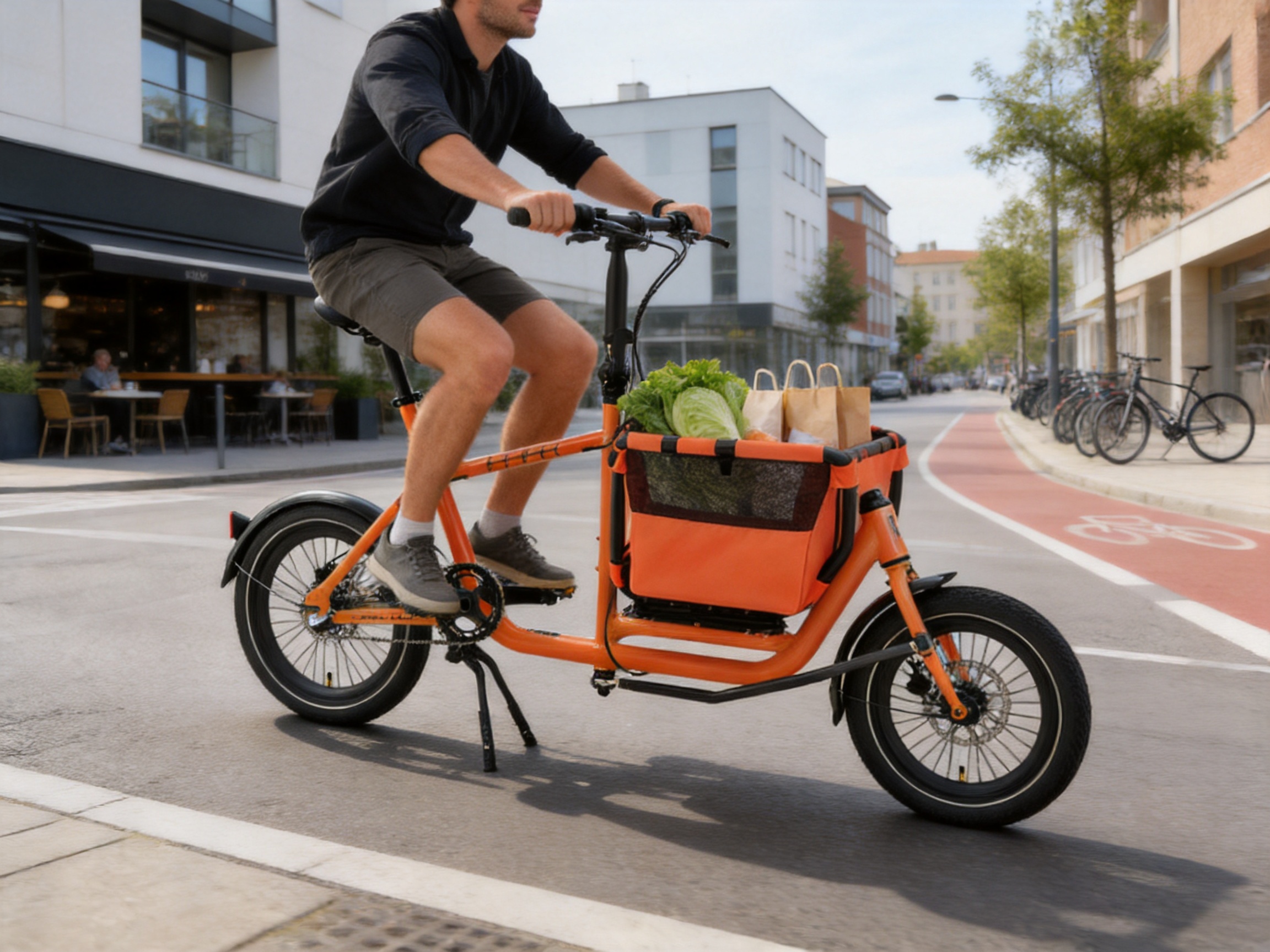
The Q1’s lack of electrical equipment simplifies several aspects of ownership. There is no charging schedule, battery storage requirement, software update, motor-assistance troubleshooting, or electronic display to manage. This can be particularly appealing to riders who prefer mechanical systems and want to perform basic maintenance themselves.
Routine care includes checking tire pressure, cleaning and lubricating the chain, inspecting brake pads and rotors, confirming that bolts remain tight, and examining the basket mount. These tasks are familiar to bicycle users and can be completed regularly without specialized electronic tools.
The absence of a battery may also make long-term storage easier. The bike does not require a particular battery charge level before storage, and there is no battery degradation to consider when the bicycle is used infrequently. A rider can keep it available for occasional errands without worrying that the power system has been left unused.
Simple ownership does not mean maintenance-free ownership. The chain, brake pads, tires, bearings, cables, hydraulic components, and fasteners still require attention. A basic service schedule will help preserve performance and reduce the chance of small issues becoming larger problems.
The bike should be stored in a dry location when possible. After riding in rain, the frame and metal components should be dried, and the chain should be checked for moisture. The basket mounting mechanism should remain free of dirt and debris so that the locking and removal actions remain smooth.
The Q1 is aimed at people who want their transportation to include physical activity. Unlike an electric cargo bike, it does not reduce pedaling effort through a motor. Every trip offers an opportunity to improve cardiovascular fitness, leg strength, coordination, and general endurance.
Because the bike includes useful cargo capacity, riders do not have to choose between exercise and practical transportation. A grocery trip, commute, or visit to a local business can become part of a daily movement routine. This can be more sustainable than scheduling separate exercise sessions for people with busy lifestyles.
The bicycle’s three gears help riders manage intensity. A lower gear can make it easier to start with a loaded basket, while a higher gear can allow a stronger rider to maintain speed on level roads. The rider controls the pace and can gradually increase distance as fitness improves.
Carrying cargo changes handling and effort. Riders should begin with a modest load, become familiar with braking and steering behavior, and increase the load only when they feel comfortable. Heavy or unstable cargo can affect balance, so the basket should never be packed beyond its stated capacity.
Fitness goals should also be matched to the route. The Q1 is particularly suitable for relatively flat neighborhoods and short-to-moderate distances. Riders who regularly face steep hills may need a different bicycle configuration or should plan routes that reduce excessive strain.
The most natural use case for the Q1 is local grocery shopping. The front basket can hold shopping bags, packaged food, household supplies, and other items that would be awkward to carry on a standard bicycle. Riders can park close to their destination, avoid traffic congestion, and return home while incorporating exercise into the trip.
The Q1 can also serve as a neighborhood commuter. A rider traveling a few kilometers on mostly flat roads may appreciate the bike’s direct feel and low operating complexity. The compact dimensions can be useful when storing the bike at home or inside a workplace.
Small business owners and independent workers may use the basket for light tools, documents, service supplies, or packaged orders. It is not intended to replace a heavy-duty delivery cargo bike, but it may be suitable for local tasks that do not require a large box or electric assistance.
Parents may find the basket useful for personal belongings, small shopping loads, or everyday items, although the supplied product information does not identify the front basket as a child seat. Riders must never carry passengers unless the bicycle is specifically designed and approved for that purpose.
The Q1 can also be used for recreational rides. Removing the basket creates a cleaner, lighter configuration for a casual ride around the neighborhood, along a park route, or on a cycling path where manual pedaling is part of the enjoyment.
Safe operation begins with correct assembly. Before the first ride, the rider should confirm that the handlebars, seat, wheels, brakes, pedals, drivetrain, and basket mount have been installed and adjusted correctly. If the bike is delivered partially assembled, a qualified bicycle technician should complete any work that exceeds the owner’s experience.
The rider should verify the basket’s locking mechanism every time it is installed. The clicking sound described in the installation instructions indicates engagement, but a physical check should follow. The basket should not wobble excessively, lift away from the mount, or interfere with steering.
Cargo should be distributed evenly. A heavy item placed at one side of the basket can influence steering, particularly at low speed. Tall objects can obstruct visibility or catch wind. Soft bags, boxes, or straps should be secured so they cannot touch the front wheel.
The combined rider and cargo load must remain within the bicycle’s stated limits. The product information identifies a maximum rider load of 120 kilograms and a basket capacity of 25 kilograms. These limits should be treated as firm operating boundaries rather than targets.
Riders should use appropriate protective equipment, including a properly fitted helmet where required or recommended. Lights and reflective elements are important for low-light conditions. Local traffic laws should be followed, including rules concerning road position, signaling, parking, and bicycle equipment.
Because the Q1 is a manual bike, riders should manage effort carefully. A suitable gear, moderate pace, and planned route can reduce fatigue. If the bicycle feels difficult to control because of load, wind, traffic, or terrain, the rider should stop and reassess rather than continuing under unsafe conditions.
| Feature | Q1 Specification | Practical Significance |
|---|---|---|
| Product type | Lightweight manual mini cargo bike | Designed for pedal-powered errands, fitness, and neighborhood mobility |
| Frame | 6061 T4T6 aluminum alloy | Balances structural performance with reduced weight |
| Battery | Not applicable | No charging or battery storage required |
| Maximum rider load | 120 kilograms | Defines the stated rider capacity |
| Front basket capacity | 25 kilograms | Suitable for groceries, bags, and light utility cargo |
| Drivetrain | Shimano three-speed Sora | Simple gearing for flat urban routes and everyday starts |
| Front basket size | 470 × 470 × 375 millimeters | Provides a practical open loading area |
| Tires | Front 16 × 2.4 inches; rear 20 × 2.4 inches | Wide tires support comfort, stability, and urban handling |
| Brakes | Tektro hydraulic disc brakes | Supports controlled stopping with a loaded front basket |
| Overall dimensions | 1,780 × 620 × 1,070 millimeters | Compact footprint for urban riding and storage |
The Q1 is a strong choice for riders who live in flat or moderately flat areas and want a practical bicycle for local trips. It suits people who enjoy manual cycling, value exercise, and prefer a vehicle that is ready to ride without charging.
It is also appropriate for owners who have limited storage space. The compact frame and removable basket can make it easier to manage in apartments, offices, and shared bicycle facilities. Riders who regularly carry groceries or small work items may find its front basket more useful than the rack capacity of a conventional bicycle.
The Q1 may be less suitable for riders who face steep hills every day, need to travel long distances, or carry children and very heavy commercial loads. Those users may benefit more from an electric cargo bike with a larger load platform and motor support.
Choosing the right cargo bike depends on matching the product to the route and the task. The Q1 is not intended to be the most powerful bike in every category. Its advantage is that it combines practical cargo utility with the lightness, simplicity, and physical engagement of a traditional bicycle.
No. The Q1 is a manual cargo bike and does not include a battery or motor. It is powered entirely by the rider, making it suitable for people who prefer traditional cycling and do not want to manage charging.
It is designed for short-distance errands, flat commutes, neighborhood travel, fitness rides, and light utility work. Typical uses include grocery shopping, carrying personal belongings, transporting small work supplies, and making local trips without a car.
The stated maximum basket load is 25 kilograms. Cargo should be distributed evenly, secured properly, and kept clear of the rider’s view, the brake controls, and the front wheel.
The product information specifies a maximum rider load of 120 kilograms. This limit concerns the rider and should be considered together with the basket capacity and safe operating conditions.
No. The basket is designed for installation and removal. Installation involves aligning the mounting holes, lowering the basket, and pushing it backward until it clicks into place. Removal involves pulling down the lower pin, sliding the basket forward, and lifting it away.
The three-speed system is intended to keep the bike simple and easy to operate on mostly flat urban routes. It provides basic flexibility for starting, carrying loads, and maintaining speed without adding the adjustment complexity of a larger drivetrain.
Yes. A cargo basket adds weight and can influence braking behavior. Hydraulic disc brakes can provide smooth, controlled stopping and are well suited to frequent urban riding when properly maintained.
The product information describes the tires as puncture proof, but riders should still avoid sharp debris and inspect the tires regularly. No pneumatic tire can be guaranteed against every road hazard.
The provided specifications identify the front basket as a cargo carrier and do not describe it as a child seat. Children or passengers should not be carried unless an approved, compatible passenger system is specifically provided and local regulations allow it.
Its manual design keeps maintenance similar to that of a conventional bicycle. Owners should inspect the tires, chain, drivetrain, brakes, wheels, fasteners, and basket mount. Hydraulic brake servicing should be completed by a qualified technician when necessary.
The Q1 is lighter, mechanically simpler, and designed for rider-powered travel. A large electric cargo bike generally offers more assistance and capacity but is heavier, more expensive to operate, and dependent on battery charging. The better option depends on route, load, terrain, and fitness goals.
Its compact dimensions, lightweight design, and removable basket can make it more manageable in apartments and other space-limited environments. Owners should still confirm that the bike fits their storage area, stairways, elevator, and bicycle rack.
The Atmose Model Q Q1 offers a focused answer to a common urban transportation problem: how to carry useful cargo without owning a large, heavy, or electrically dependent vehicle. Its manual design gives riders a direct connection with cycling, while the front folding basket provides the practical capacity needed for everyday errands.
The 6061 T4T6 aluminum alloy frame supports the lightweight concept. The three-speed Shimano Sora drivetrain keeps operation straightforward. Tektro hydraulic disc brakes add controlled stopping performance, and the wide 16-inch and 20-inch tires are designed to provide a stable and comfortable urban ride. The compact dimensions and removable basket further improve storage and day-to-day flexibility.
Its greatest competitive advantage is not maximum speed, maximum range, or maximum carrying capacity. Instead, the Q1 emphasizes simplicity, exercise, maneuverability, and practical utility. It is a thoughtful alternative for riders who travel mostly on flat roads and want to replace short car trips with active transportation.
Atmose’s broader strengths include its American product origins, European design and research presence, established bicycle manufacturing background, supply-chain experience, and attention to practical mobility. These capabilities are reflected in a product that combines a purposeful frame, integrated cargo hardware, familiar components, and clear operating procedures.
For the right rider, the Q1 can be more than a small cargo bike. It can become a daily tool for shopping, commuting, exercise, and neighborhood exploration—a simple, efficient, and enjoyable way to move through the city.
Atmose Bikes. Model Q Q1 product specifications and product information.
Atmose Bikes. Model Q Q1 product description and basket installation instructions.
Atmose Bikes. Company information and product-development background.
Shimano. Sora drivetrain technical and maintenance information.
Tektro. Hydraulic disc brake system service and operating guidance.
General bicycle maintenance practices for aluminum frames, pneumatic tires, mechanical drivetrains, and hydraulic braking systems.
Nov 23, 2026
Nov 09, 2026
Nov 01, 2026


info@atmosecargobike.com

200 rue de la Croix Nivert 75015 Paris

Custom Electric Bakfiets
 English
 Français
 Deutsch