Sep 28, 2026
Urban transportation is changing rapidly. Cities are becoming denser, parking is becoming more expensive, and many households and businesses are looking for practical alternatives to conventional cars. In this environment, a cargo bike must do more than carry goods. It must be easy to store, simple to operate, comfortable in traffic, reliable during daily use, and adaptable to different transport needs. The Atmose Model Q ESQ1 is designed around these requirements.
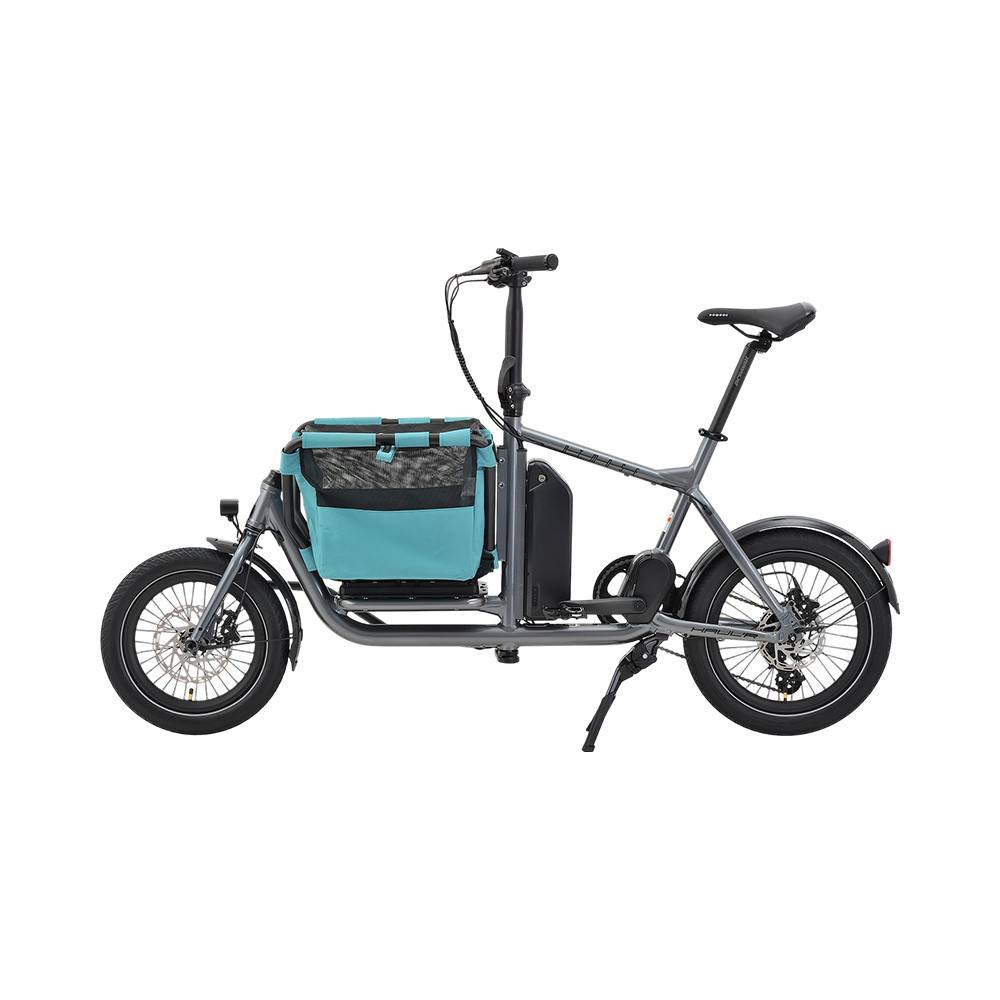
The Model Q is a compact electric cargo bike developed for urban commuters, families, retailers, delivery users, and mobility-focused businesses. Its front-loading configuration provides useful carrying capacity without creating the long, difficult-to-manage dimensions associated with some traditional cargo bicycles. At the same time, its compact wheelbase, smaller wheels, low step-through access, and responsive steering make it suitable for apartment living and busy city streets.
Rather than treating cargo capacity and agility as opposing goals, the Model Q combines them in a balanced platform. It offers a front folding basket, a mid-drive electric motor, a 36-volt lithium battery, hydraulic disc brakes, a seven-speed drivetrain, and a lightweight aluminum alloy frame. These features give the bike the flexibility to handle commuting, shopping, small-business delivery, recreational riding, and everyday family transportation.
Many urban riders need to transport more than a conventional bicycle can carry. A backpack may be sufficient for a short commute, but it is not ideal for groceries, packages, work equipment, sports gear, or small-business deliveries. A standard bicycle trailer can increase capacity, but it may also make the bicycle longer, harder to maneuver, and more difficult to store. Large cargo bikes can solve the carrying problem, yet their extended wheelbase and greater overall size may create challenges in elevators, apartment corridors, bicycle rooms, and narrow city lanes.
The Model Q addresses this challenge with a compact front-loading format. The cargo area is positioned in front of the rider, where its contents remain visible and accessible. The design supports quick loading and unloading, an important benefit for delivery users and people making frequent stops. Because the bike is only 1,780 millimeters long and 620 millimeters wide, it can fit more easily into urban storage areas than many larger cargo platforms.
Urban riding also requires frequent changes in speed and direction. A rider may need to turn around a parked vehicle, stop at a traffic signal, navigate a narrow passage, or move through a crowded market street. The Model Q’s smaller wheel format and relatively short frame help create responsive handling. The front 16-inch by 2.4-inch tire and rear 18-inch by 2.4-inch tire provide a compact footprint while retaining a wide contact patch for stability.
For urban users, convenience is not a minor feature. It determines whether a bike is used occasionally or becomes a dependable part of daily life. The Model Q is designed to make routine tasks easier by combining practical cargo space, assisted power, accessible mounting, and manageable dimensions.
The Atmose Model Q ESQ1 is an electric front-loading cargo bike intended for agile urban commuting and light-to-moderate cargo transportation. Its configuration is especially suitable for users who need more capacity than a standard electric bicycle but do not want the size and weight of a full-length family cargo bike.
The frame is manufactured from 6061 T4T6 aluminum alloy. This material is widely used in bicycle construction because it offers a useful balance of low weight, structural performance, corrosion resistance, and manufacturing flexibility. The frame supports the cargo structure, motor system, battery, drivetrain, and rider while maintaining a compact profile.
Power is supplied by a Bafang CM2503 mid-drive motor rated at 250 watts and 36 volts. A mid-drive system places the motor near the bicycle’s central mass rather than at the front or rear wheel. This arrangement can help maintain balanced handling and allows the motor to work through the bicycle’s gearing system. For urban acceleration, hill assistance, and stop-and-go travel, this layout can provide a natural riding feel.
The battery is a Samsung 36-volt, 15-amp-hour lithium battery with a stated capacity of 540 watt-hours. This capacity is appropriate for a practical urban electric bicycle and gives users a meaningful energy reserve for commuting, shopping, and repeated short trips. Actual range will depend on rider weight, cargo weight, terrain, temperature, tire pressure, assist level, wind, and riding style.
Mechanical control is provided by a Shimano seven-speed Sora system, giving the rider multiple gear choices for flat roads, inclines, loaded starts, and efficient cruising. Tektro hydraulic disc brakes provide controlled stopping performance and help reduce the hand effort required during braking. The front cargo basket measures approximately 470 millimeters in length, 470 millimeters in width, and 375 millimeters in height.
| Specification | Model Q ESQ1 Detail | Urban Benefit |
|---|---|---|
| Frame | 6061 T4T6 aluminum alloy | Lightweight structure with practical durability and corrosion resistance |
| Battery | Samsung 36V 15Ah lithium battery, 540Wh | Useful energy capacity for regular city trips |
| Motor | Bafang CM2503 mid-drive, 36V, 250W | Balanced power delivery and efficient hill assistance |
| Drivetrain | Shimano seven-speed Sora | Flexible gearing for varying loads and road conditions |
| Maximum stated load | Rider up to 120 kg; basket up to 25 kg | Suitable for commuting, shopping, and compact commercial cargo |
| Front basket | 470 mm × 470 mm × 375 mm | Practical loading area for daily goods and equipment |
| Wheels and tires | Front 16 × 2.4 inches; rear 18 × 2.4 inches | Compact handling with a broad tire profile |
| Brakes | Tektro hydraulic disc brakes | Responsive control in urban stop-and-go traffic |
| Overall dimensions | 1,780 mm long × 620 mm wide × 1,070 mm high | Easier storage in compact urban spaces |
One of the Model Q’s most important advantages is its compact physical footprint. Cargo bicycles are often associated with long frames, wide turning circles, and storage difficulties. Those characteristics may be acceptable for users with a garage or large bicycle room, but they can be inconvenient for people living in apartments or navigating dense commercial buildings.
The Model Q is designed to be more compatible with common urban environments. Its 620-millimeter width can make it easier to pass through standard access points, while its 1,780-millimeter length is more manageable in elevators, hallways, storage rooms, and small bicycle shelters. The low step-through design also helps the rider mount and dismount without swinging a leg over a high rear rack or a large cargo structure.
Storage convenience has a direct effect on product adoption. If a bicycle is difficult to bring indoors, riders may be forced to leave it outside, increasing exposure to rain, dust, theft, and accidental damage. A more compact platform allows users to consider indoor storage, which can improve security and support longer component life.
The bike’s smaller wheels contribute to its urban character. Smaller wheels can reduce the overall frame height and make the steering feel quick and responsive. They also allow the cargo area and rider position to be arranged within a shorter chassis. In a crowded city, this can be more valuable than the high-speed stability associated with a much larger wheel format.
Compact does not mean limited. The Model Q retains a useful front basket while keeping its overall dimensions under control. This balance is particularly valuable for city residents who need cargo capability but cannot dedicate a large amount of space to a bicycle.
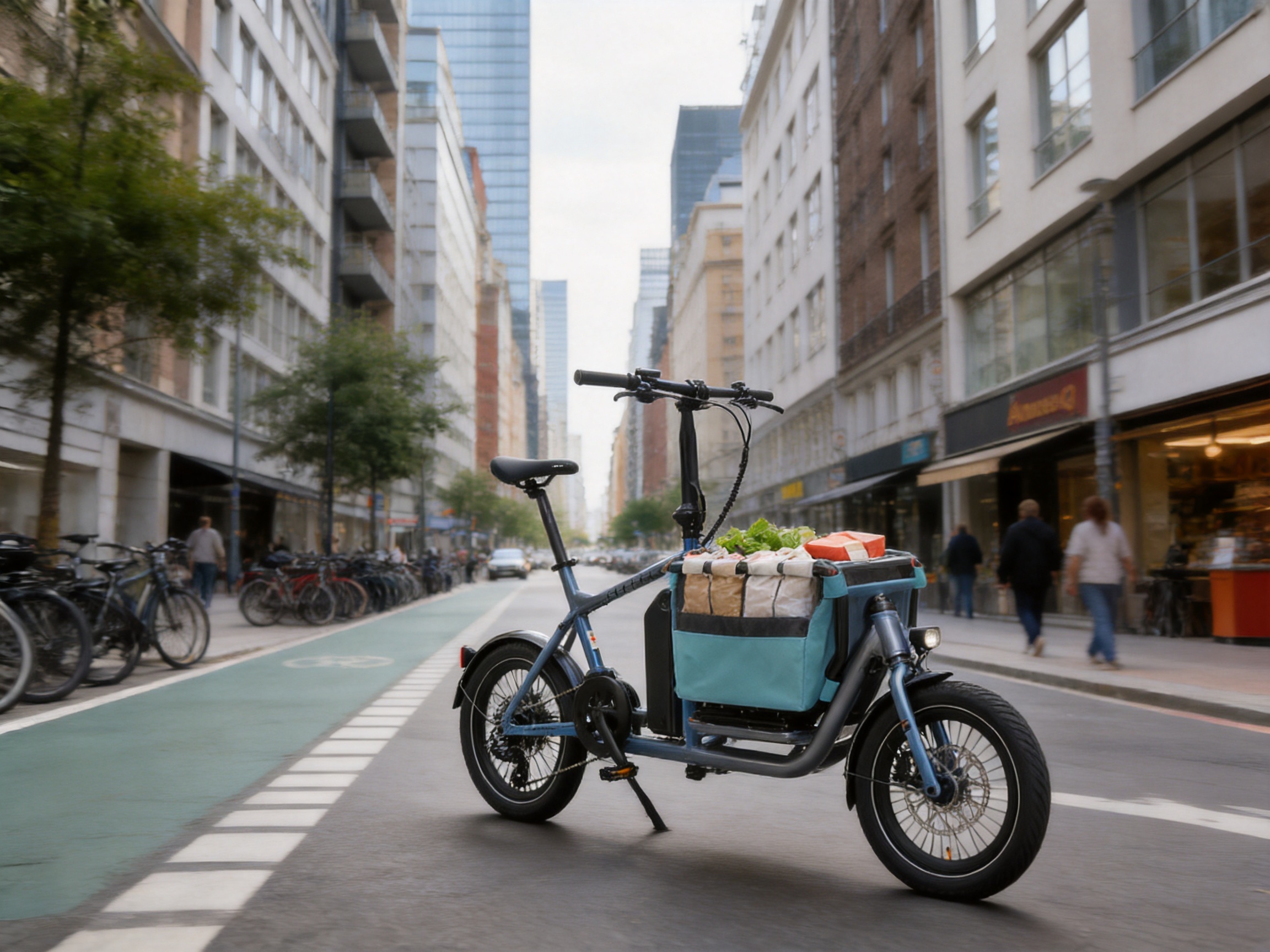
Traffic conditions in urban areas are unpredictable. Riders may encounter delivery vehicles, pedestrians, roadworks, parked cars, narrow cycle lanes, uneven surfaces, and sudden changes in direction. A cargo bike should remain stable under load, but it should not feel slow or unwieldy when the rider needs to make a quick maneuver.
The Model Q’s compact wheelbase and smaller wheel arrangement support responsive handling. The rider sits close to the center of the bicycle, while the front basket remains within a controllable reach. This design helps preserve a direct connection between steering input and the front cargo section. For experienced riders, that can make cornering and low-speed positioning more intuitive.
Wide 2.4-inch tires provide another layer of practical control. A wider tire can offer a larger contact area, support comfort over imperfect pavement, and help maintain traction during normal urban riding. Tire pressure should always be adjusted according to the manufacturer’s guidance and the rider’s load, because pressure affects comfort, rolling resistance, cornering, and puncture protection.
The stated use of puncture-proof tires is also valuable for commuters and commercial users. A flat tire can interrupt a workday, delay a delivery route, or create an inconvenient roadside repair. Puncture-resistant construction does not eliminate all risks, but it can reduce the frequency of common tire problems when combined with correct inflation and regular inspections.
Responsive handling is especially important when the bicycle is loaded. Cargo positioned at the front can affect steering if it is too high, too heavy, or improperly secured. The Model Q’s designed basket size and stated 25-kilogram basket capacity give users a clear operating framework. Keeping heavy items low, centered, and stable helps preserve predictable handling.
The front basket is the defining practical feature of the Model Q. A front-loading format allows the rider to see the cargo while riding and makes loading easier from the front or sides. This can be useful for groceries, parcels, personal equipment, retail stock, work tools, and other items that need quick access.
The basket measures approximately 470 millimeters by 470 millimeters by 375 millimeters. This creates a useful box-shaped space without extending excessively beyond the bike’s compact frame. The dimensions are suitable for everyday shopping bags, small packages, backpacks, office supplies, and compact business goods.
The basket can be adapted to different schedules and user profiles. A commuter may use it for a laptop bag, rain clothing, and lunch. A parent may use it for shopping or school supplies, subject to appropriate safety considerations and the intended load limits. A small business may use it for tools, retail products, documents, or local delivery packages. A recreational rider may use it for a picnic basket, sports equipment, or camera accessories.
Modularity is one of the major advantages of a cargo bike designed for mixed use. Instead of owning separate transport equipment for commuting, errands, and light business tasks, a user can configure one platform around changing needs. This versatility may improve the total value of the bicycle over its service life.
The removable basket system further strengthens this flexibility. The basket can be installed by aligning its base with the pre-installed mounting holes, lowering it vertically until the clips engage, and pushing it toward the saddle until a click confirms the connection. Removal is also designed as a straightforward process involving the lower mounting pin, forward movement, and upward lifting.
Tool-free or low-tool accessory changes are particularly beneficial for retailers and fleet operators. Different customers may require different basket configurations, and a quick attachment system can reduce setup time. For individual owners, it means the bicycle can transition between a cargo carrier and a more open utility platform without complex mechanical work.
Electric assistance changes the role of a cargo bike. Without assistance, the rider must provide all propulsion, including the additional effort created by cargo, hills, headwinds, and repeated stops. With a properly integrated electric system, the same bicycle can be used by a wider range of riders and for longer daily distances.
The Model Q uses a 250-watt Bafang CM2503 mid-drive motor. The mid-drive position is valuable because it keeps the motor near the center of the frame. Central mass can contribute to balanced handling, particularly when a front basket is loaded. The motor can also interact with the bicycle’s seven-speed drivetrain, allowing the rider to select an appropriate gear for the terrain.
Gear selection remains important even with electric assistance. Lower gears can help with starting from a stop or climbing an incline, while higher gears can support efficient cruising on flatter roads. Riders who learn to combine the motor’s assistance with suitable gearing may experience smoother acceleration and more efficient battery use.
The 36-volt electrical architecture is a common and practical format for urban electric bicycles. It supports compatibility with a range of established components while keeping the system suitable for a compact frame. The 540-watt-hour battery provides a substantial energy reserve for regular city use, although no battery should be judged by capacity alone.
Battery range depends on many variables. A light rider on flat roads using modest assistance may travel much farther than a heavier rider carrying a full basket over steep hills with high assistance. Cold weather, frequent acceleration, low tire pressure, strong wind, and poor drivetrain maintenance can also reduce range. For responsible product planning, range should be evaluated according to the intended route rather than a single laboratory-style number.
For wholesalers and retailers, the combination of a mid-drive motor and practical battery capacity creates a product positioned between a conventional bicycle and a large commercial cargo vehicle. It can support users who need meaningful assistance but still want a compact, approachable riding experience.
The Shimano seven-speed Sora drivetrain gives the Model Q a useful range of gear ratios. Seven speeds are sufficient for many urban environments and provide a simpler operating experience than a high-count drivetrain. A simpler system can be easier for new riders to understand and may reduce the amount of adjustment required during routine use.
Gear choice becomes more significant when cargo is carried. Starting in an appropriate low gear can reduce strain on the rider and motor. Shifting before a hill rather than during the steepest section can improve momentum and reduce abrupt changes in pedaling resistance. Proper shifting technique also supports smoother operation and can reduce unnecessary wear.
Tektro hydraulic disc brakes provide braking force through a sealed hydraulic system. Compared with basic mechanical rim brakes, hydraulic disc brakes can offer strong control, consistent modulation, and reduced hand effort. These characteristics are especially useful when the bicycle is carrying cargo or operating in wet urban conditions.
Braking performance depends on maintenance as well as component selection. Brake pads, rotors, hydraulic lines, and lever feel should be inspected regularly. Riders should allow additional stopping distance when carrying heavy or unstable cargo, traveling downhill, or riding on wet surfaces. The bicycle’s technical equipment supports control, but safe riding still depends on speed management and attention.
The combination of a seven-speed drivetrain and hydraulic disc brakes gives the Model Q a well-rounded control package. The rider receives both propulsion flexibility and dependable stopping capability, two features that are essential for a practical cargo bike.
The Model Q uses a 6061 T4T6 aluminum alloy frame. Aluminum is a popular material for modern bicycle manufacturing because it can produce a relatively light structure with good stiffness and corrosion resistance. For a cargo bike, frame design must account for more than rider weight. It must also manage the forces created by cargo, braking, steering, acceleration, uneven roads, and repeated loading cycles.
The T4 and T6 designations refer to heat-treatment conditions used to achieve different material properties during production. A carefully controlled heat-treatment process can improve the strength and consistency of aluminum components. The final result depends not only on the alloy specification but also on tube design, welding quality, heat-treatment control, alignment, inspection, and finishing.
A cargo frame must be engineered around the relationship between the steering system, cargo mount, head tube, fork, bottom bracket, rear triangle, and wheel axles. Each area experiences different forces. The front basket mount must remain secure when cargo moves. The steering assembly must remain predictable during braking. The central frame must support the rider and motor without excessive flex. The rear structure must handle drive forces and braking loads.
Aluminum also supports modern product design because it can be formed into clean, integrated shapes. This allows manufacturers to pursue a balance between functional strength and visual simplicity. For a lifestyle-oriented urban bike, appearance matters because the product is used in public spaces and may be stored inside the home or workplace.
Proper surface finishing adds another layer of protection. A durable coating can help reduce exposure to moisture and everyday abrasion while providing a consistent appearance. Users should still clean the bike regularly, avoid prolonged exposure to corrosive materials, and inspect the frame for damage after impacts or accidents.
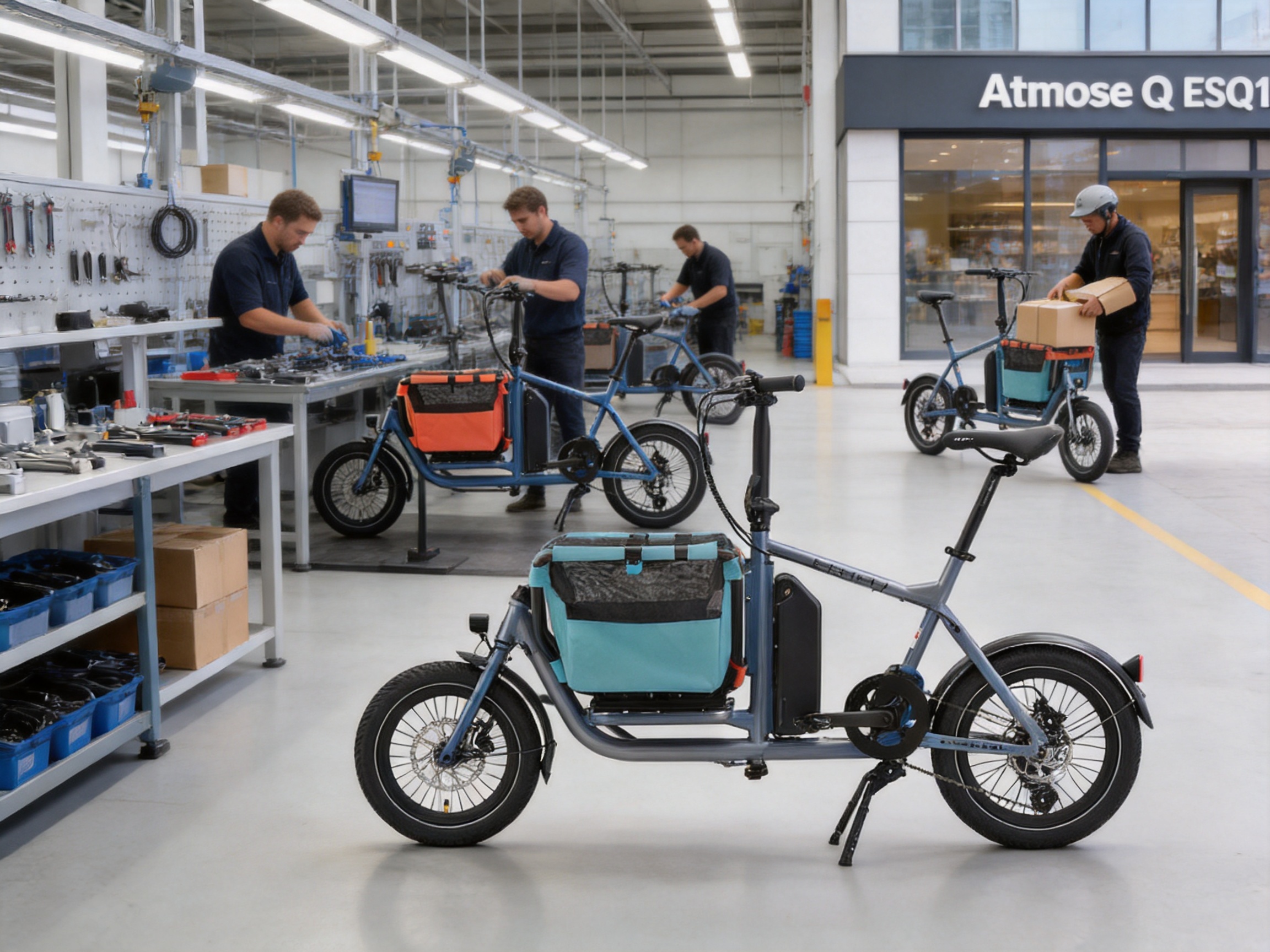
A cargo bike’s performance is determined by the quality of its complete manufacturing process, not by any single component. Atmose’s product development model combines American product thinking with European design and research-and-development involvement in Paris. This international structure supports a practical approach to user needs, visual design, engineering coordination, and market requirements.
The first stage is product definition. Engineers and designers identify the intended user, cargo volume, storage conditions, riding environment, load targets, and desired handling characteristics. For the Model Q, the priorities are compact urban dimensions, front cargo utility, accessible operation, and agile handling. These objectives influence the frame geometry, wheel sizes, basket position, motor location, battery placement, and accessory system.
The second stage is structural and mechanical development. The frame must be modeled around rider ergonomics, load distribution, steering response, component compatibility, and manufacturing feasibility. The front basket system must be positioned so that it remains practical without making the bike excessively long. The electric system must be integrated without undermining service access or frame strength.
Material preparation is another important stage. Aluminum tubes, forged or machined parts, mounting elements, and other structural components must meet defined dimensional and material requirements. Consistent incoming-material inspection helps reduce variation before welding and assembly begin.
Frame welding requires accurate fixtures. A fixture holds tubes and mounting points in the correct relationship during welding, helping preserve alignment from one frame to the next. For a cargo bike, alignment is particularly important because even a small deviation can influence steering, wheel tracking, brake performance, and drivetrain operation.
Welding quality must be monitored for penetration, consistency, heat management, surface condition, and visual defects. Excessive heat can affect aluminum properties and cause distortion, while insufficient or inconsistent welding can compromise structural integrity. Skilled operators, suitable equipment, repeatable procedures, and inspection standards work together to create dependable frame assemblies.
After welding, the frame may require alignment checks and controlled heat treatment according to the selected material and production method. T4T6 aluminum processes must be managed carefully because thermal cycles influence the final mechanical properties. Process records and inspection routines help ensure that completed frames meet the intended specification.
Surface preparation and coating follow structural processing. Cleaning, preparation, primer or conversion treatment where applicable, and final coating should be controlled to support adhesion, appearance, and resistance to everyday environmental exposure. A consistent finish is also an indication of disciplined production control, although visual quality must always be supported by structural inspection.
Component assembly is completed in a controlled sequence. The motor, battery, drivetrain, brakes, wheels, tires, steering components, basket mounts, and accessories must be installed according to defined procedures. Cable routing and electrical connections deserve particular attention because they affect both appearance and long-term reliability.
Final quality control should include functional checks. These may include wheel alignment, brake operation, gear shifting, steering movement, fastener torque, electrical activation, battery connection, motor assistance, basket engagement, and general ride readiness. A cargo bike should not be considered complete simply because all parts are present. It must operate as an integrated system.
Atmose’s manufacturing strength is supported by an established supply chain and ongoing product development. The company’s background through MOTIV, an American beach cruiser brand, contributes experience in bicycle production, sourcing, and market understanding. The establishment of ATMOSE SASU in France, together with a design and research-and-development team, supports closer attention to European urban mobility expectations and international market needs.
For wholesalers and retailers, this combination is important. A successful supplier must provide more than a visually attractive product. It should offer stable specifications, repeatable production, component coordination, responsive communication, and the ability to support customization or wholesale requirements. Atmose positions itself around these capabilities for global buyers.
The Model Q does not attempt to replace every type of cargo bicycle. A long-tail family bike or large front-loader may carry more passengers or substantially larger loads. However, the Model Q offers a different set of advantages for users whose priority is urban agility and storage convenience.
Its shorter overall length can make parking and indoor storage easier. Its narrower profile may be more comfortable in cycle lanes and compact streets. Its smaller wheels contribute to a lower step-through height and quick steering. Its front basket provides useful capacity without requiring a large, heavy cargo box.
For a city commuter, these characteristics can be more valuable than maximum carrying volume. A rider who needs to transport a laptop, groceries, clothing, or work equipment may prefer a bike that can be brought into an apartment or maneuvered through a narrow entrance. The Model Q is designed for this daily reality.
The bike may also appeal to retailers seeking a product with a broad target audience. Extremely large cargo bicycles can be difficult to display, ship, store, and explain to customers. A compact model is easier to position as a versatile lifestyle product, especially in markets where apartments and limited storage are common.
Compared with a normal commuter e-bike, the Model Q offers a dedicated cargo structure and greater utility. A standard rear rack may carry a limited amount of equipment, but it usually does not provide the same open, visible, front-mounted loading space. The Model Q is purpose-built for carrying goods as part of the riding experience.
The front basket can reduce the need for backpacks or shoulder bags. This may improve rider comfort because weight is carried by the bicycle rather than directly on the rider’s back. It can also make items easier to access during multiple stops. For delivery users, the basket creates a more professional and organized transport platform than an improvised bag attached to a regular bicycle.
The Model Q also provides an opportunity for business branding and configuration. Although the base product includes a front basket, the platform may be adapted for different cargo applications through suitable accessories or customized arrangements. Retailers and wholesalers can therefore present it as a flexible urban transport solution rather than a single-purpose commuter bicycle.
For commercial buyers, the product must be attractive to end users and practical to stock. The Model Q has several qualities that support this balance. Its compact dimensions simplify showroom placement and warehouse organization. Its clear use case makes it relatively easy to explain. Its technical specification includes recognized component suppliers, which can help establish customer confidence.
The product can be marketed to several customer groups without changing its fundamental identity. Urban commuters may value its compactness. Small businesses may focus on the basket. Apartment residents may emphasize storage. Recreational riders may appreciate its practical flexibility. Families may use it for errands, provided their chosen configuration complies with applicable safety requirements and intended load conditions.
Atmose’s stated support for custom design and wholesale orders is also relevant to business customers. Customization may involve colors, accessories, cargo configurations, branding elements, packaging, or regional specifications, depending on production feasibility and order requirements. The exact scope should be confirmed during commercial discussions, but the company’s product philosophy is compatible with different market applications.
Retailers can also benefit from demonstrating the removable basket. A live installation demonstration helps customers understand how the product changes from a cargo carrier into a more open utility bike. Demonstrating the three-step attachment sequence and the two-step removal process can communicate convenience more effectively than a written specification alone.
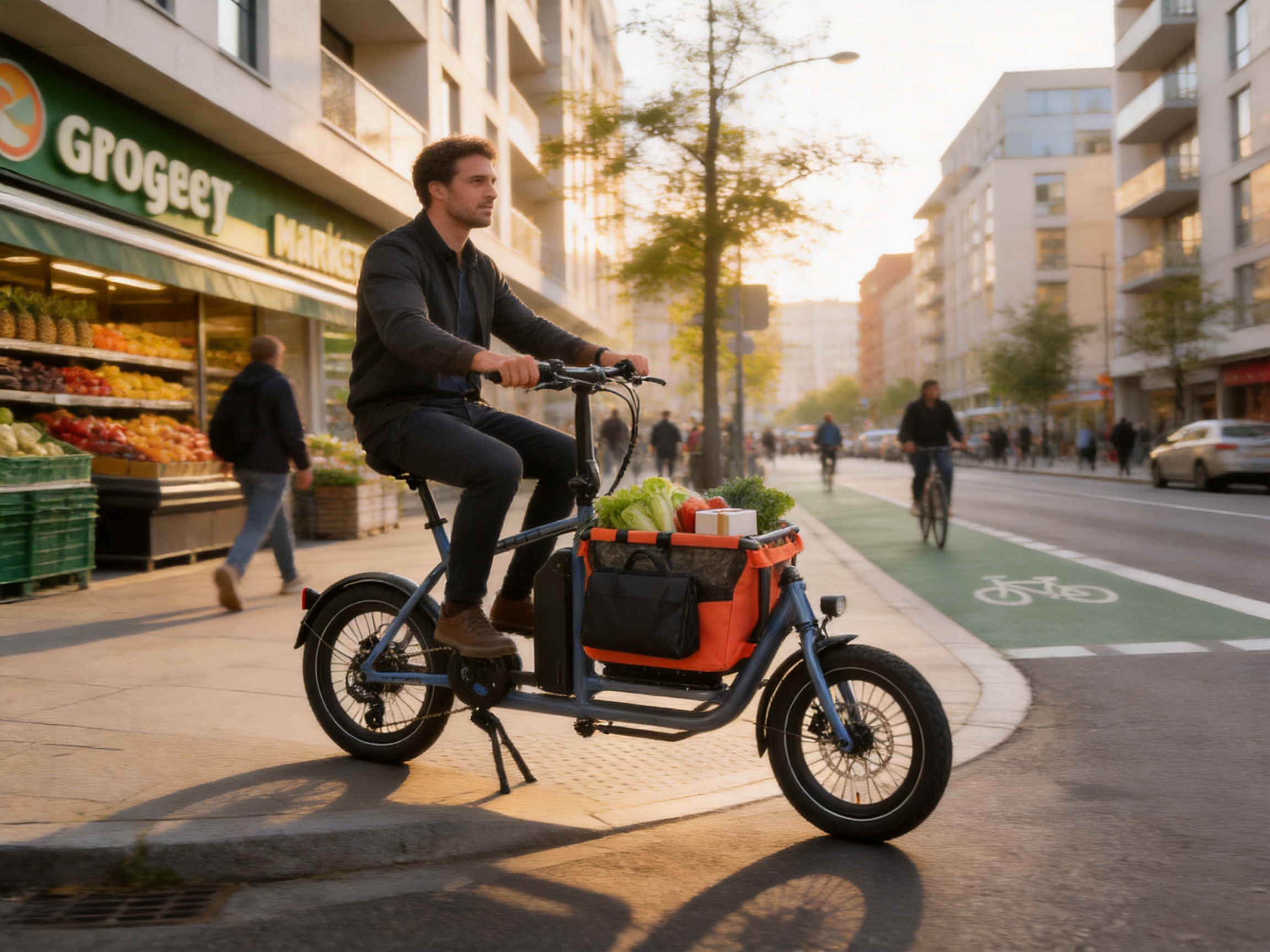
A commuter can use the Model Q to transport a work bag, clothing, lunch, rain gear, and personal items. The front position keeps the cargo visible, while the electric motor helps reduce effort during acceleration and inclines. The compact shape is suitable for city streets where a long cargo bike may feel excessive.
The basket can carry groceries and household supplies within its stated capacity. Riders should distribute weight evenly and secure loose items to prevent movement. Because the basket is positioned in front of the rider, it is easier to monitor the load during the journey.
Local retailers, repair professionals, florists, cafés, and service providers may use the bike for short-distance transport. A compact cargo platform can help businesses complete local tasks without relying on a car for every journey. The electric assist is useful when routes include repeated stops, moderate hills, or heavier loads.
The Model Q can also serve as a recreational utility bicycle. Riders can carry picnic supplies, sports equipment, camera gear, or items for a day trip. Its compact handling makes it appropriate for urban parks, bike paths, and neighborhood exploration, subject to local rules and terrain conditions.
A compact bike is more practical for integration with other forms of transportation. Its dimensions may make it easier to move from a street to a building, station access area, or secure bicycle room. Users should always check the rules of specific transport operators, but the bike’s compact design supports the broader goal of combining cycling with public and shared transportation.
Safe operation begins with respecting the stated load limits. The specification lists a maximum rider weight of 120 kilograms and a basket capacity of 25 kilograms. These limits should not be treated as suggestions to exceed. Cargo should be distributed evenly, placed as low as practical, and secured so that it cannot shift into the steering area or fall from the basket.
Riders should check the basket attachment before every trip, especially after installation or removal. The mounting clips should be fully engaged, the basket should sit securely, and the lower pin or locking mechanism should be in the correct position. A visible or audible confirmation is useful, but a manual stability check remains important.
Before riding, users should inspect tire pressure, brake response, steering movement, chain condition, battery connection, and lighting equipment where fitted. Cargo bikes experience higher loads than ordinary bicycles, so regular checks are particularly important.
The aluminum frame should be kept clean and inspected for dents, cracks, or unusual movement after a collision. Hydraulic brakes should be checked if the lever feels soft, travel increases, or braking power changes. The seven-speed drivetrain should be kept lubricated and adjusted when shifting becomes noisy or inconsistent.
Battery care also influences service life. Users should follow the supplied charging instructions, avoid unauthorized chargers, protect the battery from extreme conditions, and store it according to the manufacturer’s guidance. Electrical connectors should be kept clean and dry. Any unusual heat, swelling, odor, or damage should be treated as a reason to stop using the battery and seek qualified service.
Electric cargo bikes can support lower-impact urban transportation by replacing some short car trips. A compact vehicle that carries groceries, packages, or work equipment can reduce dependence on fuel-powered transport for local journeys. The benefit is greatest when the bike is used regularly and maintained for a long service life.
The Model Q’s practical design supports this objective in several ways. Its cargo function encourages utility use rather than purely recreational riding. Its electric assistance can make cycling accessible over longer distances and moderate hills. Its compact dimensions help it fit into existing urban homes and storage systems, increasing the likelihood that it will be used consistently.
Long-term sustainability also depends on durability, repairability, and responsible component replacement. A well-maintained frame, drivetrain, brake system, and electrical system can extend the useful life of the product. Retailers can support this by offering maintenance guidance, replacement parts, and professional service.
Atmose describes sustainability, reliability, practicality, and fun as central values. These principles are relevant to the Model Q because sustainable mobility is not achieved only through technical specifications. A product must be enjoyable and convenient enough that people choose it repeatedly for real transportation needs.
The Model Q reflects a design philosophy that combines usefulness with an approachable riding experience. Practical products are often judged by their ability to solve ordinary problems: carrying items, fitting into storage, navigating traffic, and reducing daily effort. Fun matters because users are more likely to choose a bicycle when the experience is comfortable, responsive, and enjoyable.
The bike’s compact steering, smaller wheels, accessible frame, and electric assistance all contribute to an approachable character. A rider does not need to manage the physical presence of a very large cargo platform. Instead, the Model Q aims to feel like a manageable urban bicycle with additional carrying capability.
This balance can broaden the potential market. Some customers may approach cargo bikes because they need transportation utility, while others may be attracted by the convenience of an electric bicycle that can carry more. A design that serves both motivations can create stronger customer engagement and better everyday value.
Buyers should evaluate the Model Q according to their local regulations, intended route, climate, service network, and cargo requirements. Electric bicycle laws vary by market, including rules related to motor power, speed assistance, equipment, lighting, helmets, and road access. Importers and retailers should confirm regional compliance before placing commercial orders.
Battery certification, charger compatibility, packaging, warranty terms, spare parts, and after-sales support are also important. A strong product is only one part of a successful distribution program. Retail partners need clear documentation, reliable communication, and access to technical guidance.
The Model Q is particularly suitable for markets where compact urban mobility is important. It may be attractive in cities with apartment housing, limited parking, dense commercial districts, and growing interest in sustainable transportation. Retailers can position it as a practical alternative to both conventional bicycles and larger cargo vehicles.
Potential buyers should also consider rider training. New cargo-bike users benefit from practicing with an empty basket before carrying the maximum intended load. They should learn how front cargo affects steering, braking, and low-speed balance. Retail demonstrations and test rides can help customers select the correct model and accessories.
The Model Q is a compact front-loading electric cargo bike designed for urban commuting, shopping, light business delivery, and general utility transport. It is intended for riders who want cargo capacity without the size of a large family or commercial cargo bicycle.
The stated maximum basket load is 25 kilograms. Cargo should be distributed evenly, secured properly, and kept within the specified limit. The rider should also respect the stated maximum rider weight of 120 kilograms.
The front-loading design gives the rider direct visibility of the cargo and makes loading and unloading convenient. It is suitable for groceries, packages, work tools, personal equipment, and other compact goods. The basket can also be removed when a more open utility configuration is preferred.
The supplied installation method is designed around three steps: align the basket with the pre-installed holes, lower it into position, and push it toward the saddle until a click indicates engagement. Users should still check that the basket is secure before riding.
The stated removal process involves pulling down the pin at the bottom of the mount, pushing the basket forward along its track, and lifting it upward after it reaches the end of the track. The procedure should be performed while the bicycle is stable.
Smaller wheels help keep the bicycle compact and contribute to a lower step-through height and responsive steering. This is useful in crowded urban streets, narrow storage areas, apartment buildings, and places where frequent low-speed maneuvering is required.
The bike uses a Bafang CM2503 mid-drive motor rated at 36 volts and 250 watts. Its central location supports balanced handling and allows the motor to work with the seven-speed drivetrain.
The Model Q uses a Samsung 36-volt, 15-amp-hour lithium battery with a stated capacity of 540 watt-hours. Actual riding range varies according to terrain, load, assistance level, weather, tire pressure, and riding behavior.
Its compact dimensions are intended to make apartment storage more practical. The bike measures approximately 1,780 millimeters long, 620 millimeters wide, and 1,070 millimeters high. Users should still measure their elevator, doorway, storage room, and turning spaces before purchase.
The bike uses Tektro hydraulic disc brakes. These brakes are designed to provide controlled stopping and reduced hand effort, but they require regular inspection and appropriate riding technique.
The Model Q uses a Shimano seven-speed Sora drivetrain. The gearing helps the rider manage starts, inclines, flat roads, and different cargo conditions.
It can be suitable for short-distance business transport, small deliveries, service work, and local retail tasks. Businesses should evaluate their route length, cargo size, local regulations, security requirements, and service arrangements before deployment.
The bike combines a clear urban use case, compact showroom dimensions, recognized electrical and mechanical components, removable cargo functionality, and a broad target audience. It can be presented to commuters, apartment residents, families, recreational riders, and small businesses.
Users should regularly inspect tire pressure, brakes, gears, chain lubrication, steering, basket attachment, frame condition, electrical connections, and battery condition. Maintenance should follow the manufacturer’s guidance and be performed by qualified technicians when specialized service is required.
The Atmose Model Q ESQ1 presents a focused answer to a common urban transportation problem: how to carry useful cargo without giving up the convenience of a compact bicycle. Its front-loading basket, 6061 aluminum alloy frame, 250-watt mid-drive motor, 540-watt-hour battery, seven-speed drivetrain, hydraulic disc brakes, and compact wheel format work together to support everyday mobility.
Its greatest advantage is balance. It is more capable than a standard commuter e-bike, yet less demanding to store and maneuver than many large cargo bicycles. It can serve commuters, households, small businesses, retailers, and active urban riders. The removable basket increases flexibility, while the compact dimensions make the product compatible with apartment living and dense city environments.
Behind the product is an international development and manufacturing approach that combines American product experience, European design and research-and-development involvement, established supply-chain knowledge, and an emphasis on practical innovation. Controlled frame construction, component integration, assembly inspection, and product-focused development are essential to delivering a reliable cargo bike for global markets.
For wholesalers and retailers seeking a compact electric cargo bike with broad application potential, the Model Q offers a credible combination of utility, agility, technology, and visual accessibility. For riders, it offers a way to transform ordinary city trips into more convenient, efficient, and enjoyable journeys.
1. Atmose SASU. Model Q ESQ1 Product Specification and Technical Information.
2. Atmose SASU. Product Development and Company Background Materials.
3. Shimano. Bicycle Drivetrain Technical Principles and Maintenance Guidance.
4. Bafang. Mid-Drive Electric Bicycle Motor System Documentation.
5. Tektro. Hydraulic Disc Brake System Service and Safety Principles.
6. Samsung SDI. Lithium-Ion Battery Technology and Handling Guidance.
7. Aluminum Association. General Engineering Principles for 6061 Aluminum Alloy.
8. International Organization for Standardization. Bicycle Safety, Testing, and Performance Principles.
9. European urban mobility research on cargo bicycles, active transportation, and sustainable last-mile delivery.
10. General bicycle maintenance and safe cargo-loading practices for electric utility bicycles.
Atmose Model Q ESQ1 Compact Electric Cargo Bike for Agile Urban Commuting
Nov 11, 2026
Nov 07, 2026
Nov 05, 2026


info@atmosecargobike.com

200 rue de la Croix Nivert 75015 Paris

Custom Electric Bakfiets
 English
 Français
 Deutsch