Oct 02, 2026
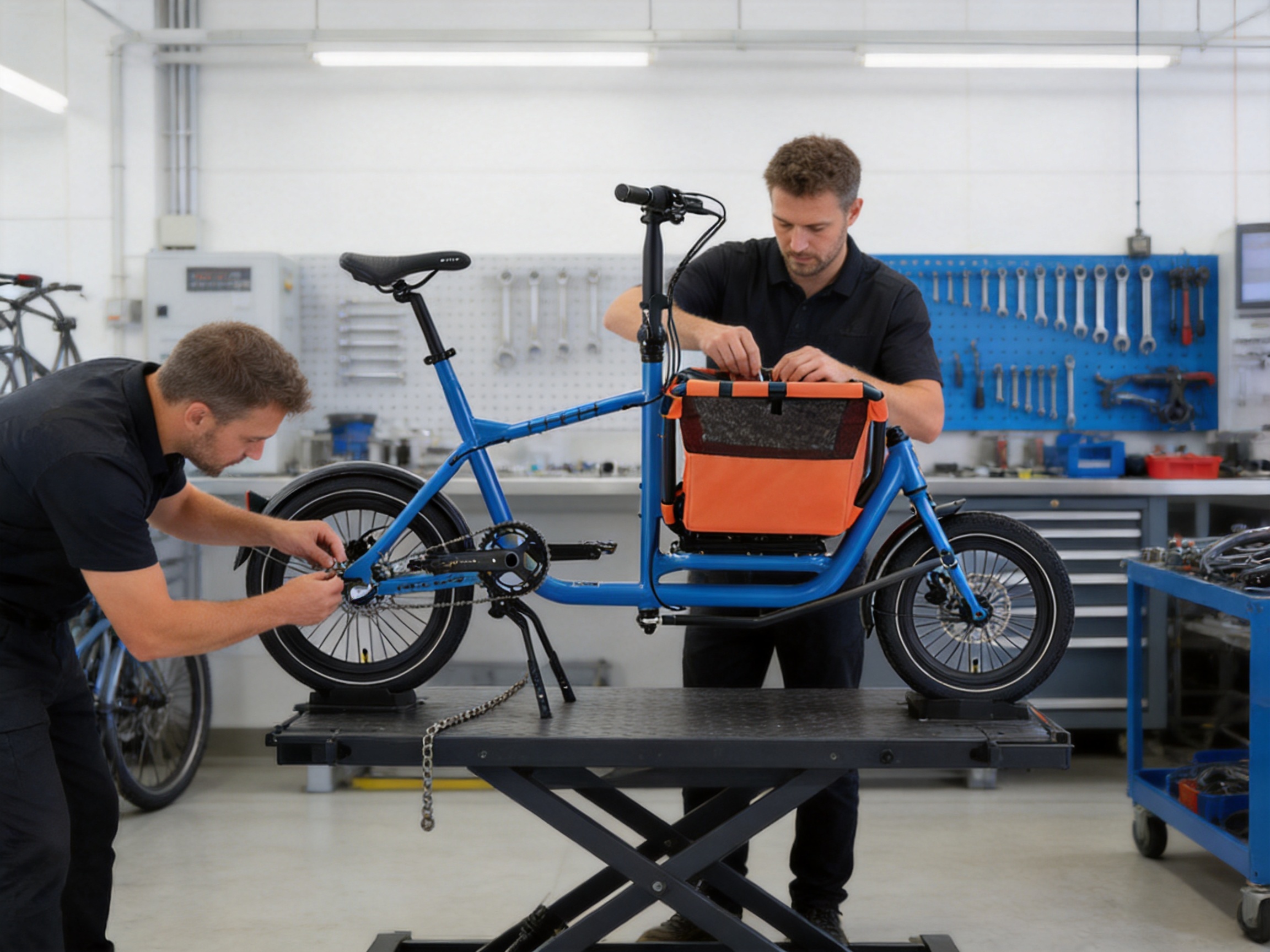
Urban cargo bikes are often associated with electric assistance, large batteries, powerful motors, and sophisticated control systems. Those features can be valuable, especially on steep roads, long commutes, or when carrying heavy loads. However, not every rider needs an electric system. For many neighborhood trips, a lightweight, manually powered cargo bike can offer a simpler, more direct, and more engaging way to move through the city.
The Atmose Model Q Q1 is designed around that idea. It is a manual mini cargo bike created for riders who want practical carrying capacity without the weight, charging requirements, or electrical complexity of an electric cargo bike. Its intended uses include grocery shopping, short-distance commuting, local errands, recreational riding, and everyday transportation on relatively flat routes.
Rather than trying to compete with high-powered electric cargo bikes on speed or hill-climbing ability, the Q1 occupies a different position. It emphasizes low weight, simple operation, responsive handling, and the physical connection associated with a conventional bicycle. This makes it particularly relevant to riders who value fitness, easy storage, low maintenance, and immediate readiness.
The Q1 combines a 6061 T4T6 aluminum alloy frame, a front folding basket, compact overall dimensions, wide puncture-resistant tires, a Shimano three-speed Sora system, and Tektro hydraulic disc brakes. Together, these features create a compact cargo platform that is easier to maneuver and store than many full-size cargo bicycles while still offering useful capacity for daily transport.
This article examines the Q1 in detail, including its design philosophy, practical advantages, carrying system, riding experience, maintenance profile, manufacturing strengths, and suitability for different types of urban riders.
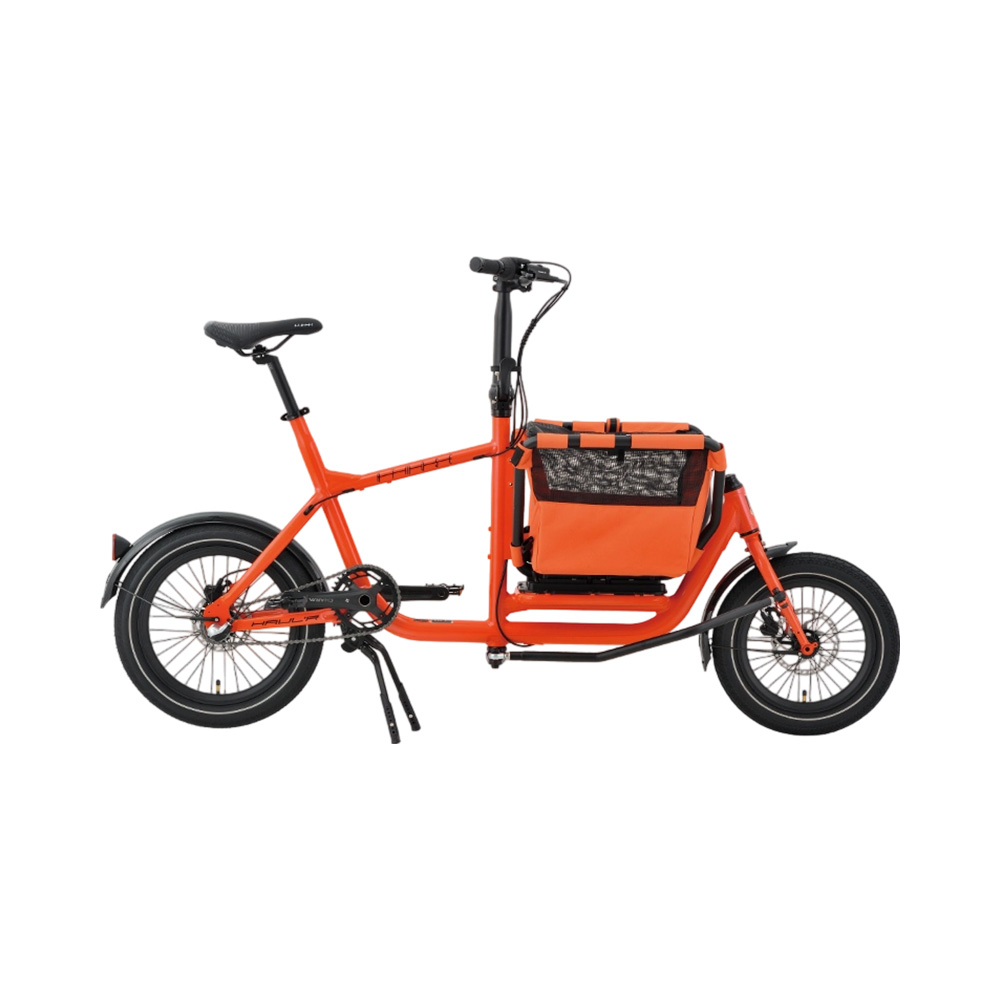
Atmose Model Q Q1 Lightweight Manual Mini Cargo Bike for Fitness and Errands
The most important feature of the Q1 is what it does not include. There is no battery, motor, controller, charger, or electronic display. Removing those systems allows the bike to remain mechanically straightforward and significantly lighter than comparable electric cargo models.
For riders living in flat or gently rolling neighborhoods, this can be a meaningful advantage. A manual cargo bike can be taken out immediately without checking battery levels. It does not need to be connected to a charger overnight, and it does not depend on the condition of a battery that may gradually lose capacity over time. The rider simply unlocks the bike, loads the basket, and begins pedaling.
This simplicity also changes the ownership experience. A conventional bicycle generally requires attention to tires, brakes, chain lubrication, gears, and bearings. The Q1 follows that familiar maintenance pattern. It does not require software updates, battery diagnostics, charging infrastructure, or specialized electrical troubleshooting.
That does not mean the bike is maintenance-free. Hydraulic disc brakes, drivetrain components, tires, and fasteners still require inspection. However, the maintenance system is easier for many riders to understand and easier for ordinary bicycle workshops to service. This can be especially useful for households that want a dependable utility bike without introducing another rechargeable device into their daily routine.
The manual design also supports a fitness-oriented riding style. Every trip provides active exercise, but the Q1 is not intended to be an athletic racing bicycle. Its purpose is to make practical journeys more enjoyable and physically engaging. Carrying groceries, commuting to a local workplace, or transporting small household items can become part of a regular daily activity routine.
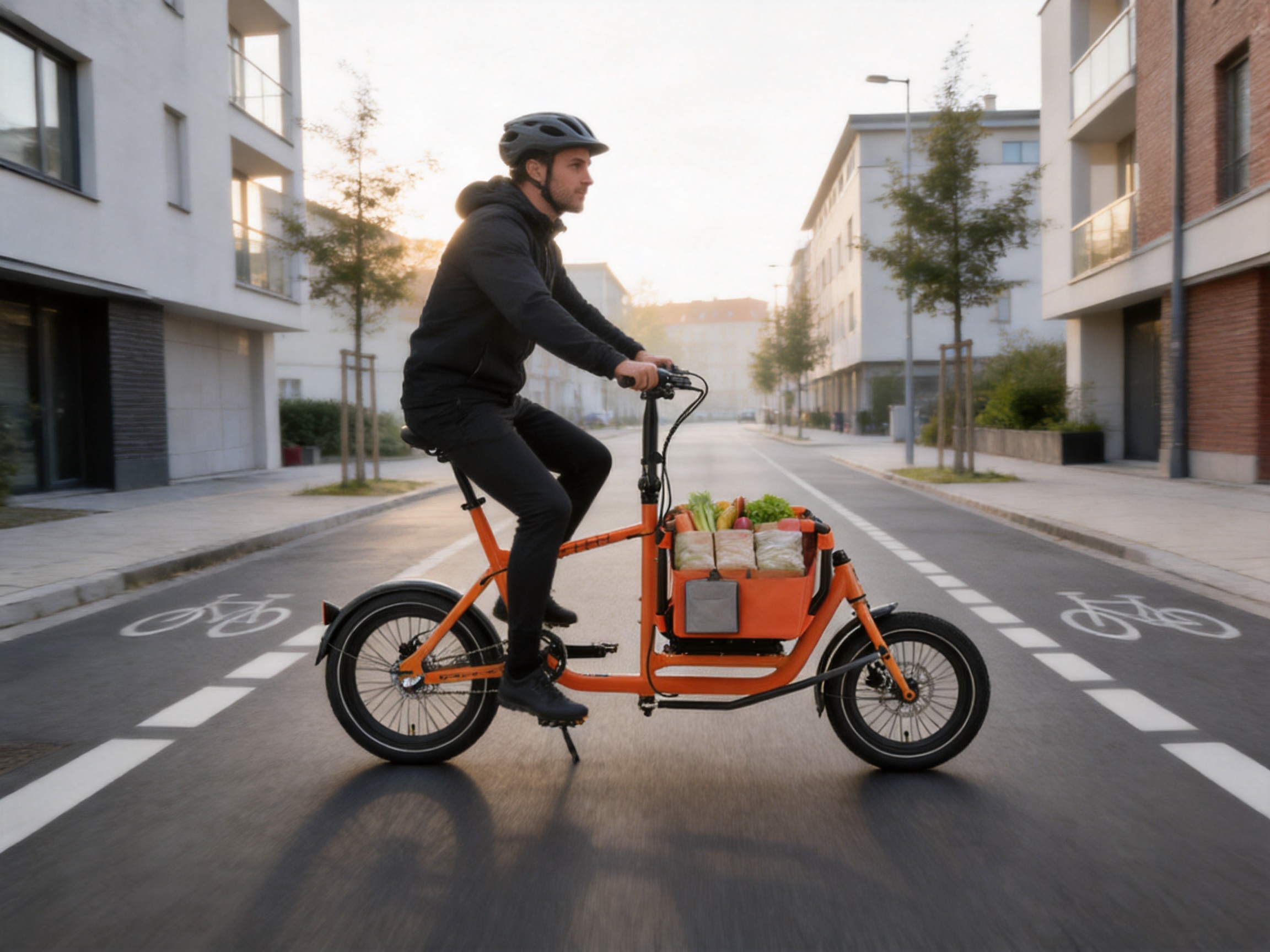
The Q1 is best understood as a neighborhood transportation tool. Its compact frame and front basket make it suitable for trips to local stores, markets, schools, cafés, parks, and community facilities. It can also serve as a secondary household bike for errands that do not justify using a car or a larger electric cargo bicycle.
Because the bike is powered entirely by the rider, route selection matters. Flat streets and moderate distances are the most natural environment. Riders who regularly face long climbs, strong headwinds, or very heavy loads may prefer an electric cargo model. For the right route, however, the Q1 can be more direct, less expensive to operate, and easier to keep ready for use.
The Q1 uses a 6061 T4T6 aluminum alloy frame. Aluminum alloy is widely used in modern bicycle construction because it provides a useful balance between low weight, structural stiffness, corrosion resistance, and manufacturing flexibility.
The T4 and T6 designations refer to heat-treatment conditions used to develop specific material properties. In practical bicycle manufacturing, controlled heat treatment helps manufacturers achieve a consistent relationship between strength, durability, and formability. The quality of the finished frame depends not only on the alloy specification, but also on tube design, joint preparation, welding quality, alignment, heat-treatment control, surface finishing, and final inspection.
For a compact cargo bike, frame design requires careful balancing. The structure must be light enough to remain manageable, yet strong enough to support the rider, basket, steering loads, braking forces, and cargo. Cargo bikes also experience different loading patterns from ordinary bicycles. Weight placed at the front changes steering behavior and creates additional stress around the head tube, fork, basket mounting area, and frame connections.
The Q1’s aluminum frame is therefore not merely a weight-saving feature. It is part of the bike’s overall usability strategy. A lighter frame is easier to move through an apartment entrance, lift over a step, place on a storage rack, or reposition in a garage. It can also make low-speed handling feel less demanding during errands and parking maneuvers.
A reliable aluminum bicycle frame requires a controlled manufacturing process. The process begins with material selection and dimensional planning. Tubes and structural parts must be produced to consistent tolerances so that the frame can be assembled accurately. Welding fixtures help hold components in the intended position during joining, reducing the risk of alignment errors.
After welding, frame alignment is important. Small deviations can affect steering, wheel tracking, brake performance, and long-term handling. Quality-oriented production therefore includes checks for head-tube alignment, rear-wheel positioning, dropout placement, and overall dimensional consistency.
Surface treatment is also significant. Aluminum naturally forms an oxide layer, but bicycle frames commonly receive additional finishing for appearance and protection. A properly prepared and coated surface helps protect the frame against moisture, road dirt, and everyday abrasion while creating a consistent visual finish.
Atmose’s company profile describes a mature supply chain, manufacturing experience, and an international design and research-and-development team. These strengths are relevant to the Q1 because cargo-bike development depends on coordination between industrial design, mechanical engineering, component sourcing, assembly, and quality control. A good cargo bike is not created by selecting isolated parts; it is created by ensuring that the frame, basket, brakes, wheels, drivetrain, and riding position work together as a complete system.
The Q1 has listed dimensions of approximately 1,780 millimeters in length, 620 millimeters in width, and 1,070 millimeters in height. These measurements place it in a compact format compared with many long-tail and front-loading cargo bicycles.
A narrower overall profile can make a practical difference in urban environments. The bike can be easier to guide through residential streets, bicycle lanes, building entrances, courtyards, and storage areas. The 620-millimeter width is also relevant when passing through standard access points or positioning the bike beside other bicycles.
Compact dimensions do not eliminate the need for careful loading. A front basket must be packed so that items remain stable and do not interfere with steering, braking, or visibility. Nevertheless, the Q1’s size is designed to keep cargo utility within a familiar bicycle footprint rather than requiring the rider to manage a very large vehicle.
The shorter and lighter format may also benefit riders who frequently stop and start. Urban errands often involve dismounting, locking the bike, moving it by hand, and navigating crowded areas. A bike that is manageable at low speed can be more convenient than a larger cargo model even when both have similar basic transport purposes.
Front cargo changes the handling characteristics of a bicycle. As the basket becomes heavier, steering can feel more deliberate, particularly during low-speed turns. The rider should therefore distribute items evenly and avoid placing unstable or very high loads in the basket.
The Q1’s front basket is designed as an integrated part of the bicycle’s utility concept. Its dimensions are listed as approximately 470 millimeters long, 470 millimeters wide, and 375 millimeters high. This offers a broad loading area for shopping bags, parcels, work equipment, and other daily items.
With a basket capacity of up to 25 kilograms, the Q1 can carry a useful amount of cargo. The rider should interpret this figure as a maximum rated basket load rather than a recommendation for every journey. The most comfortable handling will usually come from carrying moderate loads, placing heavier items low and centrally, and securing objects that could shift during braking.
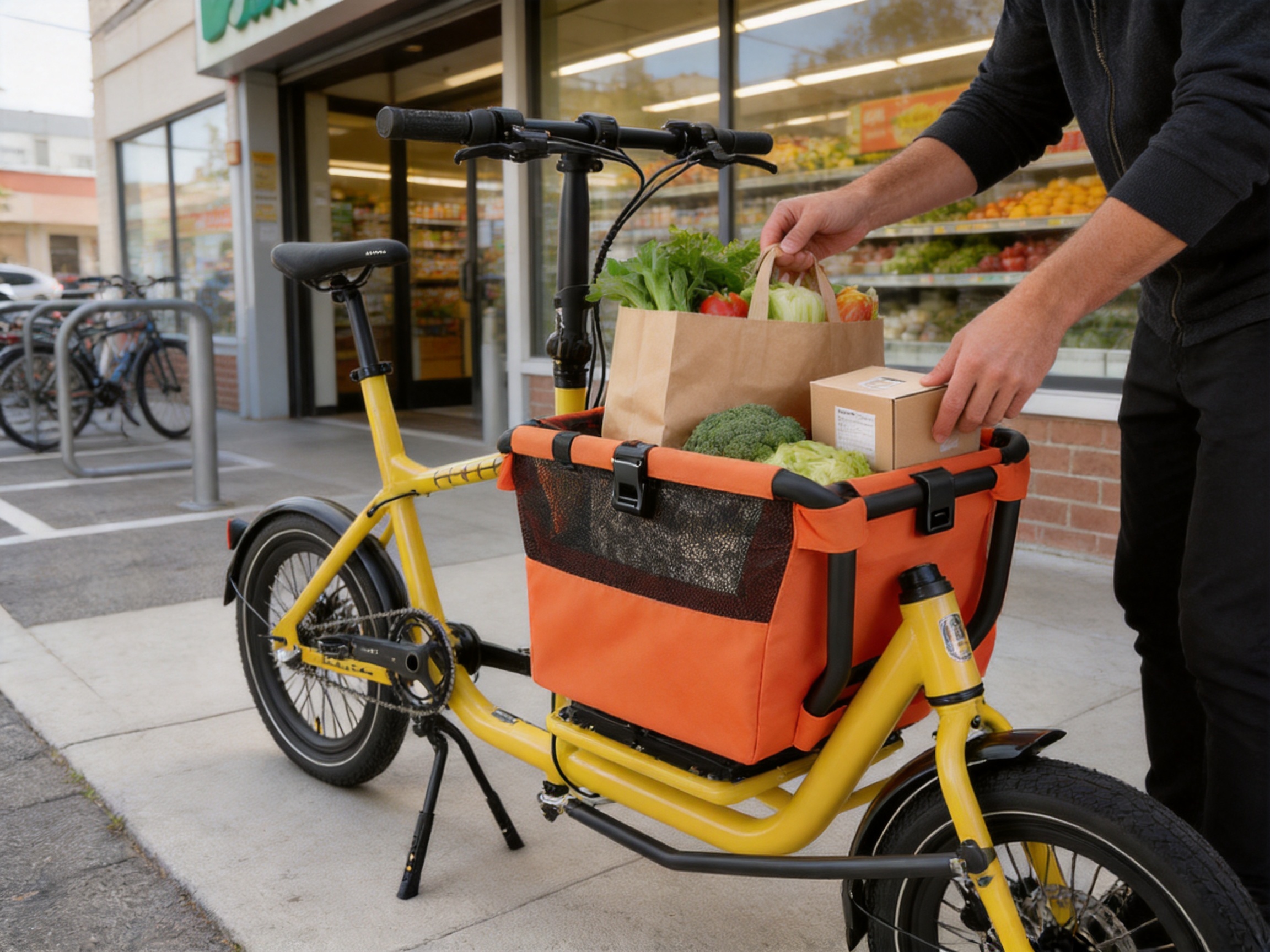
The front folding basket is one of the Q1’s defining features. Traditional bicycles often require the rider to use a backpack, rear panniers, or a separate trailer for practical carrying. A front basket provides a more visible and accessible loading area, which can be convenient for groceries, packages, sports equipment, and everyday personal items.
The basket’s front position allows the rider to keep an eye on the load. This is useful when carrying fragile goods or items that need to remain upright. It also avoids placing all the cargo behind the rider, where it may be less visible and more difficult to access during a trip.
The folding function adds flexibility. When the basket is not needed, folding or removing it can reduce the visual and physical footprint of the bike. This is useful for storage, maintenance, transport, or situations in which the rider wants a more open front area.
The basket is designed for quick installation using a guided mounting system. The first step is to align the basket base with the pre-installed mounting holes near the handlebar area. Correct alignment ensures that the mounting clips and receiving points are positioned properly.
The second step is to lower the basket vertically until the clips make contact. This downward motion helps seat the basket onto the mounting structure without requiring complicated tools or multiple loose fasteners.
The third step is to push the basket backward toward the saddle. A clicking sound indicates that the basket has reached its locked position. The rider should always confirm that the basket is fully seated and secure before loading cargo or beginning a ride.
This approach has a practical advantage over systems that require repeated bolt installation. A guided mechanical interface can make the basket easier to remove when the bike is used for a lighter trip. It also supports a more flexible relationship between the bicycle and its cargo equipment.
Removing the basket begins by locating the pin beneath the basket mount and pulling it downward. This releases the locking mechanism. The basket is then pushed forward toward the front wheel until it reaches the end of its track, after which it can be lifted upward and removed.
Users should perform removal while the bicycle is stationary and supported securely. If the basket contains cargo, it should be emptied first. After reinstallation, the rider should check the locking position and ensure that there is no excessive movement between the basket and its mounting structure.
The simplicity of this system is valuable for everyday use. A basket that is difficult to detach often remains attached permanently, even when it is no longer useful. A quick-release design encourages riders to adapt the bicycle to the task at hand.
The Q1 uses a Shimano three-speed Sora speed system. A three-speed arrangement is intentionally simple. It provides a small range of gearing for starts, steady cruising, and modest changes in terrain without creating the complexity of a large multi-speed drivetrain.
For a manual cargo bike, gearing is especially important because the rider must manage the combined weight of the bicycle, personal equipment, and cargo. A lower gear can make it easier to start from a stop or pedal with a load. A higher gear can support more efficient cruising on flat roads when the rider has built up speed.
The Sora designation is associated with Shimano’s road-oriented component family. In the Q1, the value of the system is not simply the brand name. It is the combination of familiar shifting behavior, replacement-part availability, and a drivetrain format that many bicycle technicians understand.
Three speeds also reduce the number of components that need adjustment. A simpler derailment or internal shifting arrangement can be easier for occasional riders to learn and easier to maintain than a wide-range drivetrain with many gears. This aligns with the Q1’s broader philosophy of practical ownership.
Riders should shift before the bicycle becomes difficult to pedal. When approaching a bridge, incline, or heavier section of a route, selecting an easier gear in advance can help maintain a smooth cadence. When moving on level ground, a moderately higher gear may allow comfortable cruising without excessive pedaling speed.
Because the Q1 is manually powered, rider technique has a direct effect on comfort. Smooth pedaling, early shifting, controlled acceleration, and appropriate load placement can make a substantial difference. The bike rewards an active riding style rather than relying on a motor to compensate for poor gearing choices.
The Q1 is equipped with Tektro hydraulic disc brakes. Hydraulic disc brakes are well suited to utility bicycles because they provide strong and controllable braking across a range of weather and load conditions.
When a cargo bike is loaded, its total moving mass increases. Effective braking is therefore important not only for emergency stops but also for ordinary traffic situations, downhill riding, junctions, and low-speed maneuvering. Disc brakes separate the braking surface from the wheel rim, which can help maintain more consistent performance when rims are wet or exposed to road contamination.
Hydraulic systems transmit lever pressure through fluid rather than a conventional mechanical cable. This can provide a smoother lever feel and reduce the effort needed to achieve controlled braking. It also allows the braking system to remain responsive as the pads wear, although periodic inspection and professional bleeding may eventually be required.
Riders should apply both brakes progressively, especially when the basket is loaded. Sudden use of the front brake can shift weight forward, while relying only on the rear brake can reduce stopping effectiveness. Balanced braking allows the rider to maintain control and stop with greater stability.
Before every ride, it is good practice to check lever feel, inspect the brake pads when visible, and confirm that the wheels rotate without abnormal rubbing. Any spongy lever feel, fluid leakage, unusual noise, or substantial reduction in braking power should be addressed promptly.
The use of hydraulic disc brakes gives the Q1 an advantage over basic utility bicycles equipped with less powerful braking systems. It supports the bike’s cargo purpose while preserving the smooth, controlled feel expected from a higher-quality urban bicycle.
The Q1 uses wide tires measuring approximately 16 inches by 2.4 inches at the front and 20 inches by 2.4 inches at the rear. The tires are described as puncture-proof or puncture-resistant, providing an additional layer of protection for daily urban use.
Wide tires can improve comfort by allowing the bicycle to absorb small imperfections in the road surface. They may also provide a broader contact patch, which can contribute to confidence on damp pavement, painted road markings, compacted paths, and uneven surfaces. The smaller front wheel and larger rear wheel support the compact cargo-bike format while maintaining a stable riding platform.
No tire is completely immune to punctures in every situation. Glass, sharp metal, exposed thorns, and severe impacts can damage even reinforced tires. Regular pressure checks remain important. Riding with insufficient pressure can increase rolling resistance and make the bike feel sluggish, while excessive pressure can reduce comfort and grip.
The tire selection reflects the Q1’s intended environment. It is not designed as a racing bicycle or a mountain bike. Instead, it is optimized for ordinary urban roads, neighborhood paths, and mixed everyday surfaces where stability and durability are more important than extreme speed.
The listed maximum load is 120 kilograms for the rider and 25 kilograms for the basket. These figures should be considered separately and together. The rider’s weight and the basket’s contents contribute to the total demands placed on the bicycle, wheels, brakes, frame, and tires.
Load capacity is most useful when it is combined with good loading practice. Heavy objects should be positioned as low as practical and distributed evenly. Tall items should be secured so that they cannot swing into the rider’s arms or obstruct forward visibility. Loose bags should not be allowed to contact the front wheel, brake components, or steering mechanism.
Riders should also account for the weight of locks, backpacks, water bottles, accessories, and any child or pet transport equipment if such equipment is used. Only accessories specifically compatible with the bicycle should be installed, and the basket should not be modified in a way that weakens its attachment or changes the steering balance.
The Q1’s 25-kilogram basket rating is useful for shopping and light delivery tasks. It can accommodate a substantial grocery load, office supplies, small parcels, or recreational equipment. For commercial delivery work involving heavier or larger packages, a larger cargo platform may be more suitable.
The Q1 has several advantages over ordinary bicycles that lack a dedicated cargo structure. A standard bicycle may require a backpack, rear rack, panniers, or a trailer before it can carry meaningful quantities of goods. The Q1 provides a purpose-built front cargo area from the beginning.
Compared with a standard city bicycle equipped only with a small basket, the Q1 offers a larger carrying surface and a stronger utility-oriented design. The rider can transport more items without placing the full load on the back or shoulders.
Compared with many full-size cargo bicycles, the Q1 is more compact. Its smaller format can be easier to store in apartments, offices, workshops, and narrow garages. It may also be less intimidating for riders who are new to cargo cycling.
Compared with electric cargo bikes, the Q1 is lighter and mechanically simpler. It avoids battery charging, motor servicing, electronic troubleshooting, and the gradual capacity loss associated with rechargeable batteries. Its purchase and operating costs may also be lower, although actual pricing depends on market conditions and equipment configuration.
Compared with inexpensive non-electric utility bikes, the Q1 offers a more specialized combination of hydraulic disc brakes, aluminum construction, wide tires, a quick-install front basket, and a three-speed drivetrain. These features support a more capable and refined daily riding experience.
A balanced comparison should acknowledge the situations in which an electric cargo bike may be better. Motor assistance is valuable on steep hills, during long commutes, in strong wind, or when transporting heavy loads over extended distances. It can also make cargo cycling more accessible to riders who have limited physical strength or need to arrive without significant exertion.
The Q1 is not intended to replace every type of cargo bicycle. Its advantage is greatest for riders whose routes are relatively flat, whose loads are moderate, and who appreciate active travel. The best choice depends on terrain, distance, cargo weight, storage conditions, and personal preference.
A manual cargo bike supports sustainable transportation by replacing some short car journeys with human-powered travel. Short urban trips often involve inefficient vehicle use, traffic congestion, and difficult parking. A compact cargo bicycle can address those trips while producing no direct riding emissions.
The absence of a battery and motor also reduces the number of specialized components required for operation. This may simplify repair and extend the practical life of the bicycle, provided that the frame and mechanical components are maintained correctly.
Sustainability is not limited to energy consumption during use. Product longevity, repairability, component availability, and the ability to continue using a product without frequent technological replacement also matter. A straightforward bicycle can remain useful for many years when its chain, brake pads, tires, cables, bearings, and other wear parts are replaced as needed.
Atmose identifies sustainability, reliability, practicality, and fun as important company values. The Q1 expresses those values through a deliberately restrained product concept. Instead of adding technology for its own sake, it focuses on carrying function, manageable dimensions, dependable mechanical systems, and a direct riding experience.
Atmose is described as a cargo e-bike brand with American origins, European design and research-and-development participation, and manufacturing support from an established supply chain. The company combines American product thinking with European design aesthetics, aiming to create cargo bikes that balance function and appearance.
Although the Q1 is a manual bicycle rather than an electric model, the company’s experience with cargo-bike development remains relevant. Cargo bicycles require a system-level understanding of frame strength, rider ergonomics, load behavior, component integration, safety, and everyday usability. Experience developing electric cargo bikes can also help a company understand how urban riders actually use cargo platforms, even when a specific model removes the electrical system.
The company’s history includes a connection to MOTIV, an American beach cruiser brand with manufacturing experience and an established supply chain. This background can support several important production capabilities:
First, experienced product development teams are better positioned to translate user needs into practical geometry and component specifications. A cargo bike must be stable when loaded, responsive when empty, and comfortable during repeated daily use.
Second, a mature supply chain can improve component coordination. The frame, wheels, brakes, drivetrain, tires, basket, and fasteners must be compatible in size, strength, and function. Supply-chain management also helps manufacturers maintain consistency when sourcing parts from different production partners.
Third, design and research-and-development resources can support iterative testing. Engineers can evaluate prototypes for steering response, braking behavior, basket stability, rider posture, access clearance, and long-term durability before final production.
Fourth, international design cooperation can help a product address different urban environments. European cities often place strong emphasis on compact mobility, cycling infrastructure, and space-efficient transportation, while American product development may contribute a focus on approachability, comfort, and lifestyle versatility. Combining these perspectives can create a cargo bike that is both practical and visually accessible.
A modern bicycle manufacturing process typically begins with requirements definition. The manufacturer identifies the intended rider, cargo capacity, terrain, dimensions, component targets, and price positioning. For the Q1, the requirements center on manual urban transport, low weight, compact handling, and front cargo utility.
Industrial designers and engineers then develop the frame geometry and cargo interface. Computer-aided design allows the team to analyze clearances, mounting points, tube relationships, wheel positions, and rider contact points. Prototype frames or sample assemblies can be used to evaluate fit and function.
Component validation follows. The basket must remain secure under ordinary riding forces. The brake system must provide adequate stopping control for the intended load. The wheels and tires must support the expected operating conditions. The drivetrain must provide useful gearing without adding unnecessary complexity.
During assembly, trained technicians install and adjust the components according to production specifications. Quality checks may include torque verification, brake testing, gear indexing, wheel alignment, fastener inspection, and visual review of the frame and finish.
Final inspection is particularly important for a cargo bike because problems that might be minor on a lightweight recreational bicycle can become more serious when the bike carries a heavy load. A loose basket mount, improperly adjusted brake, or misaligned wheel should be identified before delivery.
The Q1 is designed to reduce maintenance complexity by eliminating electrical systems, but it still benefits from a regular care routine. Before riding, users should check tire pressure, brake operation, wheel security, basket attachment, and the general condition of the chain and drivetrain.
The chain should be kept clean and lubricated with a suitable bicycle lubricant. Excess lubricant should be wiped away because it can attract dirt. A clean drivetrain shifts more reliably and experiences less abrasive wear.
Hydraulic brake systems should be inspected for signs of fluid leakage or damage. Brake pads are consumable parts and should be replaced when worn. If the brake lever feels soft or the system requires bleeding, service should be performed by a qualified bicycle technician unless the owner has the appropriate tools and training.
Tires should be checked for cuts, embedded debris, abnormal wear, and correct inflation. Puncture-resistant construction reduces risk but does not eliminate the need for inspection. Wheels should spin freely without excessive side-to-side movement.
The basket mounting system deserves special attention because it is frequently installed and removed. The locking pin, clips, mounting track, and receiving points should remain clean and undamaged. After installation, the rider should verify that the basket cannot lift, slide, or rotate unexpectedly.
Periodic professional servicing can include bearing inspection, drivetrain adjustment, brake inspection, wheel truing, fastener checks, and frame examination. The frequency depends on mileage, weather, load, storage, and riding conditions.
The Q1 is a strong candidate for riders who live in relatively flat areas and want a practical bicycle for short-distance transportation. It is well suited to people who enjoy pedaling and do not want every trip to depend on a motor.
It may appeal to apartment residents who need a lighter and more compact cargo option. The aluminum frame and smaller overall format can make it easier to carry, position, and store than a larger cargo bicycle.
It can also be useful as a household utility bike. One family member may use it for grocery shopping, another for commuting, and another for transporting supplies to a local activity. The three-speed system keeps the controls approachable, while the front basket gives the bike a clear everyday purpose.
Fitness-minded riders may appreciate the opportunity to integrate exercise into routine transportation. The bike transforms ordinary errands into moderate physical activity without requiring a dedicated training session.
Small businesses may also find the Q1 useful for light local deliveries, internal campus transport, market operations, and service tasks. However, businesses should evaluate expected mileage, terrain, load size, security, and weather exposure before selecting a manual cargo bike for commercial work.
Riders who frequently travel up steep hills may find a manual cargo bike demanding, especially with a fully loaded basket. In such cases, an electric cargo bike can reduce physical strain and make longer routes more practical.
Those transporting children, large packages, or heavy commercial equipment should confirm that the Q1’s front basket capacity and available accessory options meet their needs. The listed 25-kilogram basket limit should not be exceeded.
Riders seeking high-speed travel over long distances may also prefer a different design. The Q1 is optimized for neighborhood utility rather than touring, racing, or high-volume freight transport.
These limitations do not weaken the product concept. They simply define the conditions under which the Q1 performs best. Selecting a cargo bike according to real daily requirements is more important than choosing the model with the greatest number of features.
| Specification | Q1 Detail |
|---|---|
| Product type | Manual compact cargo bike |
| Intended category | Urban companion cargo bike |
| Frame material | 6061 T4T6 aluminum alloy |
| Battery | Not equipped |
| Power system | Not equipped; rider-powered |
| Rider load rating | Up to 120 kilograms |
| Basket load rating | Up to 25 kilograms |
| Drivetrain | Shimano three-speed Sora system |
| Front basket dimensions | Approximately 470 × 470 × 375 millimeters |
| Front tires | 16 × 2.4 inches, puncture-resistant |
| Rear tires | 20 × 2.4 inches, puncture-resistant |
| Overall dimensions | Approximately 1,780 × 620 × 1,070 millimeters |
| Brakes | Tektro hydraulic disc brakes |
| Basket installation | Three-step guided mounting process |
| Basket removal | Two-step release and lift process |
Before the first ride, the owner should adjust the saddle and handlebar to a comfortable position and confirm that all controls are within easy reach. The basket should be installed according to the mounting instructions and tested without cargo before normal use.
New riders should begin with an empty basket in a quiet area. This allows them to become familiar with the steering response, braking feel, turning radius, and three-speed shifting. Once comfortable, the rider can gradually add moderate loads.
When carrying groceries, heavier items should be placed toward the bottom and near the center of the basket. Glass containers and fragile goods should be cushioned. Bags should not hang over the sides where they could contact the front wheel.
During turns, riders should reduce speed before entering the corner rather than braking sharply while turning. Extra care is useful when the basket is heavily loaded because cargo can affect steering balance.
When parking, the rider should choose a stable surface and use an appropriate lock. Since the bike is designed for everyday urban use, security planning is an important part of ownership. The frame and wheels should be secured to a fixed object whenever possible.
No. The Q1 is a manually powered cargo bike. It does not include a battery, motor, or power system. The rider provides all propulsion through the pedals.
The main benefit is simplicity. The bike requires no charging and avoids the additional weight and maintenance requirements associated with a motor and battery. It is especially suitable for flat routes and riders who enjoy active transportation.
The listed maximum basket load is 25 kilograms. Users should distribute cargo evenly, secure loose items, and avoid exceeding the stated rating.
The listed rider load rating is 120 kilograms. The rider should also account for clothing, backpacks, and other personal equipment when considering the complete operating load.
No. The basket is designed to be installed and removed using a guided mounting system. Installation involves alignment, downward insertion, and a backward locking motion. Removal involves releasing the lower pin, sliding the basket forward, and lifting it away.
It can manage moderate inclines depending on the rider’s fitness, cargo weight, and gearing technique. However, riders who regularly face steep hills or long climbs may find an electric cargo bike more suitable.
The wide tires can improve comfort, stability, and confidence on common urban surfaces. Their puncture-resistant construction adds protection against some everyday road hazards, although no tire is completely puncture-proof.
They require routine inspection like other bicycle brakes. Pad replacement and basic cleaning are straightforward, while bleeding or hydraulic repairs may require a qualified bicycle technician.
Its compact dimensions and relatively light manual design can make storage easier than with many larger cargo bicycles. Actual storage suitability depends on the building entrance, stairs, rack, elevator, and available space.
It may be suitable for light local deliveries or service tasks when the route is short and relatively flat. Businesses should evaluate the basket capacity, daily distance, security requirements, and expected cargo weight before selecting it for regular commercial use.
No. Because it has no motor, battery, controller, or display, it does not require electronic diagnostics, firmware updates, or charging-system maintenance.
The Q1 is designed from the beginning as a cargo bike. It combines a dedicated front basket, a cargo-oriented frame, wide tires, hydraulic disc brakes, a three-speed drivetrain, and a load rating intended for practical transportation.
The Atmose Model Q Q1 presents a clear alternative to the assumption that every cargo bike must be electric. Its purpose is not to imitate a motorized cargo platform, but to provide a lightweight, practical, and engaging option for riders whose daily routes are suitable for human-powered travel.
Its strongest advantages are the combination of a 6061 T4T6 aluminum alloy frame, compact dimensions, removable front folding basket, three-speed drivetrain, hydraulic disc brakes, and wide puncture-resistant tires. These features support a useful balance between cargo capacity, maneuverability, comfort, and maintenance simplicity.
The Q1 is particularly attractive for neighborhood errands, short commutes, grocery shopping, light deliveries, and fitness-focused transportation. It can be easier to store and manage than a full-size cargo bicycle, while offering much greater carrying utility than a conventional city bike.
The company’s international design perspective, manufacturing experience, established supply-chain relationships, and emphasis on practical mobility provide a foundation for developing products that are both functional and approachable. The Q1 benefits from that system-level approach by treating the bike as a complete transportation tool rather than a collection of individual components.
For flat urban routes and moderate loads, the Q1 offers a direct and dependable way to move people and goods. It is always ready to ride, does not depend on charging, and invites the rider to make physical activity part of everyday transportation. In a market increasingly focused on complex electric systems, that simplicity is not a limitation for the right user. It is the central advantage.
Atmose Product Information. Model Q Q1 Product Specifications and Feature Summary.
Atmose Technical Content. Front Basket Installation and Removal Instructions.
Atmose Company Information. Corporate Background, Design Philosophy, and Manufacturing Capabilities.
Shimano Component Documentation. Three-Speed Bicycle Drivetrain Principles and Maintenance Guidance.
Tektro Brake Systems Documentation. Hydraulic Disc Brake Operation, Inspection, and Service Practices.
Aluminum Association. General Technical Information on 6061 Aluminum Alloy and Heat Treatment.
European Committee for Standardization. Bicycle Safety and Performance Considerations for City and Utility Bicycles.
International Organization for Standardization. General Bicycle Design, Load, Braking, and Testing Principles.
Nov 11, 2026
Nov 07, 2026
Nov 05, 2026


info@atmosecargobike.com

200 rue de la Croix Nivert 75015 Paris

Custom Electric Bakfiets
 English
 Français
 Deutsch