Aug 21, 2026
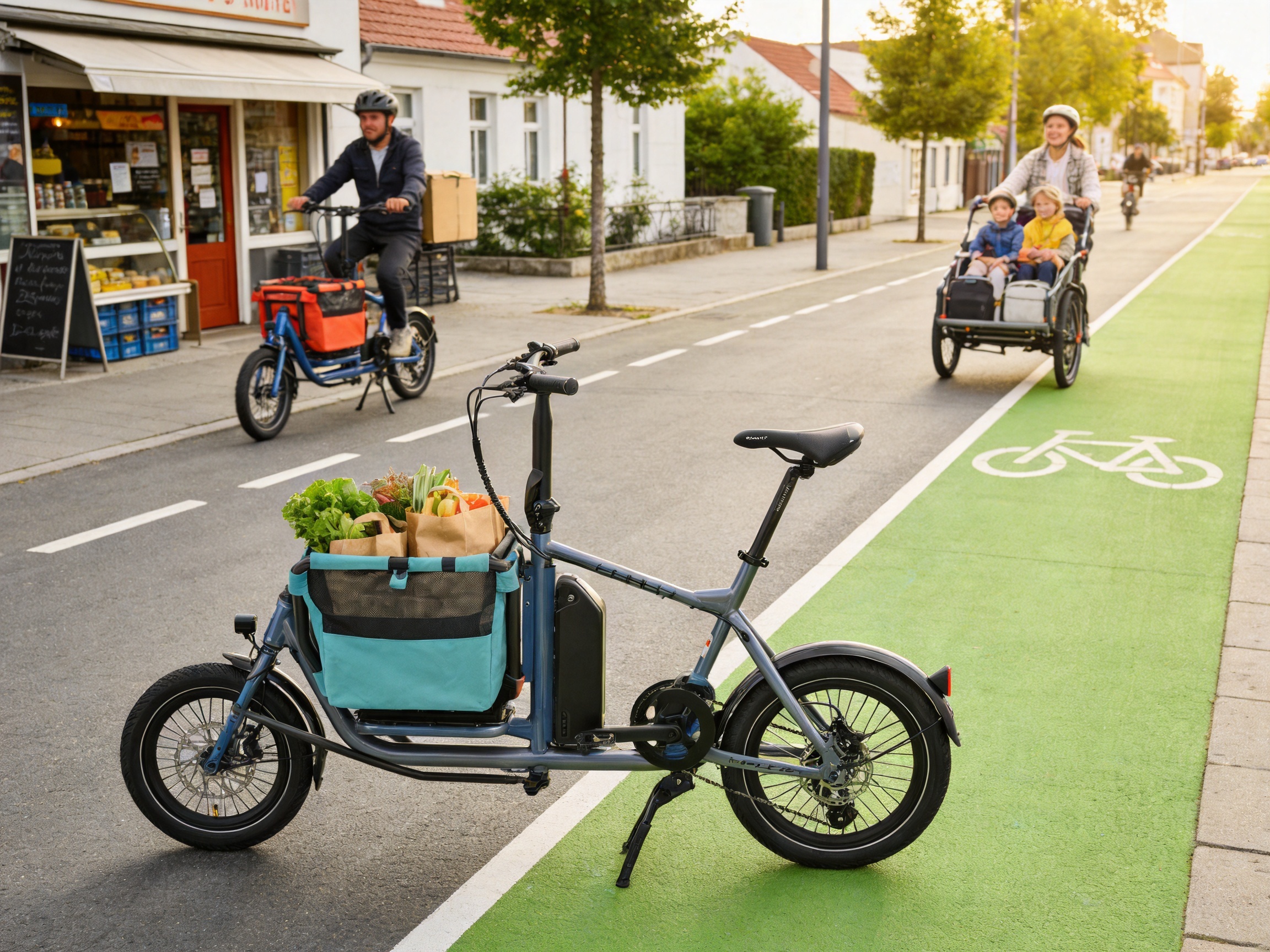
Urban transportation is changing rapidly. Cities are becoming more crowded, parking is becoming more expensive, and many residents are looking for practical alternatives to short car journeys. At the same time, conventional bicycles are not always suitable for carrying shopping, work equipment, children’s items, delivery packages, or personal belongings. A compact electric cargo bike can bridge this gap by combining the agility of a bicycle with the carrying ability of a small utility vehicle.
The Model Q ESQ1 is designed for this specific purpose. It is a front-loading electric cargo bike developed for urban commuters, small businesses, active families, and riders who need useful cargo capacity without the bulk of a traditional long-wheelbase cargo bicycle. Its compact dimensions, front folding basket, mid-drive motor, hydraulic disc brakes, seven-speed transmission, and relatively low step-through design are intended to make daily city travel easier and more versatile.
Unlike a large cargo bike that may require special storage, wide access doors, or a dedicated parking space, this compact model is designed around maneuverability. Its dimensions measure approximately 1,780 millimeters in length, 620 millimeters in width, and 1,070 millimeters in height. These proportions help it occupy less space than many full-size cargo bicycles while still offering a front cargo area suitable for everyday transport.
The result is a practical urban mobility platform rather than a bicycle limited to one type of rider. It can support commuting, grocery shopping, light commercial delivery, leisure trips, and general-purpose transportation. Its adaptable front basket further strengthens this multi-use character, allowing the bike to change according to the rider’s daily requirements.
Urban mobility places unusual demands on a bicycle. A rider may need to start and stop frequently, pass through narrow streets, store the bike in a small apartment, enter an elevator, navigate crowded bicycle lanes, or carry belongings after shopping. A product that performs well on an open road may not be equally convenient in these environments.
The Model Q ESQ1 addresses urban use through a compact frame and short overall footprint. The design reduces the amount of space required when turning, parking, or moving the bicycle through a building. Its 620-millimeter width is especially relevant in cities where bicycle lanes, apartment entrances, and storage areas can be restrictive.
The front-loading arrangement also makes the cargo area visible to the rider. Instead of placing a load behind the saddle, the basket is positioned ahead of the rider, allowing the user to monitor packages or personal belongings while moving. This layout can be useful for groceries, office equipment, small parcels, or a child’s daily necessities, depending on the selected configuration and applicable safety requirements.
A compact cargo bike must balance carrying usefulness with handling. Excessive size can make a bicycle feel difficult to control, while insufficient space limits its value. The ESQ1 takes a middle position: it offers a dedicated front basket with a stated length of 470 millimeters, width of 470 millimeters, and height of 375 millimeters, while keeping the rest of the bicycle relatively compact.
This balance is one of the model’s most important competitive characteristics. Larger front-loading cargo bicycles may provide greater volume, but they can be more difficult to store and maneuver. Ordinary commuter bicycles are easier to handle but lack an integrated cargo platform. The ESQ1 is intended to combine practical cargo functionality with a more agile urban riding experience.
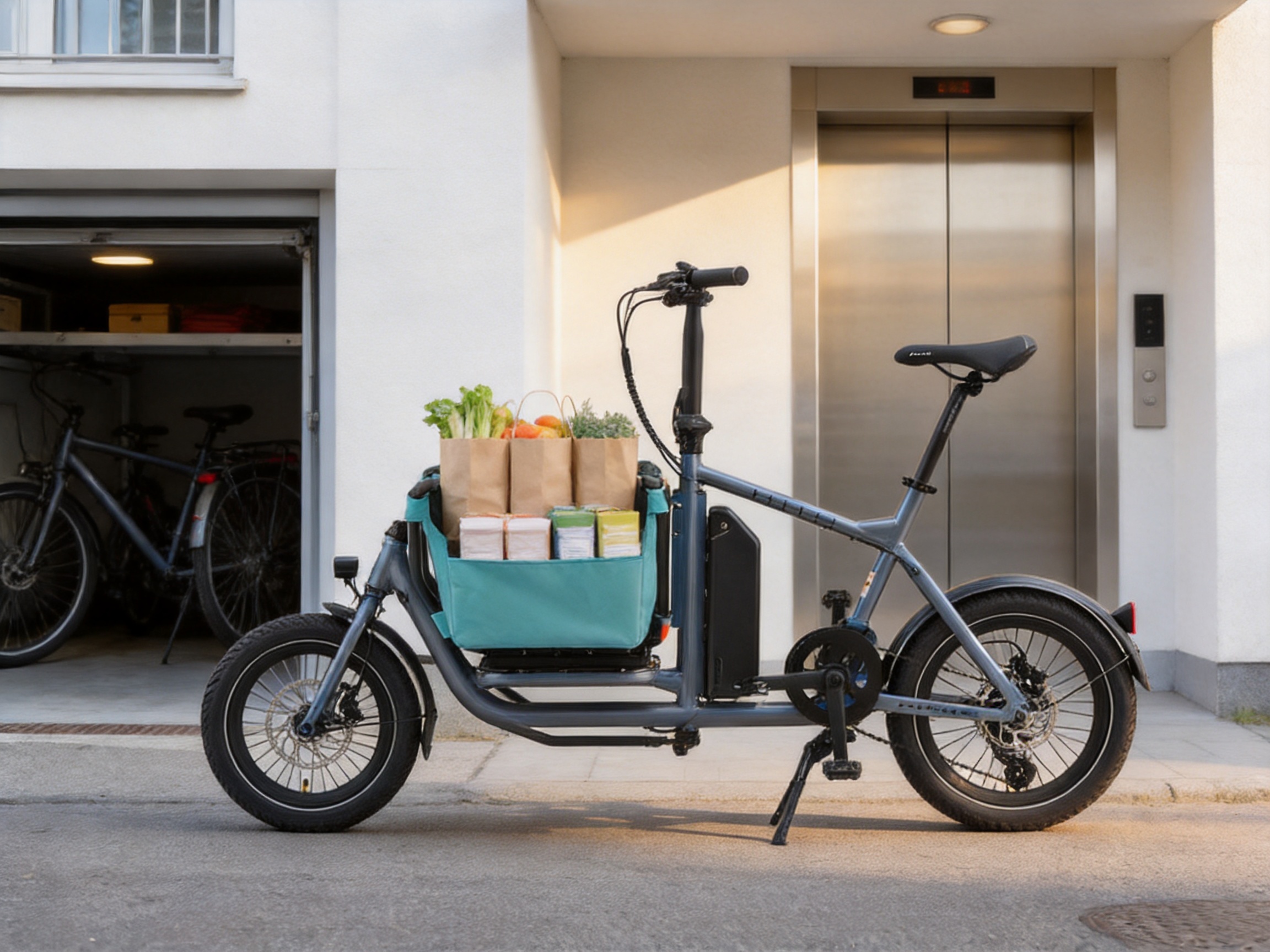
Storage is often overlooked when cargo bicycles are compared. A bike may perform well on the road but become inconvenient at home. Many urban riders live in apartments, shared buildings, or compact houses where a bicycle must fit through a doorway, inside a lift, or into a narrow storage room.
The compact geometry of the ESQ1 is designed with this reality in mind. Its overall length of 1,780 millimeters is shorter than many extended cargo bicycle formats. Its width of 620 millimeters also supports easier movement through common residential and commercial spaces. These dimensions do not make the bike invisible or weightless, but they can reduce the practical barriers associated with owning a larger cargo bicycle.
The front basket is removable. This feature is important because cargo capacity does not have to remain permanently attached when the bicycle is being stored or transported. The removal procedure uses a bottom pin, a forward sliding motion, and an upward lift. The installation process uses pre-installed mounting holes, downward placement, and a backward push toward the saddle.
A secure mechanical connection is particularly useful for a removable basket. The described “click” during installation provides a simple confirmation that the basket has reached its intended position. Riders should still inspect the attachment before every trip, especially when carrying valuable or heavy items, but the design is intended to make conversion between cargo and lighter configurations quick and accessible.
Compared with a fixed cargo box, a removable basket can give the owner more flexibility. The bike may be used for shopping in the morning, commuting in the afternoon, and light recreation in the evening. This adaptability is a major advantage for people who do not want to purchase separate bicycles for transportation and utility tasks.
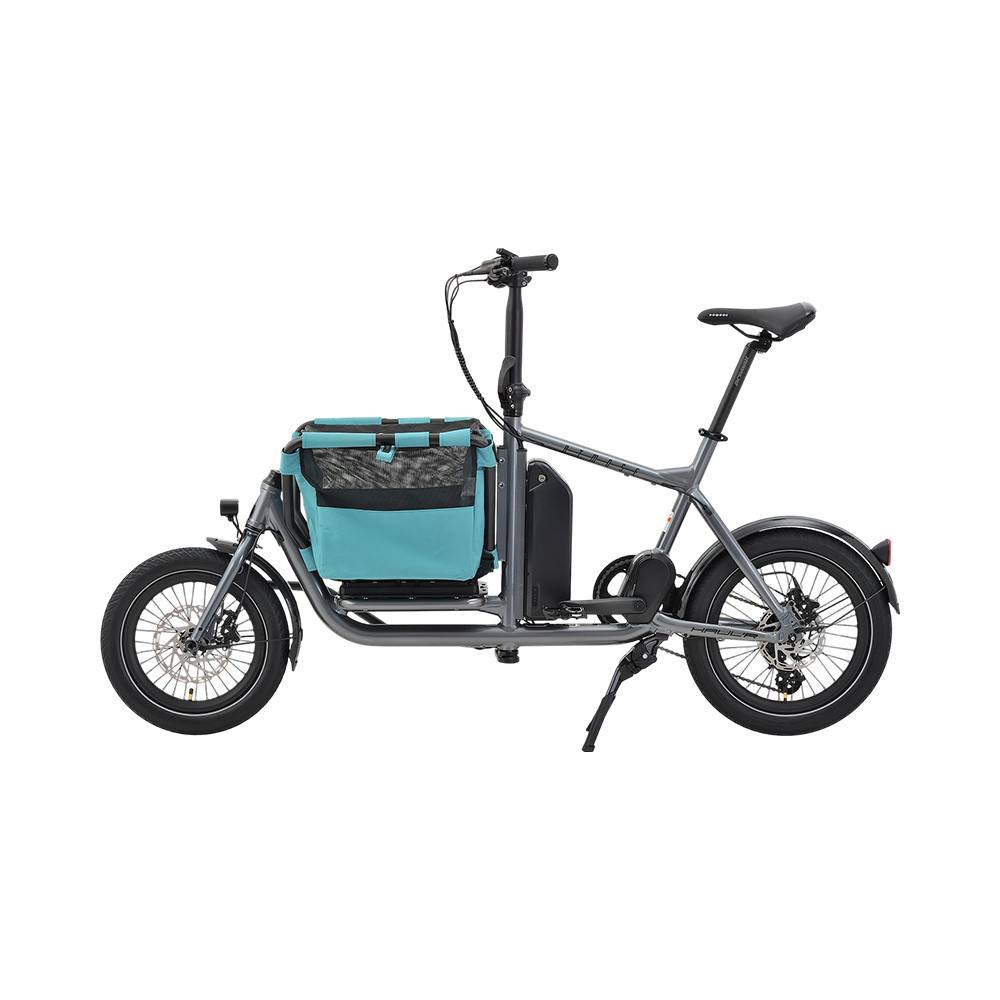
Atmose Model Q ESQ1 Compact Electric Cargo Bike for Agile Urban Commuting
The front folding basket is one of the defining elements of the Model Q ESQ1. Its stated dimensions provide a useful platform for everyday loads without requiring the full structure of a large delivery bicycle. The basket can be configured for a range of items, including shopping bags, work supplies, parcels, sports equipment, and personal belongings.
The word “folding” reflects the product’s emphasis on practicality. When cargo capacity is not needed, the front structure can be removed according to the described procedure. This can make the bicycle easier to store and may improve access in limited spaces. When additional carrying ability is required, the basket can be installed in three simple stages.
The installation sequence is designed around mechanical alignment rather than complex tools. First, the base of the basket is aligned with the mounting holes. Second, the basket is lowered vertically until the clips contact the mounting area. Third, the basket is pushed backward toward the saddle until the connection engages. A click indicates that the attachment has been completed.
For users, this arrangement can reduce the time required to change the bike’s configuration. For retailers and wholesalers, it also creates a straightforward product feature that can be explained during demonstration or delivery. A cargo bicycle is more valuable when customers understand how to configure and maintain it, and a simple basket system supports that objective.
The basket’s front position also helps preserve rear access. Riders can mount and dismount without climbing over a long rear platform or navigating around a large rear container. The lower front area can be useful for maintaining visibility of the load and keeping the bicycle’s cargo function close to the steering zone.
As with any front-loading bicycle, users should distribute weight carefully. The basket’s maximum stated load is 25 kilograms, and that limit should not be exceeded. Loads should be balanced, secured against movement, and positioned as low as practical. The rider should also allow for changes in steering feel when the basket is full.
One of the central advantages of a compact cargo bike is its handling. Urban riding often involves frequent direction changes, tight corners, traffic signals, pedestrian areas, narrow lanes, and irregular road surfaces. A bicycle with a long wheelbase may offer stability and volume, but it can require more room to turn and more time to adjust to obstacles.
The ESQ1 uses smaller wheels, specified as 16-inch front tires and an 18-inch rear tire, both with a width of 2.4 inches. This configuration contributes to the model’s compact proportions. Smaller wheels can also support a lower step-through height and responsive steering, characteristics that are useful when riders are repeatedly stopping and starting.
Lower access can benefit a wide range of urban riders. A lower step-through arrangement may make it easier to mount while wearing work clothing, carrying a bag, or stopping frequently in traffic. It can also provide a more approachable riding position for users who are transitioning from conventional bicycles to electric cargo bikes.
The 2.4-inch tire width offers a broad contact area compared with narrow road-oriented bicycle tires. The specification identifies the tires as puncture-proof, which is relevant for city streets where riders may encounter broken glass, sharp debris, and rough surfaces. Puncture resistance does not eliminate the need for tire inspection and correct inflation, but it can support greater everyday convenience.
In comparison with a large long-tail or long-john cargo bicycle, the ESQ1 is positioned toward agility and accessibility. Its compact form may be easier to guide through busy streets and bicycle storage areas. In comparison with a standard city bicycle, it offers a more purposeful cargo platform and greater load-carrying utility.
Handling depends on more than wheel size. The aluminum frame, brake system, motor placement, tire pressure, cargo weight, and rider technique all influence the experience. The combination selected for this model is intended to provide a practical balance between responsiveness, comfort, and carrying ability.
The frame is made from 6061 T4T6 aluminum alloy. This material is widely used in transportation and bicycle applications because it offers a useful combination of structural performance, relatively low weight, corrosion resistance, and manufacturing flexibility.
For a compact electric cargo bike, frame material is especially important. The frame must support the rider, battery, motor, cargo basket, wheels, brakes, and other components while remaining manageable in daily use. A well-designed aluminum frame can help reduce unnecessary bulk compared with heavier construction materials.
The T4T6 designation indicates a heat-treatment condition associated with aluminum alloy processing. In practical terms, this highlights the importance of controlled material preparation and post-forming treatment. The value of the frame does not depend only on the alloy name; it also depends on the accuracy of forming, welding, alignment, finishing, and inspection.
The company’s manufacturing background supports this type of product development. The supplied company information describes an established manufacturing base, a mature supply chain, and continuous product innovation. These strengths are important in electric cargo bike production because the bicycle integrates mechanical parts, electrical components, structural assemblies, and accessories.
Manufacturing a compact cargo bike requires coordination between frame design and component placement. The battery must be positioned so that it does not interfere with the rider or cargo. The motor must align with the drivetrain. The basket mount must carry its intended load without compromising steering. The brakes must provide controlled stopping for a bicycle that may be carrying additional weight.
Product development and manufacturing therefore work together. A design team may focus on geometry, visual proportions, and user experience, while production specialists focus on repeatability, material consistency, assembly accuracy, and supply coordination. The company’s American product development origins and European design and research presence provide an international foundation for this process.
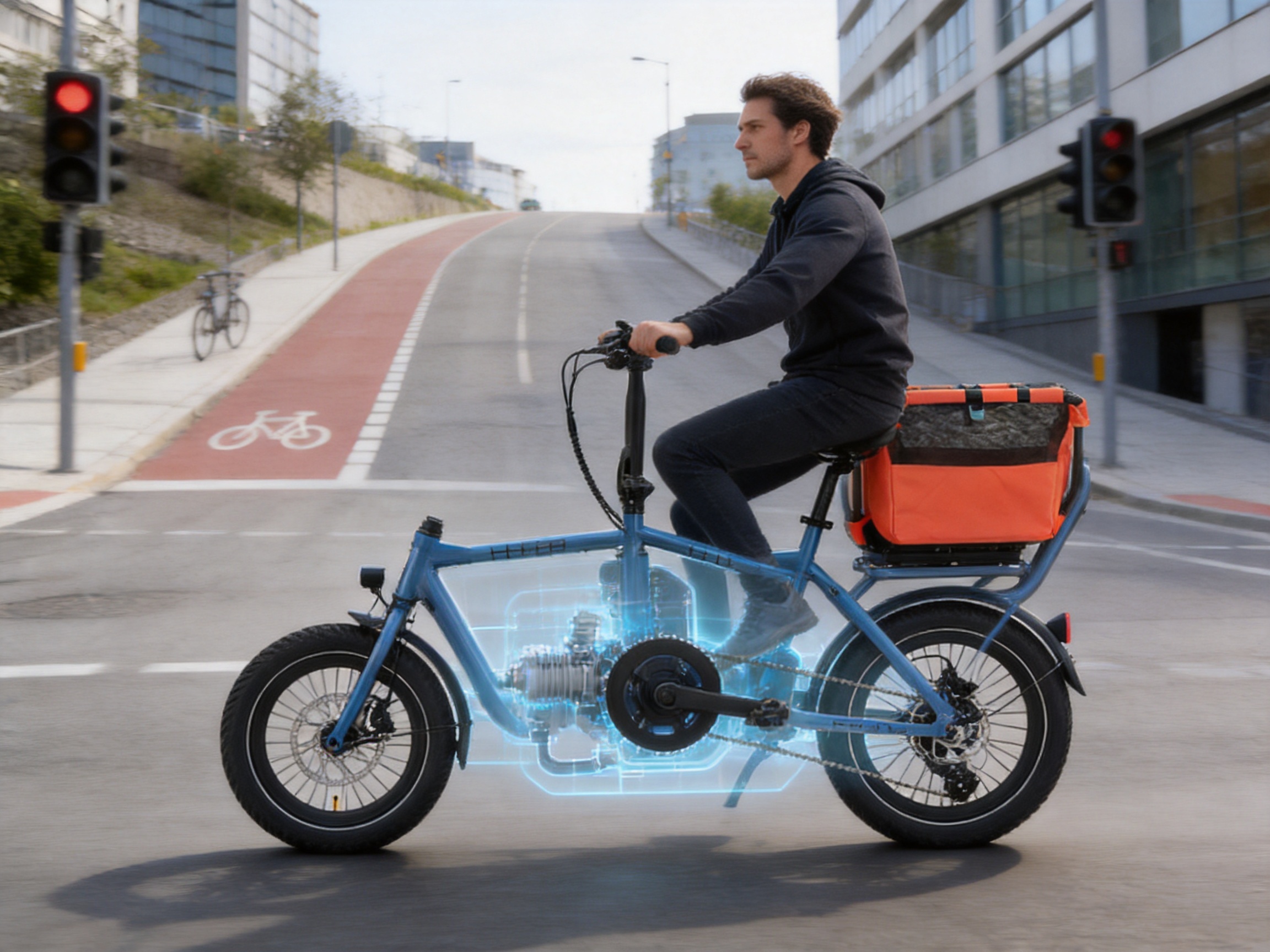
The ESQ1 uses a Bafang CM2503 mid-drive motor rated at 36 volts and 250 watts. A mid-drive motor is positioned near the bicycle’s crank area rather than inside one of the wheel hubs. This location can help centralize weight and allows motor assistance to work through the bicycle’s gearing system.
Central motor placement is well suited to a compact cargo bike because it keeps the wheel areas relatively simple and helps maintain a balanced frame layout. The rider may also benefit from the ability to use the seven-speed transmission while receiving motor assistance. This can be useful when starting from a stop, climbing a slope, or carrying a heavier basket load.
The 250-watt rating places the motor within a common European-oriented electric bicycle power category, although local laws and operating requirements vary by market. Riders, retailers, and distributors should always verify speed limits, assistance rules, registration requirements, and equipment regulations in the country where the bicycle will be used.
A mid-drive system can offer an efficient relationship between rider input, selected gear, and motor support. On level roads, a higher gear may be appropriate for maintaining speed. On inclines or when carrying cargo, a lower gear can make it easier to turn the cranks. The Shimano seven-speed Sora system gives the rider several ratios for adapting to different urban conditions.
Compared with a basic single-speed electric bicycle, the ESQ1 provides greater gearing flexibility. Compared with some hub-motor cargo bikes, its central motor position may offer a more integrated riding feel and better compatibility with changing terrain. These benefits are particularly relevant to riders who encounter bridges, ramps, hills, or frequent stops.
Motor assistance should complement, not replace, good riding technique. Riders should select an appropriate gear before climbing, avoid abrupt steering movements when the basket is heavily loaded, and use the brakes progressively. Understanding the relationship between cargo weight, gearing, battery charge, and assistance level can help preserve range and component life.
The bicycle is equipped with a Samsung 36-volt, 15-amp-hour lithium battery, identified with a capacity of 540 watt-hours. This capacity is intended to support practical daily use, including commuting, errands, and short business trips.
Battery range cannot be described by a single guaranteed distance because actual performance depends on many conditions. Rider weight, cargo weight, terrain, wind, temperature, tire pressure, assistance level, stopping frequency, and riding speed all affect energy consumption. A lightly loaded bike on flat roads will use energy differently from a fully loaded bike climbing repeated hills.
The 540-watt-hour capacity gives the rider a meaningful energy reserve for urban travel. It can reduce the need for frequent charging compared with a smaller battery, particularly when the bicycle is used for multiple errands in one day. A high-quality battery cell supplier also supports the importance of consistent energy storage and dependable daily operation, although correct charging and storage practices remain essential.
Battery care should include using the intended charger, keeping the battery away from excessive heat and moisture, and following the operating instructions supplied with the bicycle. Riders should avoid allowing the battery to remain fully depleted for extended periods. For long-term storage, the battery should be kept according to the manufacturer’s recommended charge level and environmental conditions.
For commercial users, battery capacity has a direct relationship with productivity. A small delivery operator may need to complete several nearby trips without returning to a charging point. A service worker may require dependable assistance throughout a working shift. A commuter may want to complete a journey to work, make an errand, and return home without planning the entire day around charging.
Battery capacity is only one part of an electric cargo bike’s value. The motor, drivetrain, frame, brakes, tires, and cargo system must work together. The ESQ1 combines these elements in a compact format aimed at users who need practical range without moving to a much larger vehicle.
The Shimano seven-speed Sora transmission gives the bicycle a useful range of gear ratios. Urban terrain is rarely uniform. A rider may move from a flat avenue to a sloped side street, from a smooth cycle path to a rough access road, or from an empty route to a stop-and-go commercial district.
Multiple gears allow the rider to adjust pedaling effort. Lower gears can support starts, inclines, and heavier cargo. Higher gears can be used when the bicycle is moving quickly on level ground. When combined with the mid-drive motor, the drivetrain provides a more adaptable power system than a single-speed arrangement.
Gear selection also affects battery use. A rider who chooses an appropriate gear can maintain a comfortable cadence and avoid placing unnecessary strain on the motor. Efficient shifting may help create a smoother ride and improve the practical use of available battery energy.
The drivetrain is also relevant to maintenance. A seven-speed system contains more moving parts than a single-speed system, so it requires correct adjustment, chain care, and periodic inspection. However, the additional flexibility can be valuable for a cargo bike that operates under changing loads and terrain conditions.
The ESQ1 uses Tektro hydraulic disc brakes. Braking is a critical feature on any electric bicycle, but it becomes even more important when the bicycle carries cargo. Additional weight increases the energy that must be controlled during deceleration, particularly on slopes or when riding in wet conditions.
Hydraulic disc brakes transmit braking force through fluid pressure. They are widely valued for consistent lever feel and strong stopping performance. Compared with basic mechanical rim brakes, hydraulic disc brakes can provide a more controlled response and are less dependent on the condition of the wheel rim’s braking surface.
The disc format also keeps the braking surface away from the tire. This can be beneficial in urban environments where water, road grime, and debris may affect rim braking systems. Riders should still inspect pads, rotors, hoses, and lever operation regularly.
Good brakes do not remove the need for safe riding. Cargo should be secured, the basket load should remain within its stated limit, and riders should leave extra stopping distance when the bicycle is heavily loaded. Braking should be progressive rather than abrupt, especially when steering through a crowded area.
The hydraulic braking system contributes to the ESQ1’s position above a basic utility bicycle. It supports the model’s electric and cargo functions by providing control appropriate to a heavier and faster-moving platform. This is one of the features that can distinguish a purpose-built cargo e-bike from a standard bicycle fitted with an improvised rack.
The product specification states a maximum load of 120 kilograms for the rider and 25 kilograms for the basket. These figures provide a clear framework for use. The rider should remain within both limits and should consider the combined effect of rider weight, cargo, clothing, accessories, and any additional equipment installed on the bicycle.
A 25-kilogram basket limit is suitable for many daily tasks. It can cover groceries, small packages, office supplies, tools, sports equipment, or personal belongings. The cargo area is not intended to replace a large commercial van or a high-volume delivery box. Its strength is the ability to handle regular urban loads while preserving a compact riding format.
Load placement matters. Heavy items should be positioned low and centrally whenever possible. Loose objects should be placed in bags, containers, or straps so that they cannot move into the steering area or fall onto the road. Tall or irregular loads should not obstruct lighting, braking controls, rider visibility, or the movement of the handlebars.
The front basket may influence steering when carrying cargo. Riders should practice with a light load before carrying the maximum permitted weight. This allows them to understand turning behavior, acceleration, braking distance, and the effect of uneven surfaces.
For families, the model may serve as a flexible transport tool for belongings and daily necessities. For small businesses, it may be appropriate for local deliveries, mobile services, or equipment transport. For individual commuters, it can replace some car trips while carrying more than a conventional bicycle.
| Category | Specification | Practical Relevance |
|---|---|---|
| Product name | ESQ1 | Compact electric cargo bike configuration for urban use |
| Frame | 6061 T4T6 aluminum alloy | Supports a balance of structural strength, manageable weight, and corrosion resistance |
| Battery | Samsung 36V 15Ah lithium battery, 540Wh | Provides an energy reserve for commuting, errands, and short business journeys |
| Motor | Bafang CM2503 mid-drive, 36V 250W | Central assistance compatible with the bicycle’s gear system |
| Drivetrain | Shimano seven-speed Sora | Allows adjustment for flat roads, slopes, stops, and cargo loads |
| Basket capacity | Up to 25kg | Suitable for groceries, parcels, work materials, and personal equipment |
| Rider load | Up to 120kg | Defines the stated rider-load limit for responsible operation |
| Front basket size | 470mm long by 470mm wide by 375mm high | Offers practical front cargo volume in a compact frame format |
| Tires | 16-inch front and 18-inch rear, 2.4-inch width, puncture-proof design | Supports maneuverability, access, and urban puncture resistance |
| Dimensions | 1,780mm long by 620mm wide by 1,070mm high | Designed for tighter storage and urban movement |
| Brakes | Tektro hydraulic disc brakes | Provides controlled braking for an electric cargo platform |
A conventional city bicycle is often light, simple, and easy to store, but its cargo capacity is usually limited to a small rear rack or handlebar bag. The ESQ1 provides a dedicated front basket that is designed as part of the bicycle rather than added as an afterthought. Its electric assistance also helps compensate for the additional load.
The result is greater practicality for shopping and work-related transportation. A rider can carry more without placing all the weight on the back or balancing multiple bags on the handlebars. The central motor and seven-speed drivetrain further support loaded riding.
Large cargo bicycles can offer impressive volume and passenger capacity, but they may require more storage space and a wider turning area. Their length can make elevators, apartment hallways, bicycle rooms, and small parking spaces more difficult to use.
The ESQ1 is more compact and oriented toward agility. It is not intended to replace every high-capacity cargo bicycle, particularly when large loads or multiple passengers are required. Its advantage is the ability to provide useful cargo functionality without committing the rider to the dimensions of a larger platform.
A basic hub-motor utility bike may be suitable for simple commuting, but it may not provide the same central motor integration, seven-speed gearing, front basket structure, or hydraulic braking equipment. The ESQ1 is designed as a complete cargo system, with its frame, basket, motor, drivetrain, and brakes selected to work together.
For short-distance urban trips, a compact electric cargo bike can occupy less road and parking space than a motor vehicle. It can also be easier to position near a shop, office, or residential entrance. Its operating concept is well suited to local delivery routes and errands where carrying volume is moderate and distances are relatively short.
Of course, a bicycle has limits. Weather, terrain, distance, and load size must be considered. The ESQ1’s advantage is not that it replaces every vehicle, but that it can handle a meaningful portion of daily urban transportation with a smaller physical footprint.
The product’s performance depends on more than its component list. A cargo e-bike is a system, and the quality of the finished product depends on design coordination, component compatibility, assembly accuracy, and supply-chain management.
The company behind the model combines American product thinking with European design and research and development. The company information identifies California as the origin of the brand and Paris as the location of an international design and R&D team. This combination supports a product strategy that connects practical transportation needs with contemporary European urban design considerations.
The company also describes an established manufacturing background and a mature supply chain. These strengths can be significant for wholesalers and retailers because stable production requires more than a single successful prototype. It requires repeatable sourcing, clear component specifications, controlled assembly, and the ability to support product updates over time.
Electric cargo bikes contain several interdependent systems. The frame must accommodate the motor and battery. The drivetrain must operate with the selected motor. The basket mount must align correctly and withstand its intended use. The brake system must be installed accurately. Tires and wheels must match the frame geometry and load purpose.
Advanced manufacturing is therefore best understood as an integrated process. It includes material selection, frame preparation, welding, heat treatment where applicable, surface finishing, component integration, electrical inspection, mechanical adjustment, and final quality control. The available product information confirms the use of 6061 T4T6 aluminum alloy and established manufacturing expertise, while specific factory procedures should be verified with the supplier for each production batch or market.
Continuous innovation is another stated company strength. The removable front basket and its simplified installation sequence illustrate a focus on user interaction as well as mechanical function. Small details such as attachment alignment, removal access, and storage flexibility can influence whether customers use a cargo feature regularly or leave it unused.
For international buyers, product development capability also matters because markets differ. A bicycle sold in one country may require different labeling, documentation, electrical settings, accessories, or compliance preparation in another. A company with international design and supply-chain experience is better positioned to discuss these requirements with distributors and retailers.
Quality in a compact electric cargo bike begins with the frame and continues through every subsystem. The frame should be checked for alignment so that the wheels, brakes, drivetrain, and steering operate correctly. The basket mounting interface should be positioned accurately so that the clips, pin, and track engage as intended.
Electrical assembly requires careful routing and protection of cables. The battery connection should be secure, and the motor system should respond consistently to the rider controls. Mechanical assembly requires correct tightening of the handlebar, saddle, wheels, brake components, crank system, and basket hardware.
Because the bike is intended for daily urban use, repeatability is important. Retailers and wholesalers need products that can be assembled, inspected, demonstrated, and supported through a consistent process. A mature supply chain can help maintain continuity in key components, while a dedicated design and R&D team can help refine product details and address user feedback.
End users also contribute to long-term reliability. The bicycle should be inspected before riding. Tire pressure should be maintained within the recommended range. Brake pads and rotors should be checked for wear. The chain should be kept clean and lubricated. The basket attachment should be confirmed after installation, and the battery should be charged according to the supplied instructions.
Routine maintenance does not indicate a weakness in the product. It is a normal part of owning any bicycle with moving mechanical and electrical systems. Proper care protects the rider, preserves performance, and helps the bicycle deliver its intended service life.
For commuters, the Model Q ESQ1 can carry a laptop bag, lunch, clothing, rain equipment, or other personal items in the front basket. The electric motor can make the daily journey more comfortable, especially when the route includes slopes or frequent acceleration from traffic signals.
The front basket is well suited to shopping trips. Instead of carrying bags on the rider’s body, the user can place them in the cargo area and maintain a more balanced riding position. Loads should be organized so that they do not shift during turns or braking.
Local businesses can use the bicycle for moderate-volume deliveries, mobile services, equipment transport, or neighborhood operations. Its compact dimensions may help employees access areas where a van is inconvenient. A removable basket also permits the bicycle to be adapted for different tasks.
Families may use the cargo area for daily necessities, school materials, groceries, or recreational equipment. The bike should only be used for passengers or child transport when the specific configuration, accessories, and local safety regulations permit it. The supplied specifications identify the basket and rider load limits, so families should not assume that the standard basket is automatically approved for passenger use.
The ESQ1 can also function as a practical recreational bicycle. The front cargo area can carry a gym bag, picnic supplies, or outdoor equipment. Removing the basket may create a lighter visual profile and make storage more convenient when cargo capacity is not needed.
Comfort is influenced by the relationship between frame size, step-through access, saddle position, handlebar reach, tires, motor response, and load distribution. The smaller-wheel configuration and compact geometry are intended to make the bicycle approachable for urban riding, especially when the rider must stop frequently.
A lower step-through height can make mounting less demanding. It can be useful when wearing formal clothing, carrying a small bag, or stopping at busy intersections. Responsive steering can also help a rider make controlled corrections in narrow lanes.
The broad 2.4-inch tires contribute to the bike’s urban character. They can provide a stable contact patch and help absorb some vibration from ordinary road surfaces. Tire pressure remains important: excessive pressure may reduce comfort, while insufficient pressure can affect handling, efficiency, and rim protection.
The rider should set the saddle and handlebar to a comfortable position and become familiar with the bicycle before carrying a heavy load. The first rides should take place in a low-traffic area so that the rider can practice starting, stopping, turning, shifting, and removing or installing the basket.
The Model Q ESQ1 has characteristics that can appeal to retailers serving urban mobility customers. It offers a clear product story: compact dimensions, front cargo functionality, removable configuration, electric assistance, and practical components. This makes it suitable for stores that want to offer more than a standard commuter e-bike but do not want to focus only on large family cargo bicycles.
Its product category is the Urban Companion Cargo Bike. That position can help retailers explain the model to customers who want a daily transportation tool rather than a specialized commercial vehicle. The bike can be presented as a flexible platform for commuting, shopping, light delivery, and leisure.
For wholesalers, the company’s international orientation, manufacturing expertise, design resources, and supply-chain background are relevant strengths. Wholesale buyers typically need more than a product specification. They also need consistency, product documentation, replacement-part planning, packaging information, technical support, and communication about market requirements.
Retail demonstration is particularly valuable for this model. Customers should be shown how the basket is installed, how it is removed, how the seven-speed system operates, how the hydraulic brakes feel, and how cargo weight changes handling. A clear demonstration can reduce uncertainty and help users understand the practical advantage of the compact design.
Customization and product adaptation may also be important for business customers. The broader company positioning includes custom electric cargo bike and custom electric bicycle solutions. Any customization should be evaluated for compatibility with the frame, battery, motor, brakes, load limits, and local regulations. Adding accessories without professional review can affect safety and warranty conditions.
Electric cargo bicycles can support more sustainable urban transportation by helping replace some short car trips. They use a smaller physical footprint, require less parking space, and can be practical for journeys where a car is inefficient. The environmental value depends on responsible manufacturing, battery management, product durability, repairability, and the distance and trips the bike replaces.
The company’s stated philosophy emphasizes sustainability, reliability, practicality, and fun. These principles are relevant to a cargo bike because a durable product that users enjoy riding is more likely to become part of everyday transportation. A bicycle that remains unused because it is difficult to store or uncomfortable to operate provides less practical benefit.
The compact format also supports urban efficiency. A rider may be able to travel directly to a destination, avoid searching for parking, and carry goods without using a larger motor vehicle. For businesses, small electric cargo bikes may support low-distance delivery networks and reduce dependence on vans for neighborhood routes.
Sustainability should be considered throughout the product lifecycle. Owners can extend service life through maintenance, proper charging, careful storage, and timely replacement of wear parts. Retailers can support sustainability by providing repair guidance and helping customers select accessories that are compatible rather than disposable or unsuitable.
Before each ride, the rider should check the tire condition, wheel security, brake operation, steering movement, battery connection, and basket attachment. The load should remain within the stated 25-kilogram basket limit, and the rider should stay within the stated 120-kilogram rider limit.
The basket must be fully engaged before riding. After installation, the rider should confirm that the attachment clips are seated and that the basket cannot move forward or upward unintentionally. After removal, the pin and mounting area should be kept clean and inspected for damage.
The bicycle should be ridden at a speed appropriate to the road, load, weather, and traffic conditions. Wet surfaces, loose gravel, potholes, tram tracks, and painted road markings can reduce traction. Front cargo can affect steering, so riders should take turns smoothly and avoid sudden movements.
The braking system should be operated with both brakes in a controlled manner. Heavy cargo increases stopping distance. Riders should anticipate traffic and leave more space than they would on a lightweight bicycle.
The battery should be charged only with the correct charger. It should not be opened, modified, exposed to extreme heat, or stored where it can be damaged by water or impact. Any electrical fault, unusual noise, brake problem, or frame concern should be addressed by a qualified technician before continued use.
Maintenance schedules may vary according to climate, mileage, load, and usage intensity. Commercial riders who use the bicycle every day should inspect it more frequently than occasional leisure users. Professional service is recommended for hydraulic brake maintenance, electrical troubleshooting, drivetrain adjustment, and structural inspection.
It is designed for urban commuters, shoppers, families carrying daily necessities, small businesses, and riders who want a compact cargo platform for everyday transportation. Its main emphasis is agile urban use rather than maximum-volume commercial hauling.
The stated maximum basket load is 25 kilograms. Users should distribute the load evenly, secure loose items, and avoid placing objects where they obstruct steering, lights, brakes, or rider visibility.
Yes. The described removal process involves pulling down the pin at the bottom of the mount, sliding the basket forward toward the front wheel, and lifting it upward after it reaches the end of the track.
The installation process has three main stages: align the basket base with the pre-installed holes, lower the basket vertically, and push it backward toward the saddle until the attachment clicks into place. The connection should always be checked before riding.
The mid-drive motor is positioned near the crank area and works with the bicycle’s gear system. This arrangement can provide balanced weight distribution and allow the rider to select lower or higher gears according to terrain and cargo load.
The battery is specified as a Samsung 36-volt, 15-amp-hour lithium battery with a stated capacity of 540 watt-hours. Actual range depends on rider weight, cargo, terrain, wind, temperature, assistance level, tire pressure, and riding style.
The 250-watt mid-drive motor and seven-speed transmission are intended to support changing urban conditions, including moderate slopes. Riders should select appropriate lower gears and recognize that steep terrain, heavy loads, and frequent stops will increase energy consumption.
Its overall dimensions are approximately 1,780 millimeters long, 620 millimeters wide, and 1,070 millimeters high. The smaller front and rear wheel sizes, removable basket, and compact frame are intended to make storage and maneuvering easier than with many larger cargo bike formats.
The bike uses 2.4-inch-wide tires specified as puncture-proof. They are designed for practical urban use, but riders should still maintain correct pressure and inspect the tires regularly for wear or damage.
Hydraulic disc brakes can offer consistent lever feel and controlled stopping performance. This is useful on an electric cargo bike because the rider may be managing additional cargo weight and higher momentum than on a standard bicycle.
It can be suitable for light urban delivery and small-business transport when the load remains within the stated limit. The model is not intended to replace a high-volume delivery vehicle, so the business should evaluate distance, route conditions, cargo size, and local regulations.
The supplied information specifies a front basket and its load capacity but does not confirm passenger approval for the standard configuration. Passenger use should only be considered with approved accessories, suitable equipment, correct installation, and compliance with applicable safety regulations.
The company describes an established manufacturing foundation, a mature supply chain, continuous innovation, American product origins, and an international design and research team based in Paris. These resources support coordinated development of the frame, electrical system, cargo accessories, and finished product.
The broader company positioning includes custom electric cargo bike and electric bicycle solutions. Buyers should discuss specific customization requirements with the supplier and confirm their effects on load capacity, electrical compatibility, safety, warranty, and market compliance.
The Model Q ESQ1 is designed for riders who want more carrying ability than a conventional city bicycle but less bulk than a large cargo bike. Its compact 1,780-millimeter length, 620-millimeter width, smaller wheels, removable front basket, and lower-access design support agile urban transportation.
Its technical package reinforces this purpose. The 6061 T4T6 aluminum alloy frame provides a practical structural foundation. The 36-volt, 250-watt mid-drive motor works with a Shimano seven-speed transmission to support changing terrain and cargo conditions. The 540-watt-hour lithium battery is intended for daily urban use, while Tektro hydraulic disc brakes provide controlled stopping. Puncture-proof 2.4-inch tires add practical support for city streets.
The product’s strongest advantage is the way these features are combined. It is not simply a commuter bicycle with a rack, nor is it an oversized commercial cargo platform. It is a compact, adaptable urban companion that can support commuting, shopping, family errands, light delivery, and leisure travel.
Behind the product, the company contributes American origins, European design and R&D resources, established manufacturing expertise, a mature supply chain, and a stated commitment to sustainability, reliability, practicality, and user enjoyment. These strengths provide a foundation for serving both individual riders and professional buyers seeking electric cargo bike solutions.
For responsible users who respect the load limits, maintain the bicycle correctly, and adapt their riding style to cargo and road conditions, the ESQ1 offers a useful way to make short urban journeys more efficient, flexible, and enjoyable.
1. Product specification sheet for the ESQ1 compact electric cargo bike, including frame, battery, motor, drivetrain, basket, tire, dimension, load, and brake information.
2. Product content describing compact urban cargo bicycle design, maneuverability, apartment-friendly storage, and customizable cargo use.
3. Company profile describing American product origins, California headquarters, Paris-based design and research resources, manufacturing experience, and supply-chain development.
4. General bicycle maintenance principles covering tire inspection, brake maintenance, drivetrain care, cargo distribution, and battery handling.
5. General urban mobility research concerning electric bicycles, short-distance transportation, active travel, and compact delivery solutions.
Nov 23, 2026
Nov 09, 2026
Nov 01, 2026


info@atmosecargobike.com

200 rue de la Croix Nivert 75015 Paris

Custom Electric Bakfiets
 English
 Français
 Deutsch