Sep 12, 2026
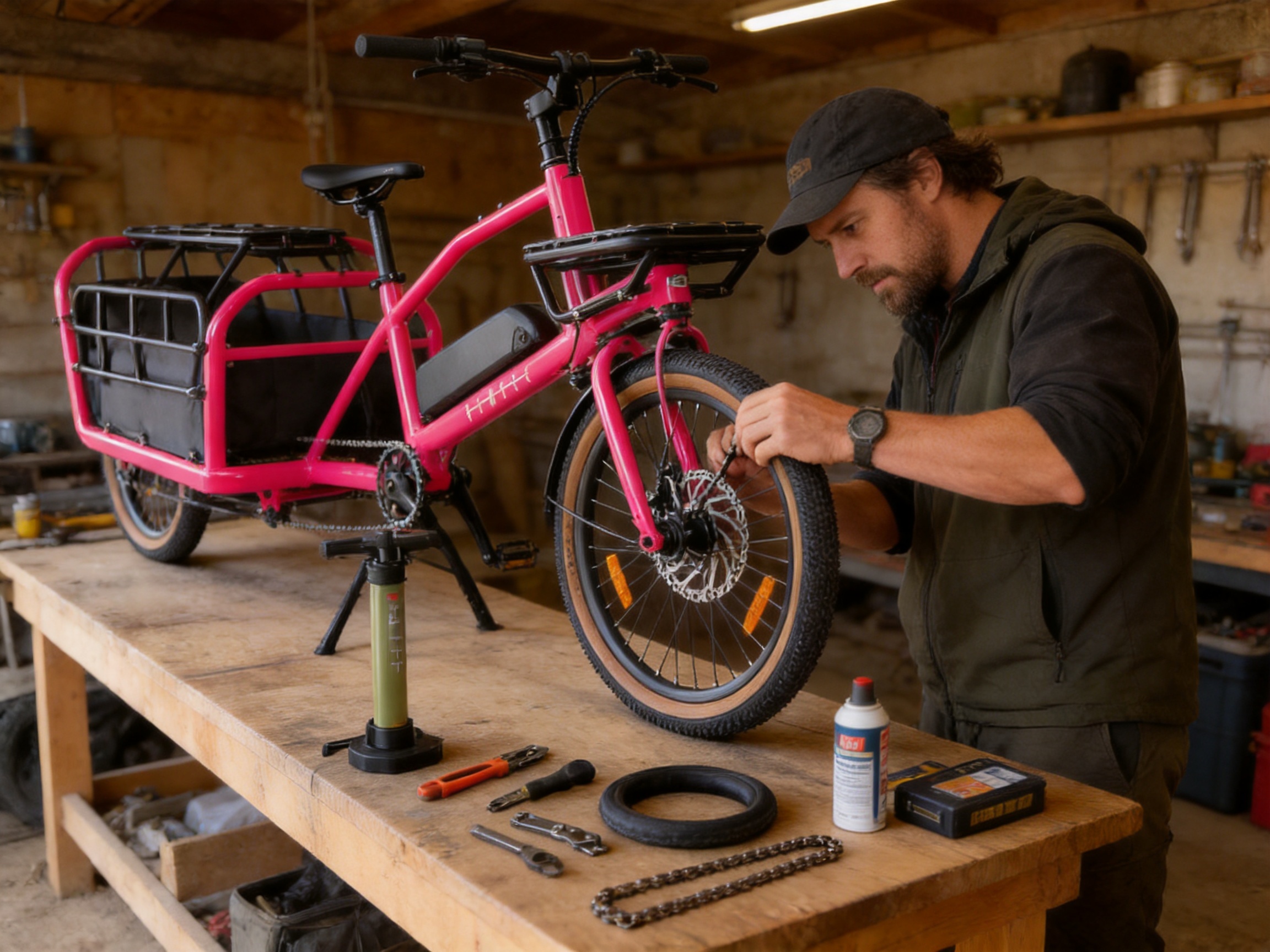
Adventure cycling is often associated with electric assistance, large batteries, charging points, and electronic control systems. Those features can be valuable, especially for urban transportation and long-distance cargo riding. However, they are not always the best answer for wilderness travel. Riders who travel far from roads, workshops, and reliable electricity may prefer a machine that is lighter, mechanically straightforward, and ready to keep moving without depending on a power source.
The Atmose Model V V1 Manual Adventure Cargo Bike is designed around that idea. It is a cargo bike for riders who want to carry substantial equipment into demanding environments while retaining the direct, active riding experience of a conventional bicycle. Instead of a motor and battery, the V1 uses human power, a wide-range Shimano 11-speed Cues drivetrain, hydraulic disc brakes, puncture-resistant tires, and a strong aluminum frame. Its oversized front folding basket provides the carrying capacity needed for camping equipment, expedition supplies, tools, coolers, and other outdoor essentials.
This combination gives the V1 a distinctive role within the cargo-bike market. It is not simply an electric cargo bike with its power system removed. It is a purpose-oriented manual adventure platform intended for self-sufficient travel, rough access roads, bikepacking routes, campsites, remote properties, and places where simplicity has practical value.
The bike also reflects the broader design philosophy of Atmose, a cargo-bike company combining American product thinking with European design and research capabilities. The company’s stated focus on practical, enjoyable, reliable mobility is particularly relevant to a manual adventure model. In this application, convenience is not measured only by electrical assistance. It is also measured by how easily the bike can be maintained, lifted, loaded, repaired, and used away from infrastructure.
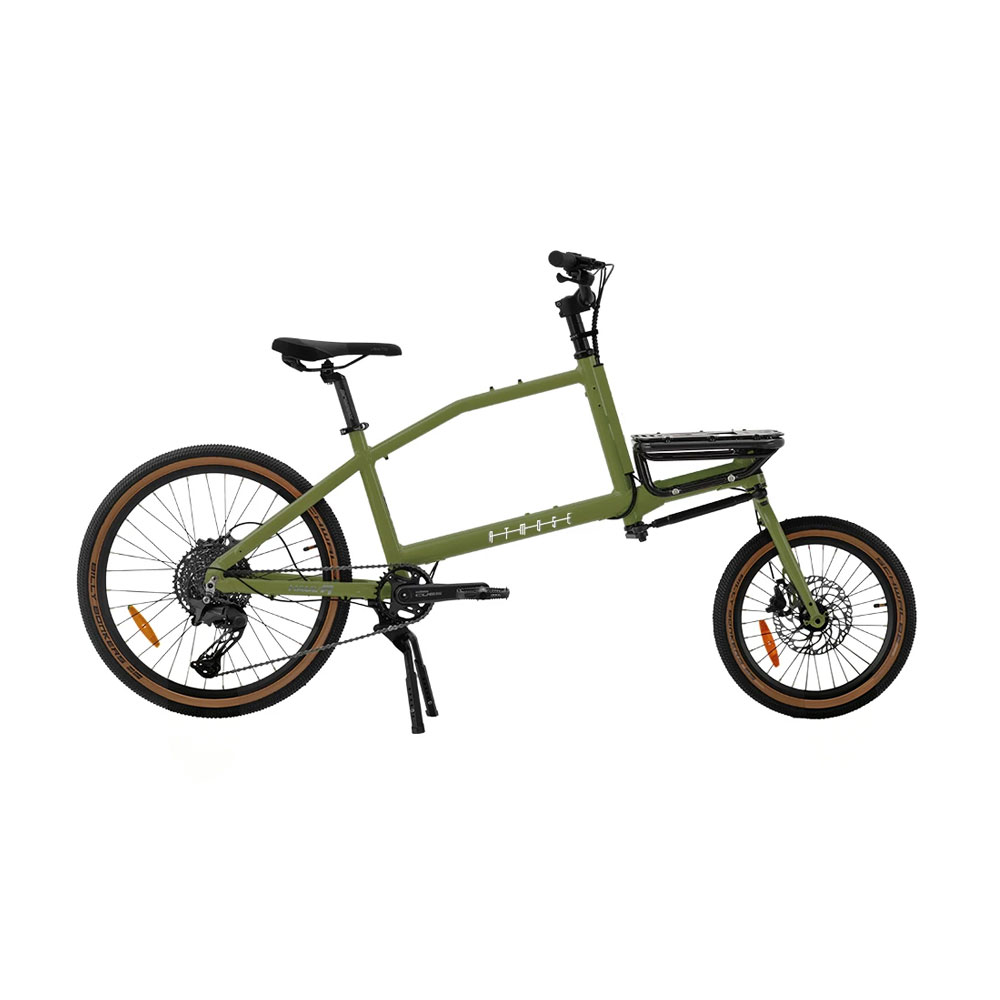
Atmose Model V V1 Manual Adventure Cargo Bike with Oversized Front Rack
Many cargo bicycles are created primarily for families, commuting, urban errands, or commercial delivery. Those uses place emphasis on passenger comfort, weather protection, low-speed balance, integrated accessories, and electric assistance. The Model V V1 belongs to a different category. Its purpose is to transport people and equipment beyond the limits of ordinary urban mobility.
An adventure cargo bike must solve several problems at once. It must carry more than a standard touring bicycle, remain controllable when loaded, provide dependable braking on changing surfaces, and withstand exposure to dust, moisture, vibration, and uneven ground. It should also be manageable when the rider needs to lift the bike across an obstacle or load it into a vehicle. The V1 approaches these requirements through a balanced combination of capacity, mechanical simplicity, and trail-oriented equipment.
The absence of a battery is central to the design. In remote locations, a battery may become a logistical consideration rather than an advantage. A rider may need to estimate range, conserve energy, locate charging facilities, carry a charger, or protect electronic systems from water and impact. The V1 avoids those requirements. As long as the rider can pedal and the mechanical components remain serviceable, the bike can continue operating.
This does not mean that a manual cargo bike is effortless. Carrying cargo by human power requires physical preparation, appropriate gearing, and realistic load planning. The V1 is intended for riders who actively value that participation. The reward is a more direct connection with the terrain and a machine that is easier to understand and maintain in the field.
Compared with a conventional bicycle, the V1 offers considerably greater front-carrying ability. Compared with many electric cargo bikes, it offers lower system complexity and potentially easier handling when lifting or transporting the bike. This middle ground makes it useful for explorers, campers, land managers, outdoor instructors, photographers, and riders who want cargo capacity without electrical dependence.
The V1 uses a 6061 T4T6 aluminum alloy frame. Aluminum is widely used in modern bicycles because it provides a favorable balance between structural strength, weight, corrosion resistance, and manufacturability. For an adventure cargo bike, the frame must support not only the rider but also the forces generated by a loaded front basket, uneven terrain, braking, cornering, and repeated impacts.
The stated rider load limit is 145 kilograms, while the basket is rated for up to 25 kilograms. These figures give riders a clear basis for planning equipment. Load limits should always be treated as engineering boundaries rather than targets to exceed. A properly distributed load is especially important on a cargo bicycle because the position of the cargo affects steering, braking, climbing, and overall balance.
The use of 6061 alloy also supports the product’s practical positioning. It is a familiar material to bicycle manufacturers and service technicians, allowing the frame to be produced with established processes and inspected using recognized quality-control methods. A well-designed aluminum structure can deliver the stiffness required for cargo handling without the additional mass that may accompany heavier materials.
The Shimano 11-speed Cues system is one of the most important components on the V1. Cargo riding frequently involves changing gradients, variable surfaces, and different load weights. A narrow-range drivetrain may force the rider to stand and push excessively on climbs or spin inefficiently on flatter sections. An 11-speed system provides a broader range of ratios, allowing the rider to select a more suitable gear for each section of a route.
For adventure travel, gearing is not simply a performance feature. It is a form of load management. When the basket is filled with camping equipment, food, water, or tools, the bike requires more effort to accelerate and climb. Lower gears allow the rider to maintain a practical cadence on inclines, while higher gears help make efficient progress on level roads and connecting paths.
The mechanical drivetrain also supports field serviceability. A rider who travels away from specialized workshops benefits from components that are familiar to bicycle mechanics and can be inspected through conventional methods. Gear adjustment, chain cleaning, cable inspection, and wear checks remain understandable mechanical tasks rather than electronic diagnostic procedures.
The V1 is equipped with Tektro hydraulic disc brakes. Braking is particularly important on a loaded cargo bicycle because the additional mass increases stopping distance and places greater thermal demand on the braking system. Hydraulic disc brakes provide strong braking control and consistent modulation across a range of weather and trail conditions.
Disc brakes are also useful when routes include mud, gravel, dust, or wet surfaces. Because the braking surface is positioned at the wheel hub rather than the outer rim, braking performance is less dependent on a clean, dry rim. Hydraulic actuation can provide a smooth lever feel, helping the rider regulate speed on descents and around obstacles.
Riders should still inspect brake pads, rotors, hose connections, and lever operation before every major trip. Hydraulic brakes reduce the need for frequent cable adjustment, but they do not eliminate maintenance. A cargo bike used in remote areas should be prepared with the same care as any expedition vehicle.
The V1 uses wide 18-inch by 2.4-inch tires at the front and a 20-inch by 2.4-inch tire at the rear. The specifications identify these as punch-proof tires, which supports the bike’s intended use on mixed and imperfect surfaces. Wide tires can provide greater contact with the ground, helping the bike remain stable on loose gravel, compacted dirt, grass, and uneven access roads.
The different wheel sizes are consistent with the needs of a compact cargo-bike layout. The smaller rear wheel can help support a low and practical cargo-bike geometry, while the front wheels are designed around the broad loading area and front-end structure. The 2.4-inch width provides a useful volume of air between the rim and the ground, improving comfort and helping the bike roll over small irregularities.
No tire is immune to every sharp object. Riders traveling into remote regions should still carry a pump, tire levers, a suitable repair kit, and replacement tubes or other compatible emergency supplies. Nevertheless, puncture-resistant construction can reduce the frequency of interruptions and improve confidence when routes are far from repair shops.
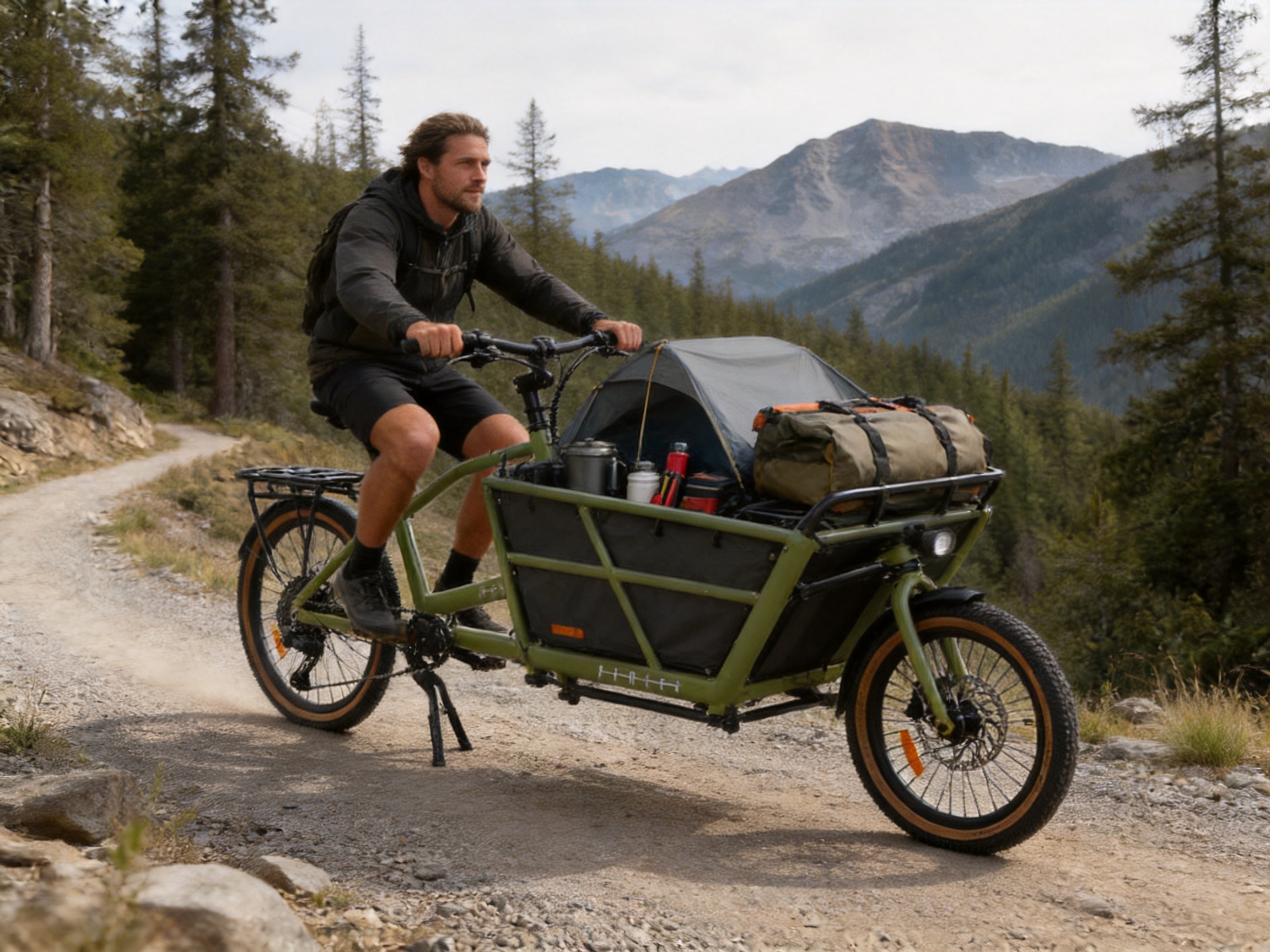
The defining feature of the Model V V1 is its oversized front folding basket. The specified dimensions are 470 millimeters in length, 470 millimeters in width, and 375 millimeters in height. This creates a broad, practical loading area for equipment that would be difficult to carry on a conventional bicycle.
The basket is rated for up to 25 kilograms. That capacity is suitable for a wide variety of adventure equipment, including compact tents, sleeping bags, cooking systems, dry bags, food containers, camera cases, climbing equipment, fishing gear, and maintenance tools. Its broad platform also allows riders to organize cargo rather than stacking every item into a narrow pannier.
The folding function adds an important benefit when the bike is not carrying cargo. A folding basket can make storage more manageable and may simplify loading the bicycle into a vehicle or placing it in a workshop. It also helps the bike adapt between travel modes. A rider can use the V1 as a cargo carrier on an expedition and then reduce the front structure when riding without equipment.
Large front cargo platforms require thoughtful loading. Heavy items should be positioned low and centered whenever possible. Soft or loose equipment should be secured so that it cannot shift during braking or cornering. The basket’s dimensions create space, but efficient packing remains the rider’s responsibility. Proper load distribution will preserve steering response and reduce unnecessary strain on the frame, fork, wheels, and braking system.
The front deck distinguishes the V1 from ordinary touring bicycles and many compact cargo models. A traditional touring bike typically distributes equipment through rear panniers and a small front rack. That arrangement works well for narrow, elongated loads, but it can be less suitable for bulky objects. The V1’s front basket is better adapted to box-shaped or irregularly shaped adventure equipment.
Its design is also useful for professional and semi-professional applications. Outdoor service workers may use the basket to carry tools and supplies. Event teams may transport equipment around campsites or venues. Rural property owners may use it for maintenance tasks. Guides and instructors may carry shared gear without relying on a motor vehicle for every short journey.
The V1 measures approximately 1,910 millimeters in length, 750 millimeters in width, and 1,060 millimeters in height. These dimensions place it within the full-size cargo-bike category while keeping the overall width manageable for many paths, gates, storage areas, and transport situations.
The 750-millimeter width should be considered when planning routes and storage. Riders should measure doorways, sheds, elevators, vehicle loading spaces, and narrow trail access points before purchasing or transporting the bike. At the same time, the width provides a stable base for the front cargo structure and helps accommodate the broad tires and loaded riding position.
At 1,910 millimeters long, the V1 has enough chassis length to support a substantial front cargo area while retaining a bicycle-like profile. Its handling will naturally differ from that of a standard bicycle. Turning should be smooth rather than abrupt, and riders should allow additional space when navigating switchbacks, tight gates, or crowded areas.
One of the practical advantages of the manual configuration is reduced weight compared with an equivalent electric model. The absence of a motor, battery, controller, and related wiring can make the bike easier to lift, reposition, and transport. This matters in places where the rider may need to cross a drainage channel, move the bike over a fallen branch, load it into a boat or aircraft, or carry it up a short flight of stairs.
Reduced weight does not remove the importance of technique. A loaded cargo bike should be lifted with care, using secure contact points and avoiding damage to cables, basket mounts, or brake lines. When moving the bike across an obstacle, the rider should first remove unstable or heavy cargo where possible.
The clearest advantage of the V1 over electric cargo bikes is that it does not require charging. This is valuable in wilderness areas, remote camps, rural properties, long-distance routes, and emergency situations. The rider does not need to plan the journey around the location of electrical outlets or carry a charger for every trip.
For multi-day travel, energy planning becomes simpler. Food and water still require careful management, but the bike itself does not consume stored electrical energy. A rider can stop for the night without searching for a suitable power source, and the bicycle remains ready for use the next morning.
An electric cargo bike contains additional systems such as a motor, battery, display, sensors, controller, wiring, and charging equipment. These parts can provide valuable assistance, but they also create more potential points of failure and more components to protect from impact, moisture, and contamination.
The V1 uses a more straightforward architecture. Its main operating systems are mechanical and hydraulic. This makes routine inspection more accessible and may simplify troubleshooting when the rider is far from a dealer or service center. A mechanical problem can still occur, but the process of identifying and addressing it is generally more familiar to experienced cyclists.
Without the additional mass of an electric drive system, the V1 is easier to lift and handle than many motor-assisted cargo bikes. This can be a major advantage for users who need to place the bike on a transport rack, move it into storage, or carry it across difficult terrain.
For expedition travel, every kilogram matters. A lighter bicycle can reduce the physical effort required during portage sections and may simplify transportation by vehicle, trailer, small aircraft, or boat. The advantage is especially noticeable when the bicycle must be moved without riding it.
Some riders choose manual bicycles because they prefer direct physical involvement. The V1 lets the rider control pace, effort, and gear selection without motor assistance. This can make the journey feel more connected to the terrain and may be especially attractive to bikepacking enthusiasts who see the physical challenge as part of the experience.
Manual riding also offers predictable behavior. There is no motor engagement, assistance mode, or battery-management decision to make. The rider pedals, selects a gear, applies the brakes, and responds directly to the route.
Although a standard touring bicycle may be lighter and faster when unloaded, it usually cannot provide the same front-carrying capacity. The V1 is designed to transport bulky equipment that may not fit comfortably in panniers or on a small rack.
The front basket creates a more accessible loading area. Equipment can be placed into the basket without requiring high rear panniers or complicated attachment systems. For users who frequently carry boxes, containers, tools, or irregularly shaped items, this can improve efficiency.
The V1 also provides a cargo-oriented frame and wheel arrangement intended for stability under load. A touring bike can carry significant weight, but its frame, rack mounts, and handling characteristics may not be optimized for the same type of front cargo. The Model V’s architecture starts with cargo transport as a central requirement rather than an accessory function.
Compared with small utility bicycles, the V1 offers a more substantial platform and a larger load rating. Its combination of a 145-kilogram rider limit and 25-kilogram basket capacity gives it a useful operating range for serious outdoor transport.
The V1’s qualities are supported by the broader capabilities of its manufacturer. Atmose originated in California and developed from MOTIV, an established American beach cruiser brand with industry experience. The company also maintains an international design and research-and-development team based in Paris. This combination gives the product a cross-market perspective: American product practicality is combined with European attention to design, usability, and urban mobility.
A cargo bike intended for adventure use must be more than visually distinctive. Its frame, basket, drivetrain, wheels, and brakes must work together as a coherent system. Product development therefore involves decisions about load distribution, rider position, steering response, component compatibility, structural durability, and service access. The V1 reflects this systems approach through its combination of a dedicated cargo frame, large basket, wide tires, low-complexity drivetrain, and hydraulic brakes.
The company describes its manufacturing foundation as including mature supply-chain relationships, extensive manufacturing expertise, and continuous innovation. These strengths are important because cargo bikes require coordination across several production areas. Frame fabrication, component sourcing, assembly, inspection, packaging, and after-sales support must be managed consistently for a complete vehicle to perform as intended.
A mature supply chain can also improve component availability and production repeatability. Using recognized bicycle components such as Shimano drivetrain technology and Tektro hydraulic braking equipment enables compatibility with established service knowledge. It also gives customers a clearer maintenance path than a product built around unfamiliar proprietary parts.
The company’s international structure may support development for different markets and riding conditions. Cargo-bike users vary widely: families need practical daily transport, businesses need reliability and capacity, and outdoor riders need simplicity and versatility. The Model V demonstrates how the same general cargo-bike expertise can be adapted to a more specialized adventure application.
Advanced manufacturing should not be understood only as automation or the use of expensive machinery. It also includes disciplined design validation, material selection, process control, assembly accuracy, quality inspection, and feedback from real-world use. For a model like the V1, manufacturing quality is reflected in the alignment of the frame, reliable basket mounting, correct brake installation, smooth drivetrain operation, consistent wheel construction, and secure finishing of contact points.
The use of aluminum alloy requires appropriate fabrication and finishing practices. Frame components must be accurately formed and joined, and the finished structure must be inspected for dimensional consistency and surface defects. Cargo-bike frames experience different force patterns from ordinary bicycles because of their longer architecture and heavier loads. Manufacturing discipline is therefore essential to maintaining predictable handling and structural performance.
Component integration is another area in which product development strength matters. A large front rack changes the balance of the bicycle. The tires, wheels, fork, steering system, frame, and brakes must be selected and assembled to support the intended load. The V1 is not defined by one isolated component; its value comes from the interaction of the entire package.
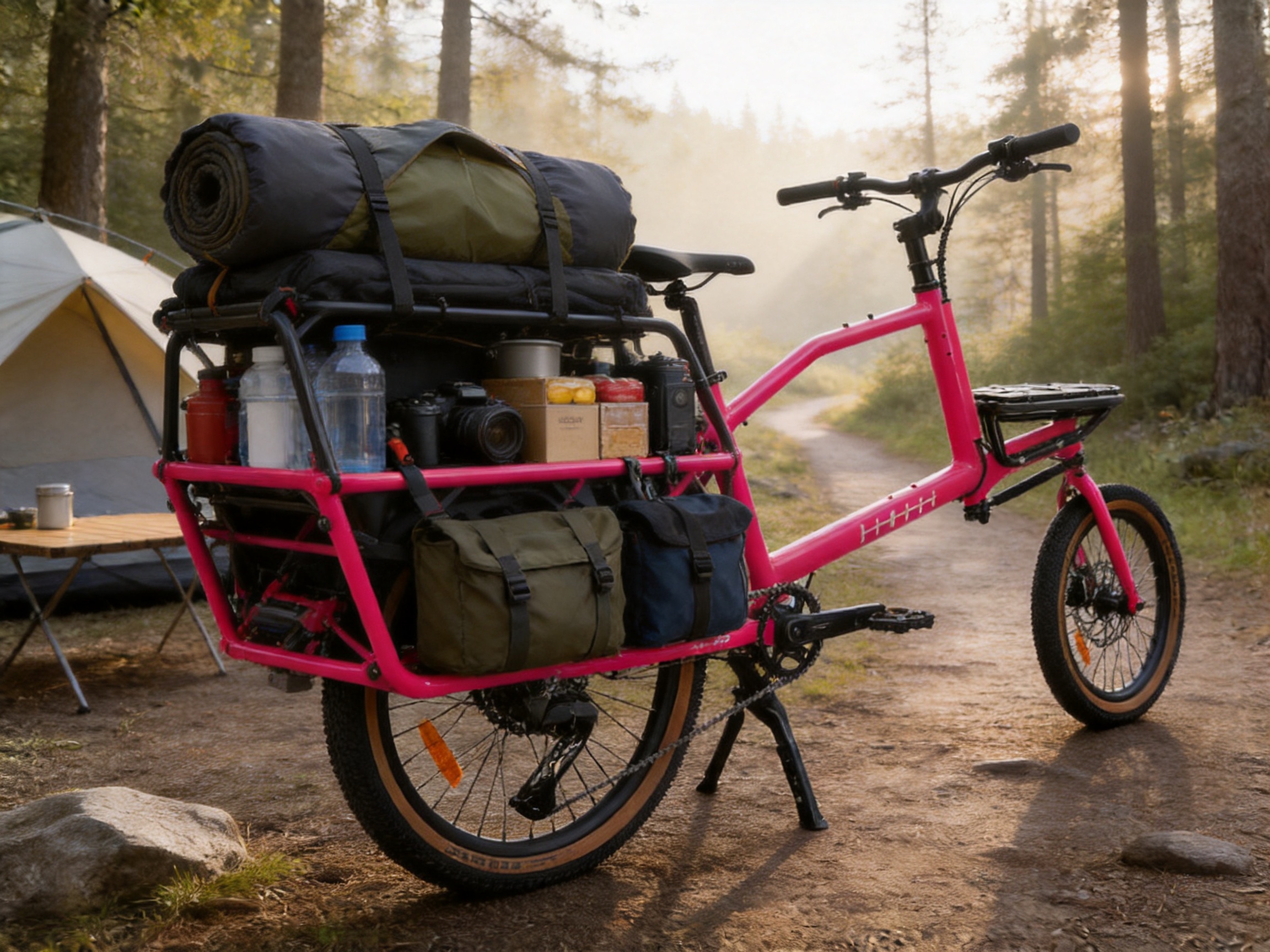
The V1 is naturally suited to remote camping. A rider can carry a tent, sleeping system, cooking equipment, food, water, clothing, and repair supplies in the oversized basket. Because the bike does not rely on a battery, the travel plan can extend beyond areas with electrical access.
The manual drivetrain encourages careful route planning and efficient packing. Riders can choose lower gears for steep sections, walk the bike where necessary, and then continue without concern about remaining battery range. The bicycle becomes a self-contained transport tool for reaching campsites, trailheads, lakes, forests, and remote recreation areas.
Traditional bikepacking often emphasizes lightweight equipment and compact bags. The V1 allows a different style of travel, one that prioritizes carrying ability and flexibility. It can transport more comfort-oriented equipment, shared supplies, or specialized tools than a lightweight touring bicycle.
This may appeal to riders who want to combine cycling with photography, fishing, climbing, research, or extended stays in the outdoors. The extra capacity can also support group travel, where one rider carries communal cooking equipment or repair supplies.
Large properties, farms, campgrounds, and rural facilities often require short-distance transport of tools and materials. A manual cargo bike can be more efficient than starting a car or utility vehicle for every small task. The V1’s basket can hold hand tools, inspection equipment, replacement parts, or maintenance supplies.
Its lack of a battery can be useful in locations where storage conditions are difficult or charging infrastructure is unavailable. The bike can remain ready for immediate use, provided that its tires, brakes, chain, and fasteners are checked regularly.
Event organizers, park staff, guides, and outdoor educators may need to move equipment between nearby locations. The V1 offers a quiet, low-impact alternative to motorized transport for many such tasks. It can carry signage, first-aid supplies, food containers, tools, and other equipment around sites where vehicle access is limited.
A mechanical cargo bike can also play a role in emergency preparedness. In situations where fuel is limited, roads are blocked, or power is unavailable, a bicycle can provide useful local transportation. The V1’s large basket increases its ability to carry water containers, food, medical supplies, tools, or communication equipment.
It should not be treated as a replacement for professional emergency equipment, but its simple operating principle and substantial carrying area make it a practical addition to a resilient transportation plan.
| Specification | Model V V1 Details |
|---|---|
| Product category | Adventure Cargo Bike |
| Drive type | Manual, non-electric |
| Frame material | 6061 T4T6 aluminum alloy |
| Battery | None |
| Motor or power system | None |
| Drivetrain | Shimano 11-speed Cues |
| Brakes | Tektro hydraulic disc brakes |
| Front basket dimensions | 470 mm long × 470 mm wide × 375 mm high |
| Maximum rider load | 145 kg |
| Maximum basket load | 25 kg |
| Front tires | 18-inch × 2.4-inch puncture-resistant tires |
| Rear tire | 20-inch × 2.4-inch puncture-resistant tire |
| Overall dimensions | 1,910 mm long × 750 mm wide × 1,060 mm high |
The V1 is designed to carry substantial weight, but performance depends on how that weight is arranged. Riders should place dense objects near the center of the basket and as low as practical. Tall or loose loads can affect visibility, steering, and stability. Straps or suitable restraints should be used to prevent cargo from moving during acceleration, braking, or rough travel.
The stated 25-kilogram basket capacity should not be exceeded. The rider load rating and basket rating are separate limits, and the total operating mass should be considered together with terrain, speed, and riding conditions. A bicycle carrying a full basket on steep, rough ground will require more caution than the same bicycle carrying a light load on a paved road.
New riders should practice first with a light load. Steering and braking feel may change as the basket becomes heavier. Gradual practice helps the rider learn how the bicycle responds during starts, stops, turns, descents, and low-speed maneuvers.
Before remote trips, the rider should inspect the frame, basket mounts, wheel fasteners, brake operation, tire pressure, drivetrain, and steering system. A basic field kit should include a pump, tire repair tools, spare tubes, chain lubricant, a multi-tool, spare fasteners, and any equipment needed for the specific route.
Mechanical simplicity is valuable only when the mechanical parts are maintained. The chain should be kept clean and lubricated, especially after muddy or dusty rides. The drivetrain should be checked for shifting problems, excessive wear, and damage. Regular cleaning also makes it easier to identify loose fasteners or cracks before they become serious problems.
Hydraulic disc brakes should be tested before every demanding ride. Riders should monitor pad thickness, rotor condition, lever feel, and signs of fluid leakage. Any change in braking performance should be addressed before entering a remote area.
Tire condition and pressure deserve particular attention. Wide tires can improve comfort and traction, but the correct pressure depends on rider weight, cargo, surface, and tire specifications. Extremely low pressure may increase the risk of rim damage, while excessive pressure can reduce grip and comfort on rough terrain.
The basket and its attachment points should be inspected because they carry concentrated loads and may experience vibration. Fasteners should be checked according to the manufacturer’s maintenance guidance. The folding mechanism should remain clean and operate smoothly, without excessive play or obstruction.
Storage also affects long-term reliability. The bike should be kept in a dry location when possible, with attention to salt, standing moisture, mud, and corrosive contaminants. Even corrosion-resistant materials and finishes benefit from regular cleaning and proper drying.
| User priority | Why the Model V V1 is relevant |
|---|---|
| Remote travel | No battery or charging infrastructure is required. |
| Mechanical simplicity | The bike uses a conventional drivetrain and hydraulic braking system without an electric drive system. |
| Bulky cargo transport | The oversized front basket provides a broad 470 mm × 470 mm loading area. |
| Climbing with equipment | The 11-speed drivetrain offers multiple ratios for changing gradients and loads. |
| Uneven surfaces | Wide 2.4-inch tires support stability and comfort on mixed terrain. |
| Transport and portage | The manual configuration can be lighter than comparable electric cargo bikes. |
| Professional serviceability | Recognized bicycle components support familiar inspection and maintenance practices. |
| Low-impact local mobility | Human-powered operation produces no direct motor emissions during use. |
The V1 is best suited to riders who value independence, cargo capacity, and mechanical simplicity more than motor assistance. It is a strong candidate for experienced cyclists, bikepacking enthusiasts, outdoor professionals, rural users, and anyone who regularly travels beyond reliable infrastructure.
It may also suit customers who want a cargo bike that can be used for both recreation and practical transport. The oversized basket can carry camping equipment on weekends and tools or supplies during the week. Its manual configuration avoids the need to maintain a separate battery-charging routine.
Riders who have limited physical capacity, regularly face very steep hills, or need to transport heavy loads over long distances may prefer an electric model. The V1 requires active effort, and its advantages are most apparent when the rider is comfortable with manual cycling and willing to manage the load thoughtfully.
For the right user, that effort is not a disadvantage. It is part of the reason to choose the product. The V1 offers a form of mobility that remains functional when batteries are empty, charging stations are absent, and electronic systems are undesirable.
No. The V1 is a manual cargo bike with no battery, motor, or electric power system. It is propelled entirely by the rider through its mechanical drivetrain.
The specified maximum basket load is 25 kilograms. Cargo should be distributed evenly and secured to prevent movement. The rider should not exceed the stated limit.
The stated maximum rider load is 145 kilograms. Riders should also consider the weight of clothing, personal equipment, and any additional items carried outside the basket.
A manual cargo bike does not depend on charging infrastructure and has fewer electrical components to protect or diagnose. It can be easier to lift and transport than a comparable electric cargo bike, while offering a direct and physically engaging riding experience.
Yes. Its oversized front folding basket is designed to carry bulky outdoor equipment such as tents, sleeping systems, cooking gear, coolers, dry bags, and tools, provided that the total basket load remains within the 25-kilogram limit.
The V1 uses a Shimano 11-speed Cues drivetrain. Its wide range is intended to help riders manage changing terrain and loaded climbs.
The bike uses Tektro hydraulic disc brakes. These provide controlled braking for a loaded bicycle and are appropriate for varied riding conditions when properly maintained.
Yes. The product specification identifies it as a front folding basket. Folding can make storage, transport, and unloaded riding more convenient.
The front uses 18-inch by 2.4-inch puncture-resistant tires, while the rear uses a 20-inch by 2.4-inch puncture-resistant tire. Their width is intended to support stability and comfort on mixed surfaces.
Yes. The V1 can be used on paved roads, access roads, gravel routes, and other suitable surfaces. Riders should adapt speed and loading practices to the conditions.
No. Because it has no motor, battery, controller, or display, the V1 avoids electronic drive-system maintenance. Its maintenance focuses on conventional bicycle systems such as the drivetrain, wheels, tires, brakes, frame, and basket.
The V1 is built around cargo transport. Its oversized front basket, cargo-oriented frame, broad tires, and stated load ratings allow it to carry bulky equipment that may not fit conveniently on a standard touring bicycle.
No bicycle is ideal for every use. The V1 is most appropriate for riders who want manual operation, substantial carrying capacity, and independence from charging. Riders who require continuous motor assistance may be better served by an electric cargo model.
The Atmose Model V V1 Manual Adventure Cargo Bike takes a clear position in the cargo-bike market. It is designed not around electrical assistance, but around self-sufficiency, carrying ability, and mechanical reliability. Its 6061 T4T6 aluminum alloy frame, Shimano 11-speed Cues drivetrain, Tektro hydraulic disc brakes, wide puncture-resistant tires, and oversized folding front basket create a practical platform for remote exploration and demanding utility work.
Its strongest advantage over electric cargo bikes is independence from batteries and charging stations. Its strongest advantage over ordinary bicycles is the ability to carry bulky equipment in a stable, purpose-built front cargo area. Its manufacturing and development strengths are supported by an established bicycle background, an international design and research team, mature supply-chain experience, and a product philosophy centered on practical, reliable mobility.
The V1 is not intended to make every climb effortless. Instead, it is intended to remain understandable, serviceable, and usable in places where infrastructure is limited. For riders who want to carry their equipment beyond the reach of conventional transport, that simplicity can be a major form of performance.
In the hands of a prepared rider, the Model V V1 becomes more than a cargo carrier. It is a human-powered expedition platform: capable of carrying essential gear, adaptable to mixed terrain, easier to transport than many motorized alternatives, and ready to travel wherever the road, trail, or route leads.
Atmose. Model V V1 Product Specifications and Product Description. Manufacturer-provided technical information.
Atmose. Company Information and Product Development Overview. Manufacturer-provided corporate materials.
Shimano. Cues Bicycle Drivetrain Technical Information. Component manufacturer reference material.
Tektro. Hydraulic Disc Brake Product and Maintenance Information. Component manufacturer reference material.
International Organization for Standardization. Cycles Safety and Bicycle Testing Principles. General technical reference.
Park Tool. Professional Bicycle Maintenance and Repair Principles. General bicycle service reference.
Nov 17, 2026
Nov 03, 2026
Oct 26, 2026


info@atmosecargobike.com

200 rue de la Croix Nivert 75015 Paris

Custom Electric Bakfiets
 English
 Français
 Deutsch