Oct 28, 2026
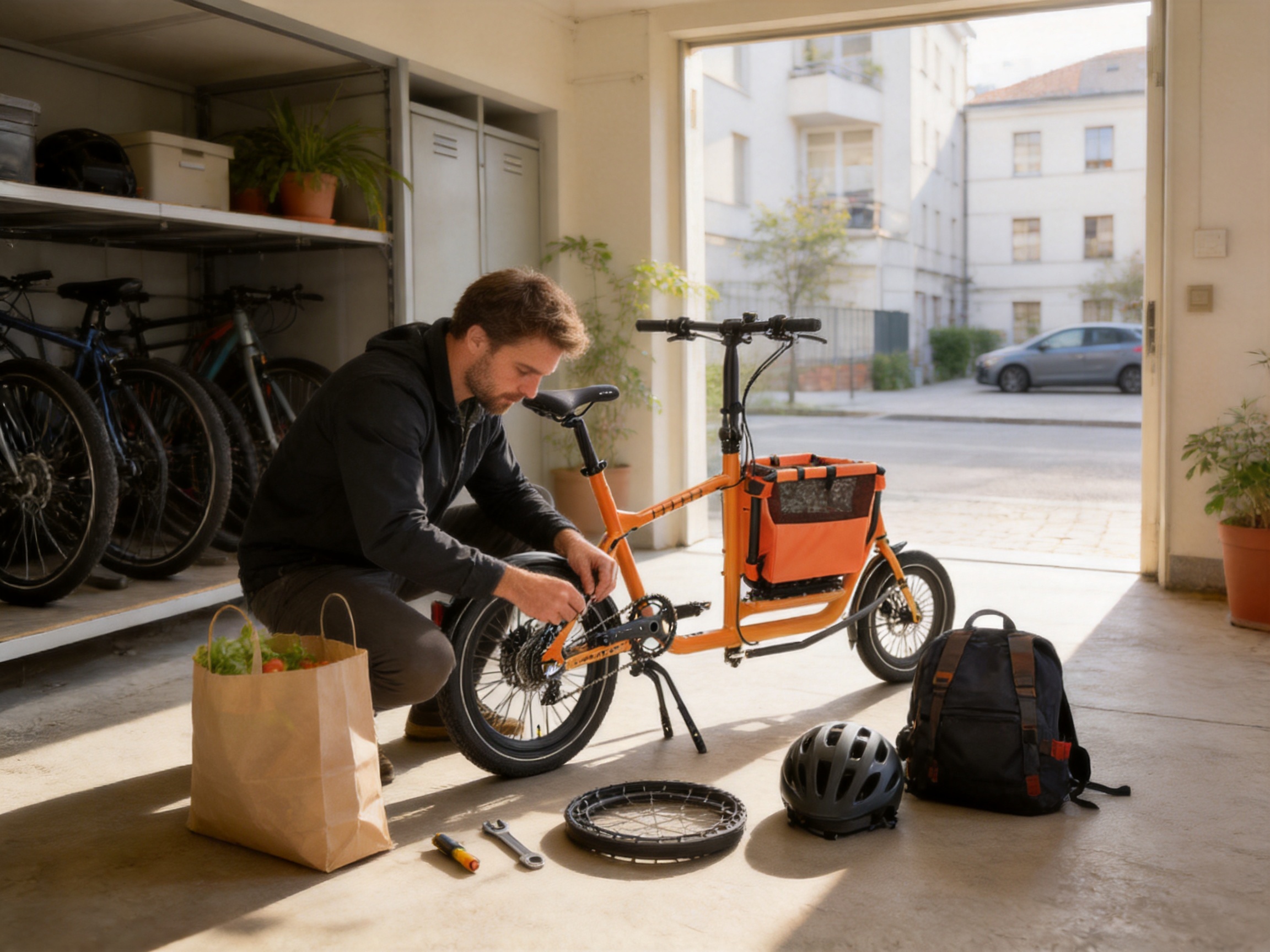
Urban transportation is changing. Riders increasingly want a vehicle that can carry groceries, work equipment, school supplies, and everyday essentials without the size, weight, and charging requirements associated with many electric cargo bikes. For this type of rider, a manual cargo bike can provide an appealing balance of utility, exercise, simplicity, and dependable operation.
The Atmose Model Q Q1 is designed around that idea. It is a lightweight, non-electric cargo bike for short urban trips, neighborhood errands, flat commutes, and riders who appreciate the direct feel of a traditional bicycle. Instead of using a motor and battery to assist every journey, the Q1 focuses on efficient human-powered riding, practical front cargo capacity, straightforward maintenance, and a compact footprint suitable for daily city use.
With a 6061 T4T6 aluminum alloy frame, Shimano three-speed Sora drivetrain, Tektro hydraulic disc brakes, puncture-resistant tires, and a folding front basket, the Q1 is positioned as a useful alternative to both ordinary bicycles and heavier electric cargo bikes. It offers cargo-carrying capability without turning every trip into a technical or logistical project.
The result is a vehicle for riders who want to move through their neighborhood under their own power while retaining the flexibility to transport the items that do not fit in a conventional bicycle basket or backpack.
A cargo bike does not always need a motor. Electric assistance is valuable for hills, long distances, heavy loads, and riders who want to reduce physical effort. However, it also introduces additional weight, charging requirements, electronic components, and maintenance considerations. Some riders prefer a different experience: a bicycle that responds directly to pedaling, remains ready at all times, and can be used for fitness as well as transportation.
The Q1 is built for this specific use case. It removes the battery and motor found on electric models and uses a conventional mechanical drivetrain instead. This makes the bike more straightforward in its operating principle. The rider pedals, the drivetrain transfers power to the rear wheel, and the hydraulic braking system provides controlled stopping performance.
This design is particularly suitable for flat neighborhoods and short-distance trips. A rider may use the Q1 for grocery shopping, collecting a parcel, visiting a local market, carrying a laptop and work materials, or transporting small household items. The front basket adds useful volume without requiring a large rear cargo platform or a trailer.
In practical terms, the Q1 occupies a space between a conventional city bicycle and a full-size electric cargo bike. It provides more carrying capacity than a standard commuter bicycle while remaining easier to manage than many long-tail or front-loading electric models. That balance is one of its most important advantages.
One of the central benefits of the Q1 is its lightweight manual configuration. The absence of a motor and battery reduces the number of heavy components attached to the frame. This affects how the bicycle feels during acceleration, turning, carrying, parking, and storage.
A lighter cargo bike is easier to move when the rider is not seated. It can be rolled into a building, lifted over a small step, positioned in a narrow storage area, or placed on a wall rack with less effort than a heavier electric cargo bike. This is especially useful for apartment residents, office workers, and riders who do not have access to a ground-level bicycle room.
Weight also influences the way a bicycle responds at low speeds. When navigating a crowded market, entering a bicycle lane, or making a tight turn near a curb, a lighter platform can feel more responsive. The Q1 is intended to remain nimble rather than imposing. This is valuable in dense neighborhoods where bicycles must frequently start, stop, turn, and maneuver around pedestrians.
Many cargo bikes prioritize maximum carrying capacity, which can result in a larger frame and a heavier overall structure. That approach is appropriate for family transport, commercial delivery, or substantial loads. The Q1 follows a different philosophy. It is designed for moderate cargo loads and routine urban errands, where ease of use may be more important than maximum payload volume.
The listed maximum load is 120 kilograms for the rider and 25 kilograms for the basket. This gives the Q1 useful capacity for groceries, shopping bags, backpacks, packages, tools, and other everyday items while maintaining a relatively compact format.
The frame uses 6061 T4T6 aluminum alloy. Aluminum is widely used in modern bicycles because it offers a favorable combination of low weight, structural strength, corrosion resistance, and manufacturing flexibility. For an urban cargo bike, these characteristics are particularly relevant because the frame must support both the rider and a front-mounted load while remaining manageable in daily use.
The T4T6 designation refers to different stages of heat treatment associated with aluminum alloy processing. In bicycle construction, controlled heat treatment can help achieve a useful balance between formability and final material strength. The precise performance of a finished frame depends on tube design, wall thickness, joining methods, weld quality, heat treatment, alignment, and inspection. Material selection alone does not determine the quality of a bicycle, but it provides an important foundation.
For the Q1, the aluminum frame supports the product’s lightweight positioning. It also contributes to the clean, modern appearance expected from an urban mobility product. Compared with traditional steel constructions, an aluminum frame can help reduce mass and resist surface corrosion in everyday conditions, although riders should still clean and inspect the bicycle regularly.
The frame must also be designed to handle the forces created by the front basket. Cargo positioned ahead of the rider affects steering and load distribution. A well-considered structure should provide a stable attachment point and predictable handling when the basket is empty or loaded. The Q1’s integrated front basket system is intended to make the cargo area part of the overall bicycle design rather than an improvised accessory.
This integration is an advantage over ordinary bicycles fitted with loosely attached baskets. A typical handlebar basket may be suitable for small personal items, but it can become unstable when heavily loaded. The Q1’s dedicated front basket and mounting system are designed specifically for its cargo-bike format and stated load capacity.
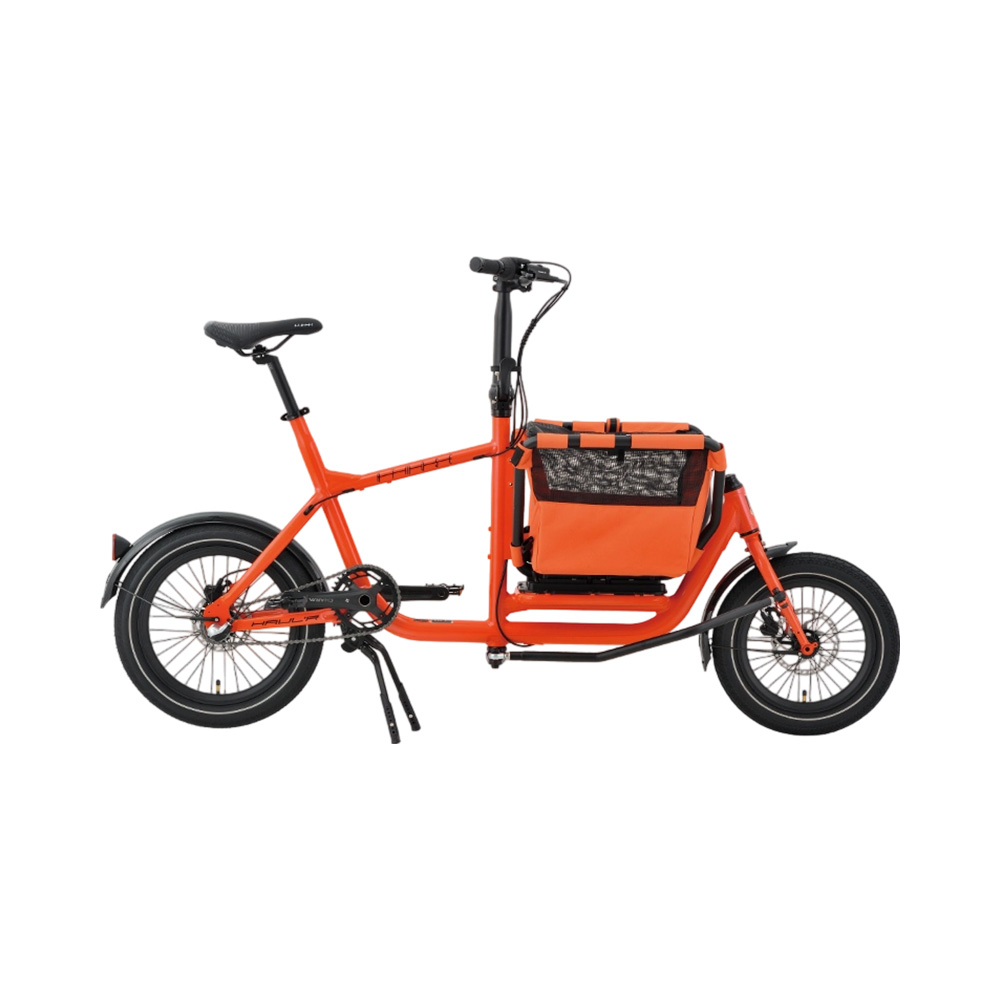
Atmose Model Q Q1 Lightweight Manual Mini Cargo Bike for Fitness and Errands
The Q1 includes a front folding basket measuring approximately 470 millimeters in length, 470 millimeters in width, and 375 millimeters in height. This provides a substantial carrying area while preserving the practical proportions of a neighborhood bicycle.
The basket is suitable for a wide variety of daily loads. A grocery bag can be placed inside without needing to hang from the handlebars. A small parcel can remain visible and accessible. A backpack, picnic container, market purchase, or work case can be transported without occupying the rider’s back. For many short trips, this simple capacity can eliminate the need for a car or a separate delivery service.
The folding design is especially useful when the bicycle is parked or stored. Cargo bikes can consume meaningful space, particularly in hallways, garages, workshops, and shared bicycle rooms. A folding basket can reduce the forward projection of the bicycle and make it easier to position against a wall or in a confined area.
The basket also reflects an important difference between a purpose-built cargo bike and an ordinary bicycle with accessories. The cargo area is not treated as an afterthought. It is part of the Q1’s core utility and contributes to the model’s identity as an urban transport tool.
The basket installation process is designed to be quick and accessible. First, the rider aligns the basket base with the pre-installed mounting holes on the handlebar area. Second, the basket is lowered vertically until the clips make contact. Third, the rider pushes the basket backward toward the saddle.
A click indicates that the basket has engaged correctly. This type of guided installation helps reduce uncertainty for users who do not regularly install bicycle accessories. It also avoids the need for a lengthy assembly procedure or specialized tools during normal attachment.
Proper installation remains important. The rider should confirm that the basket is fully seated, the retaining mechanism is engaged, and the load is distributed safely before riding. A quick visual and physical check can help ensure that the basket does not shift during turns or braking.
Removing the basket is also intended to be straightforward. The rider first locates the pin at the bottom of the basket mount and pulls it downward firmly. The basket is then pushed forward toward the front wheel until it reaches the end of its track. Finally, the basket is lifted upward to complete removal.
This removable design offers flexibility. The Q1 can be used as a cargo bike during shopping or errands and then configured with less front bulk when the basket is not needed. It also allows the basket to be stored indoors separately or cleaned more easily after use.
A removable basket can be valuable for riders who use the bicycle for different purposes throughout the week. One trip may involve groceries, while another may be a fitness ride with no cargo. The ability to alter the configuration without permanently changing the bicycle supports a more adaptable ownership experience.
The Q1 uses a Shimano three-speed Sora speed system. A three-speed drivetrain is intentionally simple compared with the wide-range gearing found on many touring or mountain bicycles. For a flat urban commute, however, a limited gear range can be a practical choice.
The lower gear helps the rider start with a load or pedal at a more comfortable cadence when carrying cargo. The middle gear can serve as a general-purpose setting for ordinary neighborhood riding. The higher gear allows the rider to maintain speed efficiently on open, level roads.
Using three clearly defined speeds can make the bike easier to understand for new riders. There are fewer controls to manage, less shifting complexity, and less need to think about a large number of gear combinations. The rider can focus on traffic, pedestrians, and the road surface while selecting a suitable level of assistance from the mechanical drivetrain.
The drivetrain also supports the Q1’s low-complexity philosophy. Because there is no motor, battery, controller, or electronic display, the rider interacts with a familiar bicycle mechanism. Routine care generally involves checking chain condition, keeping the drivetrain clean, inspecting cable operation, and ensuring that the gears shift correctly.
Riders should recognize the intended environment. A three-speed manual cargo bike is not designed to provide the same climbing capability as a multi-speed electric cargo bike. On steep roads or with a heavy basket load, the rider may need to work harder or choose a different route. The Q1 is best matched with flat or gently rolling urban areas and users who are comfortable contributing physical effort.
The Q1 is equipped with Tektro hydraulic disc brakes. Braking is one of the most important systems on any cargo bicycle because the bike may carry both the rider and a forward load. The braking system must allow the rider to reduce speed smoothly and stop with confidence in changing urban conditions.
Hydraulic disc brakes transmit lever force through fluid rather than relying solely on a mechanical cable. This can provide a smooth lever feel and consistent braking control when the system is properly adjusted and maintained. Disc brakes also perform independently of the wheel rim, which can be advantageous in wet conditions or when the rims become dirty.
For a front-cargo bicycle, controlled braking is particularly important. The rider must avoid abrupt weight transfer, especially when the basket is loaded. Smooth application of both brakes can help maintain stability and control. As with any bicycle, riders should become familiar with the braking response before carrying a full load in busy traffic.
Hydraulic systems do require appropriate servicing. Brake pads should be inspected for wear, rotors should remain clean and undamaged, and any sign of fluid leakage or unusual lever travel should be addressed by a qualified technician. The use of hydraulic disc brakes adds performance potential, but responsible maintenance remains essential.
The Q1 uses wide tires sized at 16 inches by 2.4 inches at the front and 20 inches by 2.4 inches at the rear. The listed tires are described as puncture-proof or puncture-resistant. Their width contributes to comfort, grip, and stability on ordinary urban surfaces.
City streets are rarely perfect. Riders may encounter painted road markings, drainage covers, paving transitions, gravel, small potholes, and uneven sidewalks. Wider tires can help absorb some of the vibration produced by these surfaces and provide a broader contact patch with the ground.
The different front and rear wheel sizes support the compact cargo-bike layout. A smaller front wheel can help keep the front cargo structure practical and stable, while the larger rear wheel can contribute to efficient rolling and comfortable rider positioning. The overall geometry is intended to balance maneuverability with everyday usability.
Puncture-resistant construction can reduce the inconvenience of common road debris, although no bicycle tire is immune to every puncture. Riders should still maintain correct tire pressure, inspect the tread, remove embedded glass or metal, and repair or replace damaged tubes and tires promptly.
Wide tires also influence handling. They may feel more planted at low speeds, which is useful when maneuvering a loaded cargo bike. At the same time, tire pressure should be adjusted according to rider weight, cargo weight, road conditions, and manufacturer guidance. Excessively low pressure may increase rolling resistance and damage risk, while excessive pressure may reduce comfort and grip.
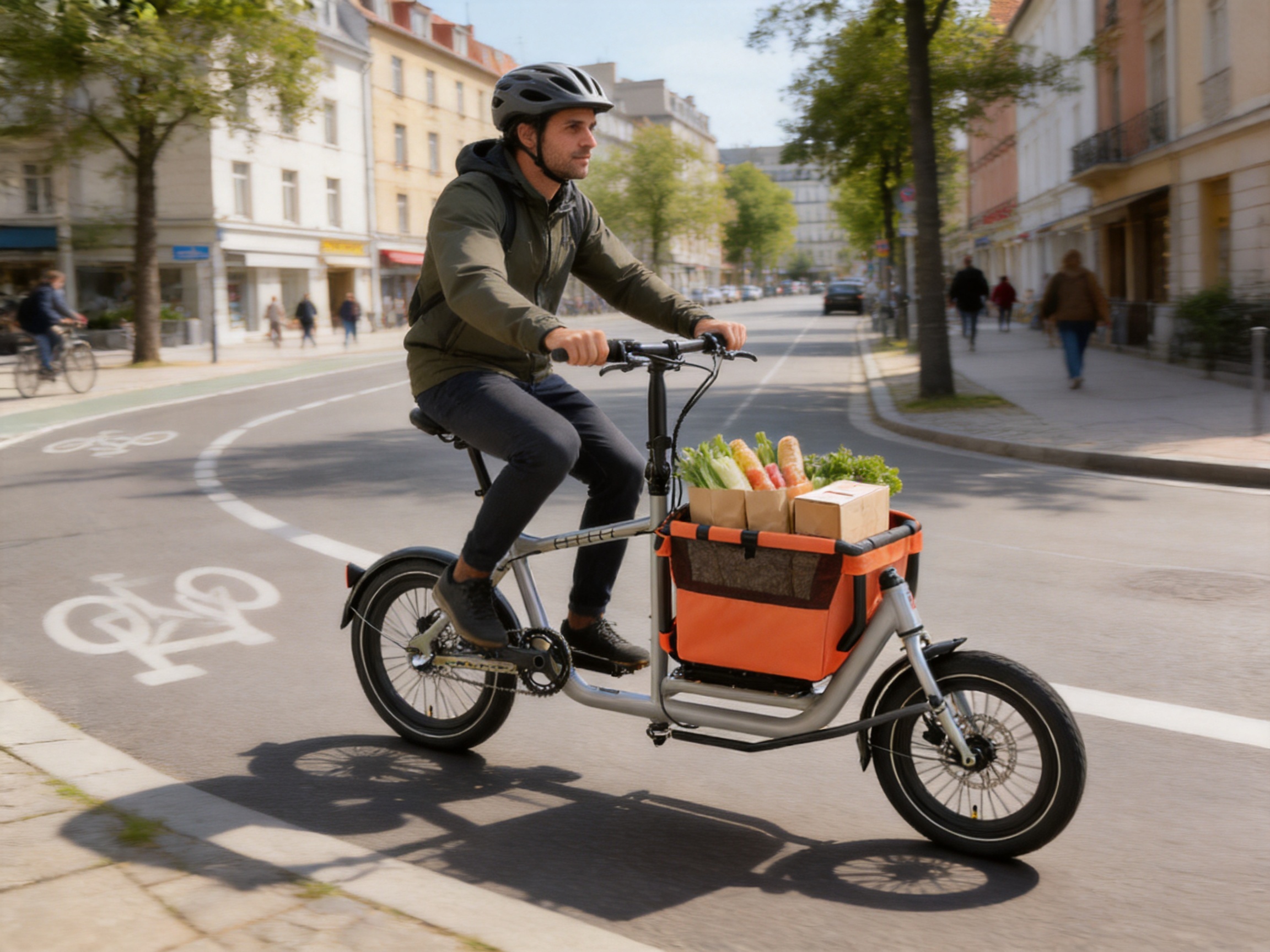
The Q1 measures approximately 1,780 millimeters in length, 620 millimeters in width, and 1,070 millimeters in height. These dimensions provide a cargo-carrying platform without reaching the scale of many larger family or commercial cargo bikes.
A width of 620 millimeters is relevant for urban use. It allows the bicycle to remain relatively manageable on bike paths, neighborhood streets, and storage areas while still providing enough space for a useful front basket. Riders should always consider local path regulations and provide adequate clearance around pedestrians and other cyclists.
The length is sufficient to create a stable cargo area while keeping the bike shorter than many long-wheelbase cargo designs. A more compact overall profile can make the Q1 easier to turn around in a courtyard, position outside a store, or store in a residential building.
These proportions reinforce the model’s intended role. The Q1 is not a high-capacity family transporter or a commercial delivery platform for large loads. It is an urban companion for moderate loads, everyday errands, and active transportation. Its value comes from combining several useful functions within a compact format.
Compared with a normal city bicycle, the Q1 offers significantly more practical cargo space. A typical commuter bicycle may support a small rear rack, panniers, or a handlebar bag. Those accessories are useful, but their capacity and weight distribution can be limited.
The Q1’s dedicated front basket creates a broad, accessible storage area. The rider can place shopping items in front of the riding position and keep them within view. This can be more convenient than wearing a loaded backpack, especially during warm weather or when carrying fragile items.
The cargo-focused frame and basket system also provide a more stable foundation for routine carrying. Instead of improvising with multiple accessories, the rider begins with a bicycle designed around the idea of transportation.
At the same time, the Q1 retains advantages associated with a traditional bicycle. It does not require a charging outlet, battery removal, software updates, or electronic troubleshooting. A rider can decide to use it spontaneously, even after it has been parked for several days or weeks.
Electric cargo bikes are excellent for riders who need motor assistance, but they are not the ideal solution for every user. The Q1 offers a different set of advantages by eliminating the motor and battery.
First, the manual configuration reduces weight. This can make the bike easier to carry, lift, push, and store. Second, there is no charging routine. The rider does not need to monitor battery level before an errand or find a suitable place to recharge after a long day. Third, the bike avoids many electronic components that can require specialized diagnosis or replacement.
The Q1 may also be less intimidating for riders who prefer mechanical simplicity. Some people enjoy the sensory experience of pedaling and shifting a conventional bicycle. The bike responds directly to the rider rather than adding motor assistance that can change acceleration and handling characteristics.
There may also be a cost-of-ownership advantage over time, depending on purchase price, usage, and maintenance needs. A manual bicycle does not require battery replacement, motor servicing, or electrical-system repairs. It still needs normal bicycle maintenance, but that maintenance is familiar to most bicycle shops.
These advantages do not make the Q1 universally superior to an electric cargo bike. Riders facing steep hills, long distances, heavy loads, or mobility limitations may benefit more from electric assistance. The Q1 is strongest where its design matches the environment: flat routes, moderate distances, manageable loads, and users who want active transportation.
The Q1 turns ordinary errands into opportunities for physical activity. A rider who would otherwise use a car or motor-assisted bicycle can pedal to the local market, post office, workplace, or neighborhood service. The cargo function makes active travel more practical because the rider does not have to choose between exercise and carrying useful items.
The fitness benefit can be adapted to the rider’s ability. A short trip with a light load may provide gentle activity, while a longer route or heavier load can create a more demanding workout. The three-speed drivetrain allows the rider to select a comfortable cadence and manage effort according to the journey.
Because the Q1 is intended for short-distance errands, it supports the idea of replacing small car trips rather than attempting to replace every type of transportation. A single car trip may involve only a few kilometers, yet repeated short trips contribute to congestion, fuel consumption, and parking pressure. A manual cargo bike provides an alternative for many of these journeys.
Regular use may also improve familiarity with local streets. Riders often discover quieter routes, neighborhood markets, and more direct connections when traveling by bicycle. The Q1 is therefore not only a transport product but also a tool for making short urban journeys more personal and active.
The Q1’s non-electric design simplifies the ownership routine. Without a battery and motor, the main maintenance tasks are familiar bicycle procedures: tire inflation, chain lubrication, brake inspection, gear adjustment, wheel checks, and periodic cleaning.
This simplicity does not mean maintenance should be ignored. A cargo bike carries meaningful loads and operates in environments where dust, moisture, road salt, and debris can affect components. Regular inspection helps preserve performance and detect wear before it becomes a safety issue.
The frame and basket should be checked for loose fasteners, damage, or unusual movement. The basket locking system should engage securely. Brake levers should feel firm, tires should be inflated to suitable pressure, and the chain should run smoothly through all three gears.
After riding in rain, the bicycle should be dried where practical. The drivetrain should be cleaned and lubricated according to the lubricant manufacturer’s instructions. Hydraulic brake components should not be contaminated with oil or grease. If the bicycle develops a handling problem, brake issue, or structural noise, it should be inspected by a qualified technician.
Compared with an electric cargo bike, the Q1’s maintenance system is less dependent on specialized electronic equipment. A bicycle shop with conventional service capability can generally address the principal mechanical systems. This can be especially valuable in regions where electric bicycle service infrastructure is limited.
The Q1 is part of Atmose’s broader cargo-bike development program. The company describes itself as a U.S.-origin cargo e-bike brand with American product thinking and a European design and research-and-development presence in Paris. This combination brings together different perspectives on function, styling, urban transportation, and user needs.
Atmose originated in California and was developed by MOTIV, an established American beach cruiser brand. The company states that its experience includes manufacturing expertise, supply-chain development, and ongoing product innovation. These capabilities are relevant when producing a specialized bicycle because cargo bikes require more than attractive styling. They must integrate structural performance, load management, braking, ergonomics, accessories, and practical assembly.
In 2023, Cameron Perstein and Guojie Shen founded ATMOSE BIKES INC. in Long Beach, California. In 2026, ATMOSE SASU was established in France with a new design and research-and-development team. The company’s international structure supports product development across markets and reflects the global nature of modern bicycle manufacturing.
A strong manufacturing process begins with translating user needs into measurable product requirements. For the Q1, those requirements include low weight, moderate cargo capacity, compact dimensions, reliable stopping, accessible basket installation, and simple human-powered operation. The finished specification shows how these objectives have been brought together in one product.
Frame material selection is one example of this process. The use of 6061 T4T6 aluminum alloy is consistent with the need for a lightweight yet durable platform. Component selection is another. Shimano drivetrain equipment, Tektro hydraulic brakes, and wide puncture-resistant tires are chosen to address shifting, stopping, traction, and daily urban durability.
The integrated basket system demonstrates attention to product usability during development. Instead of requiring riders to improvise a cargo solution, the design includes pre-installed mounting points, a guided attachment sequence, a retention pin, and a removal track. This indicates that the product has been considered not only as a bicycle frame but as a complete user experience.
Advanced manufacturing should not be defined only by automation or complex electronics. In a bicycle, it also includes accurate frame alignment, consistent joining, correct component installation, reliable finishing, dimensional control, and repeatable assembly. These details influence how the bike tracks, brakes, shifts, and carries cargo.
The company’s stated emphasis on reliability, practicality, comfort, sustainability, and fun provides a useful framework for evaluating the Q1. Its strengths are visible in the decision to avoid unnecessary complexity, select a corrosion-resistant lightweight frame material, provide a purposeful basket, and match the drivetrain to the intended environment.
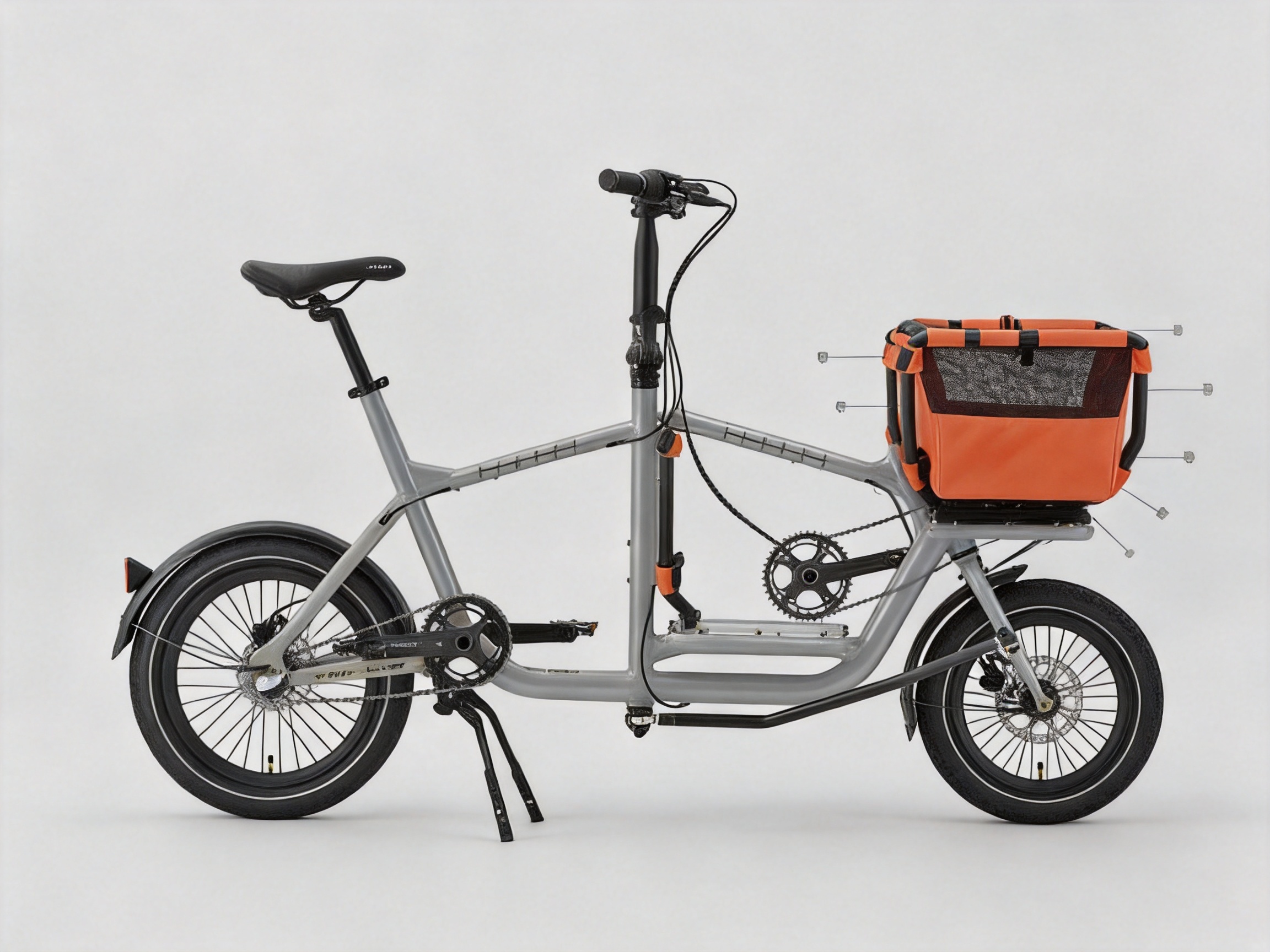
Product assembly affects both manufacturing efficiency and the customer’s first experience. The Q1’s basket attachment process uses pre-installed mounting holes and a guided sliding or locking action. Such a design can reduce installation errors and help ensure that the cargo accessory fits consistently from one unit to another.
Clear installation logic also reduces the need for excessive packaging or complicated instructions. The rider can understand the sequence by aligning, lowering, and pushing the basket into place. The audible click provides a simple confirmation that the locking mechanism has engaged.
From a production perspective, purpose-designed interfaces can support repeatable assembly. Predefined mounting points make the position of the basket more consistent. A retention pin provides a visible mechanical safeguard. A track guides the basket during removal and installation. These features can improve usability while also helping control assembly variation.
The same principle applies to the bicycle’s major systems. A properly aligned frame allows the wheels and drivetrain to operate correctly. Consistent brake mounting supports rotor alignment. Correctly fitted tires and tubes support safe operation. Reliable assembly is the foundation of a high-quality riding experience, even when the visible design appears simple.
Atmose identifies sustainability as one of its guiding values. A manual cargo bike can contribute to sustainable transportation by replacing short car trips with human-powered travel. It produces no direct riding emissions and does not require electricity during operation.
The absence of a battery also removes one category of component that eventually requires replacement or recycling. This does not make the product impact-free; manufacturing, shipping, maintenance materials, and component replacement still have environmental effects. However, a durable bicycle used regularly can provide meaningful transportation value over a long period.
Long-term use is central to sustainability. A product that is easy to understand, comfortable enough to ride, practical for errands, and straightforward to maintain is more likely to remain in service. The Q1’s simple mechanical design supports this goal by making the bicycle useful without relying on complex systems that may become obsolete.
Its removable folding basket also supports longevity. If the rider’s needs change, the bicycle can be used with or without the cargo container rather than becoming unnecessary. Adaptability can extend the useful life of a product and make it suitable for more stages of ownership.
The Q1 is well suited to riders who live in flat or gently rolling urban areas and regularly travel short distances. It is a good match for people who want to carry groceries, packages, personal belongings, or work supplies while keeping the physical experience of cycling.
It may appeal to apartment residents who need a manageable bicycle for indoor storage. It can also suit commuters who want a vehicle for the final part of a journey, local business owners who transport small supplies, and active riders who prefer a practical bicycle over an electric model.
Families may use the front basket for shopping and daily items, although the specifications provided describe a basket cargo system rather than a child passenger system. Riders should not carry passengers or loads beyond the bicycle’s stated limits. The Q1 should be used according to its design and local regulations.
The model is less appropriate for steep terrain, long-distance touring, very heavy cargo, or users who require motor assistance. In those situations, a larger electric cargo bike or another specialized design may be more suitable. Choosing the right model depends on route conditions, physical ability, cargo needs, storage space, and desired riding experience.
Although the basket is designed for useful cargo, riders should load it thoughtfully. Heavy items should be placed as low and centrally as possible. Loose objects should be secured so they cannot move into the front wheel or interfere with steering. Fragile items may benefit from padding or a stable container.
The rider should remain within the stated basket capacity of 25 kilograms and should consider the combined effect of rider weight and cargo. A bicycle may technically support a load but feel different when that load is positioned high or far forward. Practice in a quiet area can help the rider understand steering and braking response before entering traffic.
Items should not block the rider’s view of the road, the brake levers, or the front wheel. Long objects should not extend into the path of pedestrians or other vehicles. A properly loaded basket improves stability, visibility, and control.
The Q1 is designed to make routine travel feel uncomplicated. The rider approaches the bicycle, checks the tires and basket, selects a gear, and begins pedaling. There is no battery level to verify and no motor mode to choose. The operating sequence is familiar and direct.
On a flat street, the bicycle can provide an efficient and enjoyable rhythm. The rider can shift between the three gears as the route changes, use the hydraulic brakes to manage intersections, and rely on the wide tires for a stable ride over common urban surfaces.
The front basket keeps cargo visible and accessible. This can make shopping more convenient because the rider does not need to balance bags on the handlebars or wear a heavy backpack. When the errand is complete, the basket can be removed or folded to reduce the bicycle’s storage footprint.
This combination of utility and simplicity is the Q1’s strongest characteristic. It is not trying to replace every type of cargo bike. Instead, it focuses on a clear group of needs and delivers those needs in a compact manual format.
Riders should wear an appropriate helmet and follow local traffic regulations. Before each ride, they should check that the basket is securely mounted, the brakes operate correctly, the tires are properly inflated, and the handlebars and wheels are firmly secured.
Riding speed should be adapted to the load, road condition, visibility, and surrounding traffic. A loaded basket can affect steering and braking, even when the total load is within the stated limit. Turns should be taken smoothly, and additional stopping distance should be allowed when carrying cargo.
The bicycle should not be overloaded or modified in ways that compromise the frame, brakes, steering, or wheel clearance. Accessories should be installed using suitable mounting points. If a component is damaged or develops unusual play, the bicycle should not be ridden until it has been inspected.
Safety is also part of responsible manufacturing. A well-designed cargo bicycle must account for the relationship between load position, frame structure, tire contact, braking, and rider control. The Q1’s combination of a dedicated basket, hydraulic disc brakes, wide tires, and aluminum frame reflects this integrated approach.
The Q1 is a lightweight manual mini cargo bike designed for urban errands, short commutes, fitness riding, and moderate front-basket loads. It does not use a battery or motor.
The listed maximum load is 120 kilograms for the rider and 25 kilograms for the front basket. Riders should follow the manufacturer’s limits and distribute cargo securely.
No. The Q1 is a human-powered bicycle. It has no battery or power system and is intended for riders who prefer direct pedaling and low mechanical complexity.
The Q1 uses a Shimano three-speed Sora speed system. The three gears are intended to provide practical adjustment for starting, steady urban riding, and faster travel on level roads.
The bicycle uses Tektro hydraulic disc brakes. These are designed to provide controlled braking performance, but they still require regular inspection and professional servicing when necessary.
The front tires are listed as 16 inches by 2.4 inches, and the rear tires are listed as 20 inches by 2.4 inches. The tires are described as puncture-proof or puncture-resistant.
Yes. The basket can be detached by pulling down the retaining pin, pushing the basket forward along its track, and lifting it upward. It can also be installed through a three-step alignment, lowering, and backward-pushing process.
The Q1 is primarily intended for flat or gently rolling urban routes. It can be ridden on hills by a capable rider, but it does not provide motor assistance and may require more physical effort than an electric cargo bike.
The Q1 is lighter, does not require charging, and has fewer electrical components. It may be easier to carry, store, and maintain. It is best for riders who value exercise and mechanical simplicity over motor assistance.
The frame is made from 6061 T4T6 aluminum alloy. This material supports the model’s lightweight construction and provides a practical balance of strength, weight, and corrosion resistance when properly engineered and maintained.
It is best for active urban riders, short-distance commuters, apartment residents, shoppers, and users who need moderate cargo capacity without the weight and complexity of a motorized cargo bike.
The supplied specifications describe a front basket and do not identify a child-passenger seating system. The Q1 should not be used to carry passengers unless an approved configuration and applicable local requirements specifically permit it.
The Atmose Model Q Q1 takes a focused approach to cargo cycling. Rather than adding motor assistance, a large battery, or a high-capacity family structure, it concentrates on the everyday needs of riders who want a lightweight and practical manual bicycle.
Its 6061 T4T6 aluminum alloy frame supports the lightweight concept. The Shimano three-speed drivetrain offers straightforward gear selection. Tektro hydraulic disc brakes provide controlled stopping potential. Wide puncture-resistant tires support urban stability and comfort. The folding front basket adds meaningful carrying capacity while remaining removable for flexible storage and use.
The Q1’s advantages are clearest when compared with its intended alternatives. It carries more than an ordinary city bike, yet remains more compact and mechanically simple than many electric cargo bikes. It can turn short errands into fitness opportunities, eliminate charging concerns, and provide a direct riding experience that many cyclists value.
The company’s background also supports the product’s positioning. Atmose combines American origins, European design and research-and-development activity, manufacturing experience, and a stated commitment to practical, reliable, sustainable mobility. The result is a cargo bike designed not around maximum specifications, but around useful daily transportation.
For riders who live in suitable terrain, carry moderate loads, and want a dependable vehicle that is ready whenever they are, the Q1 offers a compelling form of urban mobility. It demonstrates that a cargo bike can be practical without being oversized, useful without being electric, and capable without becoming unnecessarily complicated.
Atmose Product Specification Sheet, Model Q Q1, including frame, drivetrain, load, basket, tire, dimension, and brake information.
Atmose Product Content and Installation Guide, front basket installation and removal procedures.
Atmose Company Information, corporate history, design and research-and-development structure, product philosophy, and sustainability commitments.
Shimano Bicycle Component Technical Information, three-speed drivetrain principles and bicycle shifting maintenance.
Tektro Hydraulic Disc Brake Service Principles, hydraulic braking operation, inspection, and maintenance considerations.
General Bicycle Engineering References, aluminum alloy frame design, wheel sizing, tire pressure, load distribution, and cargo bicycle handling.
Urban Mobility Planning References, active transportation, short-distance trip substitution, bicycle logistics, and sustainable neighborhood travel.
Nov 11, 2026
Nov 07, 2026
Nov 05, 2026


info@atmosecargobike.com

200 rue de la Croix Nivert 75015 Paris

Custom Electric Bakfiets
 English
 Français
 Deutsch